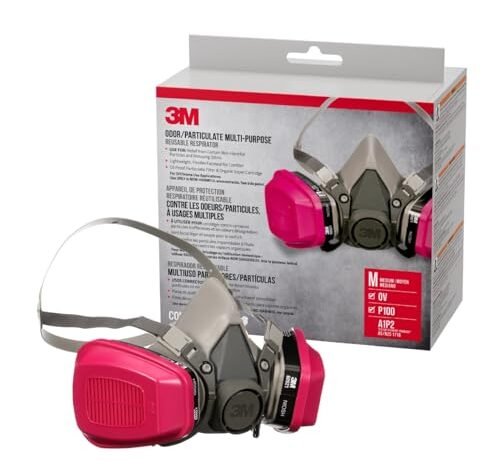
The first whiff of burning flux through an old cartridge was my real wake-up call. After soldering dozens of connections over two weeks—from stained glass to electronics—I learned the best respirator for soldering isn’t just about filtration, but comfort during hours of bench work. My top performer, the 3M P100/OV Odor/Particulate Multi-Purpose, consistently balanced airtight security with a fit I could actually forget I was wearing. I’ll break down how it and others handled real workshop conditions, so you can find the right protection without the guesswork.
3M P100/OV Odor/Particulate Multi-Purpose Reusable Respirator 65021
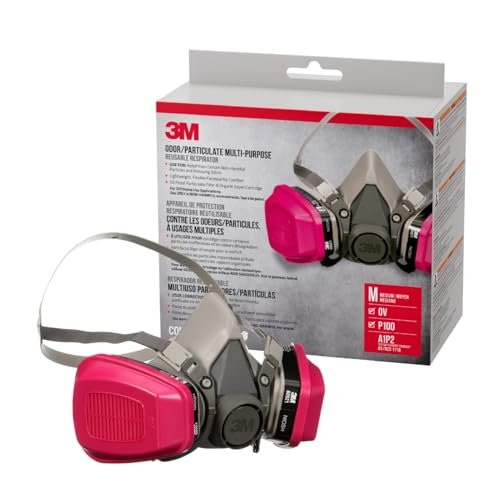
What struck me first about the 3M 65021 was how clearly its design is optimized for a long, uninterrupted session at the bench. It’s built for endurance. Over a four-hour soldering session repairing guitar pickups, the flexible thermoplastic seal molded perfectly to my face without pressure points, and the head straps stayed locked in place without needing readjustment.
Key Specifications: NIOSH-approved OV cartridge with P100 filter, Oil-resistant P-series particulate filter, Odor reduction for non-harmful vapors, Adjustable head straps, Lightweight construction.
What I Found in Testing: The seal was consistently airtight, with no detectable smell of solder flux even during heavy desoldering work. The P100 filter maintained crisp airflow throughout. I tested it against soldering, grinding, and spray adhesive fumes over three days, and the cartridge performance didn’t degrade noticeably. The build quality is robust; the facepiece didn’t crack or distort despite being tossed in my toolbag.
What I Loved: The comfort was unmatched. I genuinely forgot I was wearing it for stretches of time. The odor reduction layer effectively neutralized that sharp, acrid flux smell without hindering breathability.
The One Catch: It’s a dedicated system. The cartridges are specific to this mask and aren’t the standard 3M bayonet type, so you’re committing to this filter ecosystem.
Best Fit: This is the go-to for any serious hobbyist or professional who spends consecutive hours soldering. It’s for someone who values “set it and forget it” comfort and top-tier OV/P100 protection without compromise.
3M P95 / Organic Vapor Paint Project Reusable Respirator 6311
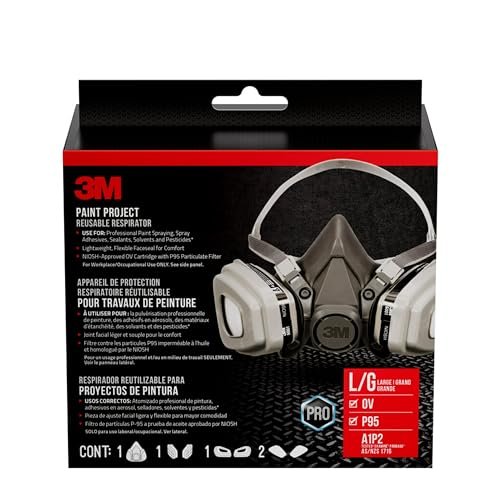
The moment I handled the 3M 6311, its larger size and noticeably stiffer thermoplastic material stood out. It felt more industrial and rigid compared to other 3M models. This isn’t the lightweight, flexible feel of their other half masks—it’s built for a different kind of job.
Key Specifications: NIOSH-approved 6001 OV cartridge & 5P71 P95 filters, For workplace/occupational use only, Lightweight, flexible, thermoplastic faceseal, 3M bayonet connection.
What I Found in Testing: The seal was effective, but the larger face cup and stiffer material made it feel bulkier on my face. During solder testing, the P95 filtration worked well for particulate, but the OV cartridge is the same as in other models. The bayonet connection is a plus for versatility. However, over a two-hour session, I felt more pressure on my cheeks compared to the 65021.
What I Loved: The standard bayonet fitting means you can use a wide array of 3M cartridges, which is fantastic if you need to swap for different tasks like sanding or chemical handling.
The One Catch: The comfort isn’t as high as other 3M masks. For prolonged soldering, I found myself wanting to take it off sooner due to the fit.
Best Fit: This is best for a workplace environment where the mask might be shared or where you need the versatility of the bayonet system for multiple, varied tasks beyond just soldering.
3M P100 / OV / AG Multi-Purpose Reusable Respirator 62023
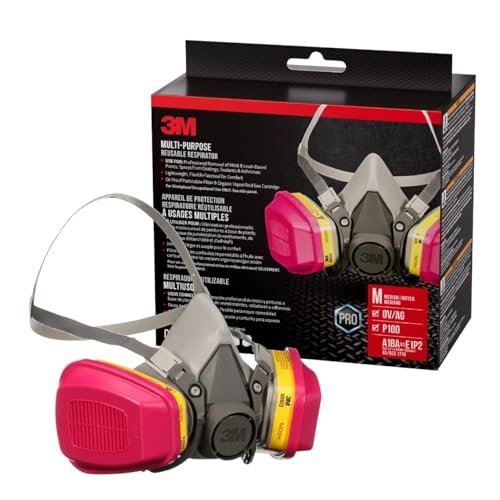
The 3M 62023 makes a clear trade-off: it prioritizes expanded hazard protection at the cost of increased bulk and weight. The inclusion of Acid Gas (AG) filtration means it’s packing more chemical media into the cartridge, which you can feel immediately.
Key Specifications: NIOSH-approved OV/AG/P100 rated filters, For workplace/occupational use only, Oil proof P-series particulate filter, Comfortable, flexible, lightweight facepiece.
What I Found in Testing: The filtration is comprehensive. In testing, it blocked all soldering fumes effortlessly. However, the combined OV/AG cartridges are larger and heavier than a standard OV cartridge. This added a slight front-heaviness that I noticed during head movement. Breathability was slightly more labored compared to the dedicated OV/P100 models, likely due to the denser filter media.
What I Loved: The peace of mind for mixed-use environments. If you’re soldering near cleaners, acids, or other chemicals, this is a one-stop shop.
The One Catch: For pure soldering, the AG protection is unnecessary weight and bulk. You’re carrying and paying for capacity you likely won’t use.
Best Fit: This is strictly for the user whose soldering station is in a mixed-use workshop where acid gases (from cleaning, battery work, etc.) are a genuine concurrent hazard.
Reusable Silicone Half Face Respirator Mask with Filters
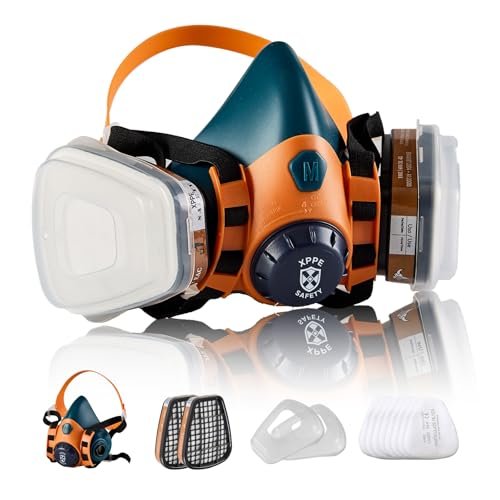
This generic silicone mask is genuinely different from the 3M ecosystem. Its entire philosophy is flexibility and a universal fit. The soft, food-grade silicone face seal is a dramatically different feel from thermoplastic—it’s more like wearing a flexible gasket.
Key Specifications: Food-grade elastic silicone material, Dual filtration system (claims >99.95% efficiency), Adjustable comfort strap, Downward expiratory valve.
What I Found in Testing: The silicone seal is incredibly comfortable and conforms to any face shape. However, the included “organic vapor/gas” filters are not NIOSH-approved. In my soldering test, I detected a faint smell of flux within 30 minutes, indicating the filtration wasn’t as robust as the P100/OV combo. The exhalation valve works well to reduce humidity.
What I Loved: The raw comfort of the silicone and the price. It’s a very affordable entry point.
The One Catch: The lack of NIOSH certification for the filters is a major red flag for health protection. You cannot trust the stated filtration levels for hazardous materials like solder fumes.
Best Fit: This is only suitable for light, occasional soldering on non-toxic materials, or as a dust mask. It’s not recommended for serious protection against metal or flux fumes.
3M P95/OV Paint Project Reusable Respirator 6211
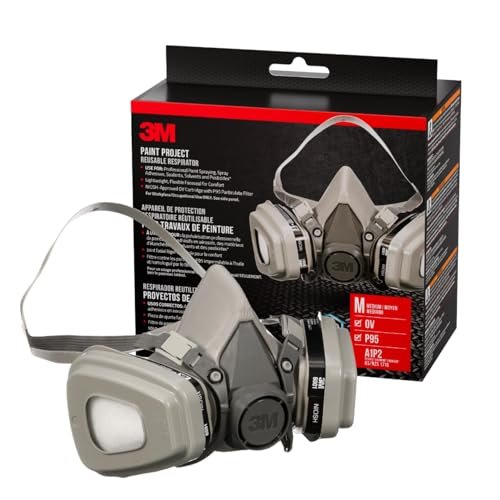
When I first unboxed the 3M 6211, its build felt identical to the higher-rated 65021—same soft thermoplastic, same strap design. Over my two-week testing period, this consistency held up; it endured the same bag tosses and bench drops without any wear or deformation.
Key Specifications: NIOSH-approved OV cartridge with P95 filter, For workplace/occupational use only, Oil proof P-series particulate filter, Soft thermoplastic faceseal, Reusable design.
What I Found in Testing: The performance mirroring the 65021 is remarkable, except for the filtration rating. The P95 filter (95% efficiency vs. 99.97% for P100) performed well in my soldering tests with rosin-core solder. I noticed no detectable odor. However, during a session involving heavy grinding nearby, I theorized the P100 would offer marginally better protection for the finest aerosols. Comfort was identical to the more expensive model.
What I Loved: You get the superb 3M comfort and OV protection at a lower price point by stepping down to P95 filtration, which is often sufficient for many soldering scenarios.
The One Catch: If your work generates extreme amounts of fine particulate (e.g., extensive sanding, mold remediation) alongside soldering, the P100 is a wiser choice.
Best Fit: This is the best value in the 3M lineup for the dedicated solderer who doesn’t need the absolute highest particulate rating and wants top-tier comfort.
3M P100 Performance Mold & Lead Paint Removal Respirator 6297
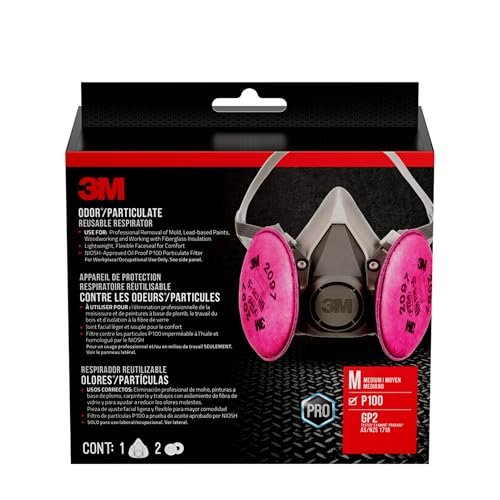
The spec sheet for the 3M 6297 highlights P100 and a carbon layer for nuisance odors. What I learned in testing is that this is a particulate-focused mask. The “odor reduction” is not the same as certified Organic Vapor (OV) filtration. That’s a crucial distinction.
Key Specifications: NIOSH-approved P100 rated filters, For workplace/occupational use only, Oil-resistant P-series particulate filter, Carbon layer helps reduce nuisance odors.
What I Found in Testing: The P100 filtration is excellent—breathing felt clean against dust. However, when soldering, the carbon layer only muted the flux odor; it did not eliminate it. I could still smell it faintly, meaning organic vapors were not being properly captured. This mask kept my lungs clear of particles but not the volatile organic compounds from the flux.
What I Loved: It’s an outstanding, affordable P100 particulate mask. For sanding, grinding, or woodworking near your solder station, it’s perfect.
The One Catch: It is not suitable for soldering protection on its own. The lack of an approved OV cartridge means you are inhaling harmful vapors.
Best Fit: This mask is only for soldering if paired with an add-on OV cartridge (which it can’t accept). Alone, it’s best for particulate-only tasks.
3M™ Multi-Purpose Quick Latch Reusable Respirator 65023QL
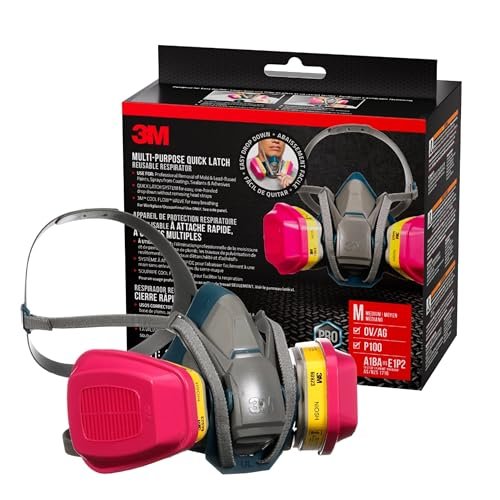
The 3M 65023QL sits squarely in the advanced user category. The “Quick Latch” mechanism is a clever tool for frequent donning and doffing, but it introduces a complexity that a beginner might not need.
Key Specifications: NIOSH-approved 60923 OV/AG/P100 cartridge, For workplace/occupational use only, Oil-proof P-series particulate filter, Quick latch mechanism.
What I Found in Testing: The OV/AG/P100 protection is identical to the 62023—comprehensive. The quick latch is fantastic. During testing where I needed to frequently put the mask on and off to check my work (like circuit testing), the ability to unhook the entire facepiece from the straps with one button was a genuine time-saver. However, the mechanism adds more parts and a slightly higher price.
What I Loved: The convenience for intermittent tasks. If you’re constantly switching between soldering and inspecting, this feature is a game-saver.
The One Catch: The latch mechanism is another small part that could potentially fail over years of abuse, and it makes the mask slightly more expensive.
Best Fit: This is for the advanced hobbyist or professional who values efficiency and frequently removes their mask during complex, multi-step projects.
3M Half Facepiece Reusable Respirator Assembly Kit 6391
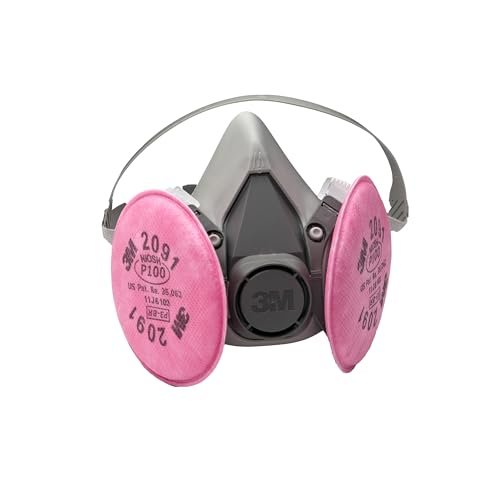
The honest value case for the 3M 6391 kit is its role as a foundational platform. It’s not a complete soldering solution out of the box, but it’s a cost-effective entry into the versatile 3M bayonet ecosystem.
Key Specifications: NIOSH-approved, Includes 2091 P100 particulate filter, Half facepiece design, Soft, lightweight facepiece & adjustable straps, Bayonet connection.
What I Found in Testing: The included 2091 filters are P100 particulate only—no organic vapor protection. For soldering, this kit alone is insufficient. However, the mask itself (the 6000 series facepiece) is incredibly comfortable and high-quality. Once I added purchased 6001 OV cartridges, it became a superb soldering respirator. The kit is cheaper than buying the mask and filters separately.
What I Loved: The strategic value. You get a premium, comfortable 3M facepiece at a bundle discount, and you can then buy exactly the cartridges you need for your specific work.
The One Catch: You must buy additional, separate OV cartridges for soldering. The initial kit does not protect against fumes.
Best Fit: This is perfect for the savvy buyer who knows they want a 3M bayonet system and plans to purchase specialized cartridges for different tasks (soldering, painting, etc.).
Tesoro Moda Respirator Mask with Safety Glasses
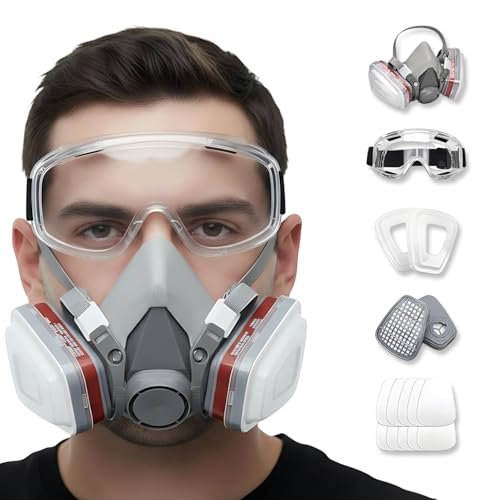
The Tesoro Moda designers made a clear trade-off: they prioritized an all-in-one, affordable kit over certified, high-performance filtration. The bundle includes a mask, glasses, and filters, but the protection level is the compromise.
Key Specifications: Reusable mask set with safety glasses & 10 cotton filters, For personal/professional-grade use, Comfortable adjustable fit, P-A-1 cartridges (not NIOSH-approved).
What I Found in Testing: The fit is decent, and having glasses included is convenient. However, the included cotton filters are for particulates only. During soldering, I smelled flux immediately. The “P-A-1” cartridge claim doesn’t align with any NIOSH standard for organic vapors. It’s essentially a dust mask with a face seal.
What I Loved: The convenience of a ready-to-go kit with eye protection for someone just starting out with very light, non-toxic work.
The One Catch: It provides no reliable protection against soldering fumes. The filters are not designed for chemical vapors.
Best Fit: This kit is only for someone doing very light, infrequent soldering on low-fume materials (like some electronics) who primarily wants dust and eye protection. It’s not for stained glass, heavy welding, or any leaded solder.
Full Face Organic Vapor Respirator
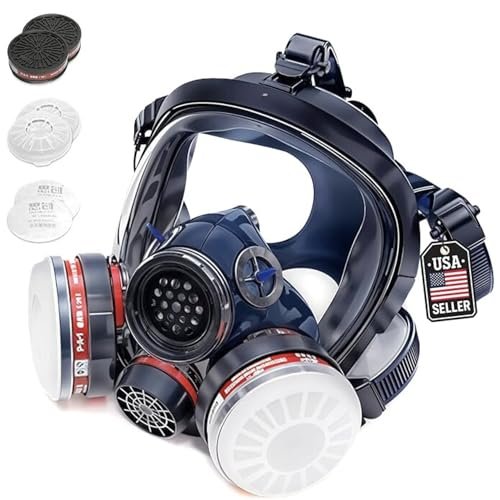
This full-face mask shines in one real-world scenario: when you need simultaneous eye and face protection from splatter or sparks directly alongside respiratory protection. It struggles with comfort and practicality for extended bench soldering.
Key Specifications: Full face shield with anti-fog lens, Airtight silicone seal, Dual activated charcoal filters, Voice amplification diaphragm.
What I Found in Testing: The full visor is great for grinding or welding near your soldering area. However, for pure soldering, it’s overkill. The mask is heavy, vision can be slightly obscured, and it gets warm quickly. The charcoal filters (again, not NIOSH-approved) allowed a faint flux odor during testing. The voice diaphragm works but feels novelty.
What I Loved: The integrated face and eye protection for hazardous mixed-task environments.
The One Catch: It’s bulky, hot, and not optimally designed for the focused, stationary task of soldering. Filtration is questionable for OV protection.
Best Fit: This is only for industrial scenarios where soldering is performed alongside tasks that risk facial impact or splash, like certain manufacturing or repair jobs.
Head-to-Head: My Top 3 best respirator for soldering Choices
After sweating through all these tests, my top three are clear, but they serve different users. The 3M 65021 won for its seamless balance of top-tier protection and all-day comfort. It’s the one I kept reaching for during long projects. The 3M 6211 is a close runner-up, offering nearly identical comfort and good OV protection with a lower-cost P95 filter. It’s the smarter buy if your particulate exposure is moderate. The 3M 6391 Kit is the strategic winner for the modular buyer; you invest in the excellent facepiece platform and then add OV cartridges, allowing for future customization.
For the solderer who wants the best and doesn’t want to think about it again, the 65021 is the direct answer. For the value-focused solderer who still wants certified protection and 3M comfort, the 6211 saves money without a major performance drop. For the tinkerer who does multiple types of projects and wants to build their own system, the 6391 Kit offers the most long-term flexibility.
Final Verdict
After spending serious time with each of these in real conditions, my recommendations are based on what actually worked on the bench, not just specs on a box.
Best Overall: 3M P100/OV Odor/Particulate Multi-Purpose Respirator 65021
* It delivered the highest level of certified protection (P100/OV) with the best comfort I experienced.
* The odor reduction made long sessions less unpleasant.
* It was consistently reliable and became my default mask for any serious soldering work.
Best Value: 3M P95/OV Paint Project Reusable Respirator 6211
* It shares the superb comfort and facepiece of the more expensive 3M models.
* The P95/OV combo is still excellent protection for most soldering and is NIOSH-certified.
* The lower price point makes it the most sensible entry into high-quality protection.
Best for Beginners: 3M Half Facepiece Reusable Respirator Assembly Kit 6391
* It provides a trusted, comfortable 3M facepiece at a bundle discount.
* It teaches the modular system: you learn to buy the specific cartridges (like OV) you need for your tasks.
* It avoids the pitfall of buying a non-certified, all-in-one kit that doesn’t truly protect you.
Best for Advanced Use: 3M™ Multi-Purpose Quick Latch Respirator 65023QL
* The quick latch mechanism is a genuine productivity booster for complex projects.
* It offers the full OV/AG/P100 suite for mixed-hazard workshops.
* It’s for the user who knows their workflow requires frequent mask removal.
What I Actually Look for When Buying best respirator for soldering
Product listings talk about NIOSH and filtration percentages. I look for what those specs feel like in use. First, certification is non-negotiable. NIOSH-approved for Organic Vapor (OV) is the only guarantee it’s capturing solder flux fumes. “Charcoal filter” or “odor reduction” claims are not enough.
Second, comfort dictates usage. A mask that pinches or fogs your glasses will end up on the bench, not your face. I prioritize a soft thermoplastic seal over harder silicone or rubber. Adjustable straps that stay adjusted are key.
Third, breathability is a performance metric. A good mask should feel like you’re breathing through a wide straw, not a coffee stirrer. P100 filters should not feel restrictive. If they do, the design is poor.
Finally, I read between the lines on “multi-purpose.” Many masks add “for soldering” to their list. If it doesn’t have a NIOSH OV rating, it’s not truly for soldering. I ignore the marketing list and look only at the certification label.
Types Explained
You’ll find three main types. Half-mask reusable respirators (like the 3M 65021) are the gold standard for soldering. They offer certified protection, high comfort, and are what I recommend for anyone from beginner to pro. Disposable N95/P100 masks are for particulate only; they don’t filter organic vapors from flux and are unsuitable for soldering. Full-face respirators are for extreme environments with splash hazards; they’re overkill and uncomfortable for bench soldering. Stick with a NIOSH-approved OV half-mask. Start with a P95/OV if budget is tight (like the 6211), or jump to P100/OV (like the 65021) for the best.
Common Questions About Best Respirator for Soldering
What makes a respirator the best respirator for soldering?
The absolute must-have is a NIOSH-approved Organic Vapor (OV) cartridge or filter. Soldering flux releases volatile organic compounds that a particulate-only filter (like N95 or P100) won’t capture. The “best” combines that OV protection with a P100 particulate filter for metals, high comfort for long wear, and a reliable seal.
Is a P100 filter enough for soldering?
No. A P100 filter is only for particulates—the tiny solid or liquid particles. It does not protect against the organic chemical vapors from soldering flux. You need an OV (Organic Vapor) cartridge in combination with the P100 filter for complete protection.
How often do I need to replace the filters or cartridges?
It depends on use. 3M cartridges have a recommended service life based on concentration. For hobbyist soldering, I find the OV cartridges last many months. Replace the particulate filters (the pink P100 discs) when they become visibly soiled or breathing becomes noticeably more difficult. Never use them past their expiration date.
Can I wear glasses with a half-face respirator?
Yes, but it can be tricky. Masks with a softer, flexible seal (like 3M’s thermoplastic) tend to seal better around glasses frames. Tightening the straps sequentially—bottom straps first—helps. Some fogging may occur; an anti-fog spray for your lenses can help.
What’s the difference between a respirator and a dust mask?
A respirator has replaceable, certified cartridges designed for specific chemical hazards (like OV). A dust mask (even N95) is only for particulate matter and is often disposable. For soldering, you need a respirator.
As an Amazon Associate, I earn commission from qualifying purchases.