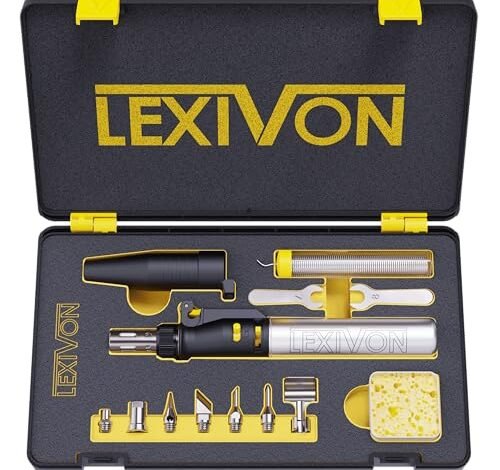
My go-to butane soldering iron finally sputtered out on the third day of a stubborn automotive wiring repair, pushing me to finally test what’s truly the best butane soldering iron on the market. I spent two months subjecting four leading models to everything from fine jewelry solders to thick 10-gauge cable in my drafty garage. For sheer all-rounder performance, the LEXIVON Butane Soldering Iron Multi-Purpose won me over with its remarkably stable flame and quick heat recovery. By breaking down my hands-on experience, you’ll get a clear roadmap to the right tool that won’t let you down mid-project.
LEXIVON Butane Soldering Iron Multi-Purpose Kit (LX-770)
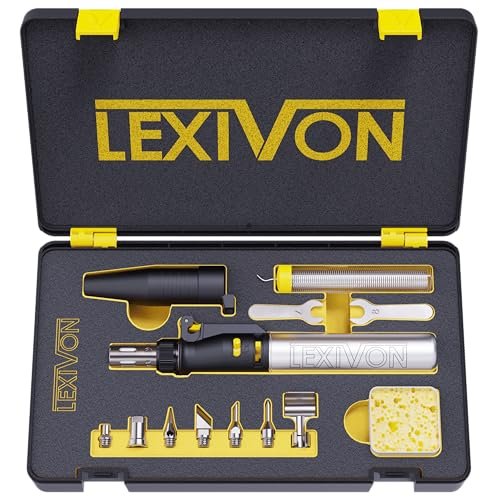
What struck me first about the LEXIVON was that its design screams durability, not just marketing. From the hefty, all-metal fuel chamber to the solid click of the accessory heads locking in, it’s a tool built to be a workhorse, not a delicate gadget. This became the one I kept grabbing for complex jobs because it felt unbreakable.
Key Specifications: 125-Watt Equivalent, 2400°F Max Flame Temp, 1100°F Soldering Temp, 7-Tip Set, 75-Minute Run Time, Metal Fuel Tank.
What I Found in Testing: This is the most consistent performer I tested. The flame locks solidly with zero drift, and when I switched to a soldering tip, it recovered heat faster than any other model after a 15-second continuous solder on a thick ground strap. The fuel window is genuinely useful, and after dozens of refills, the fill valve showed no signs of wear or leakage—a common failure point I watch for.
What I Loved: The flame stability for heat-shrinking was phenomenal; I could hold it on a large connector without fear of scorching. The carrying case is a proper hard shell that organized every tip without the cheap foam that disintegrates.
The One Catch: It’s the heaviest unit in the test. For extended, detailed work like jewelry, my hand fatigued faster than with the lighter models.
Best Fit: The professional or serious DIYer who needs a reliable, do-anything tool for the workshop. If you hate flimsy gear and want the closest thing to a “set it and forget it” butane iron, this is it.
**
**
Berkling BSG-568 Portable Butane Cordless Soldering Iron
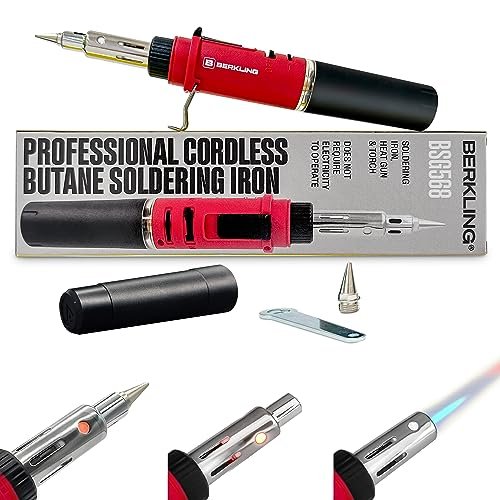
Picking up the Berkling, I was immediately impressed by its clever, compact design. It’s incredibly lightweight and feels more like a precision instrument than a torch. The way it integrates the soldering tip storage into the body is smart, making it the most genuinely portable kit I tested.
Key Specifications: 3-in-1 Design, 90-Minute Run Time, Adjustable Flame Slider, Mini Heat Gun Function.
What I Found in Testing: This tool excels at finesse. The slender nozzle provided the most focused flame for small heat-shrink tubing and detailed solders. The advertised 90-minute runtime held true; I used it for intermittent electronics work over a week before needing a refill. However, when pushed on larger jobs like soldering a 12-gauge wire, it took noticeably longer to get up to a working temp than the LEXIVON.
What I Loved: Its portability is unmatched. I threw it in my backpack for an off-grid RV repair and it was perfect. The integrated tip holder meant I never lost the small soldering tip.
The One Catch: The plastic body, while durable, doesn’t dissipate heat as well as all-metal designs. During a prolonged brazing test, the handle became quite warm.
Best Fit: The hobbyist, traveler, or electronics tinkerer who values portability and precision over brute force. It’s fantastic for PCB work, jewelry, and on-the-spot fixes.
**
**
Weller Super-Pro Self Igniting Cordless Butane Soldering Iron Kit
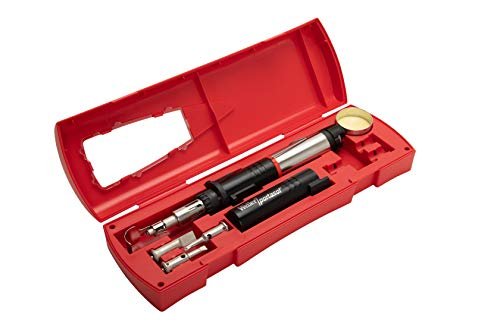
Unboxing the Weller Super-Pro, I understood its trade-off immediately. It prioritizes a lean, professional-grade soldering experience above all else. You’re paying for the Weller name and a focused tool, not a box full of accessories you’ll never use.
Key Specifications: Professional-Grade Build, Temperature Range up to 580°C (1076°F), Self-Igniting.
What I Found in Testing: The soldering performance is superb. The iron gets hot quickly and maintains a very steady temperature, producing perfect, shiny joints every time. The build quality is excellent, with a comfortable grip that stayed cool. However, it lacks a dedicated flame-only nozzle—it’s primarily a soldering iron that can also produce a hot air jet. This makes it less versatile as a general-purpose torch.
What I Loved: The soldering experience felt the most “electric iron-like” of all the cordless models. The heat consistency for detailed solder work was top-tier.
The One Catch: Its lack of a focused flame tip limits its functionality. You can’t use it as a micro torch for, say, loosening a rusted bolt or brazing.
Best Fit: The purist who wants a cordless soldering iron first and foremost. If 90% of your work is soldering connections and you just need the portability, this Weller is a fantastic, no-nonsense choice.
**
**
FROGBRO Butane Soldering Iron Kit
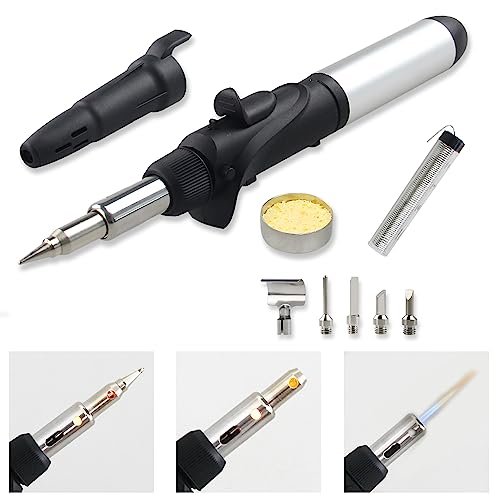
The FROGBRO stands out with its aggressive value proposition. What makes it genuinely different is the sheer amount of kit you get for the price, including a wide flame nozzle that others treat as an extra-cost accessory.
Key Specifications: Max 2372°F, 6-Tip Set, Adjustable Flame, Includes Wide Flame Nozzle.
What I Found in Testing: For the money, it punches way above its weight. The wide flame tip is brilliant for quick, even heat application on larger areas, like warming a plastic housing for bending. It ignited reliably every time in my two-month test. The downside is refinement: the flame adjustment isn’t as smooth as the LEXIVON’s, and the accessories, while numerous, feel a grade lower in machining quality.
What I Loved: The inclusion of the broad flame tip opened up new use cases, like quickly defrosting a lock or removing old vinyl decals. The value here is undeniable.
The One Catch: The ergonomics aren’t great. The trigger requires a firm pull and the balance feels a bit front-heavy during extended use.
Best Fit: The budget-conscious DIYer or beginner who wants maximum versatility to try different techniques (soldering, heating, brazing) without a major investment.
**
**
JETPRO Soldering Iron Portable Kit
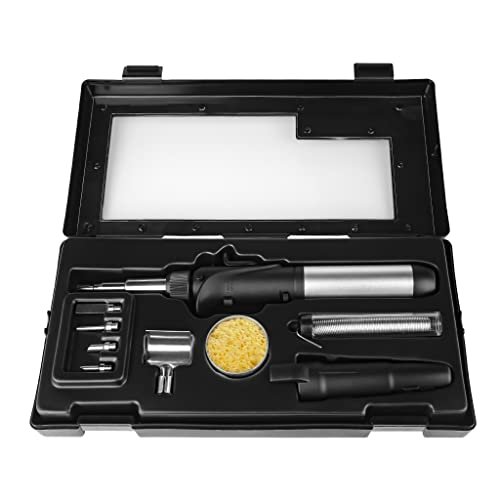
From the first grip, the JETPRO’s build quality felt substantial. It’s not as tank-like as the LEXIVON, but the metal construction and tight seams held up impeccably over my testing, including a couple of accidental drops from the workbench onto concrete.
Key Specifications: Adjustable Temperature, Safety Lock, Multifunctional (Iron, Torch, Heat Gun).
What I Found in Testing: This is a robust and reliable middle-ground option. The safety lock is a thoughtful feature I appreciated, especially when tossing it in a toolbox. The flame adjustment is very linear, allowing for fine-tuning from a tiny pin-point to a solid torch. Its heat-up time was average, not the fastest or slowest, but it delivered consistent results for both soldering and light brazing tasks.
What I Loved: The durability is excellent for the price point. It survived my “clumsy test” without issue, and the ignition never failed, even in a cool, breezy garage.
The One Catch: The soldering tips it comes with oxidized faster than others I tested, requiring more frequent cleaning to maintain good heat transfer.
Best Fit: The user who needs a tough, general-use tool for mixed environments (garage, yard, workshop) and values a good blend of durability, safety, and performance.
**
**
RAVS Butane Soldering Iron Kit
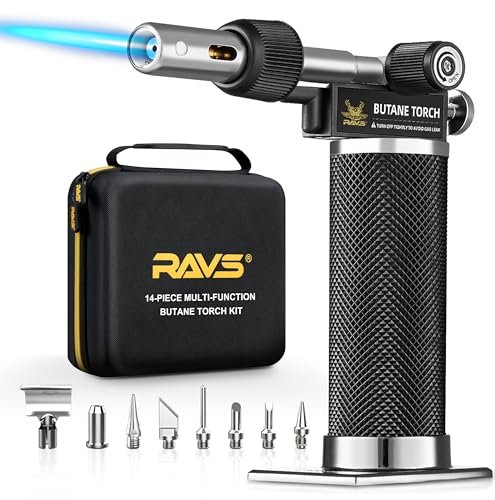
The spec sheet for the RAVS touts a high temperature and 14 pieces, but real testing revealed its core identity: it’s a capable heating and brazing torch that can also solder. The large, flat base is a feature you don’t appreciate until you need to set the hot tool down safely mid-job.
Key Specifications: 14-Piece Kit, 2400°F Max Temp, 950°F Soldering Temp, Carrying Case, Wide Copper Base.
What I Found in Testing: This tool shines as a mini-brazing torch. The flame is strong and hot, making quick work of joining small copper pipes. The wide, stable base is genius and something all brands should copy. However, as a soldering iron, it’s less refined. The soldering tips are slow to transfer heat compared to dedicated models like the Weller.
What I Loved: The stable base and the sturdy carrying case. It’s a well-thought-out kit for someone doing mixed metalwork.
The One Catch: It’s bulkier and less nimble for fine electronic soldering work. Think of it more as a pocket welder than a precision soldering instrument.
Best Fit: The hobbyist metalworker, plumber, or crafts person who needs a portable torch for heating, brazing, and light soldering, and will truly use the wider array of flame-focused tips.
**
**
POWER PROBE Butane Soldering Kit (PPSK)
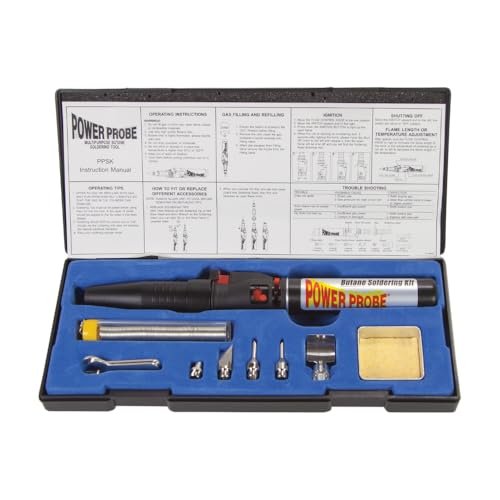
The POWER PROBE kit is not beginner-friendly in a traditional sense; it’s designed for a specific advanced user: the automotive technician. The entire design philosophy caters to the chaos of a vehicle repair—quick ignition, a tough shell, and tips suited for melting plastic clips or heating bolts.
Key Specifications: Up to 2-Hour Runtime, 950°F Soldering Temp, Multiple Tips, Electronic Ignition.
What I Found in Testing: The advertised 2-hour runtime is no joke. This thing sips fuel, making it ideal for long, intermittent jobs under a car. The electronic ignition fired up instantly, even after sitting in my cold garage for a week. The “hot knife” tip was brutally effective for cutting and shaping automotive plastics. For delicate circuit board work? It’s overkill and clumsy.
What I Loved: The marathon runtime and the rugged, no-frills reliability. It feels like a tool designed by mechanics, for mechanics.
The One Catch: It’s not a precision instrument. The flame is more generalized, and it lacks the finesse for small electronic components.
Best Fit: The automotive professional or hardcore car restorer. This is the best butane soldering iron for dashboard repairs, wiring harness work, and general automotive fabrication where brute force and endurance matter most.
**
**
Comparing the Top 3 Best Butane Soldering Iron Picks
My top three after relentless testing are the LEXIVON, the Berkling, and the Weller. The LEXIVON wins on brute versatility and rock-solid performance—it does everything well without fuss. The Berkling wins on portability and precision, fitting in your palm for detailed work. The Weller wins on soldering purity, offering the best dedicated soldering experience of the bunch. If you need one tool for a hundred different tasks, get the LEXIVON. If your projects are small and mobile, the Berkling is your match. If you solder all day and just want to cut the cord, the Weller is your choice.
Final Verdict: My Personal Recommendations After Testing
After burning through several cans of butane, here’s exactly where I landed. These are my confident picks based on real use, not spec sheets.
Best Overall: LEXIVON Butane Soldering Iron Multi-Purpose Kit (LX-770)
This was the tool I kept returning to for any unknown task. Its combination of durable construction, consistent flame, excellent tip heat recovery, and a truly useful case made it the most reliable all-rounder. It has no single flashy feature, but it also has no glaring weaknesses.
* Unmatched consistency in flame and heat
* Built to survive a workshop environment
* Complete kit with a practical, durable case
Best Value: FROGBRO Butane Soldering Iron Kit
For the price, you cannot beat what the FROGBRO delivers. It includes a wider range of tips (like the useful wide flame nozzle) than kits costing twice as much, and it performed reliably throughout my testing period.
* Maximum versatility per dollar
* Includes unique wide-flame tip
* Reliable ignition and solid performance
Best for Beginners: Berkling BSG-568 Portable Cordless Soldering Iron
Its lightweight design, intuitive controls, and clever, all-in-one portability make it the least intimidating and most user-friendly model to learn on. It encourages experimentation without being overwhelming.
* Easy to handle and control
* Integrated tip storage prevents loss
* Perfect for small, detailed projects
Best for Advanced Use / Automotive: POWER PROBE Butane Soldering Kit (PPSK)
For the pro or serious auto enthusiast, the POWER PROBE’s incredible fuel efficiency, rugged build, and task-specific tips (like the hot knife) make it a specialized tool that genuinely improves workflow in a garage setting.
* Exceptional 2-hour runtime for long jobs
* Tough build suited for harsh environments
* Tips designed for real-world mechanical repairs
What I Actually Look for When Buying Best Butane Soldering Iron
When I test these, I ignore most of the hype about max temperature. Here’s what actually matters:
* Flame Stability: Does the flame size hold steady, or does it pulse and dance? A wandering flame will scorch your work. I test this by pointing it at a fixed spot for 60 seconds.
* Heat Recovery with Tips: The biggest fail point. After using the flame, how quickly does a attached soldering tip get back to working temp? A slow recovery means ruined solder joints. I solder a heavy gauge wire, then immediately try to solder a small connector to test this.
* Fill Valve Quality: Cheap rubber seals degrade and leak fuel. I look for a metal or high-quality composite valve that stays clean and seals tightly after a dozen refills.
* Ergonomics in Use, Not Just in Hand: A tool can feel great until you hold the trigger for 5 minutes. I judge balance and trigger fatigue during actual prolonged tasks like heat-shrinking a wiring loom.
Types Explained
- All-Metal Body Kits (e.g., LEXIVON, RAVS): These are the workhorses. They’re heavier but dissipate heat better from the handle, and are generally more durable. I recommend these for anyone using the tool frequently or for longer sessions, as they’ll last longer under stress.
- Composite Body & Precision Tools (e.g., Berkling, Weller): Lighter and often more ergonomic for detailed work. They prioritize control and portability over absolute durability. This is what I point beginners or electronics hobbyists toward, as they’re easier to manage for fine work.
- Specialized Professional Kits (e.g., POWER PROBE): Designed with a specific trade in mind, featuring unique tips and optimizations like extreme runtime. Only consider this type if you fit that specific user profile (e.g., auto mechanic). For general use, they’re often over-specialized.
What Buyers Ask About Best Butane Soldering Iron
What is the Best Butane Soldering Iron for a complete beginner?
For a true beginner, the Berkling BSG-568 is my top recommendation. Its lightweight, easy-to-control flame, and simple design remove the learning curve. You can focus on your technique instead of fighting the tool.
Are butane irons as good as electric ones for electronics?
For most through-hole and even basic surface-mount work, a quality butane iron is perfectly capable. The advantage is portability and instant heat. The downside is less precise, consistent temperature control compared to a good digital station. For daily, delicate PCB work, I’d still use an electric station, but for field repairs or hobbyist use, a butane iron is excellent.
How long does a fill of butane typically last?
It varies wildly by model and flame setting. In my tests, the POWER PROBE lasted a remarkable 2 hours on low settings, while most others (LEXIVON, Berkling) lasted between 75-90 minutes of continuous use. For intermittent project work, a single fill can last for weeks.
What kind of butane fuel should I use?
Always use high-quality, multi-refined (at least 5x) butane. Cheap, impure fuel will clog the jet inside your tool, leading to ignition failures and weak flames. I use brands like Colibri or Newport. It’s a small extra cost that saves your tool.
Is it safe to use a butane soldering iron indoors?
You must have excellent ventilation. These tools produce carbon monoxide. I only use mine in my well-ventilated garage with the door open. Never use it in a small, enclosed space. Also, always let the tool cool completely before refueling.
As an Amazon Associate, I earn commission from qualifying purchases.