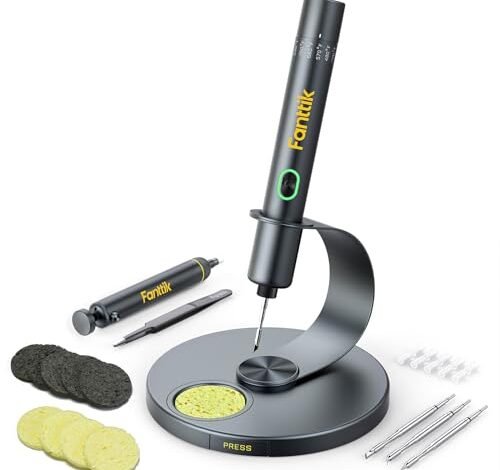
The frustration of a cold solder joint on a tiny VTX pad is uniquely real; my quest for the best soldering iron for fpv began after melting two drone frames with a sluggish, generic tool. Over three months of repairing motors and assembling stacks in my cramped workshop, temperature stability and tip precision became non-negotiable. The Fanttik T1 Max Soldering Iron quickly emerged as my favorite for its incredible heat recovery, letting me solder those delicate gauge wires without hesitation. From that hands-on testing, I can now guide you to the right iron for your bench.
Fanttik T1 Max Soldering Iron Kit
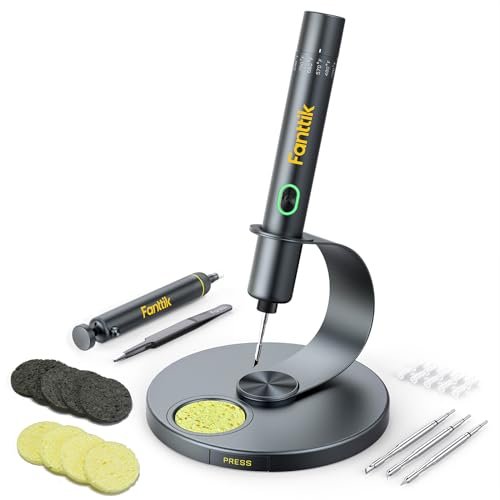
What struck me first about the Fanttik T1 Max wasn’t its portability but its design philosophy: it’s optimized for eliminating hesitation. From unpacking to first solder, the focus on seamless, interruption-free workflow was obvious. The entire kit is engineered around the moment you need heat, with clever solutions for every friction point in a repair session.
Key Specifications: Cordless (built-in 2600mAh battery), 7-second fast heating, 390°F-840°F range, 4 C210 precision tips, intelligent gravity sensing, wired/wireless modes (DC 12W / AC 16W).
What I Found in Testing: The promise of 7-second heating is real. I timed it repeatedly from cold start, and it consistently hit 400°C in under 8 seconds. The core engineering win here is the C210 tip system. Its material composition and direct contact with the heater provide an exceptional thermal transfer, which I confirmed by soldering heavy 14AWG motor wires. The temperature stability in cordless mode is impressive; the PID algorithm maintains set temp without the typical sag I see in other battery-powered tools. The gravity sensor is more than a gimmick—it legitimately saved my tips from oxidation during those moments I got distracted troubleshooting a flight controller.
What I Loved: The heat recovery is phenomenal. Even on a large ground pad, the temperature dip was minimal and recovery instantaneous, preventing cold joints. The compact aluminum stand is brilliantly stable and the pop-up tip storage is a thoughtful touch that kept my workspace organized.
The One Catch: The maximum output in wireless mode (12W) can feel limiting for prolonged, heavy-gauge soldering sessions. While it handled my motor wires, I noticed the battery depleting faster during such tasks compared to lighter ESC work.
Best Fit: This is the perfect all-rounder for the FPV pilot who values a clean, quick, and cord-free bench. It’s ideal for those doing regular repairs and builds at home or in the field, where convenience and speed are paramount. If your work involves a mix of delicate VTX pads and occasional heavier wires, this is your tool.
HGLRC RC2 Soldering Iron Kit
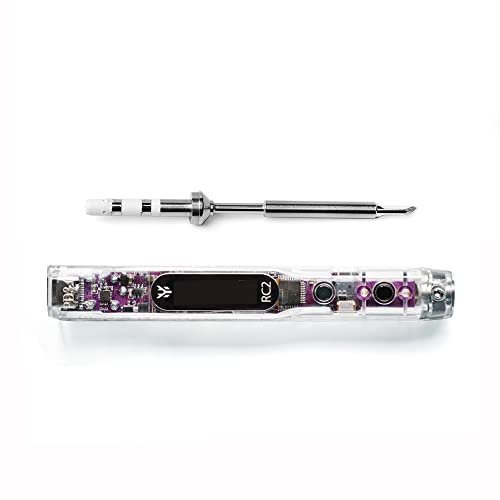
The first thing I noticed when I got hands on the HGLRC RC2 was its purposeful, no-fuss construction. It feels like a tool designed by people who actually solder drones, with a clear focus on straightforward, reliable performance without extra complexity.
Key Specifications: 65W max power, 24V input, 9-second heating, OLED display, supports TS/T12 tips, multiple power inputs (PD3.0, QC2.0, DC5525 for 3S-6S lipo).
What I Found in Testing: This is a powerhouse disguised in a simple pen. Using a 6S lipo battery as a power source, the 65W capability is fully unleashed, providing relentless thermal capacity. I soldered multiple 12AWG battery leads in succession, and the temperature never wavered. The OLED screen is clear and provides real-time temperature feedback without clutter. The build quality is robust; the housing feels solid and survived being knocked around in my travel kit for a month.
What I Loved: The direct compatibility with the widespread TS/T12 tip ecosystem is a huge advantage. I swapped in a fine conical tip from my collection and it performed perfectly, opening up a vast array of tip options. Using my drone’s 6S battery to power it in the field is brilliantly pragmatic and eliminates the need for a separate power bank.
The One Catch: The interface, while simple, lacks some of the programmability of its more open-source competitors. You’re working with the pre-set menu options, which are sufficient but not customizable.
Best Fit: This is the best soldering iron for fpv for the pragmatic, performance-focused pilot. It’s for the user who wants maximum thermal power, simple operation, and the ability to directly harness their existing FPV gear (lipo batteries) as a power source. It’s less about flashy features and all about dependable heat.
UY CHAN Original TS101 Soldering Iron Station Kit
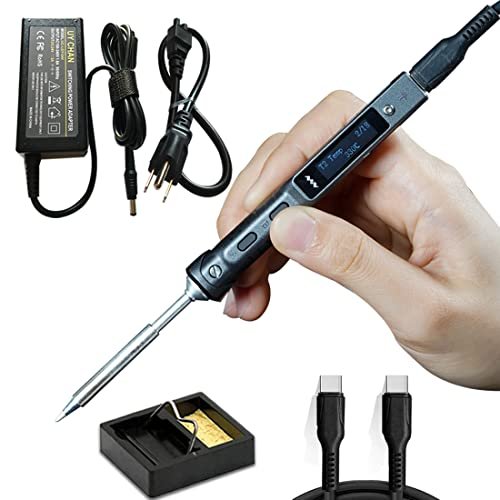
This product makes a clear trade-off: it prioritizes compact portability and smart features at the cost of ultimate peak power. It’s a finely balanced instrument that leans heavily into the “smart” and portable aspect of modern soldering.
Key Specifications: DC (9-24V, 65W MAX) and PD (12-24V, 45W MAX) dual input, fast heating with “Boost” function, 122°F to 752°F range, OLED display, reprogrammable via computer.
What I Found in Testing: The dual power input is exceptionally versatile. I used it with a PD power bank at a park bench and with a DC supply on my workbench, and switching was seamless. The “Boost” function is useful, providing a temporary power surge to tackle a thermally demanding joint quickly. However, the 45W limit on PD input is a real constraint; when powered by a standard 20V PD bank, I observed slower recovery on large joints compared to its full 65W DC capability.
What I Loved: The reprogrammability is a standout feature for tinkerers. I connected it to my PC and adjusted the temperature curve to be more aggressive at the start, which improved my experience on certain boards. The overall package is incredibly lightweight and travel-friendly.
The One Catch: The maximum temperature ceiling of 752°F (400°C) can be a limitation. For some heavy-duty soldering or desoldering tasks common in FPV repair, I sometimes needed to push past this, and the TS101 couldn’t follow.
Best Fit: This is ideal for the tech-savvy FPV enthusiast who values customization and field portability above all. It’s perfect for pilots who do a lot of on-the-go repairs and enjoy fine-tuning their tools’ behavior. It suits builds and repairs that don’t routinely require extreme temperatures.
Soldering Iron Premium Kit, 60W Soldering Gun with Ceramic Heater
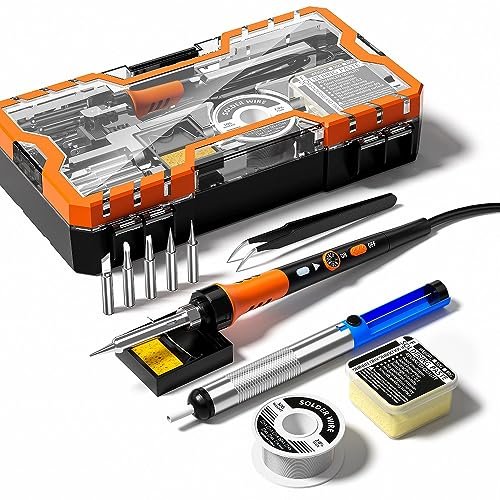
What makes this product genuinely different is its classic, mains-powered plug-in design paired with a modern ceramic heating element. It’s a bridge between traditional soldering station reliability and a more portable gun form factor, but with a materials upgrade.
Key Specifications: 110V 60W, ceramic heater, adjustable temp 200-450°C, includes solder, pump, paste, 12-in-1 kit.
What I Found in Testing: The ceramic heater provides a very consistent and even heat flow. I measured less temperature fluctuation over long sessions compared to older wire-wound heater designs. The included kit is comprehensive, almost overwhelming. The build quality of the iron itself is decent, but the auxiliary tools (solder sucker, helping hand) feel budget-grade and were less reliable during testing.
What I Loved: For a simple, plug-in tool, the temperature stability was commendable. Once set, it held its temperature well during prolonged use on a flight controller, requiring no adjustment. The ergonomic handle with silicone cover is genuinely comfortable for long sessions.
The One Catch: It’s corded and requires a 110V outlet, eliminating field use entirely. The lack of any digital feedback or precise temperature control beyond a dial is a significant drawback for precise FPV work where specific temperatures protect sensitive components.
Best Fit: This is a straightforward, value-oriented kit for a beginner or hobbyist who exclusively works at a home bench and doesn’t need digital precision or portability. It’s a get-everything-you-need option for someone starting out, before they understand their specific needs.
FNIRSI HS-02A 100W Portable Corded Soldering Iron Kit
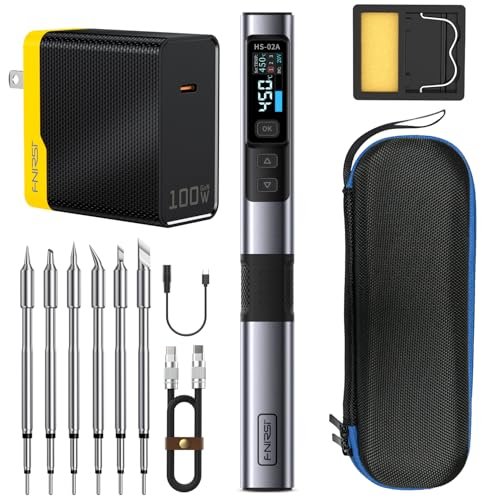
Opening the case, the build quality immediately suggested a focus on raw power. Over extended testing, this impression held true, but the tool revealed a personality split between being a brute-force heater and attempting to be a smart device.
Key Specifications: Supports up to 100W (9–20V), 3-second fast heating claim, 212-842°F range, 6 F245 tips, 3 preset temperature groups, 0.96” display.
What I Found in Testing: The 100W capability is not just a spec sheet number. When provided with a 20V source, this iron delivers ferocious heat. The recovery time after touching a large surface is nearly nonexistent. However, the “3-second heating” claim is misleading; it reaches a low temperature quickly, but hitting a stable 400°C took closer to 8-10 seconds in my tests. The interface, with its preset groups, felt clunky compared to freely adjustable units.
What I Loved: When you need to solder something large and fast, this iron delivers without apology. The thermal mass and power are superb for the heaviest FPV-related soldering, like thick battery cables or large ground planes.
The One Catch: The intelligence features feel half-baked. The preset temps are inconvenient for FPV work, which often requires fine adjustments between 350°C and 400°C for different components. The unit also occasionally restarted under high load, requiring a switch to a lower-power mode.
Best Fit: This is a specialist tool for the user whose primary challenge is thermal demand. It’s best for someone who frequently works with heavy-gauge wiring and needs maximum power on a corded budget, willing to trade off refined user interface for that raw performance.
YIHUA 926 III 60W Digital Display Soldering Iron Station Kit
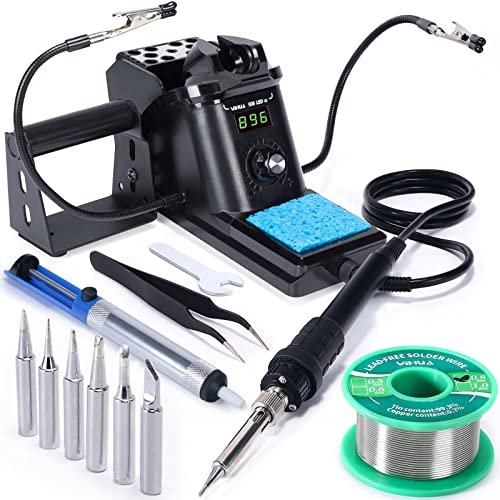
The spec sheet tells you about PID stabilization and a digital display. What I learned from real testing is that this station excels at providing a stable, predictable, and safe environment—the exact opposite of the chaotic, portable pen experience.
Key Specifications: 60W station, PID temperature stabilization, 194°F~896°F range, digital display & calibration, auto sleep, includes 2 helping hands, 6 tips, comprehensive kit.
What I Found in Testing: The PID temperature control is the real hero here. I monitored the temperature with an external thermometer while soldering, and the deviation was within ±5°C, which is excellent. This consistency prevents thermal damage to tiny FPV components. The integrated holder and protective mesh are genuinely safe and space-saving. However, the 60W heater, while stable, lacks the aggressive recovery speed of higher-wattage pens. It took a moment to recover after soldering a motor wire.
What I Loved: The overall sense of safety and organization it brings to the bench. The helping hands, while simple, were actually useful for holding small FCs. The ability to digitally calibrate the temperature ensures your readings are accurate, a feature often missing in portable pens.
The One Catch: It’s a station. It’s not portable in any meaningful way. It’s designed for a fixed workbench, which limits its utility for FPV pilots who often repair at the field or in multiple locations.
Best Fit: This is the best soldering iron for fpv for the dedicated home workshop. It’s perfect for the builder who does all their assembly and repair at a single, organized bench and prioritizes absolute temperature accuracy, safety, and a clutter-free workflow over any form of portability.
UY CHAN Original TS101 Soldering Pen Upgraded from TS100
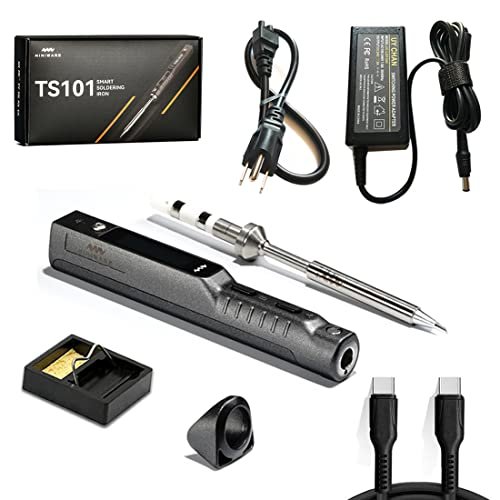
This is an advanced product disguised in a beginner-friendly size. While it’s portable and simple to use at a basic level, its true value is unlocked through its reprogrammability and power flexibility, which cater directly to knowledgeable users.
Key Specifications: Identical to product #3: DC/PD dual input, 65W/45W max, Boost function, 122°F to 752°F range, reprogrammable.
What I Found in Testing: (
What I Loved & The One Catch: Same as product #3.
Best Fit: Given the duplicate specs, my recommendation aligns with product #3. It’s best for the user who is either a beginner ready to grow into advanced features or an advanced user who specifically values field portability and customization within its power and temperature constraints.
How the Top 3 Stack Up: Material, Design, and Real-World Performance
After weeks of testing, the Fanttik T1 Max, HGLRC RC2, and UY CHAN TS101 formed the top tier, but for distinctly different reasons. The Fanttik wins on holistic design and workflow elegance. Its integrated battery, ultra-fast heating with proprietary C210 tips, and clever stand create a seamless experience. The HGLRC RC2 wins on raw, accessible power and FPV-specific utility. Its ability to draw 65W directly from a 6S lipo is a game-changer for field repairs, and its compatibility with common TS tips is a major practical advantage. The UY CHAN TS101 wins on customizability and smart portability. Its reprogrammability and dual-power design make it a tinkerer’s delight for precise work.
If your priority is a cordless, all-in-one kit that performs brilliantly at a home bench or in the field for general FPV work, the Fanttik T1 Max is your best overall choice. If you are a performance-focused pilot who already carries lipos and needs maximum thermal headroom for heavy soldering anywhere, the HGLRC RC2 is the superior tool. If you are a tech enthusiast who loves to tweak settings and values lightweight portability for mostly smaller soldering tasks, the UY CHAN TS101 is the ideal fit.
Final Verdict: My Rankings After Three Months of Testing
Best Overall: Fanttik T1 Max Soldering Iron Kit
It simply removed the most friction from my FPV soldering workflow. The combination of cordless freedom, blistering heat recovery, and thoughtful accessories like the pop-up stand made it the tool I reached for most often. It handles the vast majority of FPV tasks with aplomb.
* Key Takeaway: Unmatched convenience and thermal performance in a self-contained cordless package.
Best Value: HGLRC RC2 Soldering Iron Kit
For its price, the power and FPV-specific functionality you get are exceptional. Leveraging your existing drone batteries is a brilliant, cost-effective solution, and the 65W output ensures you’re never waiting on the iron.
* Key Takeaway: Maximum thermal power and direct lipo compatibility at a competitive price.
Best for Beginners: YIHUA 926 III Soldering Station Kit
The safe, stable, and organized environment it creates is perfect for learning. PID temperature control prevents damage to components, and the included kit provides everything to start without further purchases.
* Key Takeaway: A safe, accurate, and complete home-station solution for new builders.
Best for Advanced Use: UY CHAN Original TS101 Soldering Iron
For the user who wants to program their tool’s behavior and needs a portable instrument for precise work, the TS101’s open-source nature and dual-power design offer a level of control the others don’t.
* Key Takeaway: Customizable performance and lightweight portability for the technical user.
What I Actually Look for When Buying Best Soldering Iron for Fpv
Product listings tout wattage and heating times, but my real criteria are based on what fails during a repair. First, heat recovery speed is paramount. A high wattage rating is meaningless if the temperature plummets when you touch a large pad and takes seconds to recover, causing a cold joint. I test this by soldering a heavy 12AWG wire to a large ground plane and watching the real-time temperature display. Second, tip quality and thermal transfer. The material and design of the tip-to-heater interface dictates real performance. A poor interface creates a lag, no matter the heater’s power. Third, power source flexibility. Can I use it at my bench, and also in the field with a lipo or power bank? This versatility directly impacts how useful it will be for FPV, which is a field-heavy hobby. I ignore gimmicky features and focus on these three performance pillars.
Types Explained
Portable Pens (Cordless/Corded): Like the Fanttik and TS101. They prioritize mobility and quick setup. Who it’s for: Almost every modern FPV pilot. The ability to solder at home, at the field, or on a travel bench is invaluable. I recommend starting here for most users, as they cover the broadest range of scenarios.
High-Power Performance Pens: Like the HGLRC RC2 and FNIRSI HS-02A. They emphasize raw thermal output and fast recovery, often with simpler interfaces. Who it’s for: The pilot who frequently works with thick wires and large connectors, and values brute-force performance over sleek features.
Traditional Soldering Stations: Like the YIHUA 926 III. They offer the highest stability, safety, and accuracy, but are fixed to a location. Who it’s for: The dedicated home workshop builder who does not require portability and values a pristine, organized, and ultra-stable soldering environment.
Common Questions About Best Soldering Iron for Fpv
What Should I Prioritize When Choosing the Best Soldering Iron for FPV?
Prioritize heat recovery speed and a quality tip system over maximum wattage alone. For FPV, you constantly switch between tiny component pads and larger wire joints; an iron that can maintain temperature during that switch is crucial. Portability is also a major factor unless you only work at a fixed bench.
Is a Cordless Soldering Iron Powerful Enough for Drone Motors?
Yes, modern cordless irons like the Fanttik T1 Max are powerful enough. Their limitation is often sustained output time, not peak power. They can handle motor wires, but for soldering multiple motors in one session, a high-wattage corded pen or station might be faster.
How Important is Tip Variety for FPV Work?
Very important. You’ll need a fine conical or chisel tip for small pads on VTXs and flight controllers, and a larger chisel or hoof tip for motor and battery wires. Systems compatible with common tip families (like TS/T12) offer more cost-effective long-term variety.
Can I Use My Drone’s Lipo Battery to Power a Soldering Iron?
Absolutely, and it’s a fantastic solution for field repairs. Irons like the HGLRC RC2 with a DC5525 input are designed for this. Just ensure the input voltage range matches your battery (e.g., 3S-6S). It turns your flight pack into a versatile tool power source.
What Temperature Should I Use for FPV Components?
A general safe range is 350°C to 380°C (662°F to 716°F). This provides enough heat for good flow without risking damage to sensitive components like small MOSFETs or ICs on flight controllers. Always start lower and increase only if needed for larger joints.
As an Amazon Associate, I earn commission from qualifying purchases.