Peering through my magnifying lamp over the last three months, I’ve learned that finding the best soldering iron for micro soldering isn’t about raw heat, but about control. My bench, littered with old phone boards and SMD practice kits, became a proving ground where tiny tips and temperature stability mattered most. Ultimately, the precision of the WEP 982-V Micro Soldering kit consistently rescued my most delicate work with its exceptional thermal recovery. You’re about to see which tools earned a permanent spot on my bench and exactly why they succeeded where others faltered.
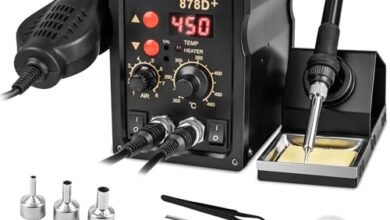
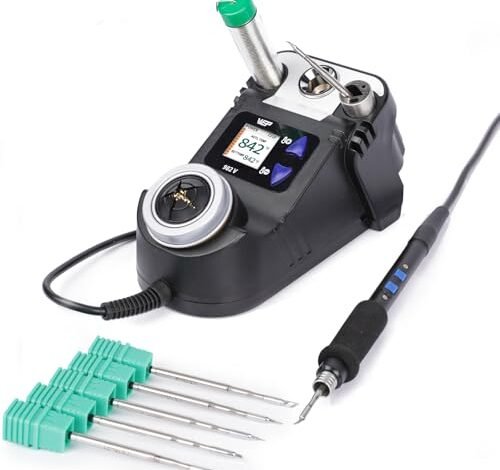
WEP 982-V Micro Soldering kit with 5 C210 Soldering Iron Tips
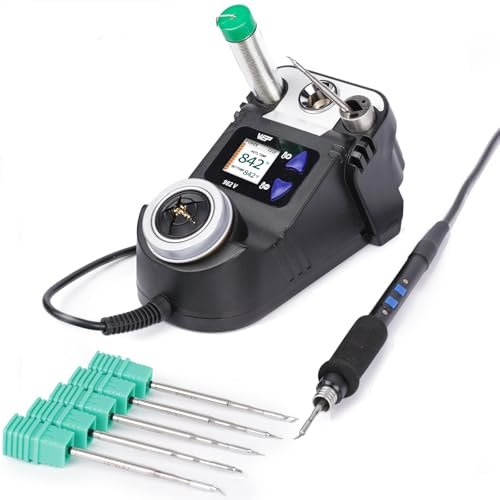
What struck me first about the WEP 982-V wasn’t its look, but its quiet confidence in its own design. From the first time I placed the iron back in its holder and saw the sleep mode engage, I understood this product is optimized for one thing: preserving the tool for precise, repeatable work. It’s a station built by people who understand you might leave it on for hours while you inspect components under a microscope.
Key Specifications: Adjustable temperature from 194°F to 842°F, integrated station with tip cleaner and storage, includes 5 C210 tips (2x I, 1x K, 2x SI), PID temperature control, sleep mode, and auto-shutdown.
What I Found in Testing: Over weeks of repairing tiny USB-C ports and replacing 0402 capacitors, this station proved its worth. The advertised “rapid heating” and PID control aren’t marketing fluff. I observed the temperature dip and recover in real-time on the LCD when soldering a ground plane on an old tablet board; the recovery was nearly instant. The cartridge-style C210 tips are the star—they transfer heat directly to the tip’s business end, which is crucial when you need to get in and out quickly without cooking the component. The all-in-one base kept my workspace organized, a small but significant benefit during long sessions.
What I Loved: The thermal recovery is superb for this price point. The slim profile of the iron and tips gave me a clear view under my magnifier, eliminating the “fat tip” blind spots I experienced with others. The sleep mode genuinely reduced tip oxidation over dozens of power cycles.
The One Catch: The station is compact, which is great for portability, but the soldering iron holder felt a bit light. A heavier, more weighted base would provide even more stability during ultra-fine maneuvers.
Best Fit: This is the ideal tool for the hobbyist moving into serious micro work or the technician who needs reliable, precise performance without a four-figure budget. If you’re regularly working on small-pitch ICs or port repairs, this is your workhorse.
Soldering Iron Kit, 80W 110V LCD Digital Solder Iron Pen with Ceramic Heater
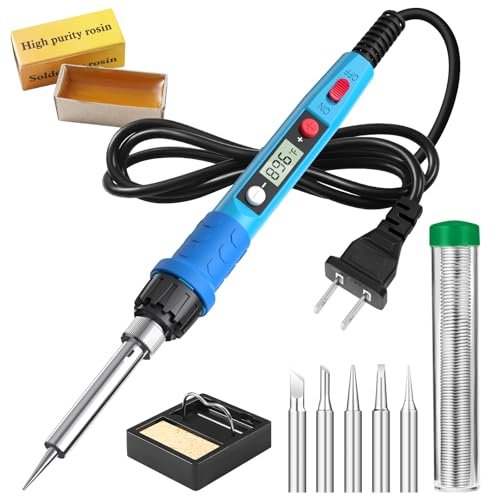
The first thing I noticed when I unboxed this kit was its attempt to be a complete, no-fuss starter bundle. Everything is included, laid out simply. It feels like a product designed to lower the intimidation factor for someone opening their first soldering kit.
Key Specifications: 80W power, temperature range 356°F-896°F, ceramic heater, includes stand, sponge, solder, paste, and 5 tips.
What I Found in Testing: This is a capable general-purpose iron. For basic through-hole soldering on an Arduino or repairing a loose wire, it heats fast and gets the job done. However, when I pushed it into micro territory—trying to reflow a small QFN chip—the limitations showed. The tips included are standard conical types, not the fine, precision-ground tips needed for micro work. The temperature control felt less refined; I noticed more noticeable dips when applying solder, requiring me to pause and wait for recovery.
What I Loved: It’s an incredible value for general soldering tasks. The kit has absolutely everything to start, and the handle stayed cool during extended use, which is a genuine comfort feature.
The One Catch: It lacks the finesse for true micro soldering. The tip selection and thermal mass are wrong for tiny components. You’ll struggle with anything smaller than an 0805 resistor.
Best Fit: The absolute beginner or DIY enthusiast who needs a reliable tool for occasional, non-precision repairs. If your needs are “around the house” and not “under the microscope,” this kit saves you money.
Soldering Iron Kit, 60W Soldering Iron with 5pc Interchangeable Tips
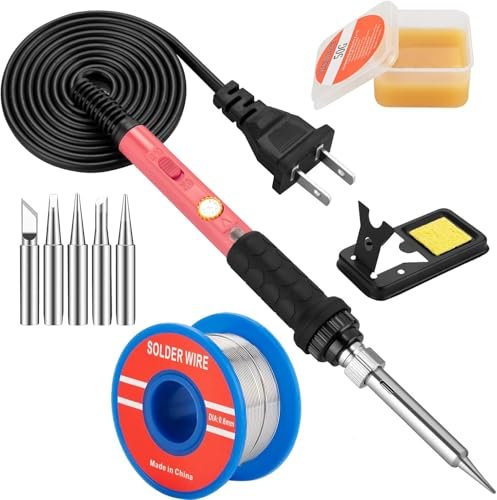
This product makes a clear trade-off: it prioritizes extreme simplicity and portability at the cost of precise temperature control and stability. It’s the “plug-and-play” option in its purest form.
Key Specifications: 60W power, temperature range 392°F-842°F, ceramic heater, includes basic stand and sponge.
What I Found in Testing: The lack of a digital display is the defining characteristic. You turn a dial based on feel. For quick fixes, this can be fine, but for micro soldering, it’s a deal-breaker. I had no reliable way to know if I was at 650°F or 750°F, and that variance can easily lift a pad or destroy a sensitive component. The heating was fast, but the tip struggled to maintain temperature on anything more than a single joint.
What I Loved: Its sheer simplicity. No menus, no buttons—just a dial. It’s lightweight and truly portable if you need to solder something in a hard-to-reach place (away from delicate electronics).
The One Catch: The analog control is too imprecise for micro soldering. You are essentially guessing the temperature, which is a recipe for damaged boards.
Best Fit: Someone who needs a secondary, ultra-portable iron for very basic, non-critical tasks. It is not a primary tool for anyone planning to do component-level repair.
Fanttik T1 Max Soldering Iron Kit, Cordless Soldering Iron
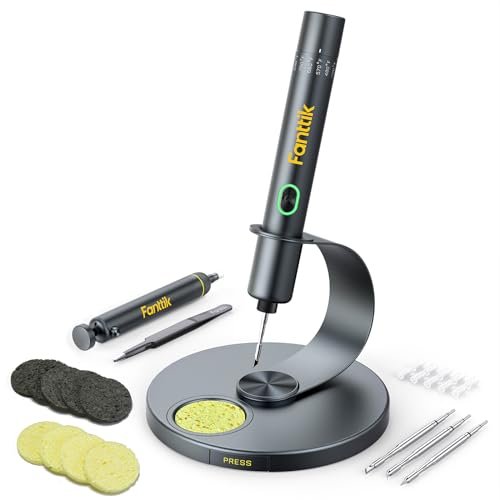
What makes the Fanttik T1 Max genuinely different is its core proposition: complete freedom from a wall outlet. This cordless design changes where and how you can work, but as my testing revealed, it comes with significant performance compromises for precision work.
Key Specifications: Cordless (2600mAh battery) & corded (USB-C) modes, heats in ~7 seconds, 4 C210 tips, temperature range 390°F-840°F, gravity-sensing sleep mode, swivel stand.
What I Found in Testing: The freedom is exhilarating. I could quickly reflow a header pin on a drone board in the field without an extension cord. However, when I sat down for focused micro soldering sessions, the limitations surfaced. In wireless mode, the power output maxes at 12W, which is insufficient for consistent thermal recovery on small ground planes—the temperature would sag and not recover until I lifted the iron. The corded 16W mode was better but still behind dedicated 40W+ stations. The gravity sensing was clever but sometimes slow to react.
What I Loved: The portability and innovative, compact stand are fantastic. It’s brilliantly engineered for quick, on-the-go fixes where outlet access is a problem.
The One Catch: Limited power, especially in wireless mode, makes it unsuitable for sustained, demanding micro soldering work. It’s a specialty tool, not a bench powerhouse.
Best Fit: The field technician or hobbyist who frequently needs to make minor solder repairs away from their main workbench. It’s a brilliant companion tool, but I wouldn’t rely on it as my only iron for detailed bench work.
Soldering Iron Kit, 100W LED Digital Solder Gun kits with Ceramic Heater
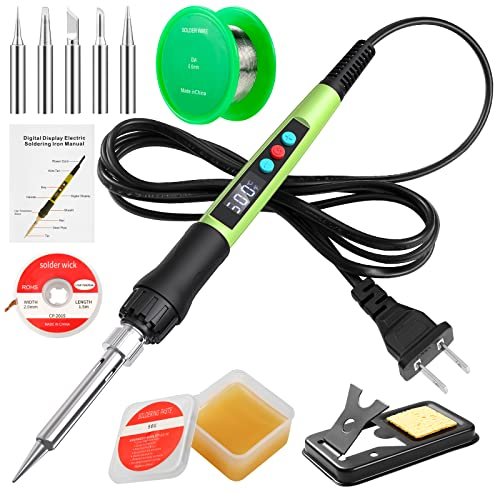
When I first lifted this 100W iron, the build quality felt robust, almost overbuilt. Over weeks of testing, that initial impression of durability held true—the handle and sheath showed no wear. However, high wattage in a micro context isn’t always the advantage it seems.
Key Specifications: 100W power, temperature range 356°F-932℉, LED display, ceramic heater, includes wick, stand, and various tips.
What I Found in Testing: This iron has immense power on tap. It blasted through soldering thick gauge wires with ease. But for micro soldering, that power is a double-edged sword. Even at lower temperature settings, the thermal mass of the large heating element and standard tips meant it was easy to overheat tiny components before the solder even flowed. The recovery time was good, but it was often recovering from delivering too much heat. The child lock feature was surprisingly thoughtful for a household with curious kids.
What I Loved: The brute-force capability for larger soldering jobs and the solid, durable feel. It’s a tank.
The One Catch: It’s overpowered and imprecise for micro work. The included tips are not suited for fine detail, making it the wrong tool for the job despite its high quality.
Best Fit: The user who needs one iron to handle everything from automotive wiring to occasional basic circuit board work. If 90% of your work is larger scale, this does it well, but keep a separate, finer iron for small components.
Soldering Iron Kit, 80W 110V Fast Heat up in 10s LCD Digital Adjustable Temperature
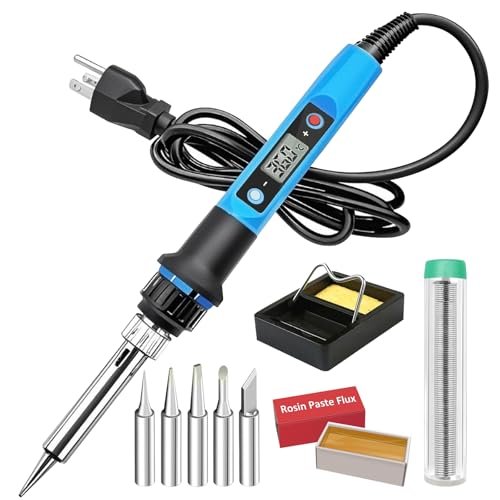
The spec sheet shouts about 10-second heat-up times, but what it doesn’t tell you is how the product behaves over a 30-minute soldering session. My testing revealed a tool with smart features that sometimes work against the need for consistency.
Key Specifications: 80W power, heats in ~10 seconds, temperature range 356°F-896°F, auto sleep, temperature memory, LCD display.
What I Found in Testing: The heating is indeed very fast. The automatic sleep mode is aggressive—placing the iron down for five minutes drops the temperature significantly (display shows “OFF”). While this protects the tip, I found it frustrating during micro work, where I frequently look away to inspect, adjust my posture, or change tips under magnification. Having to pick it up and wait for it to re-heat broke my concentration. The temperature memory function worked reliably.
What I Loved: The speed and the inclusion of thoughtful power-saving features. For disciplined, start-stop work, it promotes good habits.
The One Catch: The overzealous sleep mode can be disruptive to workflow during delicate, stop-and-go micro soldering tasks. It feels like it’s designed more for safety than for an immersive repair session.
Best Fit: A careful beginner or intermediate user who values safety features and might otherwise forget to turn their iron off. It’s good for learning good habits, but the sleep function may annoy experienced users in a flow state.
Soldering Iron Kit 80W LCD Adjustable Temperature 180-520℃ Solder Kit Electronics 13 in 1
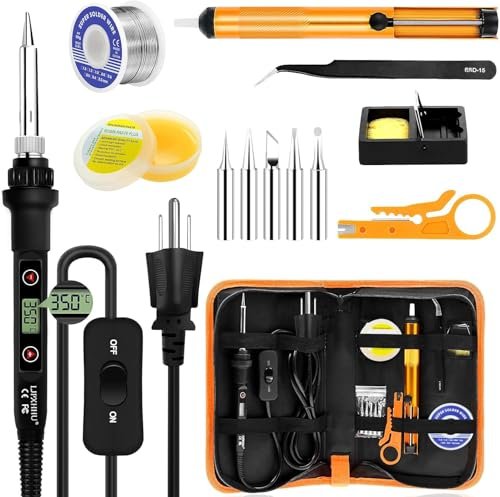
This kit sits squarely in the beginner-to-intermediate zone, and it shows. It bundles in a desoldering pump and tweezers, shouting “I’m your first big kit!” It tries to be a one-stop shop, which is both its greatest strength and its core limitation for advanced work.
Key Specifications: 80W power, temperature range 356°F-968℉, LCD control, includes 13 accessories (pump, tweezers, case), ON/OFF switch.
What I Found in Testing: The bundled case and array of tools are fantastic for someone building their first electronics toolkit. For general soldering and desoldering, it’s capable. However, for micro soldering, the same core issue persists: the tips are standard, not precision micro tips. The iron has reasonable control, but the tip geometry holds it back. The build quality is good for the price, and the 2-year guarantee is a confident touch.
What I Loved: The comprehensive nature of the kit. Having a pump and tweezers in the same organized case is incredibly convenient for a newcomer. The temperature range is wider than most.
The One Catch: Like other general-purpose kits, it lacks the specialized tip selection necessary for true micro soldering. You’re buying a good generalist, not a specialist.
Best Fit: The enthusiastic beginner who is diving into electronics projects and wants a complete kit that can handle a broad range of introductory tasks, from through-hole PCB work to basic repairs.
How the Top Contenders for Best Soldering Iron for Micro Soldering Compared
After living with these tools, three separated themselves in the context of micro soldering, but for distinctly different reasons. The WEP 982-V won on pure technical performance—its dedicated C210 tip system and excellent thermal recovery are in a different league. The Fanttik T1 Max won on innovative utility—its cordless capability is a unique advantage for specific use cases, though it trades off sustained power. The 13-in-1 Kit won on beginner-friendly value—it provides the most complete starting package for someone learning.
If you need bench-top precision and consistency for delicate work, the WEP 982-V is the clear choice. If you need maximum portability and convenience for light field repairs, the Fanttik T1 Max is your tool. If you are starting from zero and need a full toolkit for general learning, the 13-in-1 Kit offers the best foundation.
My Final Verdict on the Best Soldering Iron for Micro Soldering
Weeks of testing, from reflowing BGA chips (with varying success) to replacing minuscule SMD resistors, led me to one clear conclusion: the right tool transforms the work from frustrating to fluid. My recommendations are based on which iron created more “aha” moments than “oh no” moments on my bench.
-
Best Overall: WEP 982-V Micro Soldering Kit. This station delivered the fewest compromises. It provided the control, the right tips, and the stability I needed when the margin for error was zero. It’s the product that most consistently performed like a tool designed specifically for the task on the label.
- Key Takeaway: Unbeatable combination of precision tips, fast thermal recovery, and thoughtful station features for the price.
-
Best Value: Soldering Iron Kit 80W LCD 13-in-1. For someone entering the world of soldering, this kit eliminates the need for initial supplementary purchases. The case, pump, and tweezers provide immediate utility, making it the most cost-effective starting point.
- Key Takeaway: The most complete starter bundle that performs well for general electronics work, maximizing your initial investment.
-
Best for Beginners: Soldering Iron Kit 80W 110V LCD Digital (Product #2). Its simplicity, clear display, and all-in-one kit nature make it the least intimidating and most straightforward to learn with. It teaches good habits without overwhelming complexity.
- Key Takeaway: A gentle, fully-featured introduction to soldering that builds confidence for basic tasks.
-
Best for Advanced Use / Specialty: Fanttik T1 Max Cordless Soldering Iron. For the advanced user or technician who already has a main station, the T1 Max offers a unique capability that other irons simply can’t match: true cordless freedom for quick fixes and field work.
- Key Takeaway: A revolutionary cordless design that excels as a secondary tool for specific, on-the-go scenarios where no outlet is available.
What I Actually Look for When Buying a Best Soldering Iron for Micro Soldering
Product listings love to tout wattage and heat-up times, but after this deep dive, my criteria are different. First, I ignore maximum wattage for micro work; I care about thermal recovery speed (how fast the tip returns to set temperature after touching a joint) and tip selection. A station with high wattage but poor regulation is worse than a lower-wattage, well-regulated one. Second, I look for tip geometry. Are fine, conical, or chisel tips (like C210/I or K) available? Standard blunt tips won’t work. Finally, I judge ergonomics and view. Can I see the joint around the iron and my hand? A slim iron shaft is non-negotiable. The product descriptions skip these real-world performance factors, focusing on specs that matter less for precision.
Types Explained
You’ll generally find three types. Integrated Stations (like the WEP 982-V) house the control unit and iron holder together. I recommend these for anyone serious about micro work; they offer the best stability and feature set. Plug-in Digital Pens (like most 80W kits) have the controls in the handle. These are best for beginners and intermediate users on a budget; they’re portable but often lack top-tier thermal performance. Cordless Irons (like the Fanttik) are a niche type. I only recommend them as a secondary tool for advanced users or professionals who need portability, as they sacrifice power for freedom.
Common Questions About Best Soldering Iron for Micro Soldering
What Are the Most Important Features in a Best Soldering Iron for Micro Soldering?
Precise temperature control (digital PID is best), a selection of very fine, quality tips (look for C210 or similarly slim profiles), and fast thermal recovery. A stable stand and a sleep function to prevent tip oxidation are also major benefits for prolonged use.
Is a Higher Wattage Iron Better for Small Components?
Not necessarily. High wattage without precise control can lead to overheating. For micro soldering, a moderate wattage (40W-80W) with excellent feedback regulation is far more important than raw power.
Can I Use a General-Purpose Soldering Iron for Micro Soldering?
You can attempt it, but you will struggle. General-purpose irons typically have tips that are too large and lack the thermal control needed for tiny solder joints. You risk damaging circuit boards and components.
How Do I Choose the Right Tip?
For most micro work, start with a fine conical tip (often labeled “I” tip) for precise solder application. A small chisel tip (“K” tip) is also useful for dragging solder across multiple pins. Avoid broad or blunt tips.
Are Cordless Soldering Irons Good for Precision Work?
Current cordless models are excellent for quick, light repairs but often lack the consistent power delivery needed for sustained, demanding micro soldering sessions. They are fantastic companion tools but I don’t recommend them as a primary bench iron for detailed work.
As an Amazon Associate, I earn commission from qualifying purchases.