My last drone repair, a frayed motor wire in a cramped frame, confirmed what I’d suspected for months: finding the best drone soldering iron is about precision, not power. After three months of weekend bench work on everything from FPV quads to tiny whoop boards, one tool consistently delivered. The TS101 Portable Soldering Iron stood out immediately for its rapid heat-up and fingertip control in tight spaces. Based on my hands-on comparison, you’ll get a clear breakdown of which iron truly belongs on your workbench.
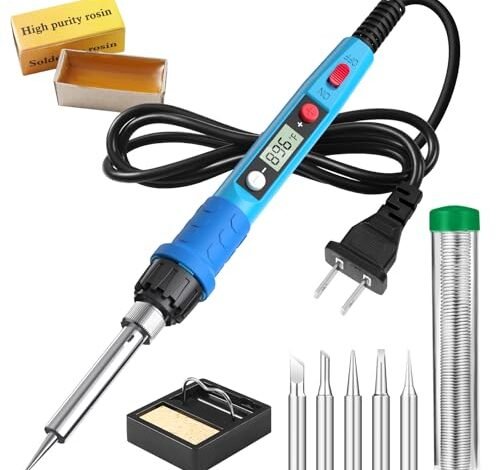
Soldering Iron Kit, 80W 110V LCD Digital Solder Iron Pen with Ceramic Heater
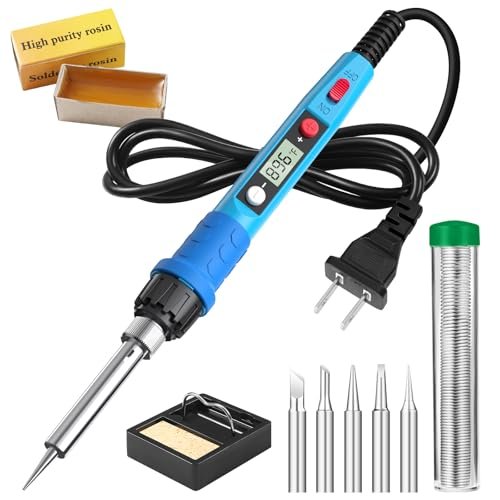
What struck me first about this kit was its “good enough” philosophy. It’s built for the bench user who wants a reliable, no-surprises corded iron that can handle a range of tasks, from big power pads to small signal wires. It doesn’t try to be flashy or ultra-portable; it just aims to be a dependable workhorse, and after weeks of use, that’s exactly what it delivered.
Key Specifications: 80W Power, 110V, Ceramic Heater, 20-sec heat-up, Temp Range: 180°C–480°C (356°F–896°F), LCD Display.
What I Found in Testing: The 80 watts felt like the sweet spot for drone work. It had enough grunt to quickly heat a 12AWG ESC power lead on a 5-inch quad, but the temperature control was stable enough that I didn’t cook a tiny VTX pad on a whoop board when I dialed it down. The ceramic heater recovered temperature decently after a big joint. The included stand is basic but functional, and the handle stayed remarkably cool during long sessions, which I appreciated.
What I Loved: The straightforward simplicity. Turn it on, set the temperature on the clear LCD, and go. It required zero tinkering or special power supplies. For a corded option, it’s surprisingly lightweight in the hand, which reduces fatigue.
The One Catch: The included tips are just okay. They’re fine for general use, but for prolonged, precise drone work, I’d budget for a set of higher-quality, brand-name tips. They oxidize faster than I’d like.
Best Fit: The hobbyist who has a dedicated workbench and does most repairs at home. If you prioritize consistent, plug-in power over portability and want a complete starter kit, this is a solid, value-packed choice.
Fanttik T1 Max Soldering Iron Kit, Cordless Soldering Iron
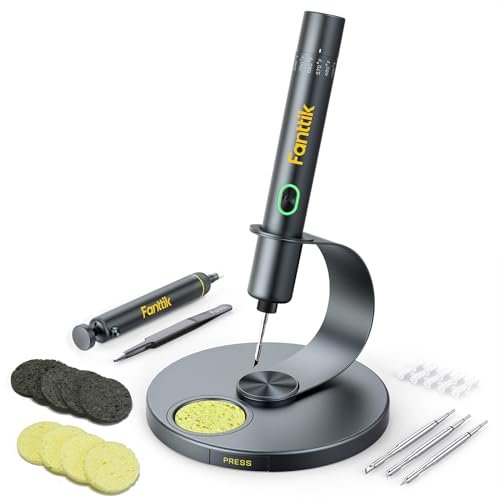
The moment I unboxed the Fanttik T1 Max, its compact, all-in-one design was impossible to ignore. It’s a complete, self-contained workstation that screams portability. The iron docks neatly into its own swiveling aluminum stand, with tip storage built right into the base. For someone who moves from the bench to the flying field, this design is a revelation.
Key Specifications: Cordless (Battery) & Corded (USB-C), 7-sec heat-up, Temp Range: 200°C–450°C (390°F–840°F), 2600mAh Battery, Gravity Sensing Sleep/Wake.
What I Found in Testing: The 7-second heat-up claim is real. I’d pick it up from sleep, and it was ready to solder before I even positioned the wire. The gravity sensor is brilliant for workflow; it sleeps to save the tip when set down and wakes instantly when lifted. In cordless mode, I got about 25-30 minutes of actual soldering time at 380°C before needing a recharge—perfect for a quick field repair or a few joints at a meet.
What I Loved: The incredible convenience. It’s the ultimate grab-and-go iron. I’ve used it on a picnic table at the park to re-solder an antenna and on my kitchen counter for a quick fix. The C210 tips it comes with are excellent, holding up well to repeated use.
The One Catch: In pure cordless mode, it lacks the sustained power for large thermal mass jobs. Soldering a thick XT60 connector directly drained the battery quickly and sometimes struggled to maintain temperature. It’s best used while plugged in for those bigger jobs.
Best Fit: The pilot who needs ultimate portability for field repairs and quick fixes, or the hobbyist with limited bench space who loves a tidy, all-in-one solution. It’s a fantastic secondary iron or a primary for those who mostly do small board work.
Mini Cordless Soldering Iron Kit, USB Rechargeable Portable Cordless Soldering Iron
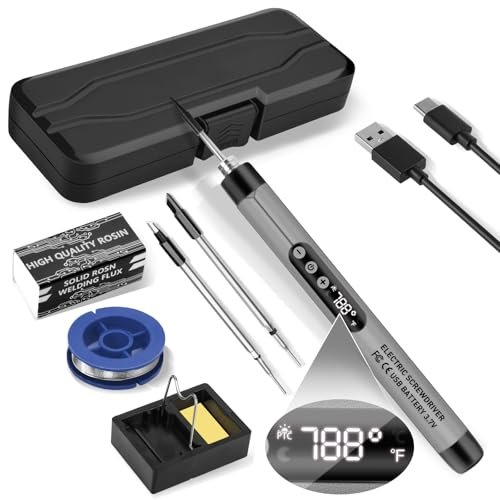
This product makes a clear trade-off: maximum portability and simplicity at the cost of sustained power and runtime. It’s a pocket-sized tool that prioritizes being small, lightweight, and easy to use for very specific, short-duration tasks. Think of it less as a primary bench iron and more as a specialized emergency tool.
Key Specifications: Fully Cordless, 1100mAh Battery, Temp Range: 260°C–420°C (500°F–788°F), LED Display.
What I Found in Testing: It is undeniably tiny and light. I could literally carry it in a jacket pocket. For a single, small-gauge wire repair on a micro drone at the field, it can get the job done. The heat-up time is reasonable, and the temperature adjustment is simple. However, the 15-30 minute runtime is optimistic for actual soldering; I found it better for 5-10 minutes of work before needing a charge or to be used while plugged in.
What I Loved: Its size. When you need to fix a tiny solder joint and have zero space, this can fit where other irons can’t. The price is also very accessible.
The One Catch: The power just isn’t there for anything beyond the smallest jobs. It struggled significantly with any wire thicker than 20AWG and would cool down on contact, leading to cold joints if you weren’t extremely fast. It’s a one-trick pony.
Best Fit: The absolute beginner on a tight budget doing only the most basic soldering on very small components, or someone who wants a hyper-cheap, ultra-portable “just in case” tool to throw in a drone field kit alongside a proper iron.
HGLRC RC2 Soldering Iron Kit 65W 24V Portable Outdoor
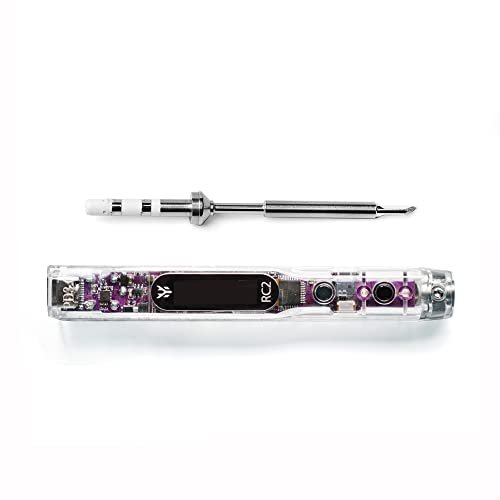
What makes the HGLRC RC2 genuinely different is its DNA. It’s built for the FPV and RC community from the ground up. This isn’t a generic soldering iron rebranded; its power input options and software are tailored to how we actually work, both at the bench and in the field. It felt immediately familiar and purpose-built.
Key Specifications: 65W, TS/T12 Tip Compatible, OLED Menu, 9-sec heat-up, Power Input: PD3.0/QC2.0/USB-C, DC5525 (12V-25V, 3S-6S Lipo).
What I Found in Testing: The versatility of power sources is a game-changer. At my bench, I power it via a USB-C PD charger. At the field, I can plug it directly into a 6S LiPo battery pack or even a 4S flight pack using the DC5525 jack. The 65W output is perfectly tuned for drone electronics—ample power for power leads but with superb control for delicate work. The OLED screen and menu let you calibrate the tip, adjust sleep settings, and more.
What I Loved: The “field-ready” design. Being able to solder directly from a LiPo is genius for race day repairs. The build quality is robust, and compatibility with the vast ecosystem of TS100/T12 tips means you can get exactly the tip shape you need.
The One Catch: It’s a tool for the initiated. The menu, while powerful, isn’t as instantly intuitive as a single dial. You need to provide your own power supply (battery or PD charger) and stand, as it’s often sold as just the iron.
Best Fit: The serious FPV pilot, racer, or builder who needs a professional-grade, portable iron that can travel from the workbench to the race course seamlessly. It’s for those who understand and will use its advanced features.
Larlarsa Cordless Soldering Iron Kit, Rechargeable USB-C Soldering Pen with OLED Screen
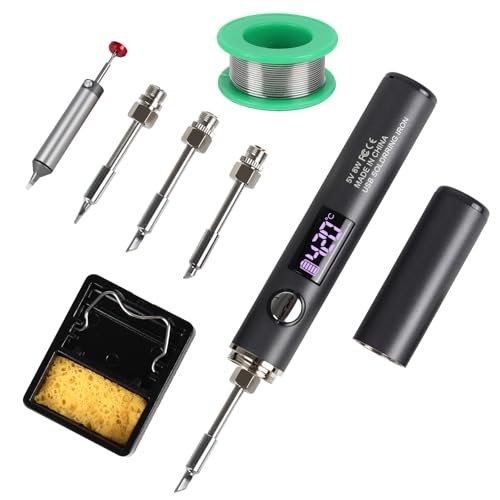
From the first week of testing, the Larlarsa’s build quality was apparent—it felt solid and well-machined, not plasticky. Over a month of use, that impression held. The aluminum body showed minimal wear, the buttons remained crisp, and the USB-C port never loosened. This is a cordless iron built to last through regular use, not just occasional tasks.
Key Specifications: Cordless, 1400mAh Battery, OLED Screen, Ceramic Heater, Temp Range: 260°C–420°C (500°F–788°F), USB-C PD Charging.
What I Found in Testing: This iron strikes a great balance between the Fanttik’ ultra-portability and more substantial performance. The 1400mAh battery provided a legit 35-40 minutes of runtime at common working temperatures. The OLED screen is bright and clear, showing live temperature accurately. It maintained heat well on small to medium drone joints, like motor wires and LED strips. The included solder sucker was a surprisingly useful bonus.
What I Loved: The feeling of durability and the excellent screen. It feels like a “proper” tool. The auto-sleep safety feature is well-implemented, and the ability to use it while charging via USB-C power bank means you’re never truly out of power.
The One Catch: Like all battery-powered irons in this class, it still hits a wall with high-thermal-mass connections. It’s not the tool for building a quad from scratch with large gauge wires, but it’s fantastic for repairs and assembly of pre-tinned components.
Best Fit: The intermediate hobbyist who wants a single, high-quality cordless iron for most of their drone work at home and occasional travel. It’s for those who value a robust feel and a great user interface.
60W Adjustable Temperature Soldering Iron Kit – 9-in-1
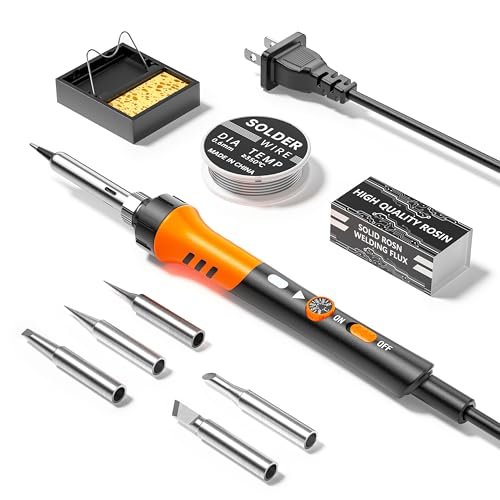
The spec sheet tells you it’s a 60W adjustable iron with five tips. What it doesn’t tell you is how basic the temperature control truly is. This is a simple analog dial, not a digital thermostat. In testing, this meant the set temperature was more of a suggestion, and actual tip temperature would fluctuate more than with digital irons, especially when soldering larger components that sucked heat away.
Key Specifications: 60W, 110V, Analog Dial Control, Temp Range: 200°C–450°C.
What I Found in Testing: For very basic, occasional soldering, it works. It gets hot and will melt solder. However, for the precise, repeatable work needed on drone electronics, it falls short. The lack of a display means you’re guessing at the temperature, which risks damaging sensitive flight controllers or VTXs. The handle is comfortable, but the overall feel is less refined than the digital options.
What I Loved: The price. It is the most affordable way to get a soldering iron that plugs into the wall. For a complete beginner who just needs to attach a pre-tinned connector or fix a household item, it’s an entry point.
The One Catch: The imprecise temperature control. This is the biggest risk for drone work. You can easily overheat a pad or component because you don’t have accurate feedback. It’s a blunt instrument.
Best Fit: The absolute first-timer with zero budget who needs to learn the very basics of soldering on practice boards or non-critical projects before investing in a proper temperature-controlled iron for their drones.
Soldering Iron Kit, 100W LED Digital Solder Gun kits with Ceramic Heater
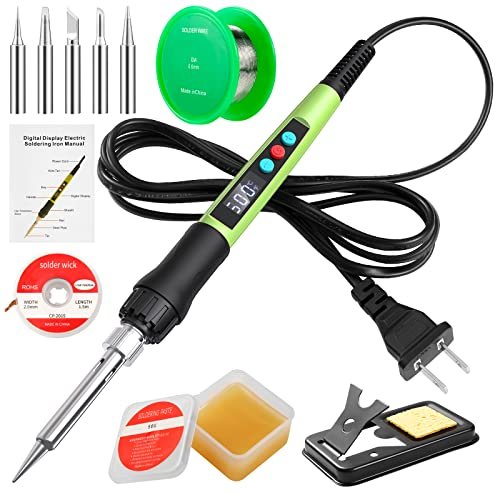
This iron sits in an interesting middle ground. With 100 watts and digital control, it has the specs of an advanced tool, but the included kit and safety features (like a child lock) make it approachable for a beginner. In practice, it’s a powerful iron that a novice could grow into, but they might be intimidated by its raw capability at first.
Key Specifications: 100W, Ceramic Heater, 15-sec heat-up, Temp Range: 180°C–500°C (356°F–932°F), LED Display, Password Lock.
What I Found in Testing: The 100 watts is powerful. It blasted through the largest gauge wires on my bench without breaking a sweat, with incredibly fast temperature recovery. The LED display is easy to read. However, that much power requires a careful hand. It’s easy to overshoot and overheat small pads if you’re not precise or if you set the temperature too high. The child lock is a thoughtful safety add-on for a household.
What I Loved: The sheer speed and power for big jobs. If you’re building large drones or working on power distribution boards, this iron makes quick work of it. It feels substantial and capable.
The One Catch: It’s overkill for most mini and micro drone work. The high wattage can be a liability for delicate electronics if you’re not experienced. It’s also a full-size, corded-only unit, so there’s no portability.
Best Fit: The hobbyist who works on a mix of large and small projects, or someone who anticipates graduating from tiny whoops to larger craft. It’s also great for a household where the same tool might be used for electronics and heavier-duty DIY tasks.
Comparing The Top Contenders For Best Drone Soldering Iron
After serious bench time, three irons separated themselves from the pack for different reasons. The HGLRC RC2 is the enthusiast’s choice, built for the FPV lifestyle with unmatched field power options. The Fanttik T1 Max wins on all-in-one convenience, offering a stunningly portable and intelligent package. The 80W LCD Soldering Iron Kit is the bench-work value champion, delivering reliable, plug-and-play performance for the lowest cost.
If you live at the flying field and need professional-grade repairs anywhere, the HGLRC RC2 is your tool. If you have a tidy home bench and want a clever, space-saving system that’s also easy to grab for trips, the Fanttik T1 Max is the winner. If you have a dedicated workshop and want the most reliable corded power for your dollar without any fuss, the 80W LCD Kit is the clear choice.
Final Verdict: My Personal Picks After Months of Testing
Spending weeks with these tools on real drone repairs—from cooked ESCs to delicate VTX installs—gave me a clear picture of what works and what doesn’t in the real world.
Best Overall & Best for Advanced Use: HGLRC RC2 Soldering Iron
This is the iron that stayed in my go-to bag. Its perfect blend of 65W power, TS100 tip compatibility, and multiple power inputs (especially direct LiPo) makes it the most versatile and capable tool for a serious pilot. It’s built for our hobby.
* Unbeatable for field repairs with LiPo power.
* Professional-grade temperature stability and control.
* Requires you to source a power supply and stand, but the performance is worth it.
Best Value: Soldering Iron Kit, 80W 110V LCD Digital
For the vast majority of hobbyists who solder at a bench, this iron offers 95% of the performance of more expensive units for a fraction of the price. The digital control is accurate, the power is ample, and it includes everything you need to start.
* Exceptional performance-to-cost ratio.
* Complete, ready-to-use kit right out of the box.
* A timeless, reliable choice for home workbench use.
Best for Beginners: Fanttik T1 Max Soldering Iron Kit
While the 80W kit is a great value, the Fanttik T1 Max is the best experience for a newcomer. Its all-in-one design, foolproof gravity sensor, and rapid heat-up remove friction and fear from learning. It makes soldering approachable and even enjoyable.
* Eliminates clutter with its integrated stand/storage.
* Intelligent sleep/wake features protect the tip and prevent accidents.
* Reduces the intimidation factor of starting out.
Specific Buyer Recommendations:
* For the FPV Racer/Rigorous Field User: Go straight for the HGLRC RC2. Its LiPo capability is a non-negotiable advantage.
* For the Home Hobbyist on a Budget: The 80W LCD Kit is the smartest money you can spend.
* For the Space-Constrained or Traveling Tinkerer: The Fanttik T1 Max is your perfect, tidy companion.
* For Your First Iron Ever: The Fanttik T1 Max provides the safest, most user-friendly introduction to the craft.
What I Actually Look for When Buying Best Drone Soldering Iron
Product listings hype wattage and heat-up times, but here’s what I’ve learned matters on the bench. First, temperature recovery speed is more critical than max watts. A 65W iron with a good heater will outperform a 100W iron with a poor one when you touch a heavy wire—it bounces back to temp faster, preventing cold joints. Second, I ignore “included tip” counts and look for tip compatibility. An iron that uses standard TS100/T12 or Hakko tips is a lifetime investment, as you can always find the exact shape and quality you need. Finally, the interface is key. A clear, bright OLED or LCD that shows live temperature (not just the set point) gives you the feedback necessary for precision work on tiny drone boards.
Types Explained
You’re really choosing between three paths. Corded Station Irons (like the 80W or 100W kits) offer the most consistent, unlimited power for your home bench. They’re best for long build sessions and are generally the best value. Advanced Portable Irons (like the HGLRC RC2) are corded but use DC/USB-C power, making them semi-portable and often more efficient. They’re the choice for the serious enthusiast who values performance both at home and in the field. True Cordless Irons (like the Fanttik and Larlarsa) trade some sustained power for ultimate freedom. They’re fantastic for quick repairs, small jobs, and working anywhere, but you must manage battery life. For a beginner, a good cordless or a simple corded kit lowers the barrier to entry. For advanced users, an advanced portable iron offers the most professional capability.
Common Questions About Best Drone Soldering Iron
What Should I Look For In A Best Drone Soldering Iron?
Prioritize precise temperature control (digital is a must), good thermal recovery (65W-80W is a sweet spot), and a form factor that suits your work. For drone work, you need an iron that can handle both fine-pitch components and occasional thick power leads.
Is A Cordless Soldering Iron Good Enough For Building Drones?
For complete builds, especially with large gauge wires, a corded or advanced portable iron is better. However, a quality cordless iron like the Fanttik T1 Max or Larlarsa is excellent for repairs, modifications, and most assembly work, offering fantastic convenience.
What Temperature Should I Use For Drone Electronics?
For standard leaded solder on ESC pads, motor wires, and most connectors, I work between 340°C (644°F) and 380°C (716°F). For more delicate work on flight controller or VTX pads, I drop to 300°C (572°F)-320°C (608°F) to minimize thermal stress.
Why Is Tip Compatibility Important?
Using a widely supported tip system (like TS100/T12) means you have access to a huge variety of tip shapes (chisel, cone, hoof) from multiple manufacturers. This lets you choose the perfect tool for each joint, from a wide pad to a tiny SMD component.
Can I Use A Cheap Soldering Iron From A Hardware Store?
You can, but I don’t recommend it for drones. Those irons often lack proper temperature control and get far too hot, posing a high risk of damaging expensive electronic components. The investment in a decent temperature-controlled iron pays for itself by avoiding destroyed flight controllers.
As an Amazon Associate, I earn commission from qualifying purchases.