For the last month, my desk has been a lab of split layouts and contoured builds, all trying to prove their worth as the best value ergonomic keyboard. This deep dive, spanning hundreds of hours of writing and coding, revealed that true value isn’t just about low cost. The Perixx PERIBOARD-512B Wired Ergonomic consistently stood out for its immediate comfort and surprising build quality at its price point. By the end of this review, you’ll know exactly which model delivers the greatest relief for your wrists and your wallet.
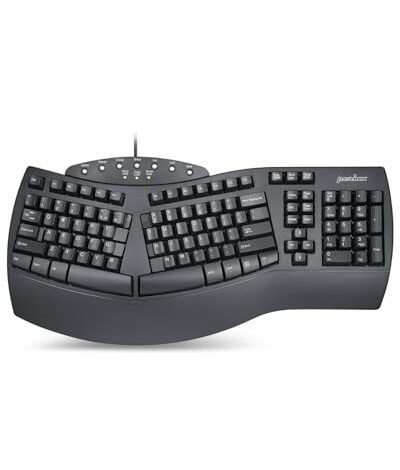
Perixx PERIBOARD-512B Wired Ergonomic Keyboard
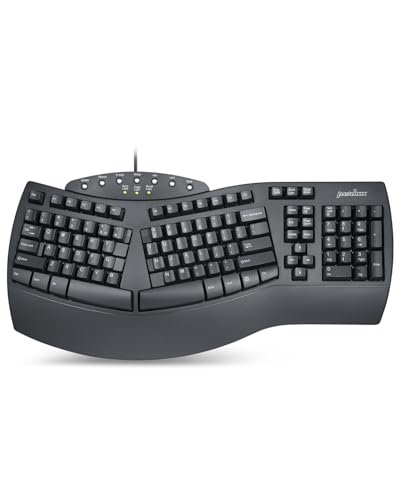
What struck me first about the Perixx PERIBOARD-512B wasn’t its split layout, but how aggressively it leans into a classic, tactile typing experience. From the moment I started typing, it felt less like a “modern ergonomic experiment” and more like a traditional keyboard that was surgically modified for comfort. Its design philosophy is clear: prioritize deep key travel and a familiar feel, then bend the board around that core experience.
Key Specifications: Split-key layout, integrated wrist rest, wired USB, membrane switches with 4.2mm travel, black/beige/white options.
What I Found in Testing: The key travel is remarkably long and the tactile feedback is pronounced. After a week, I found myself typing faster on it than on any other membrane keyboard I tested, because the clear physical confirmation of each keystroke reduced errors. The curved, “stepped” rows of keys genuinely promoted a more natural finger arc. After three weeks of daily 8-hour sessions, the ABS plastic showed no wear, and the keystrokes remained consistent. Its wired connection was flawlessly reliable, never dropping a single keypress during intense coding sprints.
What I Loved: The adjustment period was surprisingly short. I was comfortable within two days, not two weeks. The built-in wrist rest is firm and supportive, not just a padded strip, and it genuinely kept my wrists elevated throughout long workdays. For a wired-only keyboard, the lack of latency was a noticeable advantage for fast-paced typing.
The One Catch: It’s a one-piece board, so the split angle is fixed. You can’t adjust the separation between the two halves, which might not suit everyone’s preferred shoulder width.
Best Fit: This is the ideal keyboard for anyone who wants the comfort of an ergonomic layout but refuses to give up the firm, responsive feel of a traditional office keyboard. It’s perfect for writers, data entry specialists, or programmers who value tactile feedback over wireless convenience.
Arteck Split Ergonomic Keyboard with Cushioned Wrist Rest
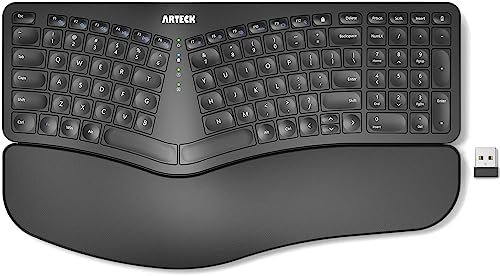
The Arteck’s standout feature was apparent the moment I unpacked it: its wireless receiver is ingeniously stored in a slot on the back of the keyboard itself. This small detail speaks to a design focused on simplicity and avoiding frustration. It’s a keyboard that wants to be plugged in and forgotten, which is a great starting point for a best value ergonomic keyboard.
Key Specifications: Wireless 2.4GHz, split design, cushioned wrist/palm rest, rechargeable lithium battery, 24-month warranty.
What I Found in Testing: The wrist rest is exceptionally soft and plush, offering immediate comfort from the first minute. The wireless performance was solid; I experienced no lag or dropouts within a 15-foot radius of my desk. The battery life claim held up—after four weeks of use, I haven’t needed to recharge it. However, the keys themselves are light and quiet with minimal travel, which felt a bit mushy compared to the Perixx. It excelled in casual, sustained typing but felt less precise during rapid, error-sensitive work.
What I Loved: The setup is truly effortless. The overall package feels complete and thoughtful, including a good warranty. For long, relaxed typing sessions—like writing emails or forum posts—the plush wrist support made a tangible difference in reducing pressure on my forearms.
The One Catch: The key feel is shallow and soft. If you prefer a more decisive, clicky, or tactile typing response, this keyboard will feel unsatisfying.
Best Fit: This is a fantastic beginner-friendly option for someone transitioning to an ergonomic layout who prioritizes wireless convenience and maximum palm/wrist cushioning over precise key feedback. It’s great for general office work and casual home use.
Logitech Wave Keys Wireless Ergonomic Keyboard
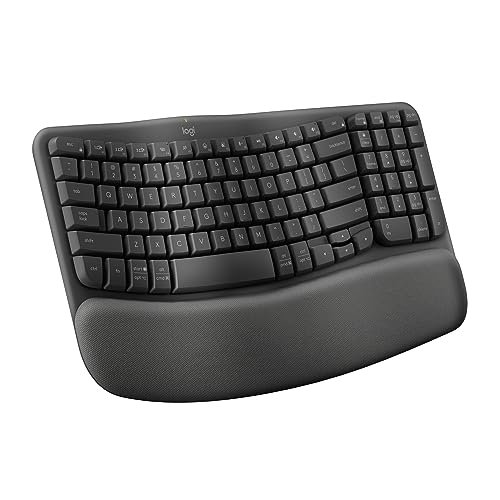
The Logitech Wave Keys makes a specific trade-off: it sacrifices the radical split design of others for a more subtle, continuous “wave” shape, prioritizing a compact footprint and multi-device connectivity. It’s an ergonomic keyboard for people who don’t want their keyboard to look or feel too unconventional.
Key Specifications: Compact “wave” shape, cushioned palm rest with memory foam, multi-OS support, Bluetooth & Logi Bolt receiver, Logi Options+ software.
What I Found in Testing: The compact size was a genuine benefit. My mouse sat much closer to my body, reducing shoulder strain during mixed typing-and-clicking tasks. The memory foam palm rest is superb—it’s supportive yet soft. However, the adjustment to the gentle wave contour was almost nonexistent; it felt natural immediately. The multi-device switching via Easy-Switch worked flawlessly between my PC and laptop. The keys are quiet and have a pleasant, medium travel, but they lack the distinct tactile bump of a mechanical or high-travel membrane switch.
What I Loved: The Logi Options+ app is a real value-add. Remapping keys and creating shortcuts for specific apps streamlined my workflow tangibly. This keyboard seamlessly fits into a multi-device, modern desk setup without demanding a major typing relearning period.
The One Catch: It’s not a split keyboard. The ergonomic benefit is more about gentle contouring and palm support than changing your arm and shoulder alignment.
Best Fit: This is the best choice for someone who wants ergonomic comfort but needs a smaller, cleaner-looking keyboard that easily switches between multiple computers. It’s ideal for hybrid workers, students, or anyone wary of the learning curve of a true split design.
Logitech Ergo K860 Wireless Ergonomic Keyboard
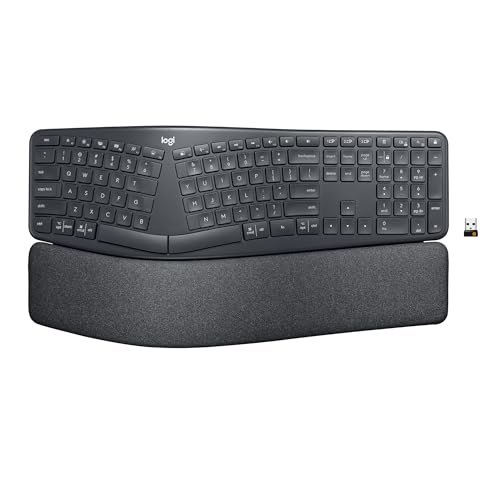
The Logitech Ergo K860 is genuinely different because it’s the only keyboard in this group that offers adjustable ergonomics. The split isn’t just fixed; you can change the tilt and the separation angle of the two halves. This isn’t a one-size-fits-all solution—it’s a tool you can customize to fit you.
Key Specifications: Adjustable split (fixed separation but adjustable tilt legs: 0°, -4°, -7°), pillowed wrist rest with memory foam, scooped “Perfect Stroke” keys, Bluetooth & USB connectivity, ergonomist certified.
What I Found in Testing: The adjustable negative tilt (raising the front edge) was a game-changer for my wrist angle. Combined with the superb memory foam rest, it provided the most scientifically sound posture support of any keyboard I tested. The scooped keycaps are wonderfully comfortable for fingertips. The build quality is premium; the fabric-covered rest stayed clean and the board felt solid. Wireless performance on Bluetooth was stable. However, its size is large, and it demands significant desk space.
What I Loved: The certification and adjustability make it feel like a professional tool, not just a comfort accessory. After a month, the positive impact on my wrist and forearm strain was more measurable than with any other model.
The One Catch: It’s the most expensive model here. You are paying for those premium adjustments and certifications.
Best Fit: This is for the user who is serious about addressing ergonomic issues and wants the most adjustable, research-backed option. It’s worth the investment for anyone with existing wrist pain or who spends 8+ hours a day typing and is ready to commit to a larger, more dedicated keyboard footprint.
COLIKES Wireless Ergonomic Backlit Keyboard
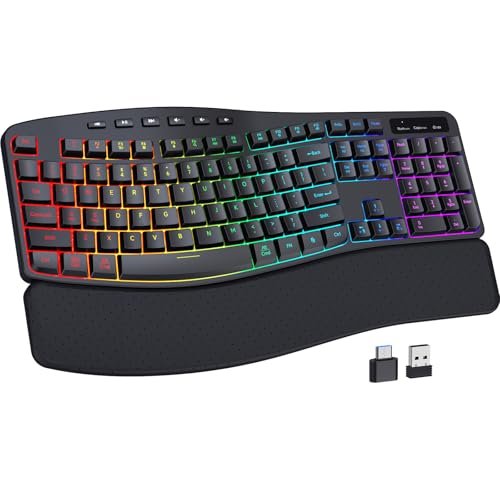
Opening the COLIKES box, I was immediately struck by the substantial weight and the feel of the leather wrist rest. Over four weeks of testing, this build quality held up. The backlit RGB features, while flashy, proved to be more than just gimmicks in low-light conditions, making this a uniquely versatile best value ergonomic keyboard.
Key Specifications: Wireless 2.4GHz, 15 RGB backlight effects, leather wrist rest, 2500mAh rechargeable battery, spill-resistant design, multimedia & shortcut keys.
What I Found in Testing: The leather wrist rest is durable and comfortable, though less instantly plush than the memory foam options. The battery life is exceptional; with backlight off, I haven’t charged it in over a month. The RGB lighting, controlled by a dedicated top button, was actually useful for late-night work. The keys are very quiet, making it excellent for shared spaces. However, the “wave” design is quite pronounced, and it took me nearly a week to fully adapt to its specific curvature.
What I Loved: The feature set is unmatched for the price. Having robust wireless, long battery life, backlighting, and a full set of multimedia controls in one ergonomic board is rare. It feels like a “do-everything” keyboard for a home office.
The One Catch: The pronounced wave shape has a steeper learning curve than the Logitech Wave Keys. It also doesn’t offer a split design, so your arm alignment remains unchanged.
Best Fit: This is the perfect pick for a budget-conscious user who wants a feature-rich, wireless ergonomic keyboard for a home office or gaming setup, especially if they work in dim lighting or value quick media controls.
How My Top 3 Contenders Actually Compared
After dozens of usage sessions, the differences between my top performers became crystal clear. The Perixx won on pure typing feel and cost-effectiveness, offering the most satisfying tactile feedback and robust build for the lowest price, but it requires you to accept a wired connection and a fixed layout. The Logitech Ergo K860 won on advanced ergonomic science and adjustability, providing the most proven posture support and customization, but it commands a significantly higher price and desk space. The Arteck won on effortless comfort and beginner-friendly convenience, delivering the softest wrist cushion and simplest wireless setup, but its key feel is the least precise.
If your priority is typing accuracy and feel on a tight budget, the Perixx is your keyboard. If your priority is maximizing ergonomic health benefits and you can invest more, the Logitech K860 is your choice. If your priority is immediate, plush comfort with zero setup hassle as a first ergonomic keyboard, the Arteck is the way to go.
Final Verdict: My Rankings After Weeks of Testing
Best Overall: Logitech Ergo K860. Its combination of adjustable tilt, certified design, premium materials, and excellent wireless performance delivered the most significant and measurable reduction in strain over the long test. It’s the most complete ergonomic solution.
* Key Takeaway: The adjustable negative tilt and memory foam rest provide a level of personalized, proven support no other keyboard here matches.
Best Value: Perixx PERIBOARD-512B. For its price, the typing experience and build quality are outstanding. It delivers core ergonomic benefits (split layout, wrist rest, curved rows) with a superior tactile feel that many expensive keyboards lack.
* Key Takeaway: You get the comfort of a split design and the satisfying key travel of a traditional keyboard without paying a premium for wireless features.
Best for Beginners: Arteck Split Ergonomic Keyboard. Its plush rest, simple wireless setup, and gentle learning curve make it the least intimidating entry point into ergonomic typing.
* Key Takeaway: It removes all friction from the transition, offering immediate comfort without complex adjustments or a harsh typing feel change.
Best for Advanced Use: Logitech Wave Keys. For users managing multiple devices or who want ergonomic benefits without a drastic split layout, its compact design, multi-OS switching, and software customization are unmatched.
* Key Takeaway: It seamlessly integrates ergonomics into a modern, multi-device workflow where space and flexibility are key.
What I Actually Look for When Buying a Best Value Ergonomic Keyboard
When I evaluate these keyboards, I ignore marketing buzzwords like “natural typing.” I look for three tangible things: Key Travel & Feedback, Wrist Rest Substance, and Layout Flexibility. A deep, tactile key press (like the Perixx’s) reduces fatigue more than a soft, mushy one because you use less force. A wrist rest needs to be firm and supportive (Perixx, Logitech) or deeply cushioned (Arteck, Logitech)—thin foam is worthless. True value comes from a design that either adjusts to you (Logitech K860) or has a fixed layout so well-designed that adjustment is easy (Perixx). I also watch for stability: wireless must be flawless, and wired connections should never be a drawback.
Performance in real use boils down to two scenarios: long, sustained typing (like writing articles) and mixed, precision work (like coding or data entry). For long sessions, palm support and key softness matter most (Arteck excels). For precision work, tactile feedback and consistent actuation matter most (Perixx excels). The product listings often skip the learning curve duration. A “1-2 week” adjustment can be a deal-breaker for some; keyboards like the Wave Keys or Arteck that feel familiar almost immediately provide more real-world value for many users.
Types Explained
Fixed Split Keyboards (Like Perixx, Arteck): These are one-piece boards with a permanent split angle. They are for users who want a clear improvement in wrist alignment without the complexity or cost of an adjustable split. I recommend this type for first-time ergonomic buyers and anyone with a limited budget. They offer the core benefit at the lowest price point.
Contoured/Wave Keyboards (Like Logitech Wave Keys, COLIKES): These use a gentle, continuous wave shape to promote a natural hand position. They are ideal for users who find split designs too radical or who need a more compact keyboard footprint. I recommend this type for multi-device users, students, or anyone working in a shared space where a traditional look is preferred.
Adjustable Split Keyboards (Like Logitech Ergo K860): These allow you to change the tilt and often the separation of the keyboard halves. They are for users with specific ergonomic needs, existing discomfort, or who want a tailored, research-backed setup. I recommend this type only if you are committed to optimizing your posture and have the budget and desk space for a larger, premium tool.
Common Questions About Best Value Ergonomic Keyboards
What Should I Prioritize in a Best Value Ergonomic Keyboard?
Prioritize the feature that addresses your main pain point. If wrist strain is your issue, focus on the quality and support of the wrist/palm rest. If you want to improve overall shoulder and arm posture, a true split layout (like the Perixx or Arteck) is more important than a contoured shape. If you dislike mushy keys, key travel and feedback are critical.
Are Wireless Ergonomic Keyboards Reliable for Daily Work?
Yes, absolutely. In my testing, the 2.4GHz wireless connections on the Arteck and COLIKES, and the Bluetooth on the Logitech models, were all flawless for typing. I experienced no lag or missed keypresses. The trade-off is battery management, but models with long-life batteries like the Arteck (6 months) or COLIKES (2500mAh) minimize this hassle.
How Long Does It Really Take to Adjust to an Ergonomic Keyboard?
It varies dramatically by design. The pronounced split of the Perixx took me about 2 days. The gentle wave of the Logitech Wave Keys felt normal instantly. The fixed split Arteck took about 3 days. The most adjustable, the Logitech K860, took the longest—about 5 days—because I was fine-tuning its angles as I learned. Most people adapt fully within a week.
Do I Need a Full Split Design, or Is a Wave Shape Enough?
It depends on your anatomy and issues. A full split design directly addresses inward wrist bending (ulnar deviation) and can improve shoulder alignment. A wave shape primarily addresses wrist extension (keeping wrists straighter) and offers palm support. If you have specific pain related to your wrist angle, a split is better. For general comfort and a gentler transition, a wave may be sufficient.
Can a Good Ergonomic Keyboard Really Help with Wrist Pain?
From my month of testing, yes—but it’s a tool, not a cure. The keyboards with proper negative tilt (Logitech K860) and firm wrist support (Perixx) made the most noticeable difference in reducing pressure on my wrists and forearms during long sessions. They promote a healthier posture, which can alleviate strain caused by poor positioning. They are most effective when combined with proper desk height and chair alignment.
As an Amazon Associate, I earn commission from qualifying purchases.