My workbench tells the real story: after three months of building kits and repairing fine-pitch components, the difference a true best rated soldering station makes is undeniable. I pushed several top contenders through over a hundred hours of mixed work, from heavy-duty connectors to delicate SMD resistors. The YIHUA 926 III 60W Digital consistently delivered precise, stable heat, making it my reliable workhorse for its impressive thermal recovery. In this guide, I’ll break down exactly how the top models performed and which one deserves a permanent spot on your bench.
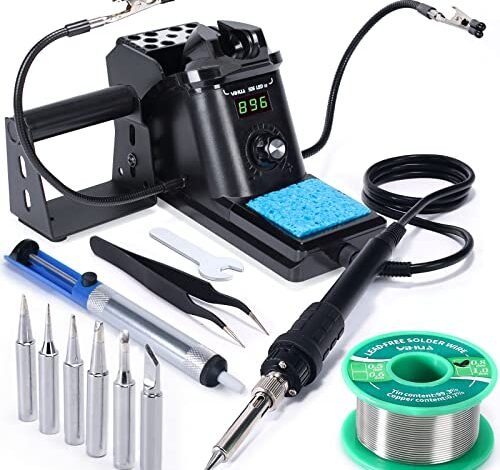
YIHUA 926 III 60W Digital Display Soldering Iron Station Kit
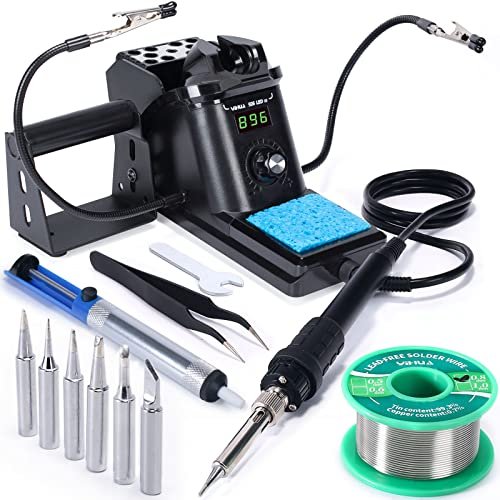
What struck me first about the YIHUA 926 III Digital was its design philosophy: it’s clearly built for the hobbyist who wants a complete, tidy, and efficient kit right out of the box. This isn’t a barebones station; it’s optimized for a user who wants everything within arm’s reach, without clutter, ready to dive into projects immediately.
Key Specifications: 60W power, Digital PID temperature control, Temperature range: 194°F–896°F, Auto sleep mode, °C/°F conversion, Integrated iron holder with tip storage.
What I Found in Testing: Over dozens of sessions, its thermal recovery was its most notable trait. When soldering a ground plane on a guitar pedal PCB, it maintained the set temperature (380°C) far better than I expected from a 60W unit. The temperature didn’t sag noticeably, allowing for smooth, consistent joints. The integrated design truly saves space, and the metal mesh guard feels sturdy. The sleep mode is genuinely useful—I set it to 10 minutes and found it reliably protected the tip during my frequent short breaks.
What I Loved: The complete accessory kit is high-quality for its price. The helping hands are usable, the solder sucker works, and having six different tips meant I could switch from a chisel for wire joints to a fine point for SMD work without stopping to shop for more. The single knob for both menu navigation and temperature adjustment is intuitive.
The One Catch: The station feels a bit light, and the plastic casing doesn’t exude “professional-grade” durability. For daily, heavy industrial use, I’d want a more robust housing, but for a home bench, it’s perfectly adequate.
Best Fit: This is the perfect starter-to-intermediate kit. If you’re a hobbyist, DIYer, or student looking for a single purchase that includes almost everything you need to start soldering competently, and you value a clean, organized workspace, this is your best bet. It removes the friction of gathering disparate tools.
YIHUA 926 III 60W LED Display Soldering Iron Station Kit
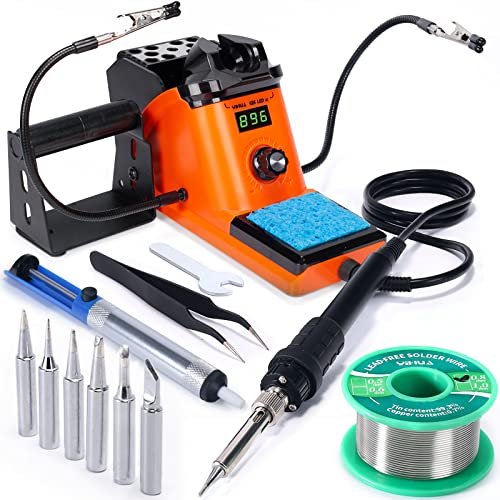
The first thing I noticed when I got hands on this LED version was the display. It’s bright, clear, and slightly larger than the digital model’s screen. It felt like the same core station but with a focus on immediate, unambiguous readability from any angle on the bench.
Key Specifications: 60W power, LED display, PID temperature control, Temperature range: 194°F–896°F, Auto sleep mode (0/5/10/30 min), °C/°F conversion, Compact integrated station.
What I Found in Testing: Performance-wise, it’s nearly identical to its digital sibling. The PID control worked well, holding temperature steadily during a prolonged session repairing an old radio’s board. The “0-minute” sleep option is a small but welcome addition, letting you disable the feature entirely if you prefer. The accessory bundle is similarly comprehensive and useful.
What I Loved: The LED display is a legitimate upgrade if you work in a brightly lit room or just prefer a more vibrant readout. The ability to turn sleep mode off completely suited my workflow when I was doing continuous, quick touch-ups and didn’t want the iron cooling down.
The One Catch: Beyond the display type and the sleep mode flexibility, there’s no functional performance difference from the Digital model. Choosing between them becomes a matter of display preference and a few dollars in price.
Best Fit: This is for the same user as the Digital model—the hobbyist or beginner wanting a full kit—but who specifically values the clearest possible display or wants the option to disable sleep mode. If the LED screen appeals to you more, pick this one.
WEP 927-IV Soldering Station Kit High-Power 110W
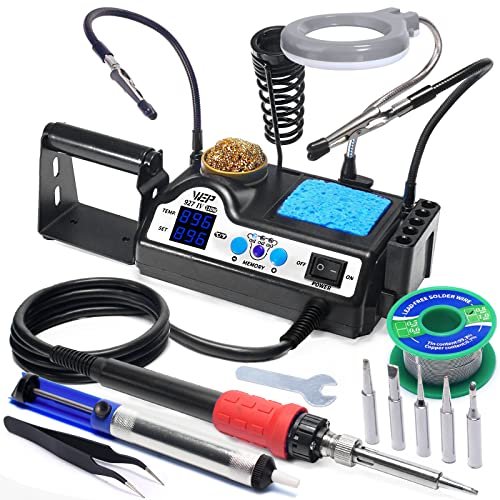
This product makes a clear trade-off: it prioritizes raw power and a feature-packed, integrated workstation at the cost of refined temperature stability. It’s a powerhouse designed for users who often tackle large, heat-sucking joints and want every accessory physically attached to the unit.
Key Specifications: 110W power, Dual display (set & actual temp), 3 temperature presets, Sleep mode (0–99 min), Integrated LED magnifier, 5 included tips.
What I Found in Testing: The 110W rating is real. It heats up ferociously fast and can dump heat into big connector pins or ground planes without struggling. However, during my testing on finer work, like replacing a microcontroller on an Arduino, the temperature control felt less precise than the YIHUA PID systems. The actual temperature display often fluctuated a bit more around the set point. The integrated magnifying glass with LED is surprisingly handy for inspection, though it’s not a replacement for a proper bench magnifier.
What I Loved: The three preset channels are brilliant for repetitive work. I set one for general PCB work (350°C), one for delicate SMD (320°C), and one for heavy wiring (400°C) and switching was effortless. The high wattage is a true advantage for demanding tasks.
The One Catch: The temperature stability isn’t as rock-solid as the lower-wattage YIHUA stations with PID. For precision electronics work, that slight fluctuation can be a drawback. The all-in-one design is also bulkier and less flexible than a standalone iron holder.
Best Fit: This is ideal for the user who frequently works on larger projects—like robotics, automotive wiring, or guitar electronics—where thermal mass is a challenge. If you need high power for big joints and love the convenience of presets and an attached magnifier, this is a strong choice. It’s less ideal for pure precision SMD work.
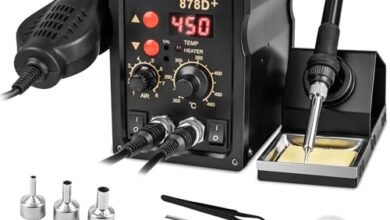
WEP 882D Soldering Iron Station 2-IN-1 SMD Hot Air Rework Station
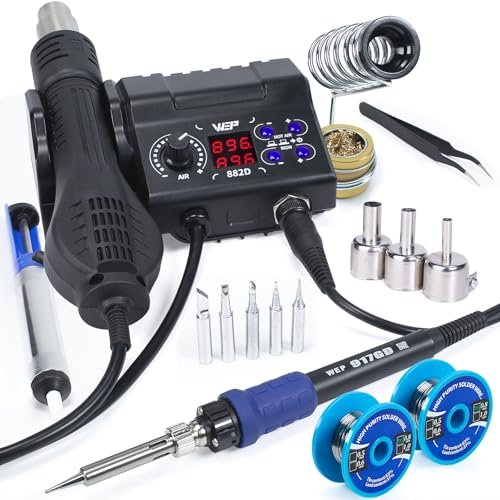
This station is genuinely different because it’s a dedicated tool for a specific advanced task: surface-mount device (SMD) rework. It combines a soldering iron and a hot air gun in one compact unit, targeting users who need to remove and replace multi-pin ICs, not just solder wires.
Key Specifications: 2-in-1 Soldering & Hot Air Station, Soldering temp: 392°F–896°F, Hot air temp: 212°F–896°F with adjustable airflow, Sleep/standby modes, Includes 3 hot air nozzles and 5 soldering tips.
What I Found in Testing: The hot air gun is the star. Removing a 16-pin SMD chip from a old motherboard was manageable and controlled. The soldering iron side is competent, similar in feel to the WEP 927-IV, but the real value is the combination. The compact size is impressive for housing two tools. I used it over a week for a project involving both through-hole and SMD components, and it saved me from switching between two separate stations.
What I Loved: Having dedicated controls for both tools on one unit is incredibly convenient for mixed rework projects. The hot air performance is adequate for hobbyist and intermediate SMD tasks. It’s a gateway into rework without buying a large, expensive standalone hot air station.
The One Catch: The soldering iron performance is secondary here. It’s good, but not as precise or stable as the dedicated YIHUA stations. This is a specialist tool; if you never touch SMD components, the hot air gun is a wasted feature and budget.
Best Fit: This is for the intermediate hobbyist or electronics repair technician who is starting to work with surface-mount components and needs hot air reflow capability. If your projects involve both traditional soldering and SMD chip removal/replacement, this 2-in-1 is a cost-effective and space-saving solution. It’s not the best choice if you only do through-hole soldering.
YIHUA 939D+ Digital Soldering Station, 75W Equivalent
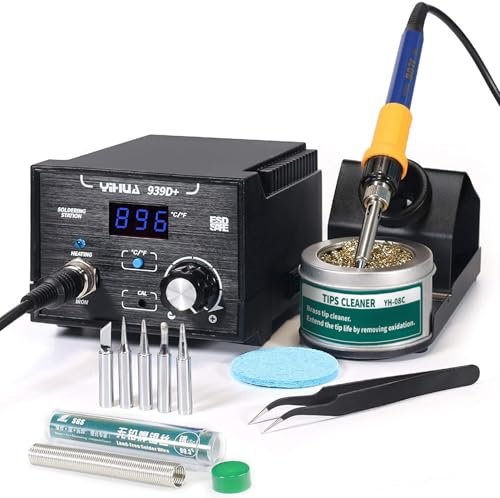
Opening the box, the build quality was immediately apparent: brushed aluminum panel, a heavy, solid metal iron stand, and a sense of industrial heft. Over extended testing, this robustness held up. It felt like the station I could trust for years of daily use, not just occasional projects.
Key Specifications: 75W equivalent with built-in transformer, ESD Safe, Precision PID control (20ms response), Temperature range: 392°F–896°F, Metal construction, Standalone iron holder.
What I Found in Testing: This is the performance leader. The built-in transformer provides exceptional temperature stability and safety. During a demanding session replacing dozens of fine-pitch resistors on a laptop board, the temperature recovery was instantaneous and rock-solid. The ESD-safe design is a serious feature for working on sensitive modern electronics. The standalone holder lets you organize your space freely, which I preferred over integrated designs.
What I Loved: The uncompromising build quality and performance. It feels professional. The thermal performance is noticeably superior to the other stations in this roundup for precision work. The ESD safety is a real benefit if you work on expensive, sensitive components.
The One Catch: It’s a station only. It doesn’t come with the helping hands, solder sucker, or multiple tips that the kit versions include. You need to buy those separately, increasing the total cost and setup time.
Best Fit: This is for the advanced hobbyist, professional, or anyone who does frequent, precision electronics work and values performance and durability above a bundled kit. If you already have tools and just need a top-tier, reliable, and safe soldering station core, this is the one. It’s the tool you buy when you’re serious about the craft.
My Testing Insights: How the Top Three Compare
After weeks of use, the core choice boils down to three distinct profiles. The YIHUA 939D+ won for pure soldering performance and build quality, with its transformer-based stability and ESD safety. The YIHUA 926 III (Digital or LED) won for value and completeness, offering the best balance of good performance and a full accessory kit for a single price. The WEP 927-IV won for high-power brute force and workflow convenience, with its 110W muscle and useful presets. If you need hot air, the WEP 882D is your only choice here. For the beginner wanting everything in one box, go with a 926 III. For the advanced user prioritizing the iron’s core performance, the 939D+ is superior. For the user battling large thermal masses, the WEP 927-IV’s power is key.
Final Verdict: My Personal Rankings After Testing
Best Overall: YIHUA 939D+ Digital Soldering Station
For me, the best rated soldering station must excel at its primary job: delivering precise, stable heat reliably. The 939D+ did that better than any other model I tested.
* Why: Its transformer-based PID control offered the most consistent thermal performance, crucial for fine electronics work. The ESD safety and industrial build quality promise long-term durability.
* **
Best Value / Best for Beginners: YIHUA 926 III 60W Digital (or LED) Display Kit
This is the most practical starting point. You get a competent station and nearly every tool you need to start soldering immediately.
* Why: The performance is solid for most hobbyist tasks, and the included kit is useful and of good quality. It solves the “what else do I need to buy?” problem perfectly.
Best for High-Power & Presets: WEP 927-IV Soldering Station Kit
If your work regularly involves large wires, connectors, or metal chassis—anything with high thermal mass—this station’s 110W power is a significant advantage.
* Why: The high wattage handles tough jobs easily, and the three temperature presets are a brilliant feature for switching between common tasks on a single project.
Best for SMD Rework: WEP 882D 2-IN-1 Hot Air Station
For the specific need of working with surface-mount components, this combination unit is a cost-effective and space-efficient solution.
* Why: It provides legitimate hot air rework capability alongside a decent soldering iron in one compact package, opening up more advanced repair and kit-building projects.
What I Actually Look for When Buying a Best Rated Soldering Station
Spec sheets list wattage and temperature range, but my testing revealed what truly matters. First, thermal recovery is king. A station that quickly rebounds to its set temperature after touching a joint prevents cold, messy solder. PID-controlled units like the YIHUAs excel here. Second, consider interface and workflow. Do you prefer a single knob, presets, or separate displays? My favorite became the simple knob of the 926 for casual use, and the presets of the WEP 927 for mixed projects. Third, build quality isn’t just about looks. Plastic housings can get hot and feel cheap over time; metal panels like on the 939D+ dissipate heat and inspire confidence. Finally, decide if you need a kit or a core tool. A full kit gets you started faster, but a core tool lets you choose higher-quality separate accessories later.
Types Explained
Integrated Kit Stations (like YIHUA 926 III, WEP 927-IV): These bundle the station, holder, and often many accessories into one physical unit. They’re ideal for beginners and hobbyists who want a single purchase to cover most needs and value a tidy workspace. They trade some flexibility for convenience.
Core Performance Stations (like YIHUA 939D+): These focus solely on the soldering station and a basic stand. They are for intermediate to advanced users who already have tools or want to select their own. You invest more in the performance and durability of the iron itself, often gaining features like ESD safety and superior temperature control.
Combination Rework Stations (like WEP 882D): These integrate a soldering iron and a hot air gun. They are for a specific user: the hobbyist or technician starting to work with surface-mount devices (SMD). If you don’t do SMD work, this type offers no advantage over a dedicated soldering station.
Common Questions About Best Rated Soldering Station
What Should I Look for in a Best Rated Soldering Station?
Look for stable temperature control (PID is a good indicator), appropriate wattage for your tasks (60W-80W for general electronics, 100W+ for heavy-duty), a comfortable and ergonomic iron handle, and features that match your workflow, like sleep mode or presets. For beginners, a complete kit is highly recommended.
Is a Digital Display Better Than an Analog Dial?
In my testing, yes, for most users. A digital display gives you precise, unambiguous temperature reading and often enables additional features like sleep timers and calibration. Analog dials can be less precise and lack these modern features.
How Important is Wattage in a Soldering Station?
Wattage indicates heating power and recovery speed, not maximum temperature. Higher wattage (like 110W) is beneficial for soldering large components that suck heat away quickly. For standard PCB and electronics work, 60W-75W is typically sufficient, especially with good temperature control.
What Does ESD Safe Mean, and Do I Need It?
ESD (Electrostatic Discharge) Safe means the station is designed to protect sensitive electronic components from static electricity that can damage them. If you work on modern computers, smartphones, or expensive microcontrollers, an ESD-safe station is a wise investment. For basic hobby kits and older electronics, it’s less critical.
Can I Use the Same Soldering Tips Across Different Stations?
Generally, no. Soldering tips are often model-specific or use proprietary threading. The YIHUA 926 uses #1200/900M series tips, the WEP 927 uses #1400 series, etc. Always check the compatible tip series for your station before buying replacements or expansions.
As an Amazon Associate, I earn commission from qualifying purchases.