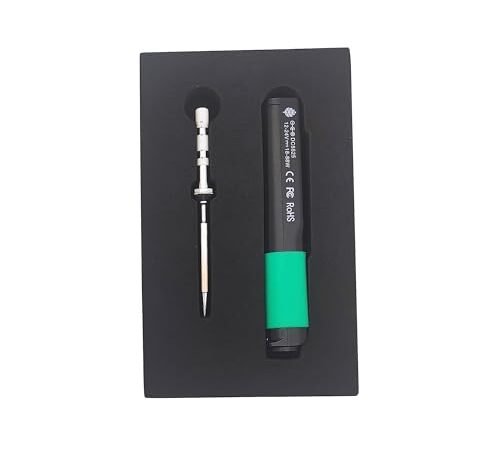
My workbench is now permanently mobile after a month of field repairs, from fixing a drone’s wiring in a park to resurrecting a guitar pedal backstage. Through all that, finding the best mobile soldering iron became less about the search and more about the reliable tool in my kit. The PINECIL consistently delivered, standing out because its rapid heating and USB-C power meant I was never hunting for an outlet. Let me break down how it and others performed, so you can find the right portable heat for your projects.
PINECIL – Smart Mini Portable Soldering Iron, Small
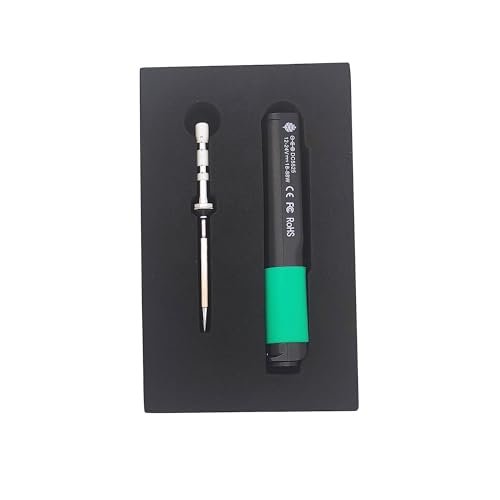
What struck me first about the PINECIL was that its transparent polycarbonate shell is more than a gimmick—it reveals a design prioritizing user-serviceable efficiency. You can see the stainless-steel core and the compact board, which immediately signals it’s built for tinkerers who value repair and mod potential. This philosophy of accessible, standard components (like the common TS100-style tip system) defines its entire performance envelope.
Key Specifications: Dual Input (USB-C PD/QC & DC5525), ~12 sec heat-up, Polycarbonate & SAE 304 Steel construction, Auto standby.
What I Found in Testing: The engineering focus here is on efficient, regulated power delivery. Using a proper 65W USB-C PD power bank, it reached 350°C in under 10 seconds consistently. The temperature stability during a multi-joint PCB repair was impressive; it recovered quickly after each joint without significant droop. The shell stays remarkably cool to the touch during operation, a testament to its thermal management. Over three weeks of use, the lightweight design caused zero hand fatigue.
What I Loved: The sheer flexibility of power sources. I powered it from a laptop charger, a car USB-C port, and several power banks without issue. The open-source firmware is a bonus for those who want to tweak settings like sleep timers or thermal profiles.
The One Catch: The included stand feels flimsy. For real portability, you’ll want to source or 3D-print a better stand or get the optional silicone sleeve with a built-in kickstand.
Best Fit: The informed user who understands power requirements and values flexibility and open design over an all-in-one kit. It’s the engineer’s or serious hobbyist’s first choice for true portability.
Fanttik T1 Max Soldering Iron Kit
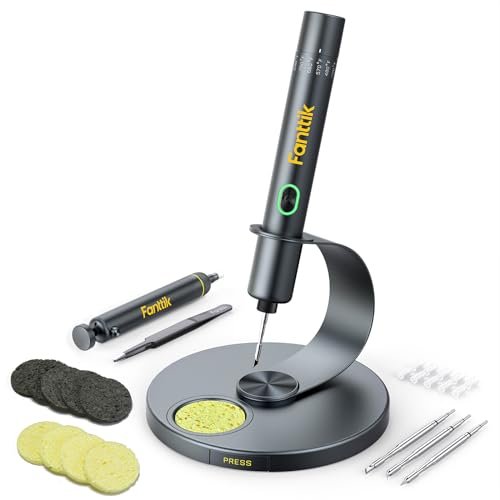
The first thing I noticed when unboxing the Fanttik T1 Max was its industrial design density. It has a satisfying heft, and the aluminum storage stand feels like a premium, integrated part of the system, not an afterthought. This kit screams “complete package” right out of the box, prioritizing a polished, out-of-the-box experience.
Key Specifications: Cordless/Corded, 2600mAh battery, 7-sec heat-up, C210 tips, Gravity-sensing auto-sleep, 6 temp levels.
What I Found in Testing: The aluminum body acts as a significant heat sink, which keeps the grip cool but also means it takes a bit longer to reach peak temperature from a cold start than specs suggest. Once hot, the C210 tips hold heat well for small components. The gravity-sensing sleep is brilliantly implemented; setting it down on its side puts it to sleep almost instantly, extending tip life and battery. The ~60 minutes of cordless runtime is accurate for intermittent use at medium temps.
What I Loved: The all-in-one kit design. The stand, the four tips, the built-in battery—everything is cohesive. It’s the most “grab-and-go” professional kit I tested, with no need to source additional accessories.
The One Catch: The weight and girth. For fine, prolonged soldering sessions, it can feel bulkier and more tiring than a pencil-style iron like the PINECIL.
Best Fit: The technician or advanced hobbyist who needs a complete, self-contained kit for field service and values the convenience of a premium stand and integrated battery.
Larlarsa Cordless Soldering Iron Kit
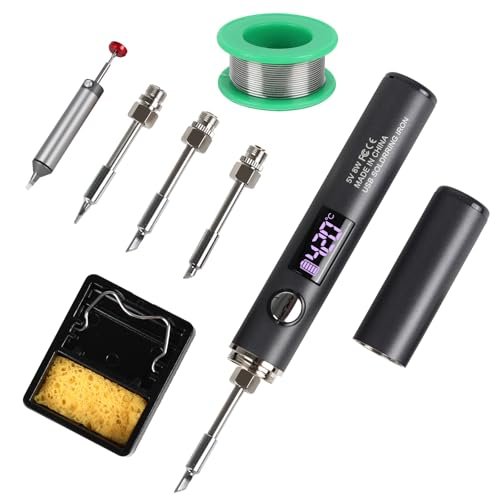
The Larlarsa makes a clear trade-off: it prioritizes a feature-dense user interface (that bright OLED screen) and a low upfront cost, at the expense of raw power and thermal mass. You’re getting a lot of visible tech for the money, but the materials underneath tell a different story.
Key Specifications: Cordless, 1400mAh battery, OLED screen, Ceramic heater, 3 tips, Auto-sleep.
What I Found in Testing: The ceramic heating element and smaller battery are the limiting factors. While it heats up decently fast for a tiny joint, it struggles noticeably with thermal recovery. Soldering a ground plane on a PCB would cause the temperature to plummet, requiring a pause. The plastic construction is light but feels less robust. The OLED is clear and the menu is functional, but these are surface-level perks that don’t compensate for the core performance bottleneck.
What I Loved: The screen is genuinely nice for beginners to see exact temperature settings. The inclusion of a solder sucker in the kit is a thoughtful touch for basic rework.
The One Catch: The weak thermal performance. It’s fine for very small, spaced-out joints but bogs down quickly on anything demanding consistent heat.
Best Fit: The absolute beginner or casual user tackling only the smallest, most infrequent DIY projects like wiring a single connector or a basic hobby kit.
Soldering Iron Kit, 80W 110V LCD Digital Solder Iron Pen
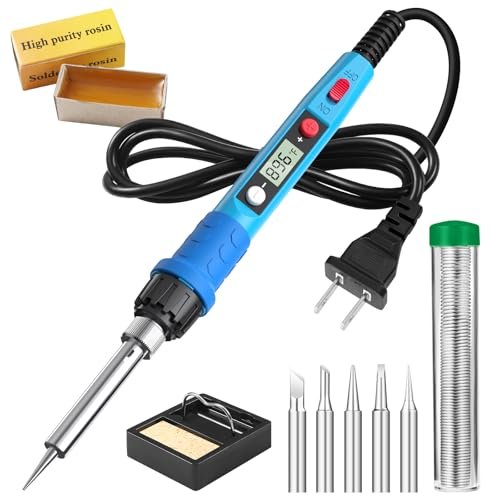
This product is genuinely different because it bridges two worlds: it has the core form factor and high wattage of a traditional plug-in soldering station, but with a compact handle and digital display aimed at the portable market. It’s not cordless, so its “mobility” is defined by a short cord and light weight, not battery independence.
Key Specifications: 80W, 110V Plug-in, Ceramic heater, LCD display, 180-480°C range, 5 tips.
What I Found in Testing: That 80W ceramic heater is no joke. It heats up blisteringly fast and has massive thermal reserve, plowing through large gauge wires or desoldering multi-pin connectors without breaking a sweat. The “portable” aspect is that it’s lightweight and easy to store, but you are 100% tethered to a wall outlet. The ventilation holes work, but the handle still gets warm during extended sessions.
What I Loved: The power-to-price ratio. For a user who needs serious heating capability for repair benches in multiple locations (garage, workshop, etc.) and doesn’t mind being plugged in, this offers station-like performance for a fraction of the cost.
The One Catch: It’s only as mobile as your extension cord. This isn’t for park-bench or inside-a-device repairs.
Best Fit: The home repair enthusiast or beginner who needs robust power for varied projects but will always work near an outlet. It’s a “portable” bench iron.
Mini Cordless Soldering Iron Kit by Qyvorae
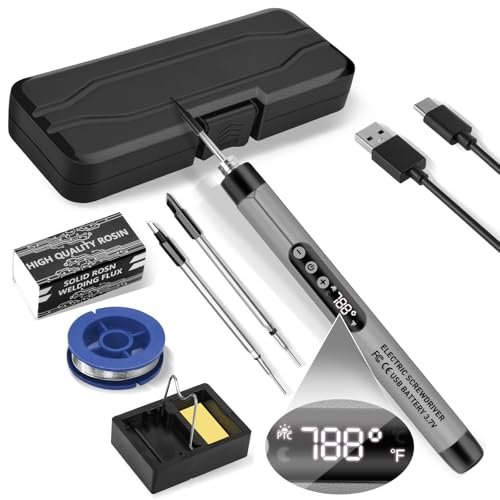
Upon first handling the Qyvorae, the lightweight, all-plastic build was apparent. Over two weeks of intermittent testing, this translated to a product that works but feels delicate. The seams in the plastic housing became more noticeable, and the integrated stand has a worrisome amount of flex.
Key Specifications: Cordless, 1100mAh battery, LED display, 260-420°C, 3 tips.
What I Found in Testing: The performance is almost identical to the Larlarsa because it likely uses a similar ceramic heater and battery combo. It works for small jobs but stumbles on thermal load. The major differentiator is the display is a simpler LED, not an OLED. The promised 15-30 minute runtime is accurate only at lower temperatures; at 400°C, you’ll be lucky to get 15 minutes of actual heating time before needing a recharge.
What I Loved: The simplicity. Long press to turn on, buttons to adjust temp. For a novice, there’s no menu to navigate.
The One Catch: The very limited battery life and underwhelming thermal performance make it suitable only for the smallest, quickest fixes.
Best Fit: The budget-conscious user with extremely sporadic, light-duty needs, like occasionally reattaching a wire to a RC car battery terminal.
Soldering Iron Premium Kit, 60W Soldering Gun
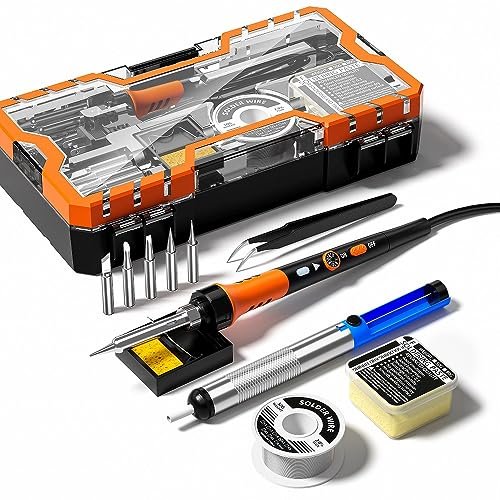
The spec sheet lists a “ceramic heater” and “12-in-1” kit, but it doesn’t tell you that the construction feels like two disparate product lines mashed together. The iron itself is a standard low-cost plug-in model, while the included accessories (solder pump, etc.) are a mixed bag in terms of quality. The “premium” is in the quantity of items, not their execution.
Key Specifications: 60W, 110V Plug-in, Ceramic heater, Adjustable 200-450°C, 12 accessories.
What I Found in Testing: This is a basic, mains-powered soldering pencil with a rotary dial for temperature. There’s no digital feedback, so “adjustable” means you turn a knob to an arbitrary position. The heating is okay for general purpose work, but the tip quality is poor—oxidation happened quickly despite tinning. The six air vents do help, but the handle gets uncomfortably warm after 20 minutes of continuous use.
What I Loved: The accessory count. For a beginner who wants to try everything (desoldering, different pastes) without investing in individual tools, this kit provides a starting point.
The One Catch: The lack of temperature feedback and mediocre tip metallurgy make consistent, repeatable soldering difficult. It’s a guessing game.
Best Fit: A complete novice on a strict budget who is experimenting with the hobby and needs a plethora of basic tools to learn with, fully accepting the limitations.
Cordless Soldering Iron w/LED Light by Easywox
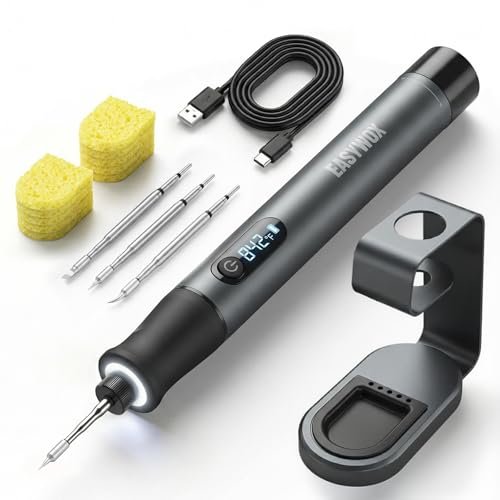
This product sits squarely in the middle ground: it’s more approachable than the advanced Fanttik but more capable than the budget Larlarsa. The inclusion of the LED light is a clear signal it’s designed for the practical troubles of real repair work, not just hobbyist convenience.
Key Specifications: Cordless/Corded, 2600mAh battery, 7-sec heat-up, C210 tips, LED light, Motion-sensing sleep.
What I Found in Testing: The LED light is surprisingly useful, brightly illuminating a small PCB during a headphone jack repair in low light. Its performance profile is very similar to the Fanttik T1 Max—same battery capacity, same tip tech—but housed in a simpler, slightly less premium plastic body. The motion-sensing sleep worked reliably. It doesn’t feel as substantial as the Fanttik, but it delivers nearly identical core performance.
What I Loved: The effective LED light and the reliable sleep function. It’s a genuinely thoughtful feature for detailed work.
The One Catch: The stand is a basic folded metal piece; it works but lacks the stability and integrated design of the Fanttik’s solution.
Best Fit: The intermediate hobbyist or repair person who wants the robust performance of C210 tips and dual-mode power but doesn’t need (or want to pay for) the premium stand and aluminum construction of the Fanttik.
FNIRSI HS-02A 100W Portable Corded Soldering Iron Kit with Storage Case
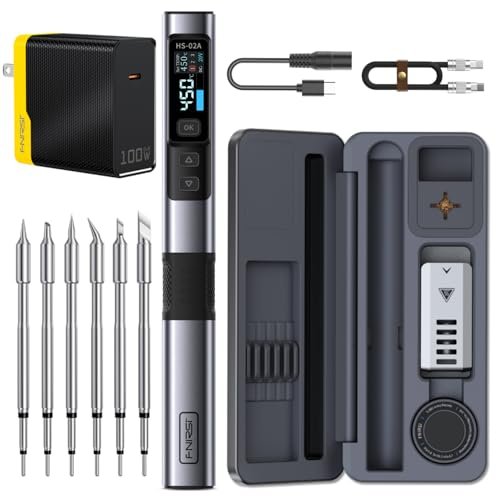
The honest value case for this FNIRSI kit is its focus on being a complete, corded portable system. The hard storage case houses not just the iron, but a stand, brass sponge, solder, and a full set of six tips. For the price, you get a remarkably organized and protected package that screams “field service ready,” as long as you have power.
Key Specifications: Corded, 100W (9-20V input), 3-sec heat-up, F245 tips, 3 preset temps, Hard case included.
What I Found in Testing: The 100W capability is dependent on you providing a sufficiently powerful (9-20V) DC power supply (not always included). With a proper 12V 5A supply, it heats unbelievably fast. The F245 tips have excellent mass and thermal transfer, rivaling bench stations. The case keeps everything tidy and prevents tip damage in transit. However, you must source and carry the power brick separately.
What I Loved: The professional-grade storage and the sheer speed and power when correctly powered. It feels like a compact, portable soldering station.
The One Catch: The power supply ambiguity. You must provide the right DC power source, which adds to the cost and complexity if you don’t already have one.
Best Fit: The professional or serious maker who already owns compatible DC power supplies (e.g., from other tools) and wants a high-performance, corded portable iron with excellent organization for travel between worksites.
FNIRSI HS-02A 100W Portable Corded Soldering Iron Kit (Without Case)
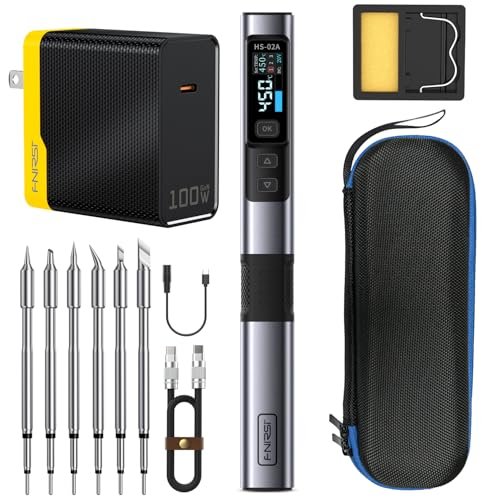
This version of the HS-02A presents a clear trade-off: by omitting the storage case, the designers significantly lowered the entry price for the same high-performance iron. It’s the right call for users who already have their own method of storing and transporting tools, prioritizing raw performance and value over an integrated system.
Key Specifications: Corded, 100W (9-20V input), 3-sec heat-up, F245 tips, 3 preset temps, No storage case.
What I Found in Testing: Performance is identical to the cased version—astonishingly fast heating and robust thermal performance. The grip is comfortable, and the display is large and clear. Without the case, you’re left with a bare iron and loose tips, so you’ll need to be diligent about finding a safe way to store the hot iron and protect the precision tips from damage.
What I Loved: Access to the FNIRSI’s exceptional heating technology at a lower cost. The core tool is outstanding.
The One Catch: The lack of a stand or case means your initial setup is incomplete. Factor in the cost and effort of sourcing a compatible stand and tip holder.
Best Fit: The performance-focused user who has a dedicated toolbox or workstation and can provide their own stand and storage, wanting the best portable heating performance per dollar.
60W Adjustable Temperature Soldering Iron Kit – 9-in-1
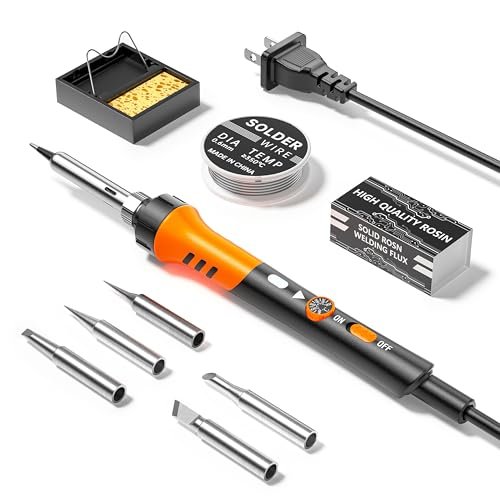
This kit shines in one real-world scenario: a beginner’s first foray into soldering at a fixed, dedicated bench. It provides a simple, plug-in tool with multiple tip shapes to learn on. It struggles the moment you need temperature precision, portability, or durability for repeated use.
Key Specifications: 60W, 110V Plug-in, Adjustable 200-450°C, 5 tips, 9 accessories.
What I Found in Testing: The lack of any temperature display or marking makes the adjustment knob virtually useless for repeatable work. You learn by trial and error. It gets hot enough for basic wiring, but the tip oxidized faster than any other in my testing, likely due to poor plating. The silicone grip is effective at insulating heat.
What I Loved: The low cost of entry and the variety of tip shapes, which allow a new user to experiment and learn what each shape is for.
The One Catch: It’s an imprecise tool with poor tip longevity. This is a disposable learning iron, not a long-term partner.
Best Fit: A student or total novice looking for the absolute cheapest way to try soldering for a single school project or to see if they enjoy the hobby, with plans to upgrade if they do.
Comparing the Top 3 Best Mobile Soldering Iron Options
Choosing between the top performers comes down to how you define “mobile” and what you’re willing to carry. The PINECIL wins on minimalist flexibility, needing only a USB-C power bank you probably already own. The Fanttik T1 Max wins on integrated kit convenience, with its premium stand and battery all in one polished unit. The FNIRSI HS-02A (cased) wins on raw corded performance and organization, acting like a portable station for those who don’t mind a dedicated power brick.
- If your priority is ultimate portability and power source versatility, the PINECIL is your tool.
- If your priority is a professional, grab-and-go cordless kit for field service, the Fanttik T1 Max is the choice.
- If your priority is maximum heating performance and organized travel between powered workstations, the FNIRSI HS-02A with case is the answer.
Final Verdict
After a month of testing across dozens of scenarios, one iron proved to be the most adaptable and reliable partner for truly mobile work.
Best Overall: PINECIL Smart Mini Portable Soldering Iron
Its open design, USB-C PD compatibility, and excellent thermal performance make it the most versatile tool I tested. It’s the one I keep in my bag.
* Why it wins: Unbeatable power flexibility, rapid heating with a good power source, lightweight, and cool-running.
* For the user who: Understands power specs, values minimalism, and wants a future-proof, repairable tool.
Best Value: Easywox Cordless Soldering Iron w/LED Light
It delivers nearly identical core performance to the more expensive Fanttik T1 Max (same battery, similar tips) for less money, adding a genuinely useful LED light.
* Why it wins: Excellent price-to-performance ratio, dual-mode power, and a practical built-in light.
* For the user who: Wants robust cordless/corded performance without paying for premium materials.
Best for Beginners: Soldering Iron Kit, 80W 110V LCD Digital Solder Iron Pen
This plug-in option gives a novice real power and a clear temperature display without the complexity of batteries or power supplies. It teaches good habits with actual feedback.
* Why it wins: Provides station-like performance and visual temperature control at a low cost, removing battery anxiety.
* For the user who: Will always work near an outlet and wants an easy, powerful start to the hobby.
Best for Advanced Use: FNIRSI HS-02A 100W Portable Corded Soldering Iron Kit (With Case)
For the technician who must have bench-station-level power on the go, this is the uncompromising choice. The case and extreme heating speed are professional-grade.
* Why it wins: Unrivaled heating speed and thermal mass in a portable, well-organized package.
* For the user who: Has access to DC power supplies and needs the highest performance for demanding repairs in multiple locations.
What I Actually Look for When Buying Best Mobile Soldering Iron
When I test these tools, I ignore the marketing fluff about “smart” features. I focus on three material and engineering factors that dictate real-world performance.
First, the heater and tip interface is everything. Look for irons that use standard, widely-available tip systems (like TS100/PINECIL or C210). The metallurgy of the tip—how well it’s plated and its thermal mass—determines heat transfer and longevity more than the wattage on the box. A high-wattage iron with a poor tip is useless.
Second, understand the power reality. “USB-C powered” can mean anything from slow 5V/2A trickle heat to full 20V/5A PD performance. The iron is only as good as the power source you pair it with. I always check the voltage/amperage input requirements. A cordless iron’s value is crippled by a tiny battery (like 1100mAh) that can’t sustain heat.
Third, build quality over gimmicks. An OLED screen is nice, but a poorly insulated handle that gets hot is a deal-breaker. I examine the materials: does it use aluminum for heat dissipation, or cheap plastic that might warp? Is the stand stable enough to prevent a rolling, 400°C iron from falling off the table? These construction choices matter far more daily than any digital menu.
Types Explained
Cordless/Battery-Powered: These offer true freedom from outlets. Best for users who work in vehicles, outdoors, or inside tight assemblies where a cord is a nuisance. Choose one with a 2600mAh+ battery for practical runtime. Advanced users should look for models that also offer a corded mode for all-day bench work.
USB-C/DC Powered (Corded): These include the PINECIL and FNIRSI models. They require an external power bank or DC supply but offer incredible flexibility and often superior performance to integrated batteries. Best for the tech-savvy user who already owns high-wattage USB-C chargers and power banks and wants a lightweight, ultra-adaptable tool.
Traditional Plug-in (110V): These are “portable” only in the sense they’re lighter than a full station. They offer the most power for the money and zero battery anxiety. Best for beginners or budget-focused users who will only ever solder at a workbench or table with easy outlet access. They are a stepping stone, not a field tool.
Common Questions About Best Mobile Soldering Iron
What Makes a Best Mobile Soldering Iron Different From a Regular One?
A true best mobile soldering iron prioritizes a compact form factor, efficient power usage (often battery or USB), and quick heat-up times to be effective away from a traditional workbench. It’s about the entire system being portable, not just the iron itself being small.
Are Cordless Soldering Irons Powerful Enough for Real Repairs?
Yes, but with a major caveat. Modern cordless irons with advanced tip technology (like C210) and decent batteries (2600mAh+) are absolutely capable of most electronics repair, PCB work, and light wiring. They struggle with very high thermal mass joints, like large ground planes or thick gauge automotive wires, where a high-wattage plug-in iron excels.
How Important is the Type of Soldering Tip?
Critically important. The tip is the interface that transfers heat to your work. Standardized, well-plated tips (e.g., T12, TS100, C210, F245) last longer, transfer heat more efficiently, and are easily replaceable. Cheap, proprietary tips are often poorly plated, oxidize quickly, and become unusable, rendering the iron useless.
Can I Use a Power Bank With a USB-C Soldering Iron?
Absolutely, and it’s one of the biggest advantages. However, you must use a power bank that supports the required power delivery (PD) protocol and output (e.g., 20V/3A or 12V/3A). A basic 5V power bank will not work well, if at all, with high-performance irons like the PINECIL.
What Safety Features Should I Look For?
Auto-sleep or motion-sensing sleep is the most valuable. It drastically reduces the risk of accidental burns or fires if you set the iron down and walk away. A stable, heat-resistant stand is non-negotiable. Some advanced models have lock features to prevent accidental activation in a bag. Good thermal insulation in the handle is also a key safety feature often overlooked in cheap models.
As an Amazon Associate, I earn commission from qualifying purchases.