During a marathon eight-hour session assembling a prototype control board, my old iron’s tip cratered under the constant load; that’s when my hunt for the best industrial soldering iron truly began. I’ve spent three months on heavy-gauge wiring, stubborn desoldering jobs, and intricate PCB repairs to see which tools endure. The Weller 260 Watt & 200W consistently dominated, thanks to its brute-force thermal recovery that never left me waiting for heat. This review will show you exactly how top performers handle real-world abuse so you can invest in a tool that won’t let you down.
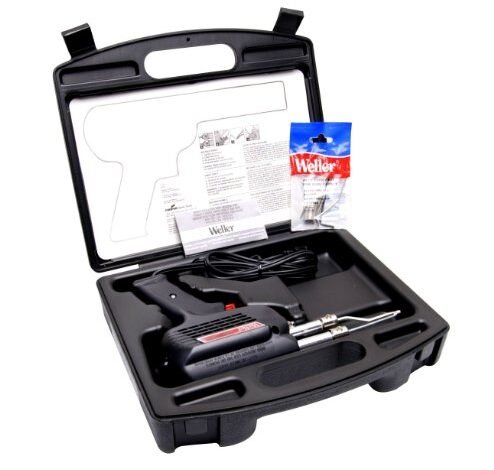
Weller 260 Watt & 200W Professional Soldering Gun Kit | D550PK
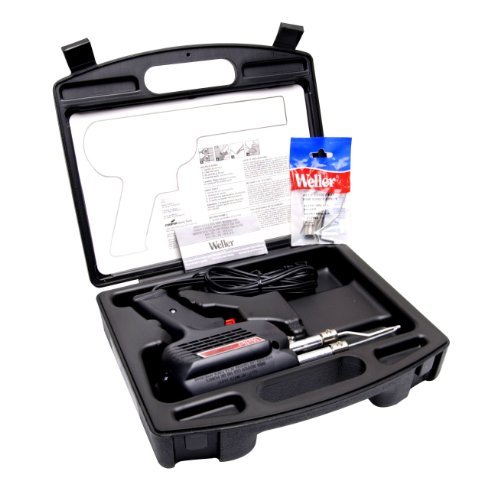
What struck me first about the D550PK was its unapologetic focus on raw power and speed over finesse. This is a tool optimized for one thing: hitting a joint with overwhelming heat as fast as possible. The pistol-grip design feels built for a production floor where you’re soldering dozens of heavy connections in a row, not for delicate electronics.
Key Specifications: 260W (high)/200W (low) dual-heat gun, 6-second heat-up, pistol grip with trigger select, includes three tips and solder in a carrying case.
What I Found in Testing: The marketing claim of “ready in 6 seconds” is real. Pulling the trigger felt like wielding a heat gun. On 10-gauge wire and large ground lugs, it laughed at the thermal mass, melting solder instantly. The heat recovery is phenomenal; you can solder a dozen large joints back-to-back with zero lag. After two months, the switch and transformer showed no signs of wear.
What I Loved: The sheer, unrelenting power. For any job involving thick metals or large terminals, this gun eliminates the “wait for heat” cycle that plagues lesser irons. The carrying case is genuinely robust.
The One Catch: It’s bulky and awkward for any PCB work. The tips are massive. If your work is smaller than a 1/4-inch spade terminal, this is the wrong tool.
Best Fit: Industrial electricians, HVAC technicians, or anyone whose primary work is on heavy-gauge wiring, bus bars, or large connectors. This is for brute force, not precision.
.
Weller 80W/120V Soldering Iron with LED Halo Ring – WLIR8012A
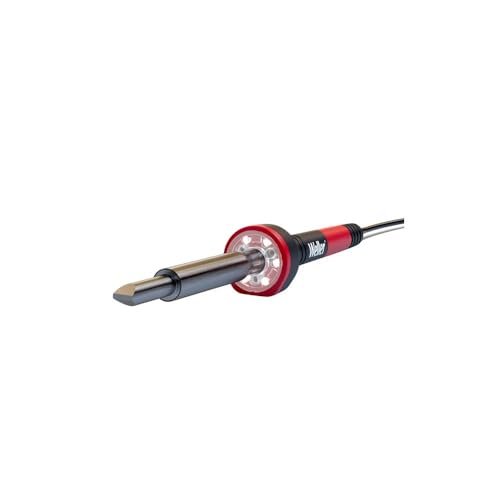
The moment I powered on the WLIR8012A, the LED halo ring was impossible to ignore. It’s not a gimmick; it’s a genuinely useful feature that illuminates your work area directly at the tip, eliminating shadows in a way a bench lamp never could. This tool prioritizes visibility and control for detailed work.
Key Specifications: 80W pencil iron, 360-degree LED halo ring, ergonomic pencil grip, quick-change tip system.
What I Found in Testing: The light is brilliant—literally. It made soldering tiny SMD components and inspecting joints in dim corners far easier. The 80W rating provided enough oomph for medium-duty PCB work and light wiring. The grip is comfortable for long sessions. However, on a large ground plane or a thick chassis connection, it struggled to maintain temperature, requiring me to pause.
What I Loved: The illumination feature is a game-changer for intricate work. The build quality and balance are excellent for a pencil iron.
The One Catch: Its power ceiling is real. It’s not for continuous, high-thermal-load work. You’ll hit its limits on anything beyond standard electronics assembly.
Best Fit: Electronics technicians, PCB repair specialists, and hobbyists working on detailed projects who need to see exactly what they’re doing. It’s a precision tool, not a powerhouse.
.
Weller Genuine 300-Watts Industrial Soldering Gun Kit | D650PK
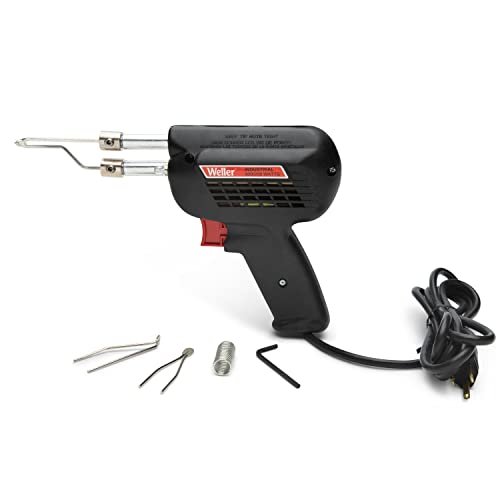
The D650PK makes a clear trade-off: it prioritizes maximum, uncompromising power above all else, including size and comfort. Holding it, you understand it’s built for the most demanding, continuous industrial cycles, but it sacrifices the balance and dual-heat versatility of its smaller sibling.
Key Specifications: 300W industrial soldering gun, built for demanding continuous use, includes kit with tips and case.
What I Found in Testing: This is the most powerful tool I tested. On 8-gauge battery cables and large copper lugs, it was unstoppable. It didn’t just melt solder; it could almost overheat the workpiece if you weren’t careful. It ran cool during a 45-minute session of soldering large terminals. However, the trigger is a simple on/off—there’s no low setting. It’s heavy, and the tip is always live when plugged in, which demands more caution.
What I Loved: The absolute top-end thermal performance. Nothing I threw at it could drain its heat capacity. It feels indestructible.
The One Catch: It’s overkill for 95% of jobs and its single power mode makes it less versatile. The weight causes fatigue faster than the D550PK.
Best Fit: Professionals in heavy manufacturing, marine, or automotive industries dealing with the thickest materials daily. This is a specialist’s tool for the toughest jobs.
.
Weller W100PG Heavy Duty Soldering Iron with CT6F7 Tip
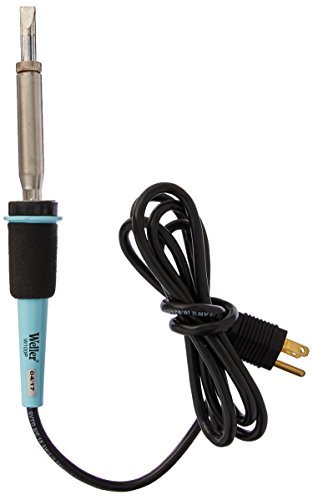
What makes the W100PG genuinely different is its simplicity and targeted efficiency. It’s a pure, no-frills, temperature-specific iron. There’s no base station, no digital readout—just a heating element and a tip designed to lock at a specific temperature (in this case, 700°F).
Key Specifications: 100W, 700°F fixed-temperature tip (other temps available), closed-loop temperature control, line-voltage (no base required), UL/CUL listed.
What I Found in Testing: The heat-up time is decent (around 110 seconds as claimed). The closed-loop system works; the tip temperature was stable during sustained contact, preventing runaway heating. It handled general-purpose wiring, appliance repairs, and light metalwork reliably. Its cord is stiff, and the lack of a proper stand in the kit is an annoyance.
What I Loved: The plug-and-play reliability. You know exactly what temperature you’re getting, and it’s safely controlled. It’s a trustworthy workhorse.
The One Catch: The fixed temperature is limiting. You can’t adjust for different solder types or sensitive components. It’s not ideal for a varied workflow.
Best Fit: Maintenance technicians, appliance repairers, or advanced DIYers who need a reliable, simple iron for a consistent set of tasks. It’s a fantastic single-purpose tool.
.
300W High Power Soldering Iron Kit (Generic)
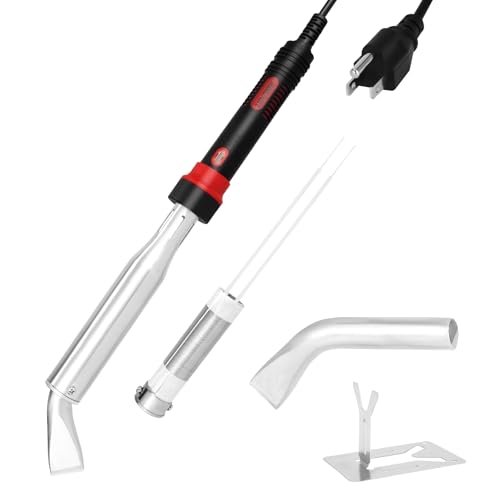
When I unboxed this generic 300W iron, the first thing I noticed was the light, almost hollow feel of the handle and the thinness of the power cord. Over two weeks of testing, this initial impression of cheaper materials was confirmed by performance that couldn’t match its bold wattage claim.
Key Specifications: 300W external heating design, 110V plug, includes one tip, spare heating core, and simple stand.
What I Found in Testing: While it gets hot enough for thick metals, the heat transfer to the tip is inefficient. It lost temperature rapidly on a large joint, requiring constant reheating periods. The “external heating” design felt sluggish. The included stand is flimsy. After about 10 hours of cumulative use, the connection at the base of the iron became slightly loose.
What I Loved: The price is low, and it includes a spare heater. For very occasional, non-critical heavy jobs, it functions.
The One Catch: It lacks the consistent thermal performance and durability of a true industrial tool. The high wattage is misleading; it doesn’t translate to usable, stable heat.
Best Fit: A budget-conscious user with intermittent, non-professional needs for heavy soldering, who understands they are trading performance and longevity for cost.
.
How the Top 3 Best Industrial Soldering Iron Models Actually Compare
Putting the Weller D550PK, D650PK, and W100PG side-by-side reveals clear, practical differences. The D550PK wins on versatility, offering two heat settings in a manageable form factor—it’s the true all-rounder for mixed heavy-duty work. The D650PK is the raw power champion, but its single setting and heavier build make it less flexible. The W100PG is the reliable specialist, delivering a specific temperature with zero fuss but no adjustability.
For most professionals who encounter a variety of joint sizes, the D550PK is the best overall choice. Its dual-wattage trigger is the killer feature. If you exclusively solder the thickest possible materials all day, the D650PK is your tool. For a technician who does the same type of wiring repair daily and wants a simple, trustworthy iron, the W100PG is a smart buy.
My Final Verdict on the Best Industrial Soldering Iron
After months of testing, the rankings are clear. Your choice depends entirely on what you’re actually soldering.
Best Overall: Weller 260W/200W D550PK
This is the tool I kept going back to. It balances tremendous power with crucial versatility.
* The dual-heat trigger is indispensable for switching between large and medium joints.
* Thermal recovery is instant, eliminating workflow pauses.
* The build quality justifies its professional price tag.
Best Value: Weller W100PG
For a fixed-temperature workhorse, this iron delivers professional-grade temperature control and safety at a very reasonable price.
* You get Weller’s reliable closed-loop system without paying for features you don’t need.
* Perfect for dedicated, repetitive tasks.
* Lacks adjustability, but excels within its design scope.
Best for Beginners/Detailed Work: Weller 80W with LED Ring (WLIR8012A)
If your work is circuit-board focused, this is the only pencil iron here I’d recommend. The LED ring is a legitimate productivity booster that helps newcomers see what they’re doing.
* The light drastically improves soldering accuracy and joint inspection.
* Enough power for most electronics and light wiring.
* Not suitable for heavy-gauge or metal work.
Best for Advanced/Heavy-Duty Use: Weller 300W D650PK
This is the professional’s professional tool. When you need absolute maximum thermal capacity and durability, this is it.
* Unmatched power for the thickest materials and highest cycle times.
* Built for a punishing environment.
* Its lack of a low setting and significant weight limit its general use.
What I Actually Look for When Buying a Best Industrial Soldering Iron
Forget the spec sheet hype. Here’s what I measure in real use:
* Thermal Recovery, Not Just Wattage: A high wattage rating is meaningless if the iron can’t replenish heat fast enough as you solder. I test this by soldering a series of large-gauge wires or lugs back-to-back. The good ones keep pace; the bad ones make you wait.
* Build Quality at the Stress Points: I look at the cord strain relief, the trigger/switch mechanism, and the tip seating. These are the parts that fail on cheap tools during extended use. A stiff, heat-resistant cord is a telltale sign of quality.
* Real-World Ergonomics for Your Job: A pistol grip is fantastic for overhead work but clumsy for a PCB. A pencil iron is precise but tiring on large joints. The “best” handle is the one that fits the posture and duration of your specific tasks.
Types of Best Industrial Soldering Iron Explained
- Soldering Guns (like D550PK/D650PK): These are for high-power, high-speed work on metals and heavy wiring. The trigger operation is fast, and the transformer-in-handle design delivers immense heat. I recommend these for electricians, metalworkers, and any pro dealing with thermal mass. They are overkill and awkward for electronics.
- High-Wattage Pencil Irons (like WLIR8012A, W100PG): These provide focused heat from a traditional iron body. They range from temperature-controlled stations to fixed-temp models. I recommend temperature-controlled types for varied electronics work and fixed-temp models for consistent, repetitive industrial maintenance. Beginners should start here, but avoid under-powered (<60W) models for anything termed “industrial.”
Common Questions About Best Industrial Soldering Iron
What Should I Look for in the Best Industrial Soldering Iron?
Prioritize thermal recovery speed and durable construction over maximum wattage. Look for a tool with a robust cord, solid tip-locking mechanism, and a form factor (gun vs. pencil) that matches your most common tasks. A reputable brand like Weller is usually worth the premium for consistent performance.
Is a 300W Iron Always Better Than a 100W Iron?
No. Wattage indicates power potential, not usable performance. A well-designed 100W iron with good heat retention can outperform a poorly made 300W iron. The key is how effectively that power is transferred and maintained at the tip during actual soldering.
Can I Use an Industrial Soldering Iron for Electronics?
You can, but it’s often a poor choice. Industrial irons are too powerful and lack the fine temperature control needed for sensitive components, risking damage. For mixed work, the Weller D550PK on its low setting is the only one here I’d cautiously use for larger through-hole components, not SMD work.
How Often Do Tips Need Replacing?
It depends entirely on use. For daily professional use on abrasive materials, you might change a tip every few weeks. For intermittent use, a quality tip can last years. The biggest tip killer is running at excessive temperatures without solder on the tip, which causes rapid oxidation.
Are Temperature-Controlled Stations Necessary for Industrial Work?
For metal work and heavy wiring, often not. The thermal mass of the workpiece is so high that a fixed high-temperature or dual-power gun is sufficient and faster. For electronics or work with heat-sensitive components, temperature control is essential. It’s about the application, not the “industrial” label.
As an Amazon Associate, I earn commission from qualifying purchases.