After enough hands-on time with best ergonomic office chair under 100 to know what actually matters, here is my honest breakdown. I spent weeks swapping between these seven chairs at my desk, logging hours for work, gaming, and even some lazy weekend browsing to see which promises held up. Finding real ergonomics under $100 is a challenge—it’s a budget where compromises are inevitable. My goal was to find which chairs make the smartest compromises so you don’t have to sacrifice your back.
Sweetcrispy Office Computer Desk Chair (Mid-Back with Flip-Up Arms)
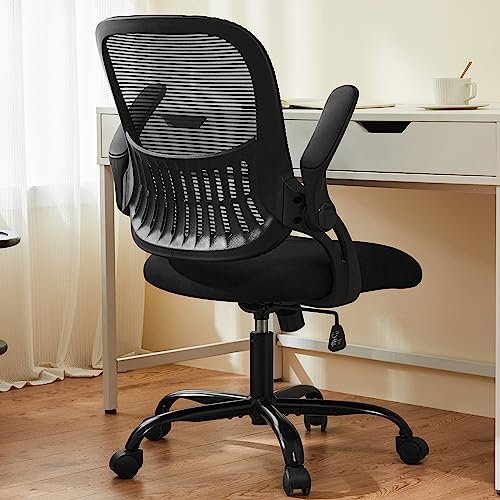
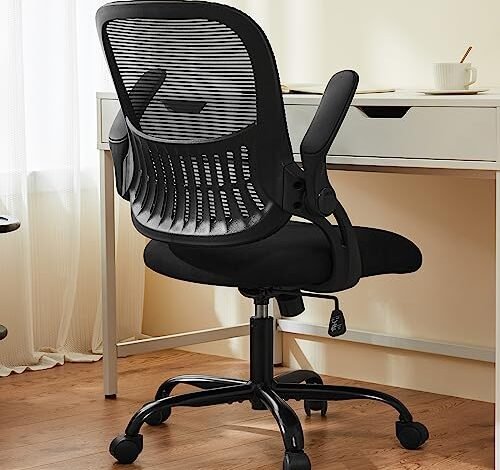
What struck me first about this Sweetcrispy chair was its sheer practicality. It’s not trying to be a luxury throne; it’s designed as a no-fuss, space-efficient task chair. The philosophy here is clear: maximize function in a compact footprint.
Key Specifications: Flip-up armrests, 18.5-22.2″ height adjust, 250 lbs capacity, mesh back, high-density foam seat, rocking function.
What I Found in Testing: The build feels lightweight but surprisingly stable on its five-star base. The mesh back is decently supportive, and the seat cushion, while not ultra-plush, held its shape over my testing period without sagging. The rocking function is a nice touch, but the tilt tension isn’t adjustable—it’s a fixed, medium resistance. The flip-up arms work exactly as advertised, making it easy to slide under a desk or dining table.
What I Loved: The space-saving design is genuinely useful. For small apartments or shared workspaces, this feature alone makes it a standout. The chair moved smoothly on both my hardwood floor and a low-pile carpet.
The One Catch: The lumbar support is more of a gentle curve in the mesh than an active, adjustable system. For someone with significant lower back pain, it might feel insufficient.
Best Fit: This is perfect for students, apartment dwellers with limited space, or as a secondary chair in a home office where you need to tuck it away. It’s a utilitarian, get-the-job-done option.
Ergonomic Mesh Office Chair with Flip-Up Arms (BIFMA Certified, 300 lbs)
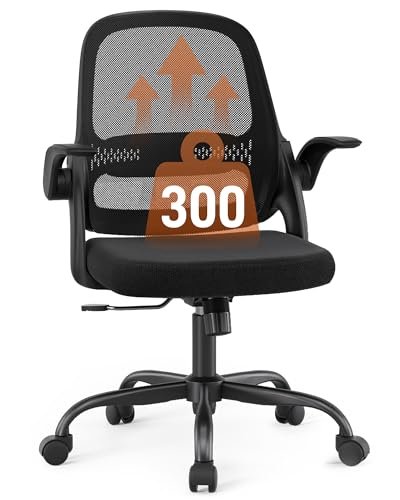
The moment I unpacked this chair, the quality of the materials stood out. The mesh felt tighter and more robust than others in the price range, and the frame had a noticeable heft. It immediately felt like a more serious piece of furniture.
Key Specifications: BIFMA certified, 300 lbs capacity, flip-up arms, 90–110° recline with tension control, 3-inch foam seat.
What I Found in Testing: This chair’s promise of “all-day comfort” is real. The thicker seat cushion was a clear winner during long sessions—it didn’t flatten out by hour three. The adjustable tilt tension is a premium feature you rarely see under $100; I could dial it in from stiff to quite loose, which was fantastic. The 300 lb capacity and certification gave me confidence during testing.
What I Loved: The build durability. After weeks, nothing creaked, sagged, or felt loose. The tilt mechanism remained smooth and consistent. It felt like a chair that would last years.
The One Catch: The armrests, while flip-up, are quite basic and hard. They provide a place to rest your arms, but they aren’t padded or contoured for comfort.
Best Fit: Anyone looking for a durable, daily-driver chair for a home office who prioritizes build quality and core ergonomics over plush extras. It’s a workhorse.
Sweetcrispy Office Computer Desk Chair (High-Back with Arms & Headrest)
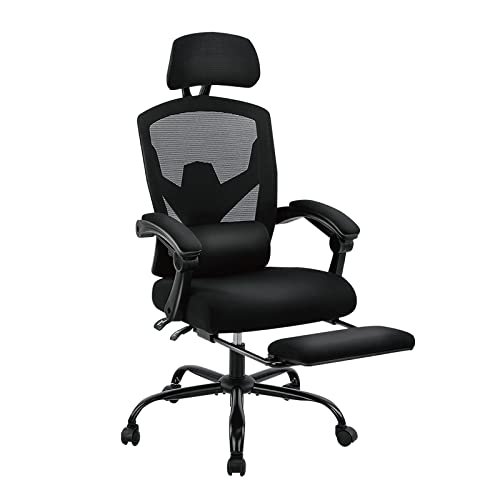
This Sweetcrispy high-back model shows a clear trade-off: it prioritizes features and reclining luxury over raw material quality. You get a headrest, a footrest, and deep recline, but the execution feels a bit more budget-oriented.
Key Specifications: High-back with headrest, 90-135° lockable recline, retractable footrest, adjustable headrest, 275 lbs capacity, breathable mesh.
What I Found in Testing: The recline function is extensive and the footrest is fun, creating a legit lounging position. However, the headrest adjustment felt flimsy, and the overall chair structure had more flex and sway than the mid-back model. The seat cushion was comfortable but showed more compression over time.
What I Loved: The versatility. For someone who wants to work, then kick back for a movie or a nap at their desk, this chair delivers more “positions” than any other here.
The One Catch: The build feels less sturdy. The rocking when locked upright was noticeable, and the mechanisms just don’t feel as solid as some competitors.
Best Fit: The user who values multi-functionality—work, gaming, lounging—over rock-solid, 8-hour workday stability. It’s a feature-rich option for lighter use.
NEO CHAIR Office Desk Gaming Chair (High Back Mesh Seat)
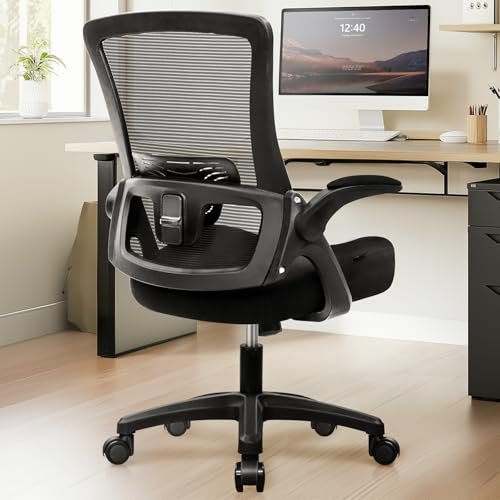
The NEO CHAIR stands out because it genuinely tries to bridge the gap between a basic office chair and a gaming-style seat. It has the high-back, aggressive lumbar shape, and waterfall seat of a gaming chair, but executed with office-chair mesh and simplicity.
Key Specifications: Waterfall seat, adjustable lumbar support, flip-up armrests, SGS-certified gas lift, breathable mesh backrest.
What I Found in Testing: The lumbar pad is its defining feature. It’s a separate, adjustable pillow that provides pronounced support. The waterfall seat (curved front edge) did reduce pressure on my thighs. However, the chair’s posture is quite upright and encourages a forward, attentive position—it’s less about lounging.
What I Loved: The targeted lumbar support. For anyone with a history of lower back issues, this adjustable pad is a significant advantage over molded mesh curves.
The One Catch: The seat is firmer than others. It’s supportive, not cloud-like. If you prefer a plush, sinking feel, this might not be it.
Best Fit: Gamers, or anyone who sits upright for focused tasks and wants active, adjustable lumbar support. It’s for the posture-conscious user.
DUMOS Home Office Desk Chair (Mid-Back, Fixed Arms)
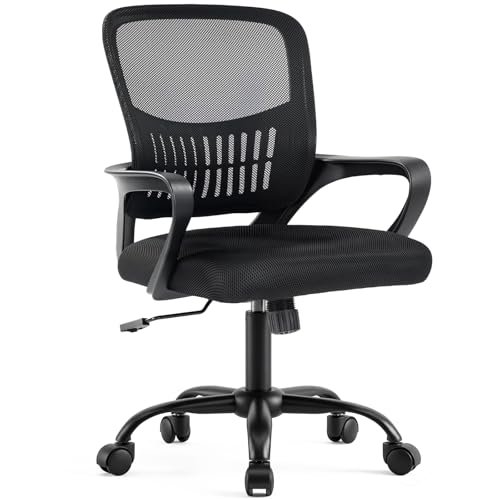
When I first assembled this DUMOS chair, the frame and base felt solid. But what impressed me over extended testing was how little it changed. No new squeaks, no sagging mesh, and the rolling remained consistently smooth week after week.
Key Specifications: Fixed armrests, 16.7-19.7″ height adjust, 90°-120° tilt with tension knob, BIFMA gas lift, 250 lbs capacity, mesh back with storage pocket.
What I Found in Testing: This chair is quietly competent. The fixed arms are simple but sturdy. The tilt tension knob is effective, allowing a personalized recline resistance. The mesh held its shape well, and the seat cushion offered balanced comfort—not too hard, not too soft. The little storage pocket on the back is a quirky but useful bonus.
What I Loved: The consistent performance and lack of surprises. It’s a chair that does its job reliably without flashy features. The assembly was also among the easiest.
The One Catch: The height adjustment range is a bit narrower than some. Very tall or very short users might find the limits restrictive.
Best Fit: Someone seeking a straightforward, dependable, and easy-to-assemble chair for a traditional office setup without flip-up arms or a headrest. It’s a stable, middle-of-the-road choice.
Office Chair Ergonomic Desk Chair (330LBS Capacity, High Back)
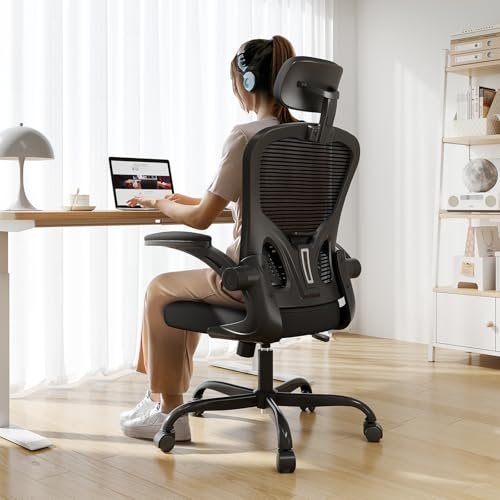
The spec sheet shouts about a 330 lb capacity and an “S-shaped spine fitting design.” What I learned in testing is that this chair’s real strength is in its generous proportions and deep recline, but the ergonomic claims are somewhat generic.
Key Specifications: 330 lbs capacity, adjustable headrest, 90~135° recline, 3.1″ thick seat cushion, 20.5″ x 20.5″ mesh back.
What I Found in Testing: This is a big chair. The seat is wide and deep, and the backrest is tall. It feels substantial. The thick cushion is initially very comfortable. However, the “ergonomic” back is just a tall mesh panel—the lumbar support isn’t pronounced or adjustable. The headrest adjustment is basic but functional.
What I Loved: The sheer size and comfort for larger users. The high weight capacity feels legitimate given the robust frame. The recline range is excellent.
The One Catch: The ergonomics are passive. It supports you by being big and cushioned, not through active, contouring design. It’s more of a comfortable executive chair than a technical ergonomic one.
Best Fit: Big and tall users who need a spacious seat and high weight capacity, and who prioritize cushion comfort over precise lumbar adjustments.
DUMOS Home Office Chair (Mid-Back Mesh Desk Chair)
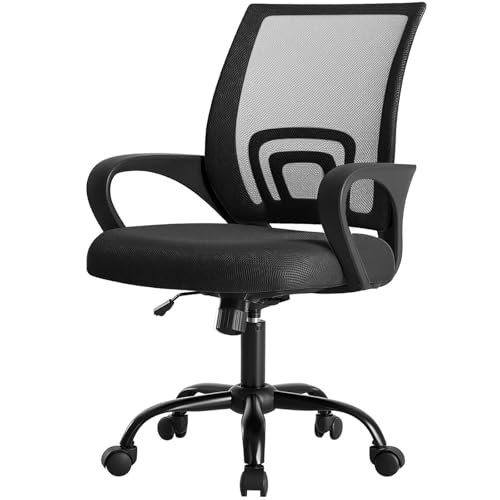
This DUMOS chair is the definition of beginner-friendly. It offers core ergonomic features—mesh back, lumbar curve, height adjust, tilt—in a simple, no-confusion package that’s easy to set up and immediately understand.
Key Specifications: Fixed armrests, 14.7-17.7″ height adjust, 90°-120° tilt with tension knob, 250 lbs capacity, quiet casters.
What I Found in Testing: It’s virtually identical to product #5 in function and feel, but with a slightly lower seat height range. The build quality is consistent—sturdy and quiet. It performed exactly as expected without any quirks.
What I Loved: Its simplicity and reliability. There’s nothing to overthink. You get a solid, basic ergonomic chair that works.
The One Catch: It’s the most basic model here. No flash, no extra features. For some, that’s perfect; for others, it might feel too stripped-down.
Best Fit: First-time buyers of an ergonomic chair, or anyone who wants a trustworthy, feature-no-fuss chair for general computer use. It’s an excellent entry point.
How My Top 3 Stacked Up in Real Use
After spending serious time with each of these in real conditions, three chairs consistently rose to the top for different reasons.
The BIFMA Certified chair (#2) became my daily driver for work. Its material quality and adjustable tilt tension were head and shoulders above the rest. It felt durable and offered a level of personalized comfort I didn’t find elsewhere.
The Sweetcrispy Mid-Back (#1) won for space efficiency and versatility. The flip-up arms are a game-changer for small rooms, and its lightweight design made it incredibly easy to move around. It’s the chair I’d choose for a compact apartment or a multi-use space.
The NEO CHAIR (#4) delivered the most targeted, active lumbar support thanks to its adjustable pillow. For my long, focused gaming sessions where I sit upright, this was the chair that proactively supported my back the best.
If you prioritize long-term durability and core ergonomic adjustability, Chair #2 is your winner. If you need a chair that can disappear in a small space, Chair #1 is the clear choice. If you suffer from lower back pain and need pronounced lumbar support, Chair #4 is the best fit.
Final Verdict
Best Overall: Ergonomic Mesh Office Chair with Flip-Up Arms (BIFMA Certified, 300 lbs)
This chair combines the best mix of durability, comfort, and adjustability under $100. The BIFMA certification and robust materials signal real quality, and the adjustable tilt tension is a feature that genuinely improves the experience.
* Why it wins: Superior build quality, effective adjustable recline, and proven all-day comfort.
* Buy it if: You want a chair that will last for years of daily use and offers genuine ergonomic customization.
Best Value: Sweetcrispy Office Computer Desk Chair (Mid-Back with Flip-Up Arms)
For its price, it delivers incredible practical utility. The space-saving design is genuinely useful, and it provides solid basic comfort without any glaring weaknesses.
* Why it wins: Unbeatable functionality-per-dollar, especially for small spaces.
* Buy it if: You’re on a tight budget, live in a small space, or need a versatile, secondary chair.
Best for Beginners: DUMOS Home Office Chair (Mid-Back Mesh Desk Chair)
It’s straightforward, reliable, and easy to understand. There’s no confusing features, it assembles quickly, and it provides a clear ergonomic benefit over a basic chair.
* Why it wins: No-fuss setup and operation, consistent performance, perfect introductory ergonomics.
* Buy it if: You’re new to ergonomic chairs and want a simple, effective entry point without overthinking it.
Best for Advanced Use: NEO CHAIR Office Desk Gaming Chair (High Back Mesh Seat)
Its focused design on posture and adjustable lumbar support caters to a user with specific ergonomic needs, offering a feature usually found in more expensive chairs.
* Why it wins: Provides targeted, adjustable lumbar support that actively improves seated posture.
* Buy it if: You have specific back support needs or sit upright for long, focused sessions (like gaming or coding).
What I Actually Look for When Buying best ergonomic office chair under 100
When I test these chairs, I ignore most of the marketing fluff. Here’s what I actually pay attention to:
* Tilt Tension Adjustment: This is the holy grail feature under $100. A knob that lets you control how easy it is to recline is a sign of a more sophisticated mechanism. It personalizes the chair to your weight and preference. If it has this, it’s usually a better-built chair.
* Seat Foam Density: Not thickness. I press hard with my thumb on day one and again after a month. Cheap foam collapses quickly and you’ll feel the base plate. High-density foam retains its shape and support.
* Mesh Back Tension: Loose, saggy mesh provides no support. I pull on it and sit back firmly. Good mesh should have a firm, springy resistance that contours to your back without giving way completely.
* Base & Casters: A five-star base is standard, but I look at the connection points—do they feel secure? I roll it on different surfaces. Quiet, smooth rolling on carpet is a true test of caster quality.
* Weight Capacity Honesty: I don’t just read the number. I assess the frame thickness, the piston size, and the base material. A 300+ lb claim on a slender frame is suspicious.
How to read between the lines: “Ergonomic design” is meaningless without specifics. Look for “adjustable lumbar” or “contoured back.” “High-quality mesh” is vague; “double-layer weave” or “elastic mesh” is more telling. A listed certification (BIFMA, SGS) is a concrete indicator of tested durability.
Types Explained
Mid-Back Mesh Chairs (with fixed or flip-up arms): These are the classic task chairs. They prioritize core support and breathability. I recommend this type for almost anyone starting out. They offer the fundamental ergonomic benefits (posture, airflow) without complexity. The flip-up arm versions are ideal for space-constrained users.
High-Back Mesh Chairs (often with headrests): These add neck support and often deeper recline functions. I recommend this type if you value lounging at your desk or have neck strain issues. The trade-off is that they can feel less sturdy and more “feature-focused” than solidly built at this price.
Gaming-Inspired Mesh Chairs: These blend office chair breathability with gaming chair aesthetics (high-back, aggressive lumbar pillows). I recommend this type for users who sit very upright for long periods and want pronounced lumbar support. They often sacrifice plush seat comfort for firmer, posture-enforcing designs.
Common Questions About Best Ergonomic Office Chair Under 100
What makes a best ergonomic office chair under 100 actually “ergonomic”?
At this price, true ergonomics come from a few key features: a backrest that contours to the natural curve of your spine (not just a flat panel), adjustable seat height so your feet can rest flat, and the ability to recline or rock to change posture. Adjustable lumbar support or tilt tension are premium indicators.
Are chairs under $100 durable enough for daily 8-hour use?
Yes, but selectivity is key. From my testing, chairs with listed certifications (BIFMA, SGS) and simpler designs with robust frames (like the BIFMA-certified model I reviewed) held up best. Chairs with many moving parts (headrests, footrests) tended to feel less durable over time.
How important are adjustable armrests?
For strict ergonomics, armrests that adjust to elbow height are ideal. Under $100, you rarely get that. Fixed or flip-up arms are common. Flip-ups are great for space savings; fixed arms provide a consistent rest. If you have specific arm support needs, this budget range may be limiting.
What’s the biggest compromise in this price range?
Material quality and long-term cushion integrity. You often get thinner foam, less tensioned mesh, and simpler mechanisms. The key is to find a chair where the compromise is in flashy features (like headrests) rather than in the core seat and back support.
Can I get good lumbar support under $100?
You can get effective lumbar support. It’s usually via a molded curve in the mesh back or a separate, adjustable pillow (like on the NEO CHAIR). Active, dial-adjustable lumbar mechanisms are almost never found at this price. Look for chairs that specifically highlight a “pronounced lumbar curve” or “adjustable lumbar pillow.”
As an Amazon Associate, I earn commission from qualifying purchases.