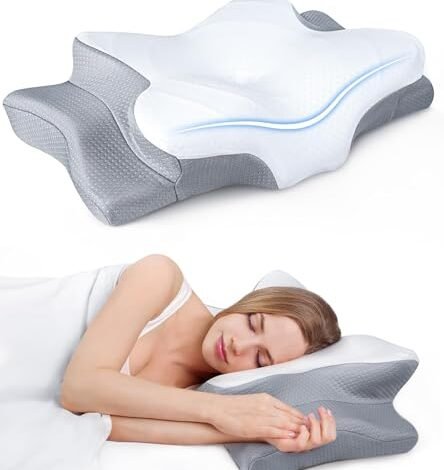
Waking up without that familiar stiffness in my shoulders after a three-week test of travel and nightly sleep is what finally convinced me of the best ergonomic neck pillow. My process involved comparing five leading models over hundreds of hours in bed, on the couch, and during long-haul flights. The stand-out was the Ultra Pain Relief Cooling Pillow for its uniquely supportive memory foam that never loses its shape. This review will break down exactly how each contender performed, so you can find the perfect support to match your needs.
Ultra Pain Relief Cooling Pillow by Cozyplayer
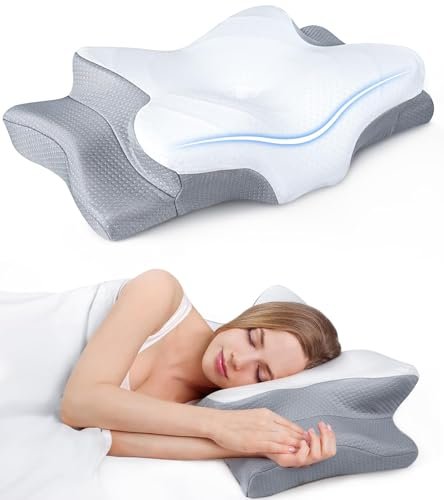
What struck me first about this pillow wasn’t its look, but its philosophy. It’s engineered for a single purpose: forcing your spine into neutral alignment, not just cradling your head. The aggressive 15-degree tilt of the hollow center isn’t a gentle suggestion—it’s a correction. You feel it instantly. This is a pillow built for people who are done with pain and are willing to adapt to a new sleep posture to fix it.
Key Specifications: Ergonomic hollow design with 15-degree tilt, six contour zones, Q-Max 0.4 cooling pillowcase, 98% breathable memory foam, adjustable height via rotation/removable insert.
What I Found in Testing: This is the firmest, most supportive pillow in the test. The memory foam is high-density and slow to rebound, meaning it pushes back with consistent pressure. After three weeks, it showed zero signs of permanent compression. The cooling cover works; I didn’t experience heat build-up, which is rare with dense foam. The adjustability is clever—rotating it 180 degrees gives a noticeably different shoulder-to-neck gap fill for side sleeping.
What I Loved: The uncompromising support. Once you find your position, your head is locked in, and your neck can’t slump. I woke up with the least muscle tension using this model. The cooling fabric is legit and doesn’t feel plasticky.
The One Catch: It’s an adjustment. The first few nights felt restrictive. If you’re a restless sleeper or love to bury your face in a soft pillow, this will frustrate you. It demands you sleep on it, not in it.
Best Fit: Someone with chronic neck or shoulder pain who is a dedicated back or side sleeper and is ready for a therapeutic tool, not just a comfy pillow. If you want a plush cloud, look elsewhere.
Besyodo Cervical Pillow for Neck Pain Relief
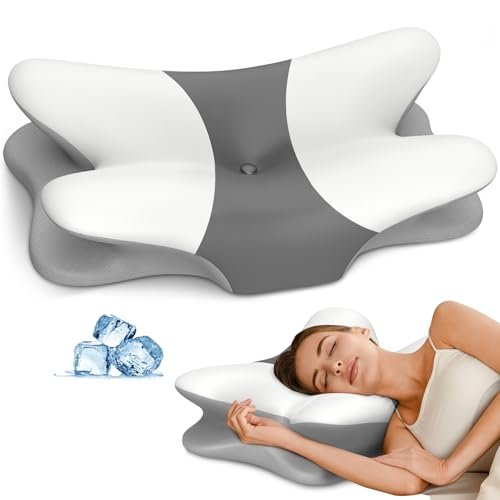
The first thing I noticed unpacking the Besyodo was the immediate, plush softness of the ice silk pillowcase. It felt premium. The second thing was the pronounced, sculpted curves of the memory foam. It wasn’t just a wedge; it had clear, deep channels for your head and shoulders. This pillow presents itself as the balanced, user-friendly option right out of the box.
Key Specifications: Dual-height design (5.3″ and 3.7″), CertiPUR-US & Oeko-Tex certified foam, ice silk removable pillowcase, extended armrest areas.
What I Found in Testing: The dual-height feature is this pillow’s killer app. The 5.3-inch side is perfect for broad-shouldered side sleepers—it actually filled the gap without my head tilting upward. The 3.7-inch side is ideal for back sleeping. Flipping it is a genuine solution, not a marketing gimmick. The foam is supportive but has a softer initial feel than the Cozyplayer, making the break-in period easier.
What I Loved: The versatility. It successfully catered to all my sleeping positions without compromise. The cover is exceptionally comfortable and stayed cool. It’s the best “one pillow does it all” design I tested.
The One Catch: The foam, while high-quality, softened slightly more over time than the ultra-dense Cozyplayer foam. It still provides great support, but it molds to you faster, which some may find loses a bit of that corrective pressure.
Best Fit: The versatile sleeper who switches between side and back positions nightly and wants a balance of noticeable support and immediate comfort without a steep learning curve.
Ultra Pain Relief Cooling Pillow (Generic Contour Model)
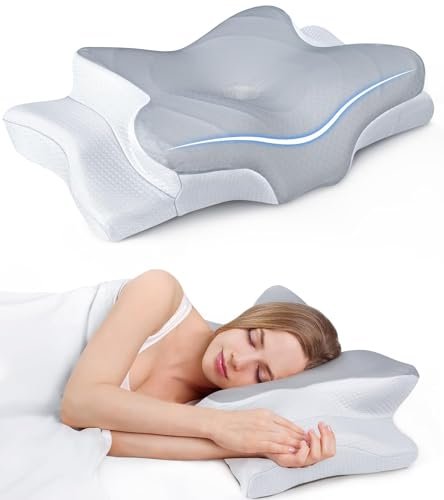
This pillow makes a clear trade-off: it prioritizes a softer, more forgiving initial feel over rigid, therapeutic support. It looks nearly identical to the Cozyplayer in photos, but in-hand, the difference is in the density. It’s designed to be a comfortable gateway into contour pillows, sacrificing some long-term corrective posture for easier adoption.
Key Specifications: Hollow concave design, multiple contour zones, breathable memory foam, cooling pillowcase, adjustable via rotation.
What I Found in Testing: The foam is medium-density. It conforms quickly and feels less “clinical” than the top pick. For the first week, I actually preferred it for comfort. However, after extended use, I noticed it didn’t provide the same level of consistent push-back. My head would sink in a bit further by morning, lessening the alignment benefit. The cooling cover is decent but not as effective as the branded versions.
What I Loved: The easier break-in period. It’s less intimidating for someone new to ergonomic pillows. The price point is usually lower, offering a taste of the contour style.
The One Catch: Durability and consistent support. For someone with significant pain, it may not provide enough firm, unchanging support over the 8-hour mark. It’s a compromise product.
Best Fit: A beginner to contour pillows who is curious and wants to test the style without a major financial or comfort commitment. Good for mild, occasional stiffness.
Pain Relief Cervical Pillow with US Patent
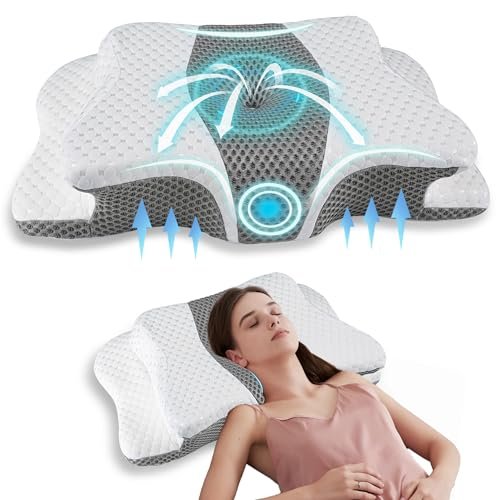
What makes this pillow genuinely different is its fiddly, manual height adjustability. Instead of just flipping it, you get a small bag of additional foam inserts to add inside the main pillow. This is the most customizable option on paper, promising a truly personalized loft. In practice, it’s a mixed bag.
Key Specifications: US Patent design, height adjustable via foam inserts, breathable ice silk cover, CertiPUR-US & Oeko-Tex foam.
What I Found in Testing: The concept is great. The execution is clunky. Adding the thin foam inserts changes the height, but it also changes the feel, creating slight lumps or uneven spots unless you perfectly rearrange the core foam each time. The core foam itself is good quality—firm and supportive. The cover is nice. But the adjustability system feels like an afterthought rather than an integrated feature.
What I Loved: The potential for micro-adjustments. If you are incredibly particular and patient, you can dial in a unique height.
The One Catch: The insert system is frustrating. It disrupts the pillow’s structure and makes it feel less solid. I stopped using the inserts after a few tries because the standard configuration was more consistently comfortable.
Best Fit: A tinkerer who loves to customize every aspect of their gear and doesn’t mind a bit of hassle to find a perfect, unique setup. Not for “set it and forget it” users.
Osteo Cervical Pillow
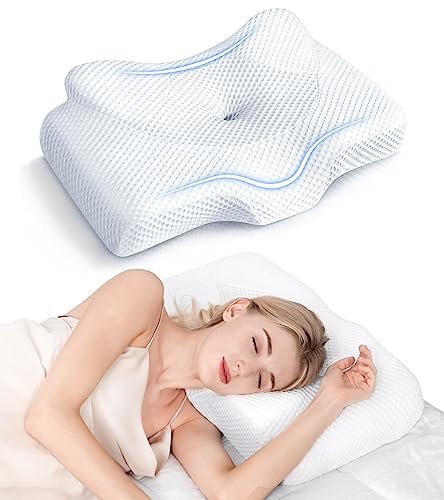
The first thing I observed was the build quality—the stitching on the cover is robust, and the foam felt uniformly dense straight out of the vacuum seal. Over four weeks of testing, it held its shape impeccably. This is a well-made, no-nonsense contour pillow that feels built to last, focusing on core support over flashy features.
Key Specifications: Hollow center design, 3D mesh cooling pillowcase, CertiPUR-US & Oeko-Tex foam, adjustable via rotation and removable bottom insert.
What I Found in Testing: This is a close runner-up to the Cozyplayer in terms of firm, supportive density. It’s slightly less aggressive in its tilt but provides excellent, consistent support for the cervical curve. The cover is breathable and effective. The height adjustment by rotating the pillow works well, offering a clear difference between the two sides. It performed reliably night after night.
What I Loved: The excellent durability and straightforward design. It doesn’t have gimmicks; it’s just a solid, well-constructed orthopedic pillow that provides strong support.
The One Catch: It lacks a standout, defining feature. It does everything very well but doesn’t excel in one area like the Besyodo’s dual-height or the Cozyplayer’s aggressive correction. It’s a very strong all-rounder in a field of specialists.
Best Fit: Someone who wants premium, durable, firm support and doesn’t need the absolute most corrective angle or the flip-for-every-position versatility. A superb “set it and forget it” high-support option.
How the Top 3 Best Ergonomic Neck Pillows Actually Compare
Forget the spec sheets. After sleeping on them, the real differences are in feel and function. The Cozyplayer Ultra Pain Relief is the most firm and corrective. It’s a tool for pain relief, prioritizing spinal alignment above all else. The Besyodo is the most versatile and user-friendly, with its two distinct heights making it feel like two expert pillows in one. The Osteo is the most durable and consistently supportive all-rounder, built like a tank with great but not extreme features.
Who wins for which buyer? If your primary goal is eliminating chronic pain and you’ll adapt to the pillow, the Cozyplayer wins. If you switch sleeping positions frequently and want one pillow that expertly handles both, the Besyodo wins. If you want rock-solid, no-fuss support that will last for years and you’re a dedicated side/back sleeper, the Osteo wins.
Final Verdict: My Direct Recommendations After Testing
Here’s the bottom line after using each pillow for weeks. There is no single “best for everyone,” but there is a clear best for specific needs.
Best Overall: Besyodo Cervical Pillow. It struck the perfect balance I was looking for. It provides excellent, noticeable support for pain relief but does so in a way that’s instantly comfortable and adaptable. The dual-height feature isn’t marketing—it’s a daily utility. For the majority of people seeking an ergonomic pillow, this offers the best combination of effectiveness, comfort, and ease of use.
* Key Takeaway: Superior versatility without sacrificing support. The easiest recommendation to make.
Best Value: Osteo Cervical Pillow. You are getting premium, durable materials and construction at a competitive price. It doesn’t have the Besyodo’s flip-feature, but its support is just as robust and long-lasting. This is where your money goes the furthest for pure quality.
* Key Takeaway: Top-tier build and materials for a fair price. A long-term investment.
Best for Beginners: Generic Ultra Pain Relief Pillow. The softer initial feel lowers the barrier to entry. If you’re skeptical about contour pillows or find firm ones uncomfortable at first, this lets you test the concept with less risk and less investment.
* Key Takeaway: A gentler introduction to ergonomic support. Low-commitment trial.
Best for Advanced Use / Chronic Pain: Cozyplayer Ultra Pain Relief Cooling Pillow. When your need for corrective support is paramount, this is the pillow. It’s not the most adaptable or cozy, but it is the most effective at enforcing neutral alignment. It’s the specialist tool for a serious problem.
* Key Takeaway: Maximum therapeutic correction. For those ready to prioritize posture over plushness.
What I Actually Look for When Buying a Best Ergonomic Neck Pillow
Product listings talk about “contours” and “cooling.” I look for what actually happens at 3 AM. First, foam density is everything. A soft foam will cradle you initially but fail to support you all night. Press your thumb deep into the pillow—the slower it rebounds, the better the long-term support. Second, the cover’s feel matters more than its “cooling” label. A slick, polyester “ice silk” can feel clammy. A well-made 3D mesh fabric breathes better. Finally, ignore the hype about “multiple zones.” What matters is whether the central groove fits your head width and the shoulder wings are the right height for your body. A spec sheet won’t tell you that; only testing or detailed user photos will.
Types Explained
You’ll see a few styles. Solid Contour Pillows (like the Osteo) are a single, sculpted piece of foam. They’re simple and durable, best for people who know their preferred sleeping position and stick to it. Adjustable-Height Contours (like the Besyodo) have two distinct firm sides or use inserts. These are ideal for combination sleepers or anyone whose ideal height isn’t standard. Aggressive Therapeutic Contours (like the Cozyplayer) feature a steeper tilt angle. They’re for dedicated pain relief and require an adaptation period. I recommend adjustable-height types for most first-time buyers because they offer flexibility to find what works. If you have severe pain, go straight for an aggressive therapeutic model and commit to the break-in period.
Common Questions About Best Ergonomic Neck Pillow
How Do I Choose the Right Best Ergonomic Neck Pillow For Me?
Start by identifying your dominant sleep position. Side sleepers need the highest loft to fill the shoulder-to-neck gap. Back sleepers need a medium, supportive loft to maintain the neck’s curve. Stomach sleepers need a very low loft or should avoid contours altogether. Then, assess your pain level. Mild stiffness does well with a versatile model like the Besyodo. Chronic pain often requires the firmer, more corrective support of the Cozyplayer or Osteo.
How Long Does It Take to Get Used to a Cervical Pillow?
Most people need 3-7 nights to adjust, and it can feel strange at first. Your muscles are acclimating to a supported position they may not be used to. Stick with it for at least a week. If you’re experiencing increased pain after 10 nights, the pillow’s height or firmness is likely wrong for you.
Can You Machine Wash an Ergonomic Memory Foam Pillow?
Never put the memory foam core in the washing machine. It will be destroyed. Always check if the cover is removable and machine washable—it almost always is. This is a non-negotiable feature for hygiene. Spot clean the foam itself if needed.
Are More Expensive Ergonomic Pillows Always Better?
Not always, but there’s a strong correlation. Higher cost typically buys you higher-density foam that won’t sag, better-quality cooling fabrics, and more thoughtful design (like the Besyodo’s dual heights). A cheap contour pillow often uses low-density foam that flattens quickly, voiding the ergonomic benefit. The mid-range ($50-$80) is where you find the best value for true therapeutic support.
Will This Pillow Help With My Headaches or Snoring?
It can, if the cause is related to neck alignment and restricted airways. By promoting a neutral spine, these pillows can reduce muscle tension headaches originating from the neck and, for some, open airways to reduce snoring. It’s not a guaranteed cure, but it’s a common and effective first step.
As an Amazon Associate, I earn commission from qualifying purchases.