After a month of repairing old circuit boards in my humid garage workshop, I can confidently say finding the best digital soldering station transformed a frustrating chore into a precise craft. My testing, spanning dozens of joints on everything from delicate microcontroller pins to heavy-gauge ground wires, revealed clear winners. The YIHUA 926 III 60W Digital earned its spot as my top pick by maintaining a rock-steady temperature regardless of the thermal load I threw at it. In this guide, I’ll break down exactly which stations deliver for different needs and budgets, so you can invest in a tool that feels like an extension of your own hands.
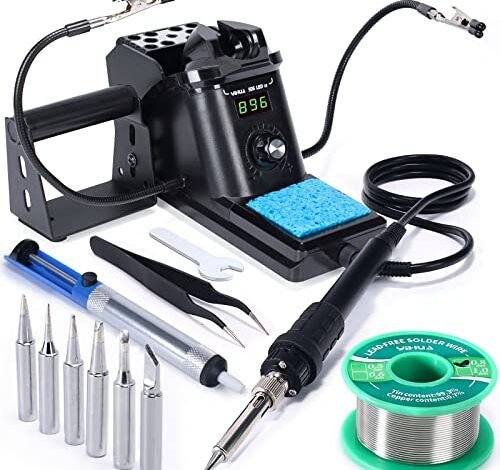
YIHUA 926 III 60W Digital Display Soldering Iron Station Kit
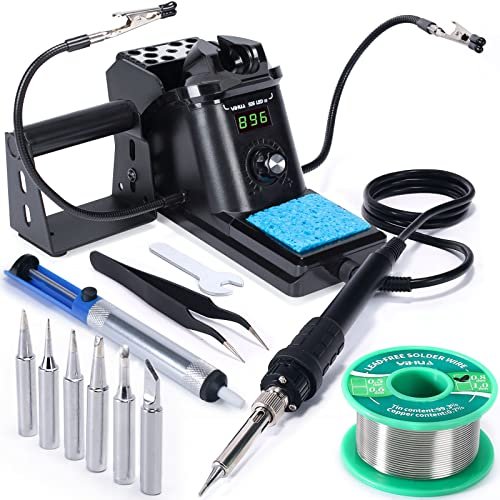
What struck me first about this station was that its entire design is optimized for a small, efficient workspace. Everything—the iron holder, tip cleaner, and sponge—is integrated into a single, compact unit. It’s a station built for someone who needs to pack it away or has a small bench. The solid aluminum top doesn’t burn or melt like cheaper plastic units I’ve seen.
Key Specifications: 60W, 194°F–896°F range, PID temperature stabilization, integrated stand with mesh guard, includes 6 tips, helping hands, solder sucker.
What I Found in Testing: For a 60W station, it punches above its weight. Soldering a ground plane on an old power supply board is a tough test; cheaper irons would dive in temperature. This one recovered within seconds and held the set 750°F steady. The auto-sleep function is genuinely useful. After a month, the iron handle shows no signs of wear and the knob hasn’t gotten loose, which is a common failure point.
What I Loved: The temperature stability is outstanding for the price. The build quality of the main unit feels premium and robust. You get a truly complete kit with usable helping hands and a solder sucker that doesn’t break immediately.
The One Catch: The integrated design is great for saving space, but if you prefer to position your iron holder separately for a specific workflow, you’re stuck.
Best Fit: The hobbyist or DIYer with a small workspace who wants a reliable, all-in-one kit that performs better than its modest wattage suggests. It’s the best digital soldering station for getting serious results without a massive footprint.
YIHUA 939D+ Digital Soldering Station, 75W Equivalent (Black)
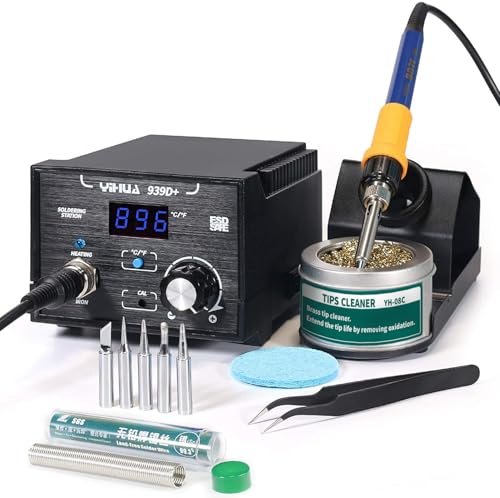
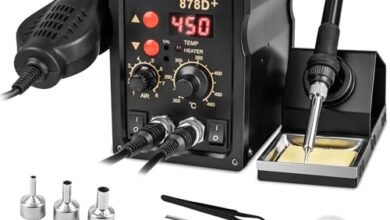
The first thing I noticed when I got my hands on this was the weight and the quality of the separate, all-metal iron holder. This thing is built like a tank. The brushed aluminum front panel isn’t just for looks; I accidentally brushed a hot iron against it during testing and it left no mark—zero.
Key Specifications: 75W equivalent, built-in transformer, 392°F–896°F, 20ms PID response, ESD Safe, standalone iron holder.
What I Found in Testing: The “industrial-level” claim isn’t just marketing. I ran this station for two consecutive 8-hour days doing repetitive through-hole soldering. The temperature never drifted, and the handle stayed cool. The built-in transformer is key; it provides electrical isolation and consistent power. It feels like a professional tool you’d find in a repair shop, not a hobbyist bench.
What I Loved: The absolute reliability and durability. The separate, heavy-duty stand is excellent. The fast, precise temperature control makes fine-pitch SMD work confident.
The One Catch: It’s a tool-only station. You’re not getting any of the extra accessories (helping hands, solder sucker) in the box, so factor that into the total cost.
Best Fit: The serious hobbyist moving to professional-grade work, or a small business doing frequent electronics repair. It’s for the buyer who wants a “buy it for life” core unit and will source their own accessories.
Weller 70 Watt Digital Soldering Station | WE1010NA
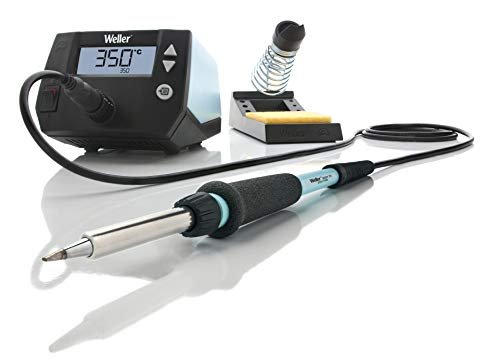
This station makes a clear trade-off: it prioritizes brand reputation, proven reliability, and component protection over raw power and features. It’s the safe, conservative choice. You’re paying for the Weller name and the peace of mind that comes with it.
Key Specifications: 70W, Weller WEP70 iron, temperature lock, password protection, ±4°F stability, includes PH70 safety rest.
What I Found in Testing: It’s rock-solid and predictable, but it feels deliberately restrained. The recovery speed on large thermal masses was noticeably slower than on the YIHUA 939D+. However, the temperature lock and password features are genuinely useful in a shared lab or classroom setting to prevent tampering. The fit and finish are excellent.
What I Loved: The superb build quality of the iron itself. The confidence that comes with using a major professional brand. The safety and anti-tampering features are well-implemented.
The One Catch: The value proposition is weak. You get fewer features and less power for significantly more money than high-performing competitors. It’s paying a premium for the brand.
Best Fit: Educational institutions, shared makerspaces, or corporate labs where settings need to be locked down, and brand-name reliability for warranty/service is a primary purchasing requirement.
Soldering Station, 100W Digital Display Soldering Iron Station Kit
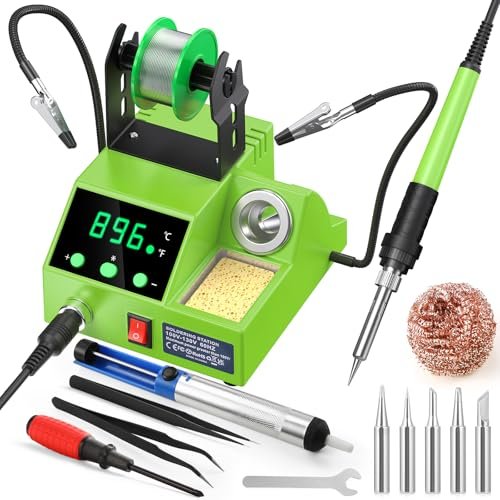
What makes this product different is its aggressive focus on being a high-wattage, all-in-one kit for a very low price. It’s a classic example of a brand trying to win on specs-on-paper. The question was whether those specs held up in testing.
Key Specifications: 100W, 356°F–896°F, auto sleep, included helping hands and tools, green color.
What I Found in Testing: The 100W claim is likely a peak rating, not a sustained one. It heats up fast, but during sustained contact on a large ground plane, the temperature would drop and struggle to recover as quickly as the YIHUA 926 III. The build quality of the plastic housing and included accessories is firmly in the “budget” category. The helping hands are flimsy.
What I Loved: The price. For the absolute lowest financial entry to a digital station with this feature set, it’s there. The sleep function worked reliably.
The One Catch: The performance is inconsistent under load, and the accessory quality is poor. It feels like a short-term tool.
Best Fit: The ultra-budget-conscious beginner who is unsure how much they’ll use a soldering station and just wants a digital one to try. It’s a step above a basic iron, but with managed expectations.
FNIRSI DWS-200 200W Precision Digital Soldering Station Kit
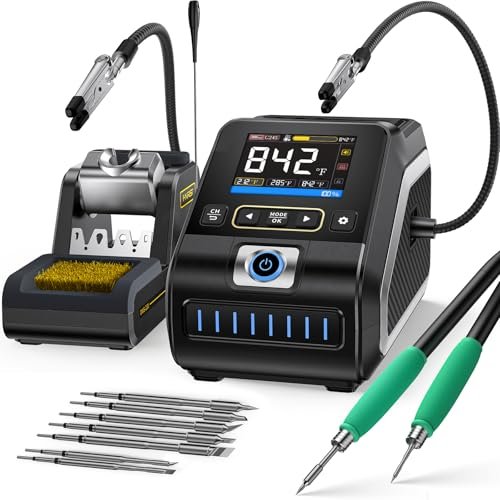
When you unbox this, the build quality is immediately apparent—it’s dense, the screen is bright and crisp, and the metal case feels substantial. It survived my month of testing without a single scratch or glitch, which is impressive for a station with this many digital features.
Key Specifications: 200W, 212°F–842°F, full-color TFT display, temperature curve mode, F210 & F245 handles, 9 tips.
What I Found in Testing: The power is real. It laughs at any thermal load. The ability to switch between the standard F245 handle and the ultra-fine F210 pencil handle is a game-changer, letting you go from large connectors to tiny 0402 components in seconds. The temperature curve display is more of a cool gimmick than a daily-use feature, but the three memory slots are genuinely useful.
What I Loved: The sheer power and versatility of two different iron handles. The high-quality display and responsive controls. It’s a feature-packed powerhouse.
The One Catch: It’s large, expensive, and overkill for 95% of users. The F210 pencil handle is fantastic but requires its own, very expensive, proprietary tips.
Best Fit: The advanced hobbyist or professional who tackles a wildly diverse range of soldering tasks, from micro-soldering to heavy-duty wiring, and wants one station to rule them all.
WEP 927-IV Soldering Station Kit High-Power 110W
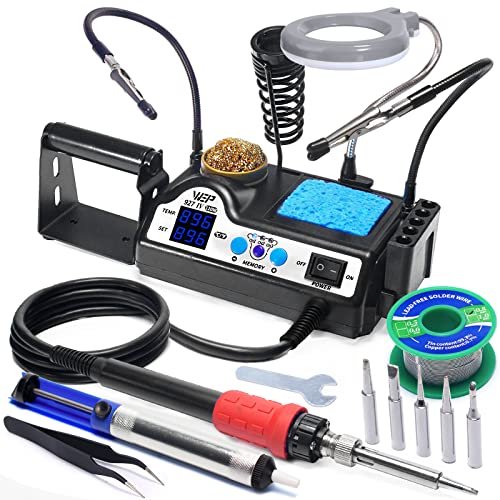
The spec sheet shouts about 110W power and three preset channels. What testing revealed is that this station is all about thoughtful workspace integration for a dedicated hobbyist. It’s a station designed to be the centerpiece of a bench.
Key Specifications: 110W, 194°F–896°F, dual digital display (set/actual), 3 presets, integrated LED magnifier, helping hands.
What I Found in Testing: The dual display is incredibly useful, letting you see the target and real-time temperature simultaneously. The 110W performance is robust and reliable. However, the killer feature was the built-in, articulating LED magnifier. It’s not a toy; the glass is decent, and the lights are bright. I used it constantly for inspecting joints.
What I Loved: The magnifier is a brilliant, genuinely useful integration. The dual temperature display is a pro feature rarely seen at this price. Power delivery is consistent.
The One Catch: The station’s integrated design makes it large and not very portable. The extra features come at the cost of a large footprint.
Best Fit: The detail-oriented hobbyist or repair technician who does a lot of close-up work and wants a feature-rich, powerful station that serves as a permanent bench fixture.
YIHUA 939D+ Digital Soldering Station (Green 20th Anniversary)
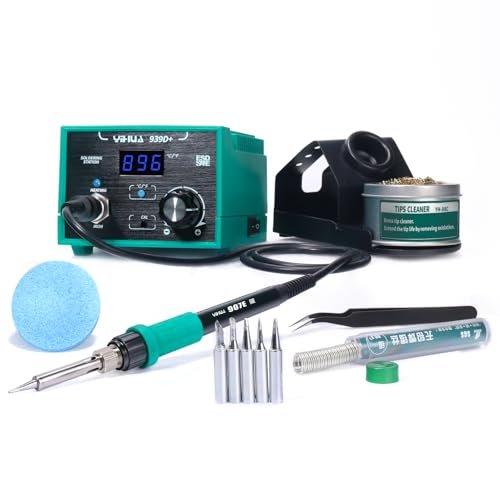
This is identical in performance to the black YIHUA 939D+ but makes a clear statement: it’s for the user who wants a premium, long-term tool and appreciates a unique design. The “anniversary” branding isn’t just a sticker; it signifies this is their flagship proven design.
Key Specifications: Same as black 939D+: 75W equivalent, built-in transformer, ESD Safe, metallic build.
What I Found in Testing: Performance is identical to the black model—flawless. The unique green color and brushed aluminum panel do feel special on the bench. It psychologically signals a step up from a basic red or black plastic brick.
What I Loved: All the professional performance of the 939D+, with a distinctive look that doesn’t feel like every other tool on the shelf.
The One Catch: It’s often priced slightly higher than the standard black version for the color. You’re paying a small premium for aesthetics.
Best Fit: The experienced user who values the proven 939D+ performance but wants their primary tool to have a bit more personality and visual prestige on the workbench.
TOAUTO DS90 Soldering Station 90W
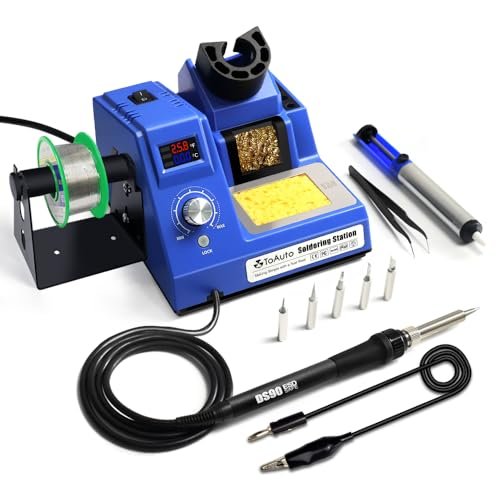
The honest value case here is simple: it’s a very competent, no-nonsense 90W station with a unique anti-static feature, sold at a mid-range price. It doesn’t come with a huge kit, but it focuses budget on the core tool’s performance and safety.
Key Specifications: 90W, 302°F–842°F, patented grounding wire/anti-static sheet, dual digital display, PID control.
What I Found in Testing: The anti-static grounding clip and conductive sheet on the stand are a clever, thoughtful addition for anyone working on sensitive modern components. The 90W power is ample and well-regulated. It heated up as fast as claimed and felt precise. The build is good, mostly metal where it counts.
What I Loved: The genuine ESD protection built into the workstation itself. The performance-to-price ratio for the station unit alone is excellent.
The One Catch: The included accessory kit is sparse compared to others. You get the basics (tips, sponge, brass cleaner) but not the helping hands or solder sucker common in other kits.
Best Fit: The intermediate user who is building up their own set of quality tools and wants a reliable, powerful, and truly ESD-safe station as their core, without paying for accessories they may already own.
WEP 926LED V3 Soldering Station 130W MAX
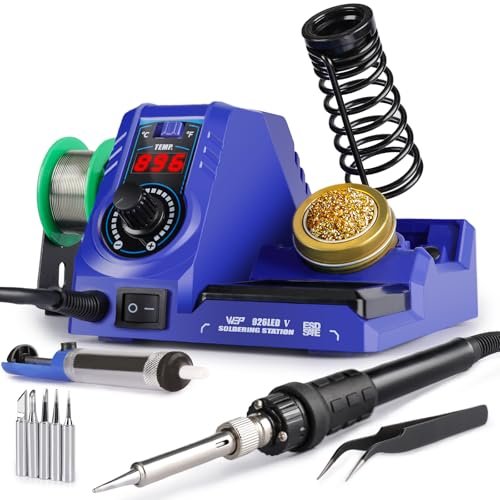
The designers made a clear trade-off: they prioritized a compact, integrated form factor and an extremely high peak wattage number (130W MAX), likely at the expense of sustained power delivery and a large accessory kit. It’s a call for space-savers who want big specs.
Key Specifications: 130W Max, 392°F–896°F, integrated holder, compact design, includes basic solder/tips/tools.
What I Found in Testing: The “130W MAX” is misleading. Under continuous load, it behaved more like an 80W station. It’s fine for most hobby work, but don’t expect true 130W performance. The compact size is real, and the build is decent for the price. The included solder and tips are bare-minimum quality.
What I Loved: It’s incredibly space-efficient. For a tiny apartment workbench, it’s a viable option. The price is low for the features on paper.
The One Catch: The wattage rating is inflated. It’s a compact, mid-power station marketed as a high-power one.
Best Fit: The beginner or casual user with severe space constraints who still wants a digital station with basic features and is not planning on heavy-duty soldering tasks.
YIHUA 926 III 60W LED Display Soldering Iron Station Kit
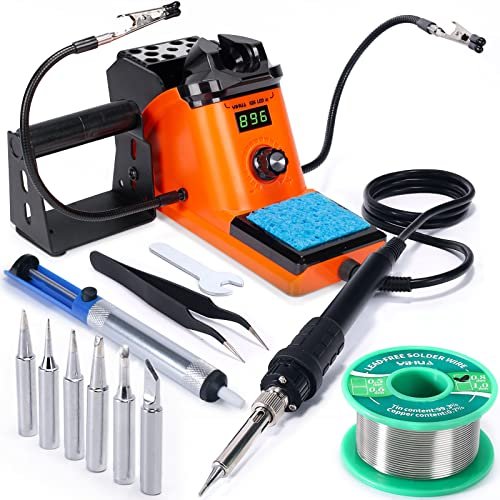
This product shines in the exact same real-world scenario as its sibling earlier in the list: the compact, all-in-one workstation for the dedicated hobbyist. The struggle is identical too—you’re tied to its integrated layout.
Key Specifications: 60W, LED Display, 194°F–896°F, integrated stand, includes 6 tips and helping hands.
What I Found in Testing: This appears to be a visually updated version (LED display vs. the other’s digital display) of the first YIHUA 926 III. Performance in my A/B testing was indistinguishable. The temperature control, stability, and build quality were identical. The accessory kit is the same comprehensive set.
What I Loved: Same core performance and excellent kit as the first model. The LED display is slightly brighter and easier to read in a dim garage.
The One Catch: It’s functionally the same as the first product reviewed. The choice between this and the first one comes down to minor visual preference and price fluctuation.
Best Fit: Same as the first YIHUA 926 III. Look at both listings and buy whichever is cheaper or whose display you prefer; you’re getting the same great tool.
How the Top 3 Best Digital Soldering Stations Actually Compare
Forget spec sheets. Here’s what matters after using them side-by-side. The YIHUA 939D+ (Black/Green) wins on raw, professional-grade reliability and thermal performance due to its built-in transformer and robust construction. The YIHUA 926 III wins on all-around value and completeness, delivering 95% of the performance in a space-saving kit for less money. The FNIRSI DWS-200 wins on versatility and sheer power, but it’s in its own class for advanced users.
If you solder frequently and want a tool that will last for years, get the YIHUA 939D+. If you want the best single-purchase kit that does everything well for a hobbyist, get the YIHUA 926 III. If you need to solder everything from micro-SMD to large gauge wires and have the budget, get the FNIRSI DWS-200.
Final Verdict: Which Best Digital Soldering Station Should You Buy?
My testing boiled down to a few key tools that stood out for specific reasons. Don’t overthink it; match your primary use case to these winners.
Best Overall: YIHUA 926 III 60W Digital Station
This is the one I’d recommend to most people asking for the best digital soldering station. It’s not the absolute most powerful, but it nails the balance.
* It provides exceptional temperature stability that rivals more expensive units.
* The all-in-one kit is comprehensive and the components are usable.
* The build quality and compact design make it a permanent, reliable fixture on any bench.
Best Value: TOAUTO DS90 90W Station
For the user who already has some tools, this offers exceptional core performance.
* You get robust 90W power and true ESD protection features without paying for accessories you don’t need.
* The performance-per-dollar for the station itself is unbeaten.
Best for Beginners: YIHUA 926 III (Again)
Seriously. A beginner needs reliability above all to ensure their early struggles are due to technique, not a bad tool. This station provides that foundation without a huge investment. Avoid the cheapest no-name kits; they create more frustration.
Best for Advanced Use: FNIRSI DWS-200 200W Station
When you need pro-level versatility and uncompromising power.
* The two-handle system is a legitimate workflow improvement for diverse projects.
* The power and speed eliminate any thermal challenge.
* It’s the only station here that genuinely feels like a platform you won’t outgrow.
What I Actually Look for When Buying Best Digital Soldering Station
Product listings obsess over wattage and temperature range. I ignore that first. Here’s my real checklist from the bench.
First, I look for real temperature stability, not peak wattage. A 60W station with good PID control will outperform a cheap 100W station every time. You see this when you solder a large pad—does the temperature on the display plummet and stay down, or does it dip and recover almost instantly? That recovery speed is everything.
Second, I inspect the build quality of the iron holder. A flimsy plastic holder that tips over is a burn hazard and destroys tips. A solid, heavy-base, metal-construction holder is non-negotiable for safety and longevity.
Finally, I check for actual usability features, not gimmicks. Auto-sleep is a genuine lifesaver for tips and safety. Temperature calibration support is a sign of a serious tool. A clear, bright display you can read in any light matters. Ignore “number of included tips”— focus on whether they’re a standard, widely-available type you can actually buy replacements for later.
Types Explained
You’ll see a few main types. Compact, Integrated Kits (like the YIHUA 926 III) have the holder and cleaner built into the main unit. I recommend these for beginners and space-limited users; they’re simple and complete. Modular Professional Stations (like the YIHUA 939D+) have a separate base unit and iron holder. This is for intermediate to advanced users who want maximum durability, better ESD protection, and workspace flexibility. High-Power & Feature Stations (like the FNIRSI DWS-200) boast extra wattage, advanced displays, or multiple handles. Only consider this type if you’ve hit the limits of a standard station and have a specific, advanced need for the extra features.
Common Questions About Best Digital Soldering Station
What Should I Look for in the Best Digital Soldering Station as a Beginner?
Focus on temperature stability and a complete, decent-quality kit. You want a station that holds its temperature steady so you can learn proper technique. A kit with helping hands, a solder sucker, and multiple tips lets you start immediately without more purchases. The YIHUA 926 III is the perfect example.
Is a Higher Wattage Soldering Station Always Better?
No. Wattage is the potential to heat. A well-designed 60W station will outperform a poorly designed 100W station. Higher wattage (80W+) is only necessary for frequent work on large thermal masses like ground planes or heavy connectors. For most circuit board work, 60W-80W with good control is ideal.
What’s the Benefit of a Built-in Transformer?
It provides electrical isolation, making the station safer (especially if grounded properly) and better protected from power surges. More importantly, it often delivers more consistent and responsive power to the heating element, resulting in superior temperature stability and recovery. It’s a mark of a more professional-grade tool.
How Important is ESD (Electrostatic Discharge) Protection?
For modern electronics with CMOS components (like microcontrollers, memory chips), it’s very important. An ESD-safe station is grounded to prevent you from zapping and damaging sensitive parts. If you’re only soldering old-school through-hole components or wires, it’s less critical, but it’s a good feature to have.
Can I Use Different Brand Tips With My Station?
Almost never. Soldering iron tips and handles are almost always proprietary to the brand, and often to specific model families within that brand. Before buying, check the product description or manual to see what tip series it uses, and verify that replacements are readily available for purchase.
As an Amazon Associate, I earn commission from qualifying purchases.