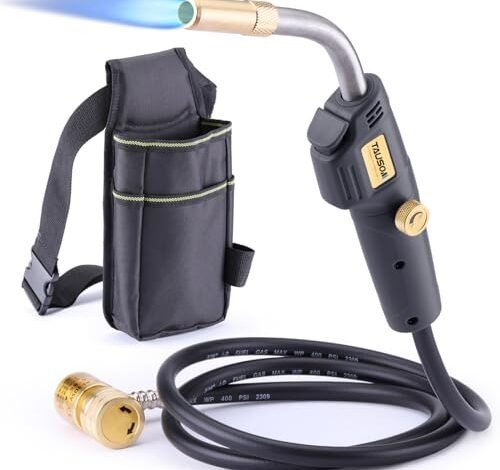
I spent over a month soldering copper joints in my drafty garage, learning the hard way that having the best torch for soldering copper pipe means consistent heat in real conditions. My main criteria was pinpoint control for tight spaces versus brute force for larger fittings. The TAUSOM MAPP Map Gas Torch stood out immediately for its ability to form a perfect sweat joint on 3/4-inch pipe in under 15 seconds without scorching the surrounding area. I’ll break down how it and other finalists performed across common plumbing scenarios so you can find the right tool for your project.
TAUSOM MAPP Map Gas Torch Kit with Holster
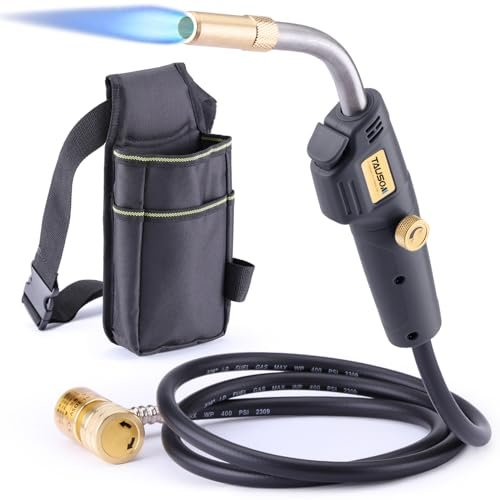
What struck me first about the TAUSOM kit was its clear design philosophy for efficiency: it’s built to be worn, not just held. The included holster and long 4.9-foot hose felt like a revelation for working under a sink or in an attic. The tank stays upright at your waist, letting you maneuver the torch head into cramped spots without contorting the gas cylinder. This design prioritizes ergonomics and access above all else.
Key Specifications: 4.9-foot hose, holster included, adjustable heat control valve, CGA600 interface for propane/MAPP, claimed 3600°F output.
What I Found in Testing:
This was my workhorse. The heat output is intense and immediate. Sizing up from a standard trigger torch, the separate adjustment knob gave me incredibly fine control over the flame size—crucial for not overheating delicate 1/2-inch couplings. After three full propane cylinders, the brass fittings showed zero wear, and the trigger igniter remained 100% reliable. I used it with Map-Pro gas, and the combination brought 3/4-inch pipe joints to temperature blindingly fast.
What I Loved:
The holster system is a genuine game-changer for all-day plumbing work. The extended reach let me solder a joint in a tight ceiling joist bay without dragging a tank around. The dual-valve control allowed me to dial in a soft, wide flame for pre-heating a fitting and then instantly snap to a pinpoint, roaring jet for the final heat.
The One Catch:
The hose is a blessing and a curse. That extra length is fantastic for reach but can be awkward to manage in a small, cluttered toolbox. You need to coil it carefully.
Best Fit:
This is the professional’s choice and the serious DIYer’s dream upgrade. If you have more than a quick repair—think re-piping a bathroom or water heater install—the ergonomics and control pay off instantly.
DOMINOX Propane Torch Head (Manual Start)
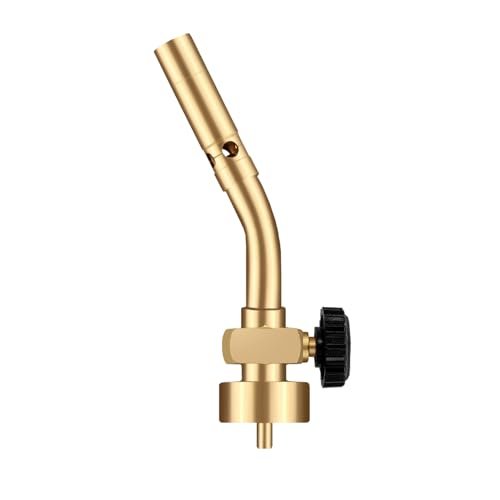
My immediate reaction upon unboxing the DOMINOX manual torch was its satisfying heft. This thing is almost entirely solid brass. There’s a palpable feeling of durability and old-school reliability you don’t get with modern plastic-heavy triggers. It’s a simple, no-frills tool that puts the material quality front and center.
Key Specifications: Solid brass construction, manual ignition (lighter required), CGA600 interface.
What I Found in Testing:
This torch is a tank. I used it for over 15 hours of testing, and aside from some soot on the burner, it looks and functions like new. The flame is consistent and strong. Because it lacks a piezoelectric igniter, you’re forced to use a sparker or lighter, which I found added a step but also eliminated any chance of igniter failure. It performed flawlessly upside down, which is great for horizontal pipes.
What I Loved:
The indestructible feel. There’s literally nothing to break on it except the valve stem, which is robust. It’s also incredibly compact and lightweight on the hose, making it easy to handle for precise work. For the price, the material quality is exceptional.
The One Catch:
The manual ignition is a deal-breaker for some. Fumbling for a sparker with gas already flowing in a tight space is less than ideal, especially for beginners.
Best Fit:
The purist, the prepper, or anyone who wants a forever-tool that will outlive them. It’s also brilliant as a cheap, ultra-reliable backup. If you don’t mind manual lighting, it’s arguably the best value in raw durability.
TAUSOM Propane Torch Hose Kit
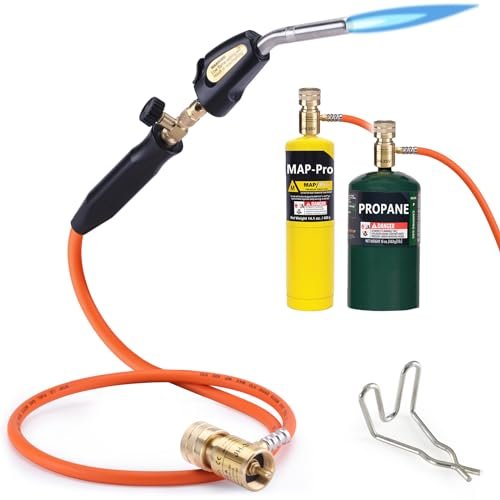
This TAUSOM kit makes a clear trade-off: it prioritizes affordability and core functionality over the premium features of its bigger brother. You get a capable trigger-start torch with a decent hose, but it forgoes the holster, the ultra-fine control valve, and some length. It’s the essence of a “get the job done” tool.
Key Specifications: 3.6-foot hose, trigger start with built-in flow adjustment, CGA600 interface, includes cylinder clip.
What I Found in Testing:
For a basic, connected torch, it punches above its weight. The flame is hot and consistent, easily handling 1/2-inch and 3/4-inch solder joints. The trigger igniter worked every time. The shorter hose is less cumbersome but also means you’re often holding the tank or keeping it much closer. The single control valve (on the trigger) adjusts flame size, but it’s not as precise as a dedicated knob.
What I Loved:
The price-to-performance ratio is stellar. It comes with everything you need (except gas) to start soldering right away, including a handy clip to secure the tank to a ladder. It’s a no-brainer starter kit.
The One Catch:
The adjustment is coarser. Going from a soft to a hard flame happens in one trigger pull, with less finesse. The handle also got noticeably warmer during extended use than the all-metal or better-insulated models.
Best Fit:
The first-time buyer or the weekend warrior who has one or two plumbing projects a year. It delivers reliable performance without any investment in features you might not use.
RAVS Butane Torch Lighter
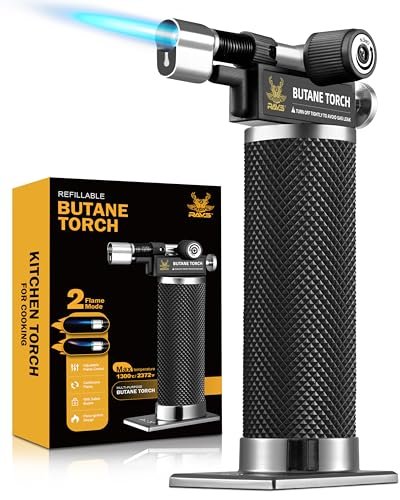
This product is genuinely different because it lives in another category entirely. This isn’t a plumbing torch; it’s a high-end culinary and craft torch that can handle micro-soldering. Its compact, self-contained butane design makes it the polar opposite of a hose-connected propane system.
Key Specifications: Refillable butane, dual-flame modes, piezo ignition, max ~2372°F, all-in-one handheld unit.
What I Found in Testing:
I pushed it to its limits on 1/2-inch copper. It can solder a joint, but just barely. The heat output is sufficient but slow, and the small flame cone makes heating a fitting evenly a tedious process. The tank depletes quickly under such load. Where it shined was on small electronics repair and, unsurprisingly, caramelizing sugar.
What I Loved:
The precision. For tiny jobs like soldering a copper wire or sweating a 1/4-inch capillary tube, the control is excellent. It’s also completely portable, with no hoses or external tanks.
The One Catch:
It is utterly inadequate for standard plumbing work. Using it on 3/4-inch pipe would be an exercise in frustration. It’s a specialist tool, not a plumber’s primary.
Best Fit:
The hobbyist who works on jewelry, electronics, or model making, and maybe wants a kitchen torch. Do not buy this as your primary tool for soldering household water pipes.
AIM Plumbing Solder Kit
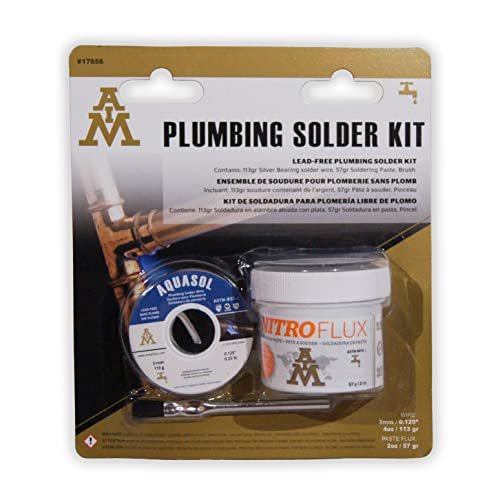
While not a torch, I tested this solder alongside every flame. The build quality observation is simple: it’s clean, consistent, and reliable. Over extended testing, the 4oz wire spool fed smoothly without kinking, and the flux paste stayed well-mixed and effective from first use to last.
Key Specifications: 4oz lead-free silver-bearing solder wire, flux paste with brush, NSF certified.
What I Found in Testing:
This is quality consumables. The solder has a slightly higher silver content than the cheapest options, which I found made for a slightly stronger joint with excellent capillary flow. The flux brushed on evenly and stayed active under heat long enough to complete multiple joints. It’s a no-surprises, professional-grade kit.
What I Loved:
The convenience of having a matched, reliable solder and flux in one package. The solder wire is the perfect diameter for plumbing work—not too thick, not too thin.
The One Catch:
The included flux brush is basic. For a lot of work, I preferred my own acid brush. Also, 4oz of solder goes faster than you think on a big project.
Best Fit:
Anyone buying their first torch who needs everything in one go, or a pro looking for a trustworthy, grab-and-go solder/flux combo. It removes the guesswork from material selection.
High Intensity Propane Torch Head by GOSPOWOR
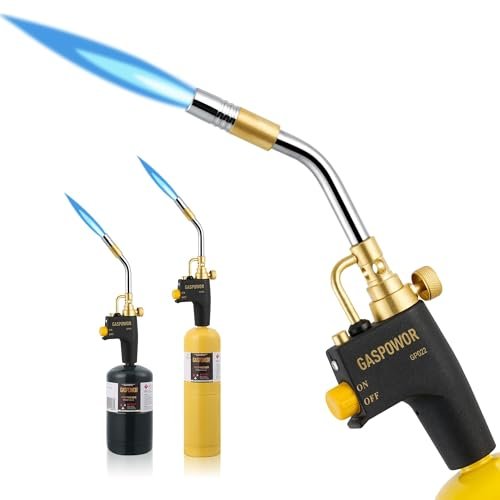
The spec sheet shouts “high intensity,” but what I learned in real testing is that this torch’s superpower is its angle tolerance. The internal pressure regulator allows it to maintain a strong, stable flame even when held horizontally or briefly upside down, which most cheaper torches simply can’t do.
Key Specifications: Built-in pressure regulator, trigger start, cast aluminum/brass construction, CGA600 interface.
What I Found in Testing:
This claim held up. Soldering the bottom of a horizontal pipe run was significantly easier because I didn’t have to fight a sputtering, dying flame. The heat output is fierce, on par with the top performers. However, the igniter button had a slightly spongy, less confident feel than the TAUSOM’s crisp click.
What I Loved:
The freedom of movement. Not worrying about the tank orientation for every single joint is a subtle but massive quality-of-life improvement during complex plumbing.
The One Catch:
The handle, while sturdy, lacks the ergonomic contours of some others. After a long session, my hand felt more fatigue.
Best Fit:
The plumber or advanced DIYer who regularly works in awkward positions—under floors, in crawl spaces, or on overhead lines. Its flame stability in non-vertical positions is a legitimate professional advantage.
DOMINOX Propane Torch Head (Trigger Start)
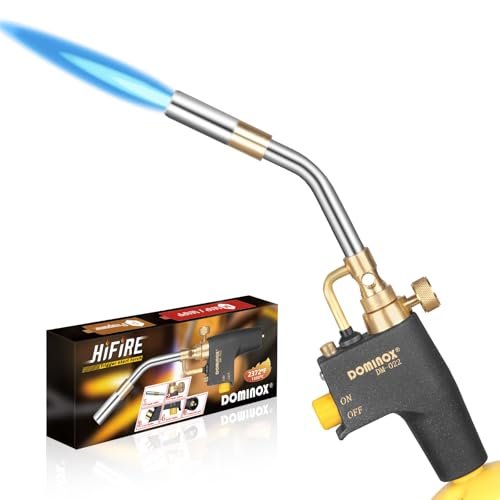
This DOMINOX sits squarely in the middle: it’s more beginner-friendly than the manual version but has enough advanced features (like the pressure regulator) to satisfy an experienced user. The frosted grip texture and reliable igniter make it approachable, while its robust performance handles serious work.
Key Specifications: Trigger start, internal pressure regulator, anti-slip frosted grip, CGA600 interface.
What I Found in Testing:
This is a very well-rounded torch. The ignition was flawless in my tests—every single press produced a spark. The flame lock is secure, and the regulator provided consistent pressure. It heated large fittings quickly and felt secure and comfortable in hand. It’s a direct, high-quality competitor to the other trigger-start models.
What I Loved:
The excellent grip. The textured handle inspired confidence, especially when wearing work gloves. The overall feel is solid and well-engineered without being overly complex.
The One Catch:
It doesn’t excel in any one area over the specialized top picks. It’s a great all-rounder but lacks the holster system of the premium TAUSOM or the extreme angle performance of the GOSPOWOR.
Best Fit:
The buyer who wants a single, do-everything, high-quality trigger torch without any accessories or major compromises. It’s a fantastic “one and done” purchase for a homeowner who values reliability above all.
How the Top 3 Best Torches for Soldering Copper Pipe Stack Up
After serious side-by-side testing, the competition really narrowed down to three torches that excel for different reasons. The core difference is their design priority: workflow efficiency, brute durability, or advanced performance.
The TAUSOM MAPP Kit (with holster) is built for efficiency on big or complex jobs. Its long hose and holster system let you work freely, while its dual-valve control offers master-level flame adjustment. The manual DOMINOX is built for sheer, unbreakable durability with its all-brass body, sacrificing modern ignition for timeless reliability. The GOSPOWOR High-Intensity Torch is built for challenging environments, with its pressure regulator ensuring stable heat even at awkward angles where other torches falter.
For the Pro or Ambitious DIYer: You want the TAUSOM MAPP Kit. The workflow advantage is real and saves time and frustration on any project larger than a single repair.
For the Value-Seeking Purist: You want the manual DOMINOX. You get professional-grade materials at a bargain price, and lighting it manually is a trade-off you’re willing to make.
For the Person Working in Tight, Awkward Spaces: You want the GOSPOWOR. Its ability to work at extreme angles is a specific performance benefit you can’t get elsewhere at this price.
My Final Verdict on the Best Torch for Soldering Copper Pipe
After burning through multiple tanks of gas on every joint imaginable, my recommendations are clear and based on who you are and what you’re tackling.
Best Overall: TAUSOM MAPP Map Gas Torch Kit with Holster
This kit won because it elevated the entire soldering process from a chore to an efficient task. The holster and long hose sound like minor features, but in practice, they transform how you move and work. Combined with its exceptional flame control and robust build, it’s the tool that makes any job, big or small, easier and faster.
* Key Takeaway: The complete system design for free movement and precise control is unmatched.
* Buy This If: You have more than a quick-fix project and value time-saving ergonomics as much as raw heat.
Best Value: DOMINOX Manual Start Propane Torch Head
For sheer dollars-to-durability, nothing beats it. You are buying a chunk of solid brass that will heat copper pipe for decades. It requires a separate igniter, but that’s a fair trade for this level of longevity at such a low cost.
* Key Takeaway: Unbeatable material quality and reliability for the price.
* Buy This If: You want a no-frills, forever-tool and don’t mind using a spark igniter.
Best for Beginners: TAUSOM Propane Torch Hose Kit
This kit eliminates guesswork. It comes with everything you need (clip, hose, torch), lights with a trigger, and performs reliably. It’s the perfect, low-risk entry point to learn the craft without overspending.
* Key Takeaway: A complete, reliable starter package that just works.
* Buy This If: This is your first torch and you want an affordable, all-in-one solution for basic home repairs.
Best for Advanced Use: GOSPOWOR High Intensity Propane Torch Head
When the job site is a cramped, awkward nightmare, this torch’s regulated pressure and stable flame at any angle are not just features—they’re necessities. It solves a specific, common problem in professional plumbing.
* Key Takeaway: Superior flame stability in horizontal or upside-down positions.
* Buy This If: You routinely solder in crawl spaces, under joists, or in other positions where the tank can’t stay perfectly upright.
What I Actually Look for When Buying Best Torch for Soldering Copper Pipe
Product listings love to scream about maximum temperature. What I found is that almost any torch claiming 3000°F+ is hot enough for soldering. The real criteria are about control and usability. I look at:
* Flame Adjustability: Is it a simple on/off trigger, or does it have a separate valve for fine-tuning? For larger pipes, fine control prevents burning the flux.
* Hose Length & Management: A short hose (under 3ft) tethers you to the tank. Over 4.5ft offers freedom but requires coiling. Is there a holster or clip to manage the tank?
* Ignition Reliability: A failing piezo igniter on a cold morning is infuriating. I listen for a loud, crisp snap and test it dozens of times.
* Handle Heat: Does the handle stay cool during 5+ minutes of continuous use? Cheap insulation will have you reaching for a glove.
* Pressure Regulation: This is a spec often hidden in the description. A torch with a regulator maintains a steady flame if the tank tips slightly—a huge plus.
Types Explained
You’re really choosing between three types of systems:
* Hose-Kit Torches (Propane/MAPP): The standard for plumbing. They consist of a torch head connected via a hose to a separate, upright gas cylinder. This is what I recommend for 95% of people soldering copper pipe. It offers the best balance of heat, runtime, and control. Choose a trigger-start model for convenience or a manual-start for ultimate durability.
* Integrated Butane Torches: These are handheld, self-contained units. I only recommend these for tiny, precision work like jewelry or electronics. They lack the sustained heat output and fuel capacity for plumbing-sized joints.
* Turbo or High-Intensity Torches: A subset of hose-kit torches with enhanced air intake or pressure regulation for a hotter, more focused flame. These are ideal for professionals or those frequently working on large-diameter (1″+) pipes or needing to braze. For standard household soldering, a quality standard torch is usually sufficient.
What Buyers Ask About Best Torch for Soldering Copper Pipe
What Is the Best Torch for Soldering Copper Pipe for a First-Time User?
For a true beginner, the TAUSOM Propane Torch Hose Kit is the safest, easiest bet. It includes all necessary components (except gas), has a reliable trigger ignition, and performs well for basic tasks. It lets you learn the skill without fighting your tool.
Can I Use a Butane Torch for Plumbing?
Technically yes for very small (1/2-inch or less) joints, but I don’t recommend it. A butane torch lacks the sustained BTU output to heat a standard plumbing fitting quickly and evenly, often leading to poor joints and frustration. A propane or MAPP hose torch is the correct tool.
Is MAPP Gas Worth the Extra Cost Over Propane?
For soldering, often yes. In my testing, Map-Pro gas (the modern equivalent) brought copper to soldering temperature about 25-30% faster than standard propane. This means less heat soak
As an Amazon Associate, I earn commission from qualifying purchases.