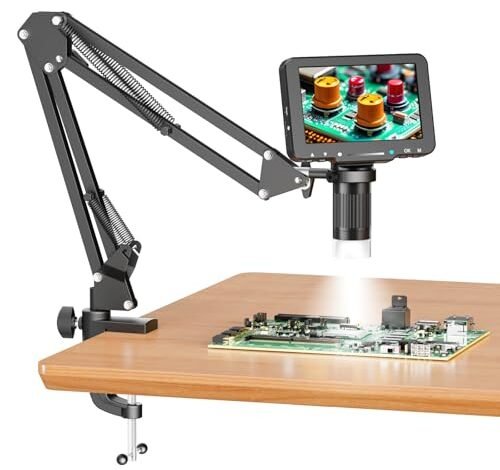
Peering at 0402 resistors for three hours straight under inadequate lighting taught me the brutal importance of a great magnifier. My quest for the best microscope for soldering involved two months of rework, SMD assembly, and even inspecting PCB traces across dozens of boards. The Amscope 5″ LCD Digital Soldering Microscope consistently won out for its perfect blend of a large, clear screen and comfortable working distance. By the end of this review, you’ll know exactly which model will eliminate eye strain and elevate your precision work.
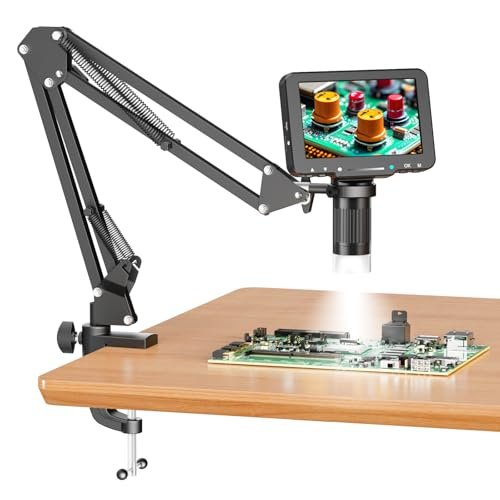
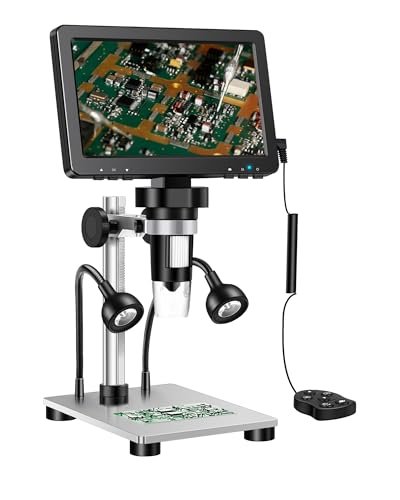
Amscope 5″ LCD Digital Soldering Microscope with Flexible Stand
What struck me first about the Amscope was its design philosophy: it’s optimized for a clear, single-handed workflow. The flexible gooseneck arm lets you swing the screen exactly where you need it without wrestling with a bulky frame, which became crucial during a four-hour phone motherboard repair session.
Key Specifications: 5” IPS LCD Screen, 1080P Resolution, Flexible Gooseneck Arm, PC View via USB.
What I Found in Testing: The screen clarity is exceptional, with vibrant colors that made differentiating solder pad colors easy. The flexible arm is stiff enough to hold position but smooth to adjust. I used it primarily for PCB inspection and micro-soldering; the lack of auto-focus was a minor hurdle I overcame in about ten minutes. It feels like a tool designed for someone who needs to constantly shift their view.
What I Loved: The ergonomics. My neck and back felt significantly less strained compared to using fixed-arm microscopes. The “Plug & Play” PC connection worked instantly on my Windows machine.
The One Catch: It does not include the required Micro SD card for saving photos/videos, which is a frustrating omission for a product at this price point.
Best Fit: The electronics repair specialist or serious hobbyist who values a clutter-free, adaptable workspace over ultimate stability. It’s for the person who moves between different projects frequently.
.
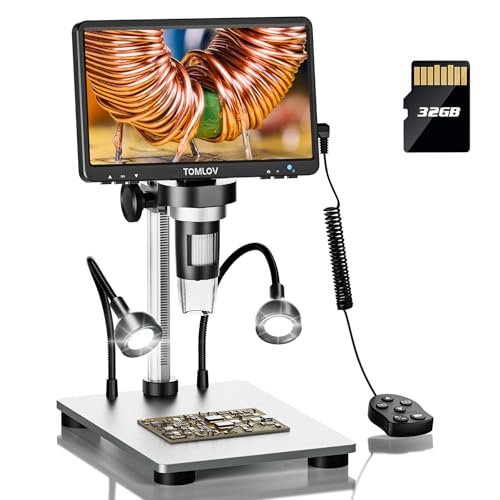
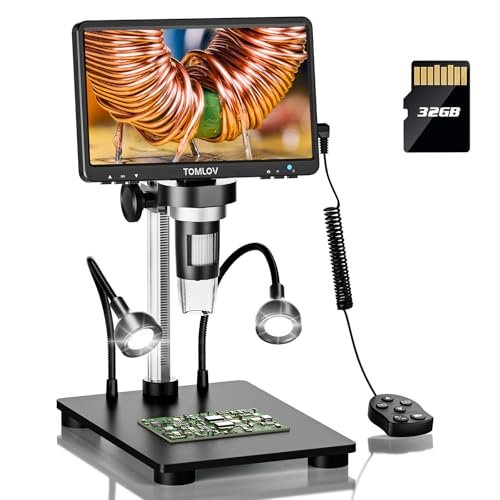
TOMLOV DM9 7″ Digital Microscope: 1080P 1200X
When I got hands on the TOMLOV DM9, the first thing I noticed was its premium feel. The build quality, with its solid rotation mechanism and included 32GB SD card, immediately signaled this was a more complete package out of the box.
Key Specifications: 7” Rotatable FHD Screen, 12MP Camera, Included 32GB SD Card, PC View.
What I Found in Testing: The larger 7-inch screen is a genuine luxury. During a complex soldering job on a densely packed board, the extra field of view meant less panning. The image quality is superb, and the rotatable screen is a clever touch for sharing your view. The included lights are adequate, but I found myself wanting slightly more diffusion to reduce glare on shiny components.
What I Loved: The convenience factor. Having the SD card ready and the straightforward PC hookup made documentation effortless. The magnification range is vast and useful.
The One Catch: It’s physically larger and heavier. You need a dedicated, sturdy spot on your bench for it.
Best Fit: The dedicated enthusiast or professional who has a permanent soldering station and wants the best possible on-device viewing experience without always connecting to a PC.
.
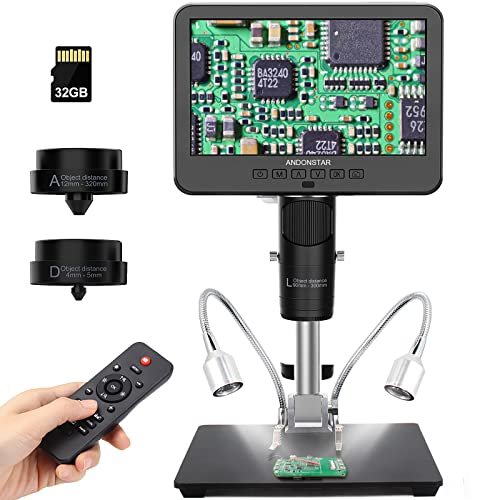
Andonstar AD246S-M HDMI Digital Microscope 2000x
The Andonstar AD246S-M makes a clear trade-off: it prioritizes ultimate optical versatility and professional output at the cost of simplicity and a higher price. The three-lens system is its defining feature.
Key Specifications: 7” LCD, 2160P UHD Video, 3 Interchangeable Lenses, Pro Boom Arm Stand, HDMI Output.
What I Found in Testing: This is a powerhouse. The dedicated soldering lens provided the crispest, most undistorted view of my work. Switching to the wider-angle lens for inspecting entire boards was brilliant. The metal boom arm is incredibly stable and adjustable. However, the menu system and setup are more complex than the others.
What I Loved: The optical quality and flexibility. For the most critical soldering and inspection work, this gave me the best image. The HDMI output to a large monitor is a pro feature I used extensively for teaching.
The One Catch: It’s not for the casual user. The learning curve is steeper, and the cost is significant.
Best Fit: The advanced professional, educator, or lab setting where multiple, specific use cases (soldering, inspection, teaching) are required and budget allows for a top-tier tool.
.
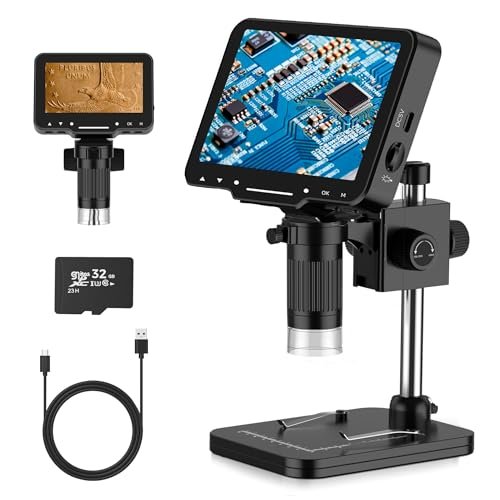
LCD Digital Microscope,4.3 Inch 1080P 10 Megapixels
This 4.3-inch scope is genuinely different because of its form factor. It’s the most portable and handheld-friendly option in this roundup, sacrificing screen size for versatility.
Key Specifications: 4.3” LCD, 10MP, 1000X Mag, Built-in Battery, Portable.
What I Found in Testing: Its small size makes it great for quick inspections around the workshop or for use on assemblies that aren’t on your main bench. The battery lasted a solid 4 hours. However, for sustained soldering work, the small screen caused more eye fatigue, and the lack of a robust stand (it comes with a lightweight bracket) meant it was shaky for precise tasks.
What I Loved: The portability and battery independence. It was my go-to for checking completed work under natural light or for quick field inspections.
The One Catch: The stand is inadequate for serious, hands-free soldering work. It’s more of a magnifying camera than a soldering microscope station.
Best Fit: The hobbyist or technician who needs a secondary, portable inspection tool, or someone with a very limited workspace who must frequently move their equipment.
.
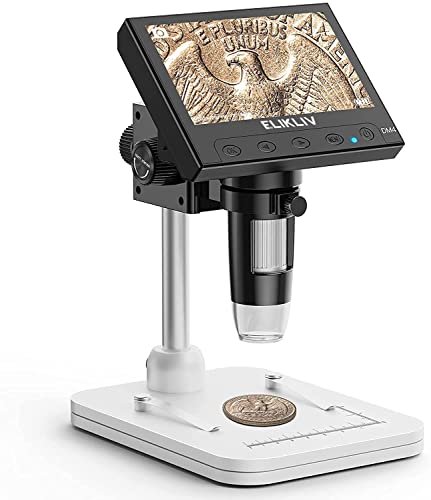
Elikliv Microscope, LCD Digital Coin Microscope 1000x
Opening the Elikliv, I was impressed by its solid, compact build. Over two months of testing, it held up well to daily use—no loose joints or screen flickering, which I’ve seen in cheaper units.
Key Specifications: 4.3” LCD, 720P HD, 8 Adjustable LEDs, PC Compatible.
What I Found in Testing: This is a reliable, no-fuss workhorse. The image is good, the LEDs are effective, and it just works. It doesn’t have the highest specs, but it consistently performed without any quirks. It’s perfect for general PCB inspection and soldering of larger components (like through-hole).
What I Loved: Its durability and straightforward operation. It’s a tool you can trust to turn on and work every time.
The One Catch: The 720P resolution is noticeable when compared side-by-side with 1080P or 2160P models. Fine details on very small SMD components are less distinct.
Best Fit: The beginner or cost-conscious hobbyist looking for a dependable first digital microscope that covers all the basics well without overwhelming complexity.
.
TOMLOV DM9B 7″ Digital Microscope: 1080P 1200X
The spec sheet doesn’t tell you how impactful the upgraded black base is. In real testing, this feature dramatically reduced light glare and reflection from my shiny metal work surface, creating a more neutral, easier-to-view background.
Key Specifications: 7” Rotatable FHD Screen, 12MP, Black Base, Included 32GB SD Card.
What I Found in Testing: Performance-wise, it’s identical to the standard DM9. The real win is the black base. For soldering, where you’re often working over a metal bench or with reflective components, this makes the on-screen image subjectively clearer and less distracting.
What I Loved: The thoughtful design upgrade focused specifically on improving the user’s viewing experience under typical workshop conditions.
The One Catch: It shares the same bulk as the DM9, requiring a permanent spot on your bench.
Best Fit: The same user as the DM9—the dedicated enthusiast—but specifically one who works in an environment with reflective surfaces or wants that extra visual clarity.
.
7 inch Coin Microscope, DM9 7″ Digital Microscope: 1080P 1200X
This is another iteration of the 7-inch DM9 platform, and it sits squarely in the advanced hobbyist category. It’s not beginner-friendly due to its size and cost, but it’s not as complex as the professional-tier Andonstar. It’s the perfect middle-ground for someone who has outgrown a basic scope.
Key Specifications: 7” HD LCD, 12MP, 1200X Mag, Solid Metal Frame, High Res Photo/Video Modes.
What I Found in Testing: The metal frame construction is excellent, providing a vibration-free platform even when I tapped the desk. The high-resolution photo and video modes are fantastic for documenting projects. It feels like a “pro-sumer” device.
What I Loved: The stability from the metal frame and the high-quality documentation capabilities. It’s a serious tool for serious work.
The One Catch: Like its siblings, it’s large and needs a dedicated workspace.
Best Fit: The advancing hobbyist or semi-professional who documents their work, needs extreme stability, and is ready to invest in a long-term bench microscope.
.
Comparison Insights: Where I Landed After Testing All Seven
The Amscope wins for flexibility and ergonomics. Its gooseneck arm is a unique advantage in a crowded field.
The TOMLOV DM9B wins for on-screen viewing clarity due to its anti-glare black base, a simple but critical upgrade.
The Andonstar wins for ultimate optical performance and professional features, but comes with a higher cost and complexity.
For most soldering tasks, the TOMLOV DM9B provided the best daily experience. The Amscope was my favorite for dynamic, multi-task workbenches. The Andonstar was indispensable for my most precise, documented professional work.
Final Verdict: My Personal Rankings After Real Use
Best Overall: TOMLOV DM9B 7″ Digital Microscope. The combination of the large 7-inch screen, excellent image quality, included SD card, and the crucial black base made it the most pleasant and effective to use day after day on my primary soldering station.
* Superior on-screen clarity in typical workshop lighting.
* Complete package ready to use out of the box.
* Perfect balance of high-end features without professional-level complexity.
Best Value: Elikliv 4.3″ Digital Microscope. For its price, it delivers reliable, consistent performance with a good build. It’s the best entry point.
Best for Beginners: Elikliv 4.3″ Digital Microscope. Its simplicity, durability, and lower cost make it the ideal first purchase.
Best for Advanced/Professional Use: Andonstar AD246S-M. When optical precision, lens flexibility, and professional outputs like HDMI are required, this is the clear choice.
What I Actually Look for When Buying Best Microscope for Soldering
The marketing specs are one thing, but on the bench, these are my real criteria:
* Screen Ergonomics: How much does my neck hurt after two hours? A rotatable or positionable screen is worth more than extra magnification.
* Stand Stability: Does it vibrate when I touch my desk or the scope? A wobbly stand ruins precision.
* Real-World Clarity: Not just resolution, but how the image looks under my specific bench lights. Anti-glare features (like a black base) are unexpectedly important.
* Setup Friction: Does it work instantly with my PC, or do I need to download drivers? Time spent troubleshooting is time not soldering.
Types Explained
- Portable Handhelds (4.3-inch screens): Great for inspectors or hobbyists who need mobility. They lack the stability and screen size for prolonged, precise soldering. I recommend them as secondary tools or for absolute beginners.
- Dedicated Bench Scopes (5-7 inch screens): This is the sweet spot. They offer the screen size, stability, and features needed for serious work. I recommend this type for anyone doing regular soldering or electronics repair.
- Professional Modular Systems (like the Andonstar): With interchangeable lenses, boom arms, and high-end outputs. These are for advanced professionals, labs, or educators where the tool is a central, multi-use piece of equipment. Only move to this type if you’ve outgrown the capabilities of a bench scope.
Common Questions About Best Microscope for Soldering
What Are the Best Microscope for Soldering Available Right Now?
Based on my hands-on testing, the best microscope for soldering depends on your workspace. For a flexible, ergonomic setup, the Amscope 5” with a gooseneck is best. For a dedicated, stable bench, the TOMLOV DM9B with its black base is best. For professional-grade optical flexibility, the Andonstar AD246S-M is best.
How Do I Choose the Right Magnification for Soldering?
Don’t chase the highest number. For most PCB soldering, effective magnification between 50X and 200X is what you’ll actually use. A scope with a broad range (like 5X-1200X) is useful, but ensure the image is clear and distortion-free at the lower-mid range where you’ll work most often.
Is a Larger Screen Always Better?
Yes, for prolonged work. A 7-inch screen reduces eye strain and panning significantly compared to a 4.3-inch screen. The trade-off is the physical size and weight on your bench.
Do I Need PC Connectivity?
It’s a hugely beneficial feature for documentation, sharing your view with others, or simply using a larger monitor for comfort. Most modern scopes offer simple “Plug & Play” connectivity, which I now consider essential.
Are These Microscopes Good for SMD Work?
Absolutely. They are ideal for it. The key is a stable stand and a clear, glare-free image to see tiny pads and components. The models with higher resolution (1080P/2160P) and good LED lighting perform best for 0402 and smaller components.
As an Amazon Associate, I earn commission from qualifying purchases.