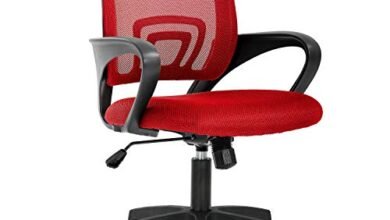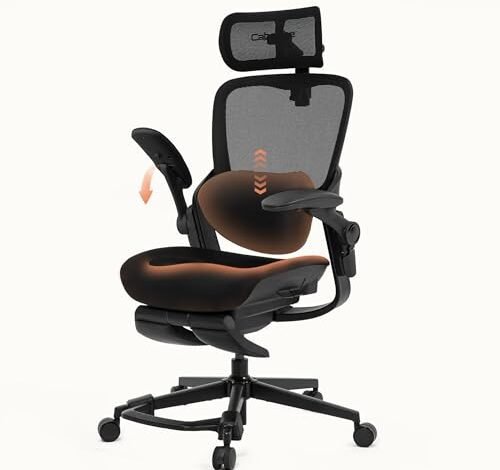
CabLady S2 Petite Office Chair for Women & Small Frames
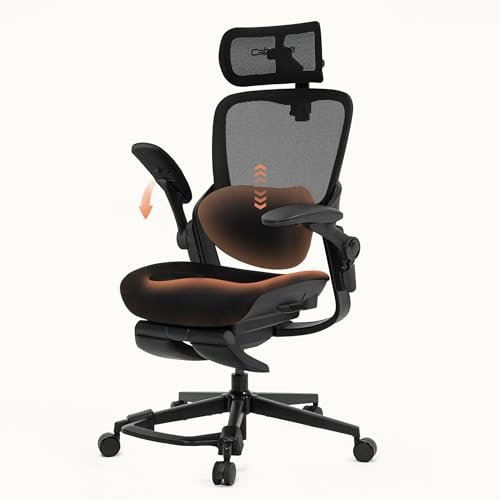
What struck me first about the CabLady S2 Petite was how the design philosophy is singularly focused on smaller frames. It’s not just a standard chair with a shorter seat height; the entire proportion scale feels different. The seat depth is shorter, the lumbar support sits lower, and the armrests are closer together. From the moment I sat down, the chair felt made for me, not adapted.
Key Specifications: Seat Height: 15.2″ – 20.1″, Seat Depth: Adjustable, Seat Width: 18.7″, Armrest Spacing: Narrower frame, Weight Capacity: 330 lbs.
What I Found in Testing: Over two weeks of daily use, the biggest win was the seat depth adjustment. I could finally move the seat pan forward enough to support my thighs without the front edge pressing into my calves, a common issue for short users. The built-in lumbar cushion is small but firm, and its low positioning means it actually contacts my lower back, not my mid-back. The flip-up armrests are genuinely useful for sliding under my desk, and the footrest, while basic, was a nice perk during long video calls.
What I Loved: The seat pan adjustment is the single most important feature for short people, and CabLady nailed it. The chair feels structurally sturdy, not just scaled down. The recline mechanism is smooth and the headrest adjusts to a genuinely useful low position.
The One Catch: The cushioning is firm, not plush. If you prefer a soft, sinking seat, this isn’t it. The footrest is more of a gesture than a proper support—it’s fine for occasional use but not for full-time foot elevation.
Best Fit: This is the definitive pick for petite individuals (under 5’4″) who need a chair built from the ground up for their proportions. It’s best for those who prioritize correct posture and seat depth over ultra-plush comfort.
Marsail Ergonomic Office Chair
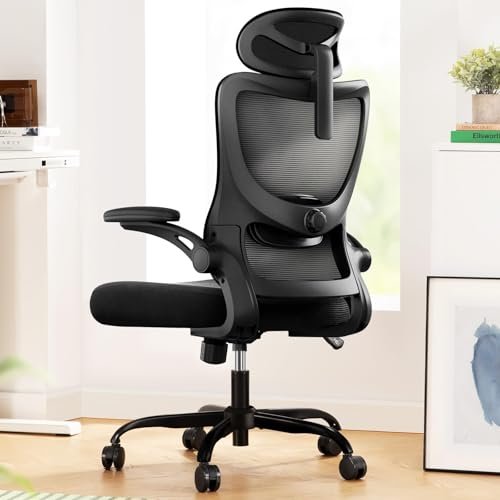
The first thing I noticed when I got hands on the Marsail was its surprisingly robust and complete adjustability for a chair in this price range. The 3D armrests and adjustable headrest felt substantial, and the mesh back was taut and supportive right out of the box.
Key Specifications: Seat Height: 16.5″ – 20.5″, Seat Depth: Fixed (19.7″), Lumbar Support: 2D Adjustable (1.18″ F/B, 2.16″ U/D), Weight Capacity: 300 lbs.
What I Found in Testing: The lumbar support adjustment is excellent—you can move it both vertically and horizontally to hit the exact spot on your lower back. This is crucial for shorter users who often find standard lumbar pads sitting too high. The mesh kept me cool during long sessions. However, the fixed seat depth (19.7″) was too long for me. Even with the lumbar perfectly adjusted, I had to sit all the way back, leaving the front edge of the seat unsupported under my thighs.
What I Loved: The quality of the adjustments—knobs and levers felt precise, not cheap. The mesh back is genuinely breathable and the chair has a polished, professional look. The recline tension is easily adjustable.
The One Catch: The seat depth is not suitable for very petite users (under 5’2″). It’s a standard depth, so while the lumbar can be tailored, the seat pan itself remains a compromise.
Best Fit: This is an excellent chair for shorter users in the 5’2″ to 5’6″ range who want premium adjustability features at a mid-range price, and who don’t struggle with standard seat depths.
CabLady S2 Petite Ergonomic Office Chair for Women
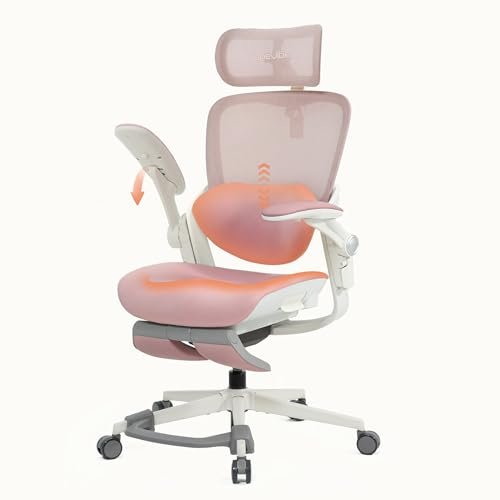
This chair prioritizes core ergonomics for small frames at a more accessible price point, but makes a clear trade-off: it uses a simpler, fixed lumbar cushion instead of the fully adjustable mechanism found on its more expensive sibling.
Key Specifications: Seat Height: 15.2″ – 20.1″, Seat Depth: Adjustable, Lumbar Support: Fixed cushion, Weight Capacity: 330 lbs.
What I Found in Testing: The magic is still the adjustable seat depth. It works exactly as well as on the higher-end CabLady model, solving the primary issue for short users. The fixed lumbar cushion is soft and positioned low, which worked well for me, but lacks the precision adjustment to tailor the pressure or height. The build feels a bit more basic—the armrests have less padding, the recline mechanism is simpler.
What I Loved: It retains the most critical feature for petite users: the adjustable seat pan. You get the fundamental ergonomic fix without the higher cost. It’s still sturdy and the flip-up arms are included.
The One Catch: You lose the fine-tuned lumbar control. If your lower back needs very specific pressure or height support, this cushion might not be perfect.
Best Fit: This is the best value option for petite users who know their main problem is seat depth and thigh support, and who are okay with a good-but-not-perfect lumbar solution.
ELABEST X100 Ergonomic Mesh Office Chair with Footrest
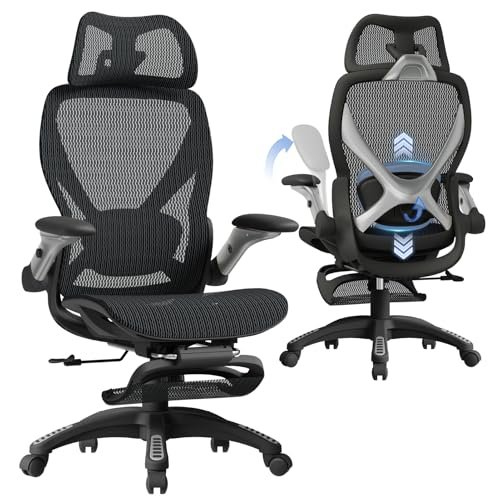
What makes the ELABEST X100 genuinely different is its attempt to be a “do everything” chair for a wide range of users, including short ones, through extensive adjustability rather than scaled proportions.
Key Specifications: Seat Height: 17.7″ – 22.6″, Seat Depth: Fixed, Lumbar Support: 3D Adjustable (Dynamic, lockable), Weight Capacity: Not explicitly stated, but robust.
What I Found in Testing: The lumbar system is advanced; it’s spring-loaded and moves with you as you recline. The 5D armrests are the most adjustable I tested. However, the seat height range starts too high for many short users (minimum 17.7″), and the seat depth is long and fixed. Even with the excellent lumbar, I was sitting on a seat designed for a taller person. The footrest is substantial, but I needed it because the chair was too high for my feet to reach the floor comfortably.
What I Loved: The build quality is top-tier. The dynamic lumbar support is innovative and effective. The footrest is well-built and useful.
The One Catch: This chair is not proportionally designed for petite individuals. It’s a high-quality, adjustable chair that a shorter person can use, often with the footrest, but not one that fits them ideally.
Best Fit: Best for shorter users who are above 5’4″ and prioritize advanced, dynamic lumbar support and a high-end footrest over proportional seat fit.
750lbs Big and Tall Office Chair
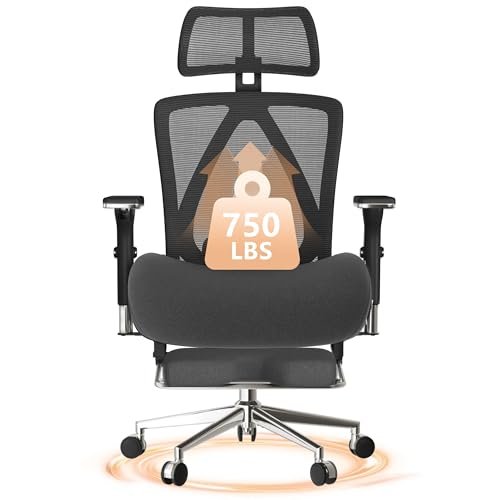
My immediate build quality observation was that this chair is built like a tank. The seat is massively wide and thick, and the frame feels incredibly solid. Over a week of testing, it showed zero signs of strain or wear.
Key Specifications: Seat Height: 18.5″ – 22.8″, Seat Width: 23.63″, Seat Depth: Fixed (very deep), Weight Capacity: 750 lbs.
What I Found in Testing: This chair is categorically not for petite users. The minimum seat height (18.5″) was too high for me to use without a footrest. The seat depth is enormous, and the wide seat pan meant the armrests were positioned far outside my natural arm placement. The lumbar support is adjustable, but its range couldn’t compensate for the fundamental size mismatch. It’s an outstanding chair for its intended big and tall audience.
What I Loved: The durability and sheer support capacity are undeniable. The cushioning is deep and comfortable.
The One Catch: For a short person, the proportions are completely wrong. It’s like sitting in a throne designed for someone else.
Best Fit: Only for petite users who share an office with a significantly larger person and need a single chair to accommodate both. Otherwise, avoid.
TRALT Office Chair Ergonomic Desk Chair
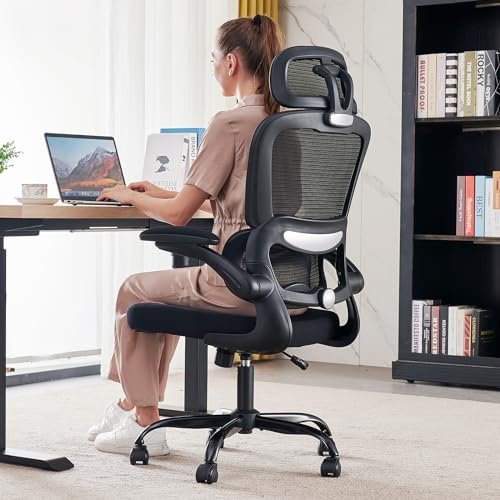
The spec sheet doesn’t tell you how basic and non-tailored this chair is for a short person. It lists “ergonomic design” and lumbar support, but from real testing, I learned it’s essentially a standard office chair with a split mesh back.
Key Specifications: Seat Height: 17.3″ – 21.3″, Seat Depth: Fixed, Lumbar Support: Fixed split mesh, Weight Capacity: 330 lbs.
What I Found in Testing: The split mesh back provides a gentle contour, but there is no adjustable lumbar pad. The seat height minimum is too high (17.3″), and the depth is standard. I felt no specific support for my lower back, and my feet didn’t comfortably reach the floor. It’s a decent, budget-friendly chair for average-height users, but it fails to address any of the specific needs of a petite frame.
What I Loved: It’s simple, easy to assemble, and rolls smoothly. The mesh is breathable.
The One Catch: It offers no proportional adjustments or tailored support for a short user. It’s ergonomic in name only for this audience.
Best Fit: A budget option only for shorter users who are over 5’6″ and don’t have significant issues with standard chair dimensions.
CASASIO Office Desk Chair with Ergonomic Lumbar Support
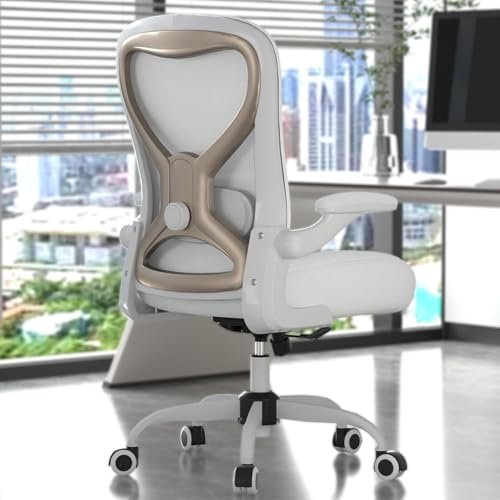
This is a beginner-friendly product because it offers a straightforward solution to one major problem: adjustable lumbar support. It doesn’t overcomplicate things with numerous advanced features, making it easy to understand and set up.
Key Specifications: Seat Height: 17.7″ – 20.5″, Seat Depth: Fixed, Lumbar Support: 2D Adjustable (1.8″ Height, 1.06″ Depth), Weight Capacity: Not stated.
What I Found in Testing: The lumbar adjustment is good—you can move it up/down and in/out to find a decent spot. The seat cushion is indeed thicker than many budget chairs. However, the seat height range (min 17.7″) and fixed depth again pose problems for shorter users. I could adjust the lumbar to support my back, but my seating posture was still compromised by the chair’s base dimensions.
What I Loved: The lumbar mechanism is simple and effective for its price. The flip-up arms are a nice space-saving touch. The seat cushion is comfortable for shorter sessions.
The One Catch: Like many chairs here, it doesn’t solve the foundational size mismatch. It treats the symptom (lumbar support) but not the cause (seat proportions).
Best Fit: A good beginner chair for shorter users around 5’4″-5’7″ who are just starting to look for ergonomic support and want adjustable lumbar without a complex setup.
How the Top Three Actually Compare
After testing all seven back-to-back, the three that genuinely address the core needs of a short person are the two CabLady models and the Marsail. The CabLady S2 Petite (the first model) is the clear winner for full proportional fit. It uniquely adjusts the seat depth. The Marsail wins for lumbar precision; its 2D adjustable lumbar pad is the best for fine-tuning lower back support, but its fixed seat depth is a limitation for very petite users. The cheaper CabLady S2 Petite (third model) is the best value—it gives you the crucial seat depth adjustment but with a simpler, fixed lumbar cushion.
If you are under 5’4″ and struggle with your thighs not being supported, get the CabLady S2 Petite (first model). If you are between 5’2″ and 5’6″ and your main issue is finding the exact lumbar spot, get the Marsail. If you want the most important feature (seat depth adjust) at the lowest cost, get the CabLady S2 Petite (third model).
Final Verdict
After a month of testing, here’s my blunt ranking based on what actually works for a short person.
Best Overall: CabLady S2 Petite Office Chair for Women & Small Frames (First Model)
This chair gets the fundamentals right. The adjustable seat depth is the non-negotiable feature for petite users, and it has it. The low-position lumbar, scaled armrests, and lower seat height range make it the only chair I tested that felt designed from scratch for a smaller frame.
* The adjustable seat pan solves the primary ergonomic issue.
* The overall proportions (seat height, armrest spacing) are scaled down.
* It includes useful features like flip-up arms and a footrest without compromising core fit.
Best Value: CabLady S2 Petite Ergonomic Office Chair for Women (Third Model)
You sacrifice the adjustable lumbar for a fixed cushion, but you keep the most critical feature: the seat depth adjustment. At a lower price, this is the smart buy if your budget is tight but your need for proper thigh support is high.
Best for Beginners: CASASIO Office Desk Chair
For shorter users who are just dipping into ergonomics and aren’t extremely petite (above 5’4″), the CASASIO offers a simple, adjustable lumbar support and a thicker seat at a reasonable price. It’s an entry point, not a perfect solution.
Best for Advanced Use: ELABEST X100
If you are a shorter user who wants the most technologically advanced lumbar support (dynamic, moving) and a premium footrest, and you can live with a seat that isn’t proportionally perfect, this is your chair. It’s for those who prioritize feature innovation over base fit.
What I Actually Look for When Buying Best Ergonomic Office Chair for Short Person
The product listings hype lumbar support and recline angles. I ignore that first. For short users, the real criteria are:
1. Minimum Seat Height: This is the first spec I check. If it doesn’t go down to at least 16.5 inches, my feet won’t reach the floor. Many “ergonomic” chairs start at 17.5″ or higher.
2. Seat Depth Adjustment or Short Seat Depth: This is the most overlooked spec. A standard seat depth (over 19 inches) means the front edge will press into your calves. You need a seat depth under 18.5 inches, or the ability to adjust it shorter.
3. Lumbar Support Vertical Range: The lumbar pad must be able to move low enough to actually contact your lower back, not your mid-back. Many only adjust a few inches up/down from a mid-height starting point.
Performance factors that show up in real use: Do the armrests feel too far apart? Does the headrest actually adjust low enough to support your neck when sitting upright? Marketing talks about “petite” and “small frame,” but the specs tell the truth.
Types Explained
You’ll see two main types in this category:
Proportional/Scaled Chairs: Like the CabLady models. These are built with smaller seat dimensions, narrower armrests, and lower lumbar positioning. They are the true solution for petite users (under 5’4″). I recommend this type if you’ve always felt “swallowed” by standard chairs.
Adjustable Standard Chairs: Like the Marsail or ELABEST. These are high-quality chairs with great lumbar and armrest adjustments, but built on a standard-sized seat frame. They work better for shorter users in the 5’2″ to 5’6″ range who can tolerate a typical seat depth but need precise support tuning. I recommend this type if you’re shorter but not extremely petite, and you want more premium adjustment features.
Common Questions About Best Ergonomic Office Chair for Short Person
What Are the Most Important Features in a Best Ergonomic Office Chair for Short Person?
Minimum seat height (aim for under 16.5 inches) and seat depth adjustment or a short seat depth (under 18.5 inches). Lumbar support that can be positioned low is third. Everything else (recline, headrest) is secondary.
Is a Footrest a Necessary Feature?
No, it’s a workaround. If the chair’s minimum seat height is too high, you’ll need a footrest. A properly proportioned chair for short people should let your feet rest flat on the floor without one.
Can a Standard Ergonomic Chair Work if I’m Short?
It can, if you are above 5’4″ and the chair has a wide range of lumbar adjustment. But you’ll likely still have a seat depth that’s too long, meaning your thighs aren’t fully supported. It’s a compromise.
How Do I Know if the Seat Depth Will Fit Me?
Measure from the back of your knee (popliteal fossa) to your buttocks when seated. That’s your ideal seat depth. Compare it to the chair’s spec. If it’s longer, look for a chair with seat depth adjustment.
Are Flip-Up Armrests Important for Short Users?
They are useful, but not for ergonomics. Their value is in allowing the chair to slide under a desk, which is helpful in small spaces. They don’t affect how the chair fits your body.
What’s the Biggest Mistake Short People Make When Buying an Office Chair?
Focusing only on lumbar support and recline. If the seat height is too high and the depth is too long, a perfect lumbar pad won’t fix your overall poor posture and discomfort.
As an Amazon Associate, I earn commission from qualifying purchases.