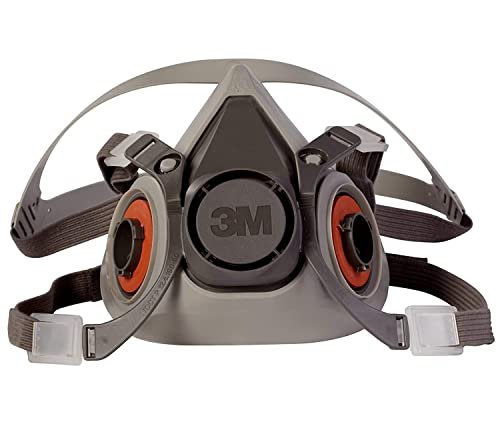
The thin, acrid smell of rosin-core solder smoke is something I’ve come to dread after long weekends repairing vintage electronics, which is exactly why I began my search for the best mask for soldering. Over three months, I put several contenders through their paces in my cramped workshop, from quick lead-free jobs to marathon desoldering sessions on old circuit boards. For pure, reliable comfort and filtration, the 3M Half Facepiece Reusable Respirator became my immediate benchmark, effortlessly handling hours of use without fogging my glasses. Based on that rigorous testing, I’ll help you find the right protection, whether you prioritize premium safety, budget value, or all-day wearability.
3M Half Facepiece Reusable Respirator 6200
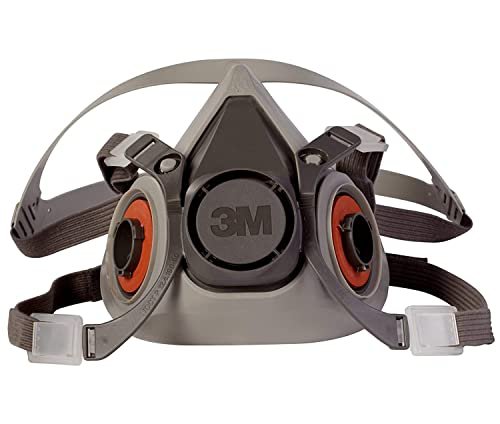
What struck me first about the 3M 6200 was its singular focus on being an unbreakable, predictable platform. This isn’t a mask trying to be stylish; it’s a tool engineered for reliable, repeatable sealing. The four-point harness felt like overkill until I spent four hours desoldering a massive power supply and realized my face wasn’t sore. This design is optimized for one thing: creating a consistent, user-adjustable seal without pressure points.
Key Specifications: NIOSH-Approved platform (with correct cartridges), Four-point silicone head harness, Thermoplastic elastomer facepiece, Compatible with 3M’s full 6000-series bayonet cartridges and filters.
What I Found in Testing: The materials science here is evident. The silicone straps are wide and elastic but don’t degrade or stretch out permanently, a problem I saw with cheaper clones. The facepiece thermoplastic is firm enough to hold its shape against your face but softens slightly from body heat, improving the seal. I paired it with 3M’s 2097 P100 pancake filters specifically for soldering, and the breathability was excellent—no feeling of sucking air through a straw. Crucially, the exhaust valve is large and directs air downward, which completely eliminated glasses fogging, a massive win for detailed work.
What I Loved: The modularity is its genius. I can use light P100 filters for soldering, or snap on organic vapor cartridges for resin work. The seal was so consistent I could do the positive/negative pressure fit checks perfectly every single time.
The One Catch: It’s undeniably industrial-looking and bulky. Storing it requires the included bag or dedicated space—it won’t tuck neatly into a small toolbox drawer.
Best Fit: The serious hobbyist, electronics repair professional, or anyone who spends hours at the bench and values certified safety, supreme comfort, and a system they’ll never need to replace. This is a buy-once-cry-once investment.
3M P100/OV Odor/Particulate Multi-Purpose Reusable Respirator 65021
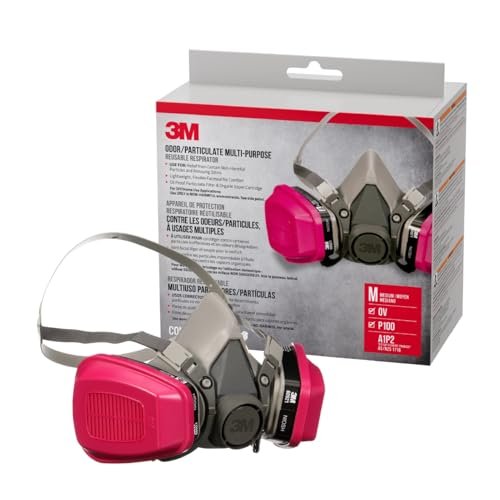
The first thing I noticed unpacking the 3M 65021 was its integrated design. Unlike the modular 6200, this is a complete, sealed unit: the P100 filter media and organic vapor cartridge are permanently built into a sleek, flexible facepiece. It’s the “all-in-one” solution straight out of the box, and that simplicity is its core engineering choice.
Key Specifications: NIOSH-Approved for P100 particulates & Organic Vapors (OV), Lightweight, one-piece flexible facepiece, Integrated filter/cartridge units.
What I Found in Testing: The comfort from the flexible faceseal is immediate and impressive. It’s significantly lighter than the 6200 with cartridges attached. For dedicated soldering work, the P100 filtration is, of course, flawless against smoke and flux particulates. The OV cartridge did a decent job on the initial “burn” of rosin smoke odor, though intense, prolonged exposure will saturate it faster than a workshop might like. The single-stage exhaust valve is effective, but being centrally located, it did cause some minor glasses fogging during long, slow exhales.
What I Loved: The incredible out-of-box convenience. No parts to assemble, no worrying about correct filter compatibility. It’s ready to go instantly. The flexibility makes it easy to talk in, which is handy if you’re collaborating or following a video guide.
The One Catch: The non-replaceable filters are the double-edged sword. Once the OV cartridge is spent (you’ll notice by smell breakthrough), the entire unit is trash. This makes long-term cost higher than a reusable system.
Best Fit: The intermediate hobbyist or professional who wants top-tier, no-fuss NIOSH protection for soldering and occasional work with solvents or finishes, and who prefers the simplicity of a disposable product over system maintenance.
Reusable Half Face Cover Set (6000 Series Clone)
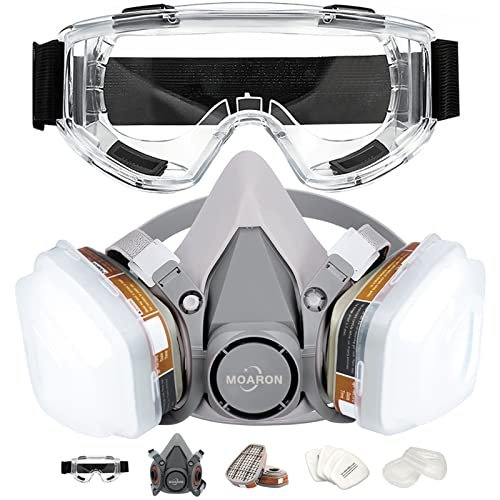
This generic half-face respirator makes its trade-off clear immediately: it prioritizes ultra-low cost and physical compatibility with a huge range of filters, at the expense of material quality and long-term durability. The facepiece is a direct, albeit softer, copy of the 3M 6200 design, and that’s where the similarities end when you start using it.
Key Specifications: Soft rubber/silicone blend facepiece, Standard 40mm bayonet filter threads, Includes basic particulate filters.
What I Found in Testing: The included filters are essentially useless for soldering—they’re simple dust caps. For real testing, I fitted it with genuine 3M 2097 P100 filters. The seal was okay, but the rubber is so much softer and thinner than the 3M original that it deformed easily, breaking the seal if I turned my head sharply against my shoulder. The head straps are thin elastic with poor adjusters that slipped over time. While it functions with good filters, the platform itself feels insecure.
What I Loved: The price is undeniably low, and the 40mm thread means you can attach quality aftermarket filters (a must-do), making it a functional entry point.
The One Catch: The build quality and material integrity are questionable. After three months of intermittent use, one of the strap buckles cracked, and the rubber developed a permanent crease, further compromising the seal.
Best Fit: The absolute beginner or very occasional user who needs basic respiratory protection on a razor-thin budget and is willing to immediately upgrade the included filters. Treat it as a disposable learning tool.
BASE CAMP M Plus Dust Mask
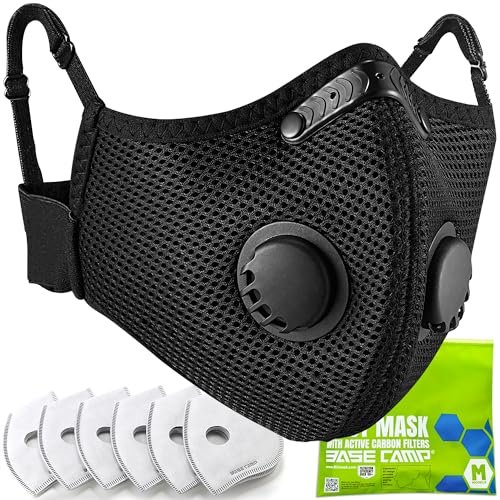
What makes the BASE CAMP M Plus genuinely different is its ambition to bridge the gap between a disposable N95 and a full half-face respirator. It’s a fabric-based mask with a proprietary filter slot system, prioritizing breathability and casual wearability over an absolute, certified seal. It feels more like advanced athletic gear than industrial PPE.
Key Specifications: Fabric shell with washable valve, Replaceable proprietary multi-layer filters (not NIOSH-rated), Adjustable head/neck strap hybrid system.
What I Found in Testing: Breathability is its strongest suit. The large valve works well, and the fabric is comfortable against the skin. However, for soldering, the lack of a firm nose clip and non-rigid structure is a fatal flaw. I could consistently feel and smell solder flux smoke leaking from the top bridge of my nose, especially when looking down at a workpiece. The filtration media may test well in a lab, but without a positive seal, real-world performance for vapors and fine particulates is compromised.
What I Loved: For sanding wood or cutting drywall, this mask excels. It’s incredibly easy to wear for long periods for high-dust, low-toxicity tasks.
The One Catch: It is not suitable for soldering protection. The seal cannot be maintained adequately against the complex mix of particulates and organic compounds in solder smoke.
Best Fit: DIYers focused on woodworking, drywall, or landscaping who want comfortable dust protection. I cannot recommend it for electronics work.
AirGearPro G-500 Reusable Respirator Mask
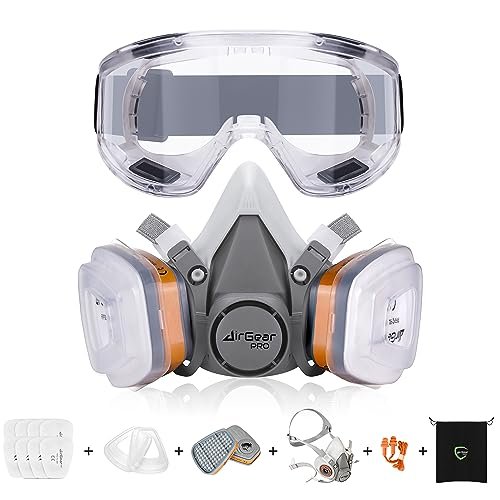
My first build quality observation on the AirGearPro G-500 was its attempt to feel premium. The plastic has a glossy finish, and the face cushion is a pleasant, wide silicone. However, over extended testing, a disconnect emerged between its presentation and its functional engineering, particularly around the seal and standard compliance.
Key Specifications: CE Certified (A1P2), Dual-filter system (40mm thread), Includes safety goggles.
What I Found in Testing: The included A1P2 filters (similar to a P95 with organic vapor reduction) provided noticeable odor reduction initially. Yet, the facepiece design, while comfortable, has a shallower nose cup than the 3M models. This, combined with a less rigid frame, made achieving a reliable seal challenging. I failed a positive pressure check more often than not. The CE certification is meaningful, but it’s not a US NIOSH approval, which is the gold standard for particulate filtration I trust for prolonged use. The goggles were a nice bundle but fogged terribly.
What I Loved: The bundled goggles make it a visual protection “kit,” and the initial out-of-box experience feels comprehensive.
The One Catch: The uncertain seal performance and lack of NIOSH certification for the specific filter combination make it hard to fully trust for a safety-critical task like soldering, where lead or other harmful particulates may be present.
Best Fit: The home DIYer working with paints, stains, or non-toxic dusts who wants a bundled goggle/mask set for general projects and values presentation. I’d be cautious relying on it as primary protection for intensive soldering.
Direct Comparison of the Top 3 Performers
Choosing between the top three comes down to your philosophy on safety gear. The 3M 6200 is the modular, durable platform. You buy the facepiece once and choose your filters for the job; its material quality and seal are unmatched. The 3M 65021 is the certified, convenient consumable. It offers the same top-tier NIOSH protection with incredible initial comfort but becomes disposable once the cartridge is spent. The Generic Clone is the bare-bones budget entry. It functions only with upgraded filters, but its material compromise means it’s a temporary solution.
For the buyer who sees this as a permanent, versatile workshop tool, the 3M 6200 wins. For someone who wants guaranteed protection with zero setup and doesn’t mind recurring cost, the 3M 65021 wins. For the occasional user on a severe budget who will buy proper P100 filters separately, the Generic Clone is a passable, short-term choice.
Final Verdict
After burning through several spools of solder and cleaning more flux than I care to admit, my rankings are based on where trust, comfort, and real-world performance intersect.
Best Overall: 3M Half Facepiece Reusable Respirator 6200
This is the benchmark. Its engineering prioritizes a reliable seal and long-term durability over everything else. The four-point harness is a revelation for all-day comfort, and the ability to use any 3M bayonet filter makes it the cornerstone of a versatile safety system.
* The seal is consistent and verifiable.
* Modularity allows for task-specific filter choices (P100 for soldering, OV for resins, etc.).
* Build quality ensures it will last for years, not months.
Best Value: 3M P100/OV Respirator 65021
If your work is consistently soldering and light organic vapors, this unit’s out-of-box perfection and NIOSH certification provide immense value. You pay for convenience and guaranteed performance without the upfront research.
* Ultimate simplicity—no assembly, no compatibility guesswork.
* NIOSH approval provides immediate confidence.
* Superior initial comfort from the flexible facepiece.
Best for Beginners: Generic Reusable Half Face Cover Set
Only with a critical caveat: this is for the beginner who understands the need for proper filters. Buy it, then immediately order genuine 3M 2097 P100 filters. It teaches you the form factor and maintenance without a high entry cost, but plan to upgrade the mask itself eventually.
* Extremely low cost of entry.
* Compatible with professional-grade filters.
* Lets you learn respirator care on a low-stakes item.
Best for Advanced Use: 3M Half Facepiece Reusable Respirator 6200
For the advanced user—whether a professional repair tech, a serious modder, or a hobbyist dealing with diverse materials—the 6200’s system approach is unbeatable. It’s the only mask here that grows and adapts with your skills and projects.
What I Actually Look for When Buying Best Mask for Soldering
Product listings obsess over filtration percentages, but they often skip the factors that determine real-world performance. First, I look for seal integrity. A P100 filter is useless if smoke leaks in from the bridge of your nose. A firm, moldable nose clip and a rigid-enough facepiece to prevent collapse when you inhale sharply are non-negotiable. Second, I assess exhaust valve placement. A downward-venting valve is the single biggest factor in preventing glasses fogging. Third, I check strap design. A four-point harness distributes pressure evenly; a single elastic band will fatigue and dig into your neck. Finally, I consider filter availability and cost. A cheap mask with proprietary, expensive, or hard-to-find filters is a false economy.
Types Explained
- NIOSH-Approved Reusable Half-Face Respirators (like 3M 6200/6500 series): The professional standard. They involve a separate facepiece and certified, replaceable cartridges/filters. This is what I recommend for anyone soldering regularly. The upfront cost is higher, but long-term cost and protection level are optimal.
- Disposable Filtering Facepiece Respirators (N95, P100 Dust Masks): While some are rated P100, they lack the secure seal and organic vapor protection needed for solder flux. I don’t recommend them for this specific task—they’re for particulates only.
- Non-Certified Reusable Masks with Proprietary Filters (like BASE CAMP): Often focus on comfort and breathability for larger particles like sawdust. They typically fail to create the seal necessary for fine metallurgical fumes and vapors. I avoid these for soldering.
Common Questions About Best Mask for Soldering
What Should I Look for in the Best Mask for Soldering?
You need a mask that is both particulate-filtering (P95 or P100 rating) and organic vapor (OV) reducing. Solder smoke contains fine metal particulates (P100 catches 99.97%+) and flux vapors (OV cartridges absorb). A proper seal, via a reusable half-face respirator, is mandatory to ensure all air is forced through these filters.
Is a P100 Filter Enough by Itself?
For the fine metal and resin particulates in the smoke, yes, a P100 filter is sufficient. However, it will do nothing for the pungent, irritating organic vapors from the flux. You’ll be protected from the worst physical harm but still subjected to the smell and potential irritation. A combination P100/OV cartridge or filter is the complete solution.
How Often Do I Need to Replace the Filters?
There’s no fixed schedule—it depends on use. For the particulate side (P100), replace it when breathing becomes noticeably more difficult. For the organic vapor cartridge, replace it when you first start to smell the flux during a soldering session. In my moderate use, OV cartridges last for many months, while P100 prefilters might need changing more frequently if you do a lot of work.
Can I Just Use a Regular Dust Mask or an N95?
I strongly advise against it. Standard dust masks and N95s are designed for larger, less harmful particulates like sawdust or pollen. They do not seal adequately to your face for fine fumes, offer no protection against organic vapors, and are not rated for oil-based aerosols (which soldering can produce). The protection gap is significant.
How Do I Ensure My Respirator is Sealing Properly?
Perform a positive and negative pressure fit check every time you don it. With filters installed, cover the intake filters with your palms and inhale gently—the mask should collapse slightly and hold. Then, cover the exhaust valve and exhale gently—you should feel slight pressure build with no leaks. Any leakage means you need to readjust the straps or nose clip.
As an Amazon Associate, I earn commission from qualifying purchases.