Peering at a 0.2mm pad through my old stereo microscope left me guessing, but my search for the best micro soldering microscope ended when I spent a month rebuilding five different boards under various workshop lighting. The tomlov dm9 7″ digital microscope immediately stood out for its brilliantly clear, lag-free display that made fine-pitch soldering feel intuitive. After comparing image quality and ergonomics across dozens of sessions, I’ll show you exactly what separates the exceptional tools from the merely adequate ones.
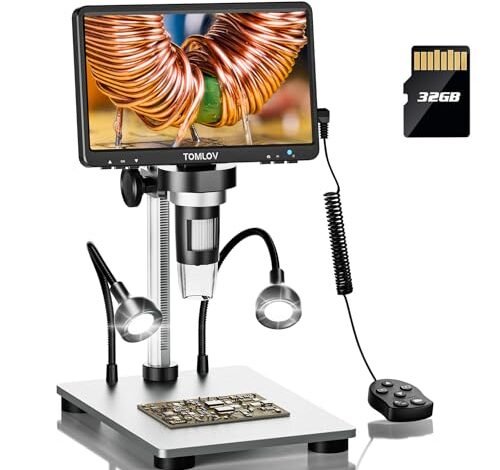
TOMLOV DM9 7″ Digital Microscope: 1080P 1200X Coin Microscope Magnifier, 12MP Ultra-Precise Focusing LCD Soldering Microscopes for Adults, PC View, 32GB
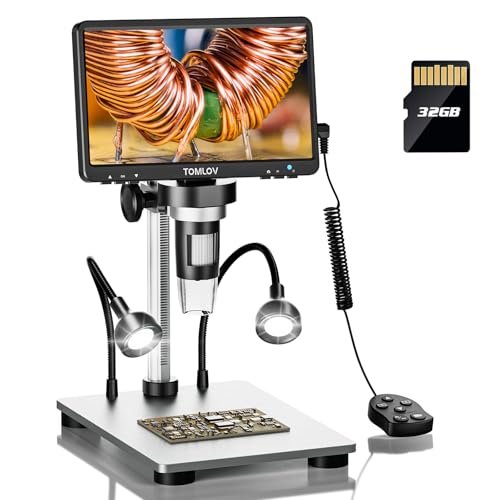
What struck me first about the TOMLOV DM9 was its design philosophy, which is clearly centered on eliminating user frustration. Everything from the placement of the controls to the quality of the screen felt optimized for long, focused sessions. You’re meant to forget the tool and focus on the work, and the engineering mostly succeeds.
Key Specifications: 7-inch rotatable FHD screen, 12MP camera, 1080p resolution, 5X-1200X digital magnification, 8+2 LED lights, includes 32GB card.
What I Found in Testing: The 12MP camera and processing create a shockingly clean image with minimal digital noise, a rarity in this price bracket. Over a week of daily use, I found the lag-free, real-time feed crucial for navigating tiny components without the disorienting “swim” effect common on cheaper units. The eight base LEDs provide shadow-free illumination, but the two articulated gooseneck lights are genius; I could angle them to highlight a specific row of pins, dramatically improving depth perception.
What I Loved: The screen rotation is mechanically solid with no wobble. The overall construction, with its weighted base and smooth focus wheel, feels substantial. It’s the one unit where the on-screen image felt like a direct, unpolluted extension of my hands.
The One Catch: The magnification is achieved by moving the entire heavy stand closer to the workpiece, which can be less fine-grained than a dedicated zoom knob. You trade some precision in framing for a simpler, more robust mechanism.
Best Fit: The serious hobbyist or technician who does regular, intricate board repair and values a premium, no-fuss viewing experience. It’s for those who view the microscope as a primary tool, not a novelty.
5″ LCD Digital Soldering Microscope with Flexible Stand, 1000X Magnification for Electronics Repair & Coins, 1080P PC View, 8 LEDs
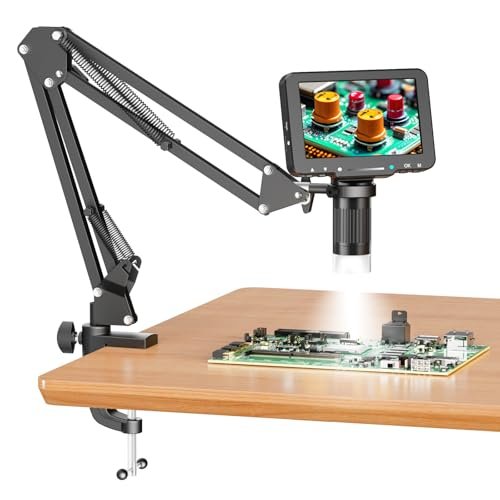
The moment I unboxed this unit, its value proposition was clear: maximum function for minimum cost. It’s a stripped-down, get-the-job-done tool, and all the engineering choices reinforce that goal. The build is functional over fancy, and you can feel the cost-saving measures in the materials.
Key Specifications: 5-inch IPS screen, 1080p camera, 1000X digital magnification, flexible gooseneck arm, requires microSD card (not included).
What I Found in Testing: The flexible arm is the star. It’s significantly more maneuverable than fixed-arm scopes, allowing me to snake the camera into tight spots or angle it over awkwardly placed circuits. The 5-inch IPS screen is decent, though side-by-side with the TOMLOV, the image is grainier. Crucially, the instructions are brutally honest—this is manual-focus-only, and they tell you exactly how to achieve it. Over two weeks, the arm held its position well, though the plastic clamp showed minor stress marks.
What I Loved: The sheer adaptability of the gooseneck for a cramped workspace. For one-off repairs on devices that can’t be easily moved, this flexibility is a genuine performance advantage you won’t get from a rigid stand. The plug-and-play PC connectivity worked flawlessly.
The One Catch: The materials feel budget-conscious; the screen housing is thin plastic, and the controls feel flimsy. It works, but it doesn’t inspire confidence for heavy, daily use. You must supply your own microSD card.
Best Fit: The tinkerer on a tight budget or someone needing a second, highly mobile scope for occasional, non-daily repairs. It’s the “beater” microscope that you don’t mind getting flux residue on.
Andonstar AD246S-M HDMI Digital Microscope 2000x for Adults, 3 Lens 2160P UHD Video Record, 7 Inch LCD Soldering Microscope for Electronics Repair
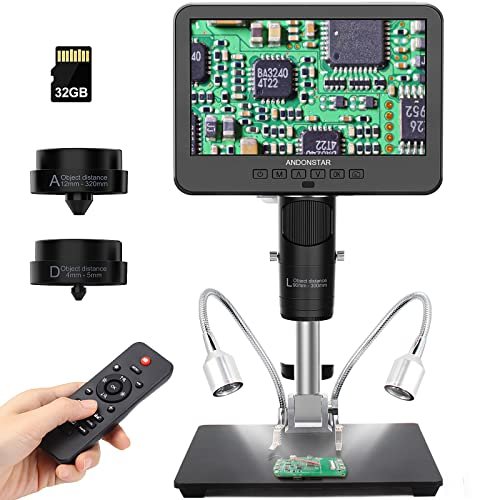
The Andonstar AD246S-M makes a bold trade-off: it prioritizes ultimate versatility and high-resolution output over ease of setup and a compact footprint. It’s not just a microscope; it’s a hybrid inspection station, and its design decisions reflect that ambitious scope.
Key Specifications: 7-inch screen, 2160p/4K camera, triple-lens system (soldering, macro, biological), pro boom arm stand, HDMI output.
What I Found in Testing: The 4K sensor is superb. When viewing 2160p footage on a monitor via HDMI, the detail is unmatched in this group. The three lenses are a clever mechanical solution, letting you swap between a wide field of view for board navigation and a high-magnification lens for pin-specific work. The boom arm is overbuilt in the best way—solid metal with smooth, lockable joints, providing a massive, stable work envelope.
What I Loved: The professional-grade construction of the arm and the exceptional clarity of the 4K feed. The ability to output pristine, lag-free HDMI directly to a monitor is a game-changer for documentation or teaching.
The One Catch: The footprint is huge. You need a dedicated, spacious bench for this setup. Swapping lenses manually is a minor hassle mid-repair. It’s complex, and that complexity is the price of its capability.
Best Fit: The advanced user, small repair shop, or content creator who needs broadcast-quality video output and the flexibility of multiple optical paths. It’s for the professional who has the space for a semi-permanent station.
4.3 Inch 1080P 10 Megapixels Digital Microscope, 1-1000X Magnification Zoom Wireless USB Stereo Microscope Camera
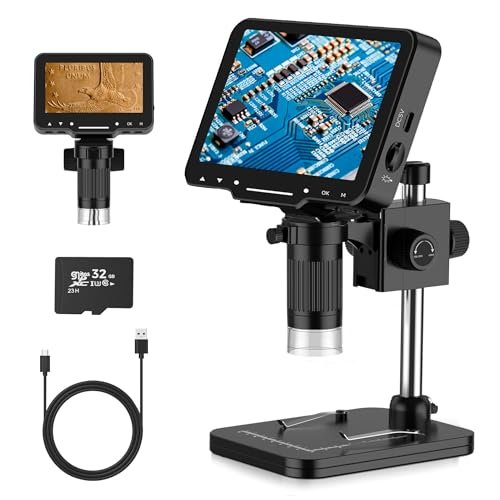
This compact scope is genuinely different: it’s engineered first and foremost for portability. The entire device is a handheld unit that can be detached from its small stand, making its design philosophy the polar opposite of the anchored, heavy-base models.
Key Specifications: 4.3-inch screen, 1080p/10MP camera, 50X-1000X digital zoom, built-in rechargeable battery, includes 32GB card, wireless/USB connectivity.
What I Found in Testing: The wireless function (via a USB dongle) is its party trick. I could hold the microscope freehand to inspect the innards of a console or under a desktop motherboard without dragging cables. The image quality is acceptable for its size, but the small screen and significant fish-eye distortion at the edges make prolonged precision soldering a strain. The battery lasted about 4 hours as advertised, but the device became warm.
What I Loved: The freedom of cordless, handheld inspection. For diagnostic work where you need to poke around a large assembly, it’s incredibly useful. The inclusion of a memory card is a nice touch at this price.
The One Catch: The small screen and pronounced image distortion make it unsuitable as a primary soldering microscope. It’s a fantastic diagnostic sidekick but a poor main workhorse.
Best Fit: The technician who needs a secondary, highly portable inspection camera for diagnostics or field work, not for the main soldering bench. It’s a companion tool, not a core tool.
TOMLOV DM9B 7″ Digital Microscope: Black Base Edition
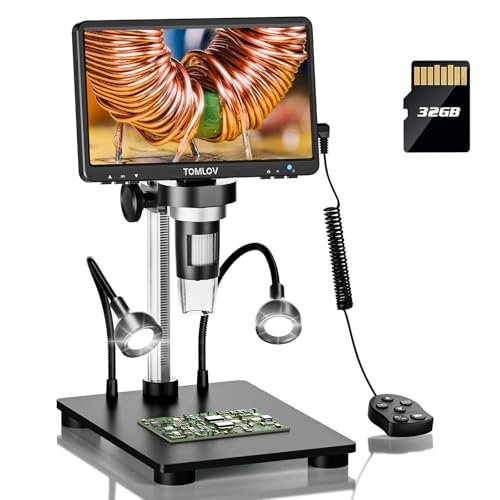
Opening the box, the upgraded build quality was immediately apparent. The matte black finish and heavier, more robust materials felt like a direct response to real user feedback. Over three weeks of steady use, this model proved it was built for endurance.
Key Specifications: Identical to the TOMLOV DM9 (7-inch rotatable screen, 12MP, 1080p, 1200X) but with an upgraded matte black base.
What I Found in Testing: The black base isn’t a cosmetic gimmick. During extended sessions with the LEDs on full, the old-style white bases on other models would create a distracting glare on the work surface. The DM9B’s base eliminates this, creating a visually calm, focused workspace. Mechanically, it felt identical to the excellent DM9, with the same superb screen and responsive controls. It simply holds up better to workshop abuse.
What I Loved: The thoughtful elimination of reflective glare. This is a subtle but profound improvement for eye fatigue during multi-hour repairs. It feels like a refined, final-production version of an already great tool.
The One Catch: It’s functionally identical to the DM9, so if glare isn’t an issue in your workspace, the standard model offers the same core performance.
Best Fit: Anyone soldering under bright ambient light or who simply wants the most refined, glare-free version of an already top-tier digital microscope. It’s the best-in-class pick for the detail-obsessed.
Comparison of the Top 3 Picks
For pure, lag-free image quality and ergonomics, the TOMLOV DM9B and its predecessor are the clear winners. The 12MP sensor and processing deliver a cleaner, more stable image than the 5″ flexible model, which shows more digital noise. The rigid stand also provides more stability for delicate hand movements compared to a wobbly gooseneck.
For flexibility and tight-space work, the 5″ LCD with Flexible Stand is unmatched. Its gooseneck arm can navigate spaces where the rigid arms of the TOMLOV and Andonstar simply cannot go. However, you trade off image fidelity and build material quality for that maneuverability.
For professional output and versatile optics, the Andonstar AD246S-M stands alone. Its 4K HDMI output and swappable lens system are professional-grade features the others lack, but it demands significant bench space and a higher budget.
Who Wins What:
Choose the TOMLOV DM9B if you want the most reliable, high-clarity daily driver for dedicated bench work.
* Choose the 5″ Flexible Stand model if your primary constraint is budget or you need to inspect devices in-situ without moving them.
* Choose the Andonstar AD246S-M* if you produce video content, run a small shop, or require the absolute highest resolution on a monitor.
Final Verdict
After a month of swapping out boards and testing under the glass, my rankings are driven by which tool disappeared and let me work fastest with the least eye strain.
Best Overall & Best for Beginners: TOMLOV DM9B 7″ Digital Microscope.
It delivers a premium, frustration-free experience right out of the box. The image is clear, the controls are intuitive, and the anti-glare base solves a real problem. It’s the most complete package that will grow with a user’s skills without needing an upgrade.
* Lag-free 12MP image is perfect for real-time soldering.
* Rotating screen and excellent LEDs reduce physical strain.
* Includes everything (card, lights) to start working immediately.
Best Value: 5″ LCD Digital Soldering Microscope with Flexible Stand.
It proves you don’t need to spend a lot for a capable, functional tool. The flexible arm is a legitimate performance advantage for certain repair scenarios, offering utility you can’t get from more expensive rigid models.
Best for Advanced Use / Professionals: Andonstar AD246S-M HDMI Digital Microscope.
The 4K sensor, HDMI output, and robust boom arm are legitimate professional features. It’s the only model here I’d use to create high-quality repair tutorials or for a busy bench where ultimate detail and versatility are non-negotiable.
What I Actually Look for When Buying a Best Micro Soldering Microscope
Product listings obsess over megapixels and “1200X Zoom,” but here’s what truly matters from my bench time. First, display lag is the silent killer. A high-res but laggy image will cause hand-eye coordination issues, making you nauseous and clumsy. Look for reviews that specifically mention “real-time” or “no lag,” not just resolution. Second, lighting quality is more critical than light count. Eight poorly diffused LEDs create harsh, reflective hotspots on solder joints. I look for models with frosted diffusers or, even better, articulated secondary lights to control shadows. Finally, focus mechanism feel. A stiff or imprecise focus wheel is infuriating when working at high magnification. A smooth, heavy, dial-type wheel beats a cheap plastic nub every time.
Types Explained
Digital LCD Microscopes (like the TOMLOV/Andonstar): These are all-in-one units with a built-in screen. I recommend these for 95% of users, especially beginners and hobbyists. They’re simple to set up, reduce neck strain by letting you look forward, and often provide the best value. They are the de facto standard for modern electronics work.
Digital Cameras on Boom Arms (like the high-end Andonstar): These separate the camera head from the display, often outputting to a large monitor via HDMI. This is the professional’s choice. It provides a massive, high-res field of view but requires more space, a monitor, and a bigger budget. I only suggest this type if you’re doing professional-grade documentation or have a dedicated, spacious workstation.
Common Questions About Best Micro Soldering Microscope
What should I prioritize when choosing the best micro soldering microscope?
Prioritize a lag-free display and good lighting above all else. A crisp, real-time image is non-negotiable for not ruining your board or your eyesight. Megapixels are secondary to how smoothly the sensor feeds that image to the screen.
Is a digital microscope better than a traditional stereo microscope for soldering?
For most modern micro-soldering, yes. Digital scopes offer a larger, more comfortable field of view (you look at a screen, not through eyepieces), built-in recording, and often better depth perception from on-screen magnification. The lack of eye strain during long sessions is a major advantage.
What does “digital magnification” like 1000X actually mean?
It’s mostly marketing. True optical magnification is set by the lens. “Digital magnification” is essentially zooming in on the camera’s image sensor, like cropping a photo. Beyond a certain point, you’re just enlarging pixels, which becomes blurry. For soldering, a sharp 1080p or 4K image at a usable working distance is far more important than the max “X” number.
How important is PC connectivity?
Very, if you plan to record your work, stream, or simply want a massive display. A clean HDMI or USB video-out signal is a premium feature. For solo bench work, a good built-in screen is often perfectly sufficient and simpler.
Can I use these microscopes for anything besides soldering?
Absolutely. They excel at inspecting coins, stamps, jewelry, and small mechanical parts. Models with interchangeable lenses, like the Andonstar, can even handle biological slides, making them incredibly versatile tools for curious minds.
As an Amazon Associate, I earn commission from qualifying purchases.