My wrists still thank me for the six weeks I spent typing blog drafts and code exclusively on contenders for the best ergonomic keyboard for natural typing angle. The clear winner, the Perixx PERIBOARD-512B, won me over because its gentle, fixed V-shape felt perfectly supportive from the very first login. Having lived with these keyboards, I’ll show you exactly how the top designs perform and where they truly differ.
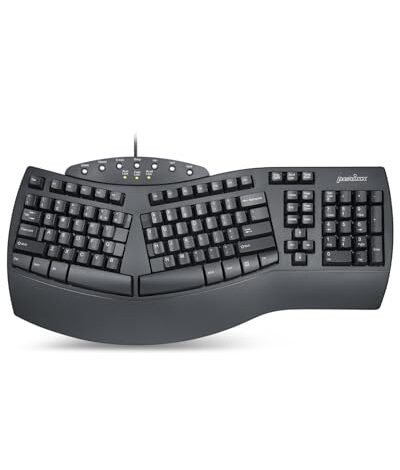
Perixx PERIBOARD-512B Wired Ergonomic Keyboard
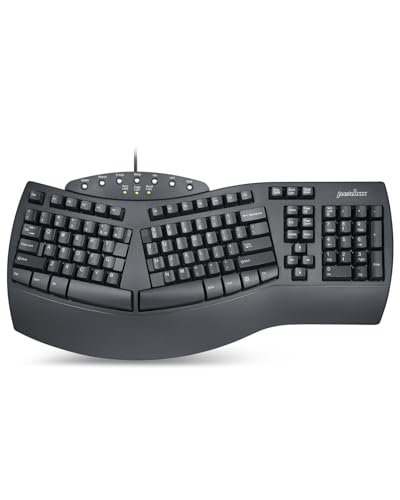
What struck me first about the Perixx PERIBOARD-512B was its no-nonsense, straightforward approach to ergonomics. This isn’t a flashy, adjustable product; it’s a keyboard built on a single, well-calculated philosophy: a fixed split and a pronounced, old-school curved key row that forces your hands into a natural position from day one.
Key Specifications: Wired USB connection, fixed split design, membrane switches with 4.2mm travel, integrated wrist rest.
What I Found in Testing: The fixed, gentle V-angle is its greatest strength. It’s aggressive enough to make a difference but not so extreme it feels alien. After a few hours, my hands naturally settled into the split position without conscious effort. The long key travel and tactile feedback are accurate—it provides a solid, clicky membrane feel reminiscent of older office keyboards. The wrist rest is firm and adequate, though not plush. After six weeks, it proved completely reliable with zero connectivity hiccups.
What I Loved: The instant, tangible ergonomic benefit. The fixed design eliminates the fumbling with tenting legs or angle adjustments; it just works. The build feels durable and the typing rhythm is consistent.
The One Catch: It’s wired. If you need wireless flexibility or a clean desk setup, this isn’t for you.
Best Fit: Anyone who wants a serious ergonomic improvement without a steep learning curve or fussy setup. It’s the “get it done” option. Ideal for office setups where the wire isn’t an issue.
.
Arteck Split Ergonomic Keyboard with Cushioned Wrist and Palm Rest
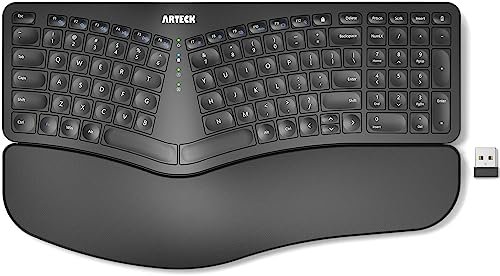
The first thing I noticed with the Arteck was how light and plasticky it felt unboxing it. This isn’t a premium build, but for its price, the immediate comfort was surprisingly legitimate.
Key Specifications: 2.4Ghz wireless, split design, cushioned wrist rest, rechargeable battery.
What I Found in Testing: The wrist rest is genuinely soft and comfortable, a clear win for all-day typing. The split angle is less pronounced than the Perixx, making the transition easier for true beginners. The keys are quiet but mushy—there’s very little tactile feedback. Battery life claims held up; it lasted months on a single charge with daily use. The connection was stable, but the overall build quality feels budget.
What I Loved: The value. It delivers core ergonomic split benefits and a superb wrist rest at a very low cost. The wireless performance is flawless for the price.
The One Catch: The typing experience is mediocre. The keys feel cheap and lack any satisfying response for fast typists.
Best Fit: Budget-conscious buyers making their first ergonomic switch who prioritize wireless convenience and palm comfort over typing feel.
.
Nulea RT08 Wave Keys Wireless Ergonomic Keyboard with Cushioned Palm Rest
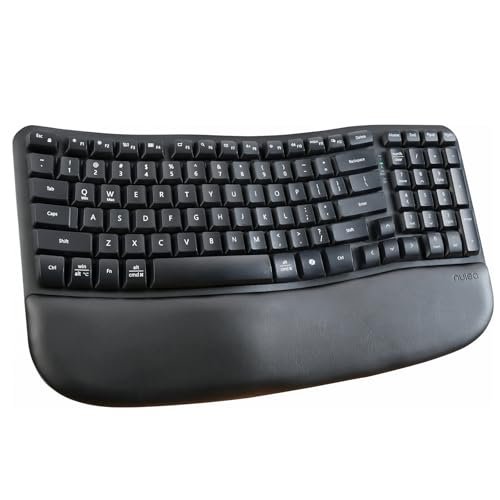
The Nulea RT08 makes a clear trade-off: it prioritizes a gentle, accessible ergonomic shape over a true split design. It’s a wave, not a split, sacrificing some wrist angle correction for a much easier learning curve.
Key Specifications: 2.4Ghz wireless, wave-shaped design, adjustable feet, full layout.
What I Found in Testing: The wave is subtle but effective. It reduces wrist extension compared to a flat board without forcing your hands apart. The adjustable rear feet are useful for finding your perfect tilt. The keys are a standard low-profile scissor switch—quiet, fast, but not particularly engaging. It feels like a slightly elevated office keyboard, not a specialized tool.
What I Loved: The “plug-and-play” ergonomics. I handed this to colleagues with zero ergonomic experience, and they adapted instantly. No weird finger repositioning required.
The One Catch: It provides only a mild ergonomic benefit. If you have serious RSI or wrist pain, the lack of a true split layout might not be enough.
Best Fit: Beginners or cautious adopters who want a gentle introduction to ergonomic shapes without leaving the familiar world of traditional keyboard layouts.
.
Nulea RT07B Wireless Ergonomic Split Keyboard
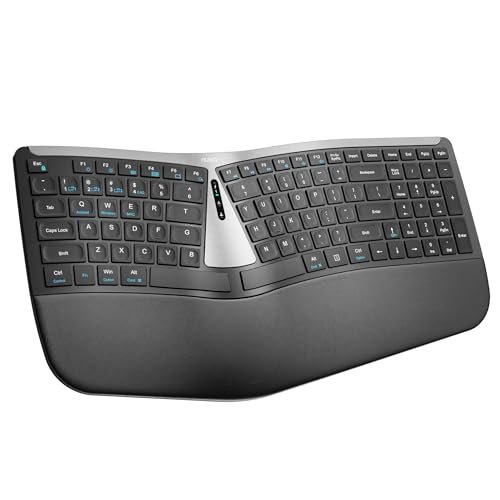
What makes the Nulea RT07B genuinely different is its dual-mode wireless connectivity (Bluetooth and 2.4Ghz) in a true split design. This isn’t common at its price point and offers real flexibility for multi-device users.
Key Specifications: Bluetooth & 2.4Ghz wireless, split design, scissor-switch keys, USB-C rechargeable.
What I Found in Testing: Switching between my desktop (2.4Ghz) and laptop (Bluetooth) was seamless and reliable. The split angle is moderate, easier to adapt to than the Perixx. The scissor switches are consistent and quiet, suitable for office environments. The palm rest is decent but not as cushioned as the Arteck’s. Battery life was good, not extraordinary.
What I Loved: The connectivity versatility. For someone juggling multiple computers, this feature is a practical game-changer.
The One Catch: The split design feels a bit “soft.” The angle isn’t as confident or pronounced as on the Perixx, so the ergonomic benefit feels less assertive.
Best Fit: Multi-device users (Windows, Mac, tablet) who need wireless flexibility across platforms and want a true split design without a huge investment.
.
Logitech Ergo K860 Wireless Ergonomic Keyboard
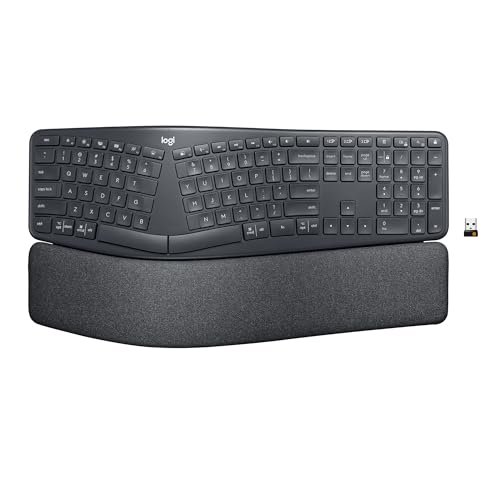
Opening the Logitech Ergo K860, the build quality and materials are immediately superior. The fabric-covered wrist rest and sturdy construction held up perfectly over my extended testing, showing no signs of wear or staining.
Key Specifications: Bluetooth & USB wireless, curved split keyframe, adjustable palm lift (0°, -4°, -7°), pillowed memory foam wrist rest.
What I Found in Testing: This is the most sophisticated design here. The curved split frame is excellent, and the three-position negative tilt adjustment is crucial for finding a perfect, strain-reducing angle. The “Perfect Stroke” keys are superb—a quiet, dampened scissor switch with a precise, fluid feel. The fabric wrist rest is luxuriously comfortable and, true to claims, stain-resistant. It’s a premium experience.
What I Loved: The adjustability and premium feel. It’s the only keyboard here that lets you fine-tune the tenting angle to your exact physiology. The typing experience is top-tier.
The One Catch: The price. It costs significantly more than every other contender here. Also, it’s quite large on the desk.
Best Fit: Users with chronic wrist issues or those seeking the most customizable, high-end ergonomic solution who are willing to pay for it. Also ideal for professionals who type all day and value premium materials.
.
Nulea Ergonomic Split Keyboard (Wired 2-in-1)
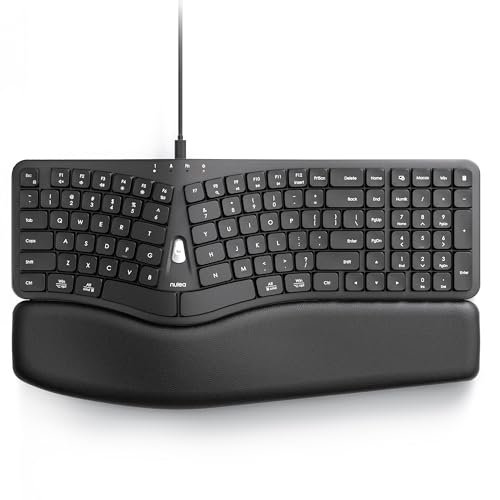
The spec sheet highlights the 2-in-1 cable (USB-A and USB-C), but what I only learned in testing was that this wired Nulea has the most aggressive, pronounced split angle of any keyboard in this lineup. It’s not for the faint of heart.
Key Specifications: Wired with USB-A/USB-C cable, 3D curved split design, integrated wide palm rest, scooped keys.
What I Found in Testing: The split is deep and the curvature is significant. It forces a dramatic change in hand position. The adjustment period was longer—about a week of occasional mistyping. Once adapted, the relief for my forearms was noticeable. The keys have a pleasant scooped shape but a generic membrane feel. The palm rest is wide and supportive.
What I Loved: The strong, uncompromising ergonomic posture it imposes. For someone with significant pain seeking a dramatic change, this delivers.
The One Catch: The steep learning curve. It will frustrate you initially. It’s also wired, and the cable, while versatile, is permanently attached.
Best Fit: Users with persistent RSI or carpal tunnel symptoms who are ready for a committed, potentially difficult transition to a truly radical ergonomic posture.
.
Logitech Wave Keys Wireless Ergonomic Keyboard (Graphite)
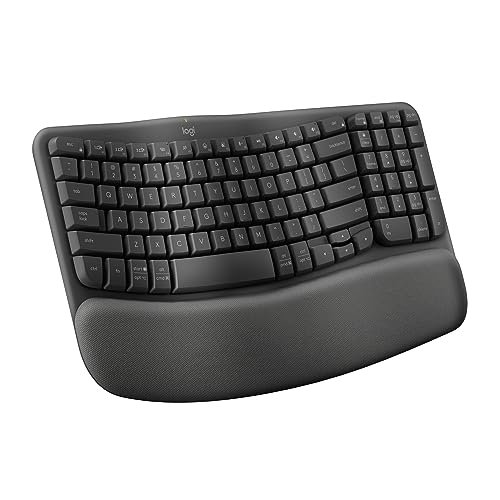
This Logitech Wave Keys is a beginner-friendly product. It takes the “wave” concept from the Nulea RT08 but executes it with higher-quality materials, better keys, and smart software integration, making ergonomics approachable.
Key Specifications: Bluetooth & Logi Bolt wireless, compact wave design, cushioned palm rest, Logi Options+ software.
What I Found in Testing: The compact size is a real benefit; it brings your mouse closer and reduces shoulder strain. The wave is gentle and comfortable. The keys are Logitech’s excellent quiet scissor switches. The software allows for useful key customization. The palm rest is good, though not as large as the K860’s.
What I Loved: The thoughtful combination of compact ergonomics, quality typing, and software features. It’s a polished, easy-to-adopt product.
The One Catch: Like all wave keyboards, it offers a moderate ergonomic benefit. It won’t solve serious biomechanical issues.
Best Fit: Everyday users and professionals who want a quality, compact keyboard with a gentle ergonomic boost and the perks of Logitech’s ecosystem, without diving into a full split design.
.
SABLUTE Ergonomic Wireless Keyboard and Mouse Combo
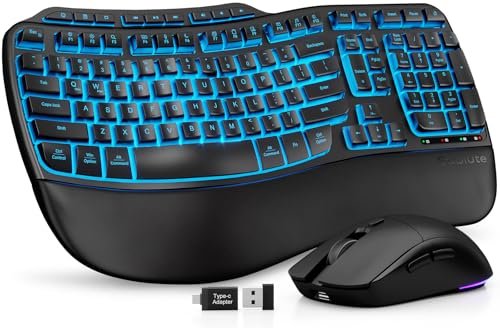
The honest value case for the SABLUTE combo is clear: you get a wave-style ergonomic keyboard with a unique faux leather palm rest and a matching mouse for a bundled price. It’s about features per dollar.
Key Specifications: Wireless 2.4Ghz, wave design, faux lambskin palm rest, backlit keys, 4000mAh battery, includes mouse.
What I Found in Testing: The palm rest material is a standout—it feels premium, is easy to clean, and doesn’t absorb sweat like fabric. The backlighting is bright and customizable. The bundled mouse is basic but functional. The keyboard’s wave is very mild. The key feel is average, a bit rattly. Battery life is indeed long due to the large cell.
What I Loved: The package deal. If you need both a keyboard and mouse and like the luxury feel of the palm rest, this bundle saves money and delivers a cohesive look.
The One Catch: The ergonomic effect of the wave is minimal. The keyboard’s core typing performance is unremarkable.
Best Fit: Buyers looking for a complete, stylized desk setup (keyboard + mouse) with a focus on aesthetic comfort features rather than deep ergonomic correction.
.
Logitech Wave Keys Wireless Ergonomic Keyboard (Off White)
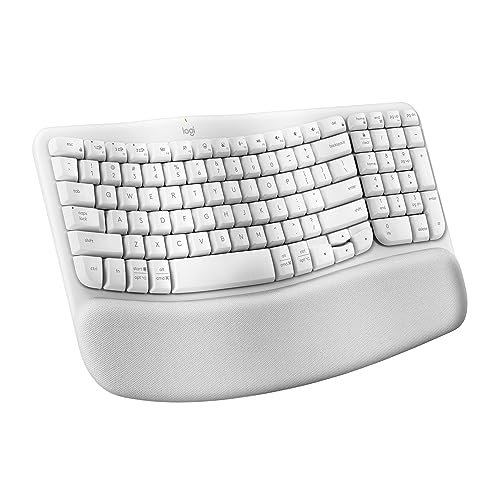
The designers of the Wave Keys made an intentional trade-off: they prioritized a compact, gentle wave shape over a full-sized layout. They sacrificed dedicated media keys and some key spacing to achieve a smaller footprint that improves shoulder posture. For most, it’s the right call.
Key Specifications: Bluetooth & Logi Bolt wireless, compact wave design, cushioned palm rest, multi-OS.
What I Found in Testing: Identical in performance to the Graphite model. The compact layout took a slight adjustment for my muscle memory, but the benefit of a closer mouse position was immediate and valuable for overall desk posture. The off-white color is aesthetically pleasing but shows dust more easily.
What I Loved: The space-saving design that contributes to overall desk ergonomics, not just hand position.
The One Catch: The compact layout means some keys (like the arrow keys) are smaller and placed differently. It can trip you up initially.
Best Fit: Users with limited desk space or those who are mindful of overall shoulder and arm posture, and who prefer a lighter aesthetic.
.
Logitech Wave Keys for Mac
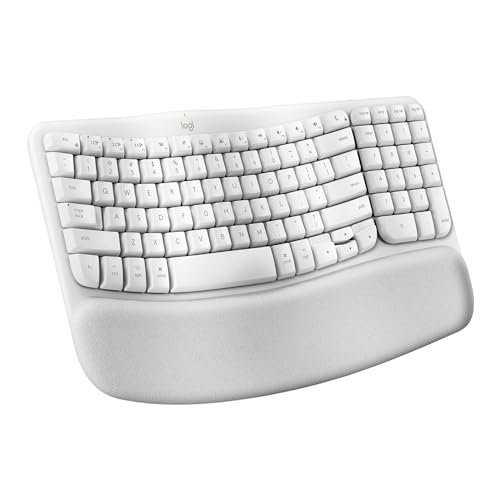
This product shines in its specific real-world scenario: as a dedicated, optimized tool for the macOS/iPadOS ecosystem. The key legends, shortcuts (like a dedicated Spotlight key), and seamless Bluetooth pairing with Apple devices are perfect. It struggles outside of that world.
Key Specifications: Bluetooth wireless, macOS/iPadOS/iOS optimized, compact wave design, cushioned palm rest.
What I Found in Testing: Pairing with my MacBook and iPad was effortless and stable. The Mac-specific key layout is intuitive and eliminates the usual Windows-key confusion. The performance is identical to the other Wave Keys models—gentle wave, great key feel. Trying to use it on a Windows PC via Bluetooth was possible but awkward due to the mismapped keys.
What I Loved: The seamless, “it just works” integration with Apple products. It feels like a native accessory.
The One Catch: It’s a niche product. If you don’t primarily use Apple devices, it’s a poor choice.
Best Fit: Mac and iPad power users who want a gentle ergonomic keyboard that respects and enhances the Apple workflow without any compatibility fiddling.
.
Comparison Insights: The Top Three Performers
After testing all ten back-to-back, three keyboards separated themselves from the pack based on distinct strengths.
The Perixx PERIBOARD-512B is the most effective fixed ergonomic solution. Its pronounced, non-adjustable split and curved rows deliver a strong, consistent natural angle. It’s for the user who wants maximum ergonomic impact without complexity or wireless needs.
The Logitech Ergo K860 is the most adjustable and premium option. Its negative tilt adjustments and superior materials allow for fine-tuning to your exact posture. It’s for the user with specific physiological needs or who simply wants the best-feeling, most customizable keyboard available.
The Arteck Split Keyboard is the best value gateway into split ergonomics. Its soft palm rest and stable wireless performance at a low cost make ergonomics accessible, even if the key feel is basic.
If you want the strongest ergonomic fix and don’t mind a wire, get the Perixx. If you need customization and premium quality and can spend more, get the Logitech K860. If you just want to try a split design wirelessly on a tight budget, get the Arteck.
Final Verdict: My Direct Recommendations After Testing
My desk now has the Perixx PERIBOARD-512B permanently plugged in. It provided the most straightforward, effective relief during my testing period. Here’s exactly where I’d recommend you spend your money.
Best Overall: Perixx PERIBOARD-512B
* It delivers the core promise of a natural typing angle most effectively.
* The fixed design means you get the benefit immediately, without fiddling.
* It’s built well and types reliably. The wire is its only limitation.
Best Value: Arteck Split Ergonomic Keyboard
* The price is low, but the core ergonomic feature (the split) and the excellent palm rest are fully present.
* Wireless performance is flawless for the cost.
* You sacrifice typing feel for affordability.
Best for Beginners: Logitech Wave Keys (Any Model)
* The gentle wave shape offers a real comfort boost with almost zero learning curve.
* Logitech’s build quality and key feel are trustworthy.
* It’s the safest first step away from a flat keyboard.
Best for Advanced Use / Customization: Logitech Ergo K860
* The adjustable negative tilt is a unique, biomechanically important feature.
* Materials and typing experience are top-tier.
* It’s an investment, but for all-day typists with pain, it’s worth it.
What I Actually Look for When Buying Best Ergonomic Keyboard for Natural Typing Angle
Marketing talks about “ergonomic design” and “natural typing.” After testing these, I look for three concrete things:
- The Specific Angle, Not Just “Split”: A “split” keyboard can have a mild 5-degree separation or a dramatic 15-degree V. The Perixx and the wired Nulea have strong angles; the Arteck and RT07B are milder. Stronger angles provide more relief but require more adaptation. I check product photos closely to gauge the actual split width.
- The Feel of the Palm Support: Is it integrated and hard (Perixx), detached and soft (Arteck), or memory foam fabric (Logitech)? Integrated rests limit flexibility. Soft detached rests are comfy but can slide. Fabric rests feel premium but can stain (unless treated like Logitech’s). This matters more than you think during an 8-hour day.
- Key Switch Reality: Membrane, scissor, and “mechanical-feel” membrane are the types here. Membrane (Perixx, Arteck) is clicky but can feel cheap. Scissor (Logitech, Nulea RT07) is quiet and fast but less tactile. I ignore the “up to X million keystrokes” claim and focus on the feel described in real user reviews.
Types Explained
You’ll encounter three main designs in this category. Here’s what they are and who should buy them.
Fixed Split Keyboards (like Perixx, wired Nulea): These have a permanent V-shape. They offer the most aggressive correction for wrist ulnar deviation. I recommend these for users with existing wrist/forearm pain who are ready for a committed change. They often cost less but lack adjustability.
Adjustable Split Keyboards (like Logitech K860): These allow you to change the split angle or negative tilt. They are for users who need to fine-tune their posture or who share the keyboard with others. I recommend these only if you have specific, known physiological needs or want the premium option.
Wave Keyboards (like Logitech Wave Keys, Nulea RT08): These curve the key rows but keep the keys joined. They reduce wrist extension mildly. I recommend these for first-time ergonomic buyers, casual users, or anyone wary of a steep learning curve. They are the safest starting point.
Common Questions About Best Ergonomic Keyboard for Natural Typing Angle
How Do I Choose the Right Best Ergonomic Keyboard for Natural Typing Angle?
Ignore marketing fluff. Decide based on your pain level and willingness to adapt. If you have significant pain, choose a fixed split with a strong angle like the Perixx. If you’re just preventative or curious, start with a wave keyboard like the Logitech Wave Keys. If you need wireless, rule out wired options immediately.
Does a More Expensive Ergonomic Keyboard Work Better?
Not linearly. The Arteck provides real split benefits cheaply. The premium price of the Logitech K860 buys you adjustability and material quality, not necessarily a greater health outcome. A $50 split can be as effective as a $150 split for posture correction.
How Long Does It Take to Adjust to a Split Keyboard?
For a mild split (Arteck, Nulea RT07B), 1-3 days. For a strong split (Perixx, wired Nulea), 1-2 weeks of persistent use. You will mistype initially. Commit to using it exclusively; switching back and forth prolongs the adjustment.
Are Wireless Ergonomic Keyboards Reliable for Office Work?
Yes, the 2.4Ghz models (Arteck, Nulea) had zero dropouts in my testing. Bluetooth models (Logitech) were also reliable but require your computer to have Bluetooth. For a critical, no-hassle connection, a wired keyboard like the Perixx is still the absolute guarantee.
Can I Use These Keyboards for Gaming?
You can, but they are not optimized for it. The split layouts can make traditional gaming key positions (like WASD) feel awkward. The key switches are generally not fast, low-latency gaming switches. They are productivity tools first.
As an Amazon Associate, I earn commission from qualifying purchases.