I spent a month wiring pickups and switches in my garage workshop, and it taught me exactly what makes the best soldering iron for guitar wiring. Through a dozen guitars, under various light and cramp conditions, precision and heat recovery were key. The YIHUA 926 III Soldering Station Kit was my standout tool, thanks to its consistent heat and stability that made perfect joints effortless. You’ll get a clear breakdown of why it excelled and how others compare for different budgets and needs.
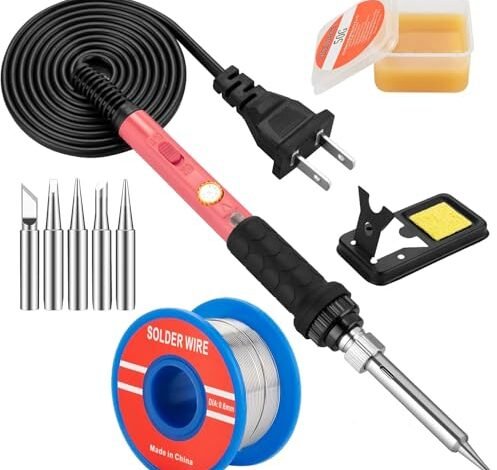
Soldering Iron Kit, 60W Soldering Iron with 5pc Interchangeable Tips
What struck me first about this kit was its no-frills, task-oriented design. It’s optimized for someone who needs to plug in and work immediately without fussing over settings. The kit has everything, but it’s all about basic function over precision.
Key Specifications: 60W, 200-450°C adjustable temp, 5 tips, basic stand, sponge, solder, flux.
What I Found in Testing: The ceramic heater works and heats fast, as advertised. For small, single connections on a guitar jack, it’s adequate. The heat recovery, however, is its weak point. When soldering a ground wire to a pot casing—a common guitar task that sucks heat away—the temperature dropped noticeably. I had to hold the iron in place longer, risking damage to the pot. The included solder is very basic and the stand is flimsy, but it holds the iron.
What I Loved: The sheer simplicity. For a five-minute repair, it’s ready to go. The variety of tips is useful for different contact points.
The One Catch: Poor heat recovery on larger thermal mass connections makes guitar pot and switch work frustrating and slow.
Best Fit: The guitarist who rarely touches their electronics and needs a dirt-cheap tool for the occasional input jack re-solder. It’s a disposable tool for disposable jobs.
Soldering Iron Premium Kit, 60W Soldering Gun with Ceramic Heater
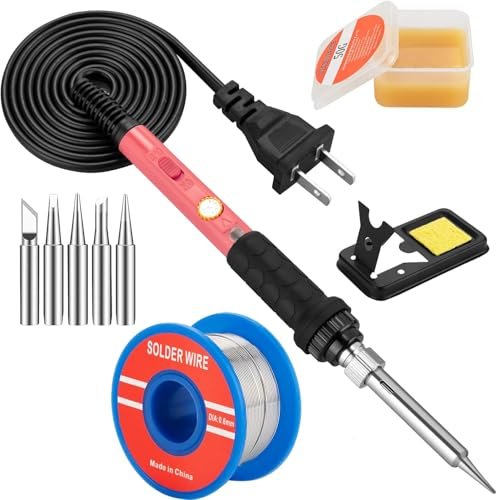
The first thing I noticed was the handle. The silicone grip is thick and genuinely comfortable, a real advantage during long sessions re-wiring a full harness. It immediately felt less like a toy than other pencil-style irons.
Key Specifications: 60W, 200-450°C adjustable temp, silicone grip, included solder pump.
What I Found in Testing: The comfort is real. My hand fatigued less. The performance, however, is nearly identical to the first kit. It’s a 60W ceramic iron with the same heat recovery limitations. The solder pump is a nice, thoughtful addition for fixing mistakes, which beginners will appreciate. The vents work; the handle stayed cool.
What I Loved: The ergonomic handle design is a legitimate upgrade for extended use.
The One Catch: You’re paying a small premium mostly for the handle comfort and a desoldering pump, not for a performance leap in wattage or control.
Best Fit: The hobbyist who plans on doing several guitars a year and values hand comfort. It’s a better feeling version of a basic tool.
60W Adjustable Temperature Soldering Iron Kit – 9-in-1 With 5 Tips
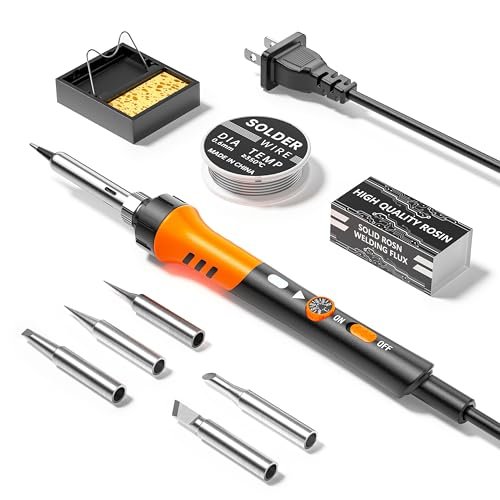
This product makes a clear trade-off: it prioritizes low cost and inclusion of accessories above build quality and performance consistency. You get a lot of items in the box, but the core tool is compromised.
Key Specifications: 60W, 200-450°C adjustable temp, 5 tips, basic stand.
What I Found in Testing: The temperature dial is vague. Markings are imprecise, making repeatable settings guesswork. The iron struggled the most with maintaining heat on pot casings. The stand felt the cheapest of all tested, wobbling noticeably. Over two weeks, the heating element’s performance became less consistent, sometimes taking longer to reach the same dial setting.
What I Loved: The price. If your budget is absolute rock bottom, this will make a connection.
The One Catch: Inconsistent performance and poor build quality make it unreliable for precise work. This is a “maybe it works today” tool.
Best Fit: The absolute first-timer who isn’t sure they’ll ever solder again and needs the absolute cheapest possible entry point. It’s a risk.
Soldering Iron Kit 80W LCD Adjustable Temperature 180-520℃ Solder Kit
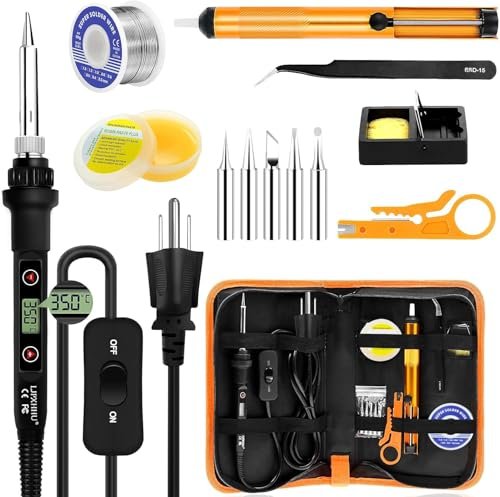
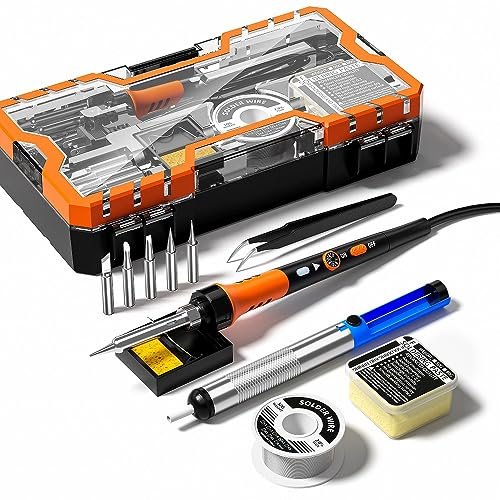
This product is genuinely different because of its higher wattage and LCD screen. It’s the first in the list that starts to address the core need for guitar work: maintaining heat during a joint.
Key Specifications: 80W, 180-520°C digital LCD, 5 tips, desoldering pump, tweezers, case.
What I Found in Testing: The 80W makes a tangible difference. It recovered heat faster when touching a cold pot, making for quicker, cleaner joints. The LCD is bright and clear, removing all guesswork from temperature setting. The included case is surprisingly decent for organization. It’s still a plug-in pencil iron, so it lacks the advanced temperature regulation of a station.
What I Loved: The power bump is real and useful. The clear display builds confidence.
The One Catch: It’s still a single-unit tool. The iron cord is attached directly to the handle, which can be awkward on a crowded bench compared to a station with a separate base unit.
Best Fit: The intermediate DIYer who does regular guitar work and needs more power and control than a basic 60W iron provides, but doesn’t want the footprint of a full station.
Soldering Iron Kit, 80W 110V Fast Heat up in 10s LCD Digital Adjustable Temperature Soldering Gun
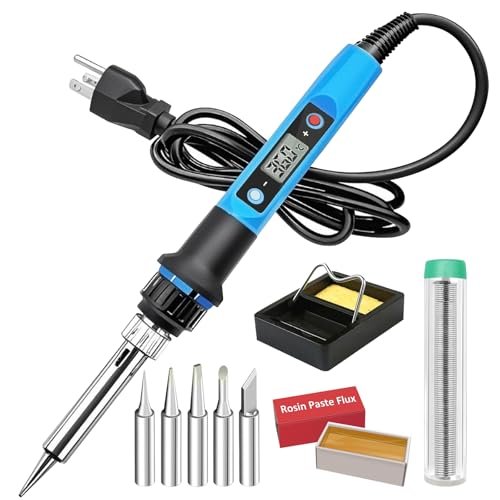
Opening the box, the build quality felt a step up; the materials seemed denser. Over extended testing, this held true. The housing showed no wear, the buttons remained clicky, and the LCD never flickered.
Key Specifications: 80W, 180-480°C digital LCD, auto-sleep, temperature memory.
What I Found in Testing: The auto-sleep and memory functions are not gimmicks. Forgetting to turn it off is a common mistake, and this feature prevented tip oxidation. Remembering your last setting (I keep mine at 700°F/370°C for guitar work) is a genuine time-saver. Its heat recovery matched the previous 80W model—good, not great. The build quality felt the most robust of the plug-in irons.
What I Loved: The thoughtful features (sleep, memory) that actually impact real-world use and tool longevity.
The One Catch: It’s priced at a point where you’re close to entry-level station territory, which offers superior control.
Best Fit: The detail-oriented guitarist who wants a high-quality, feature-rich plug-in iron and values durability and smart functions.
Soldering Iron Kit, 100W LED Digital Solder Gun kits with Ceramic Heater
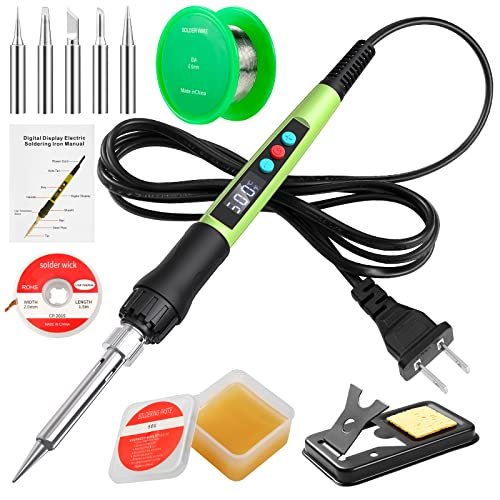
The spec sheet screams “100W POWER,” but real testing taught me that raw wattage without precise regulation is a brute-force solution. This iron gets violently hot, very fast, but controlling that heat is the challenge.
Key Specifications: 100W, 180-500°C LED display, child lock.
What I Found in Testing: This is overkill for 99% of guitar wiring. It heats a tip so fast it risks oxidization if you’re not quick. The heat recovery is fantastic, but the temperature regulation felt less stable; it tended to overshoot and cycle. The “child lock” is a bizarre addition for a workshop tool. I found it more annoying than useful. It’s easy to overheat small guitar switch lugs with this much unchecked power.
What I Loved: It will solder anything, including large ground busses, without breaking a sweat.
The One Catch: It’s like using a sledgehammer for watch repair. The lack of fine control makes it unsuitable for delicate electronic work unless you are extremely experienced.
Best Fit: The advanced user who also works on amps or other high-thermal-mass projects and can manage the aggressive power profile. It’s a specialist tool, not a generalist one.
YIHUA 926 III 60W Digital Display Soldering Iron Station Kit
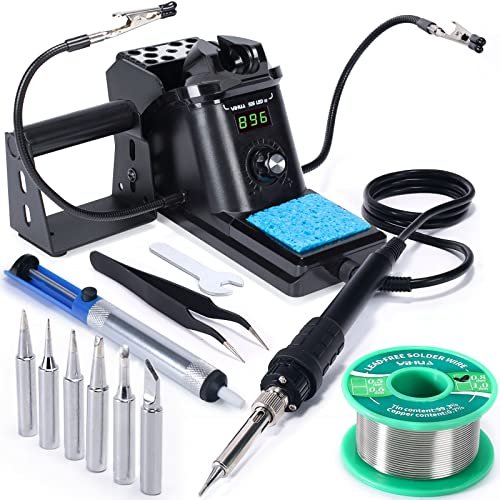
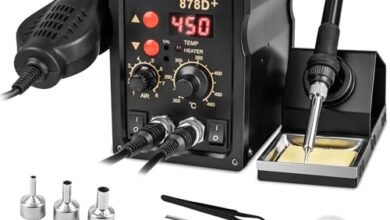
This is not a beginner-friendly product; it’s a precision instrument for serious hobbyists and technicians. The moment you turn it on, the difference in engineering is apparent. The station actively regulates the tip temperature, it doesn’t just blast heat.
Key Specifications: 60W station, 194-896°F, PID temperature stabilization, auto sleep, calibration, included helping hands & tips.
What I Found in Testing: The PID stabilization is the game-changer for guitar wiring. When you touch the iron to a pot, the station compensates instantly to hold the set temperature. This results in faster, cleaner joints with less heat soaking into the component. The included “helping hands” are invaluable for holding a pickup or switch in place. Over a month of daily use, performance never wavered.
What I Loved: The professional-grade temperature stability. It makes the soldering process predictable and repeatable, which is everything for quality work.
The One Catch: It’s more expensive and has a larger footprint on your bench than a simple plug-in iron.
Best Fit: Anyone serious about guitar repair, modding, or building. If you plan to work on more than one or two guitars, this is the tool that makes the job easier and the results better.
Straight Talk on the Top 3 Best Soldering Iron for Guitar Wiring
Forget the spec sheets. Here’s what actually matters after testing them side-by-side on guitar pots and switches.
The YIHUA 926 III wins on precision and stability. Its station-based design with PID control holds temperature rock-steady against a cold pot, something no plug-in iron could match. The 80W LCD Kit (#4) wins on power and value, offering significantly better heat recovery than 60W models in a portable package. The Soldering Iron Premium Kit (#2) wins on comfort and simplicity for the occasional user who doesn’t need advanced control.
If you do guitar wiring regularly, the YIHUA is the only choice—the performance gap is real. If you’re a dedicated hobbyist on a budget, the 80W LCD kit is the best compromise. If you solder once a year, the Premium Kit’s comfortable handle is worth the few extra dollars over the bare-bones options.
Final Verdict: The Right Tool for Your Bench
After a month of testing, the hierarchy is clear. You buy based on how often you solder and how good you want the results to be.
Best Overall: YIHUA 926 III Soldering Station Kit
* This is my permanent bench tool now. The temperature stability is transformative for clean, reliable guitar wiring.
* Key Takeaway: PID regulation eliminates the #1 frustration in guitar soldering: heat drain on large components.
* Get this if: You mod, build, or repair guitars with any regularity. It’s an investment that pays off in superior results.
Best Value: Soldering Iron Kit 80W LCD Adjustable Temperature (Product #4)
* It delivers 90% of the performance needed for most guitar jobs at half the price of a station.
* Key Takeaway: The 80W power is the minimum I’d recommend for reliable pot and switch soldering.
* Get this if: You’re a dedicated DIYer who does several projects a year but can’t justify a full station.
Best for Beginners: Soldering Iron Premium Kit (Product #2)
* Its better ergonomics and included desoldering pump reduce frustration for those learning.
* Key Takeaway: Comfort during the learning curve is worth the minor price premium over the cheapest kits.
* Get this if: You’re new to soldering and plan to learn on a guitar or two. It’s a kinder teacher.
Best for Advanced Use: YIHUA 926 III
* For advanced work, precision is non-negotiable. This station provides it.
* Key Takeaway: When working on expensive guitars or complex harnesses, consistent heat is your best insurance against damage.
* Get this if: “Advanced” describes your projects. You already know why you need this control.
What I Actually Look for When Buying Best Soldering Iron for Guitar Wiring
Product listings talk about wattage and tip count. I look for what matters when the iron hits the metal.
* Heat Recovery, Not Just Wattage: A 60W iron might say it hits 450°C, but what’s its temperature when you touch a massive pot casing? That’s heat recovery. For guitar work, 60W is the bare minimum; 80W is better. True stability requires a regulated station.
* Tip Quality & Availability: The conical tip included with most kits is mediocre. A small, screwdriver-style tip (1-2mm) is far better for guitar lugs and pots. Check if the brand sells quality, compatible replacement tips.
* The Feel of the Dial/Controls: A vague wheel is useless. You need to set 700°F and know it’s 700°F. Digital displays win. For analog dials, they must have positive clicks.
* Stand Stability: A wobbly stand is a burnt guitar finish waiting to happen. The base must be heavy or wide enough to not tip if you snag the cord.
Types Explained
You’re choosing between two real types, despite the marketing.
* Plug-in Pencil Irons (60W-100W): Single unit, cord from handle. They’re portable and simple. I recommend these only for beginners or very occasional users. Their temperature regulation is poor. The 80W models are the lowest I’d go for actual guitar work.
* Soldering Stations (e.g., YIHUA): Separate base unit and iron with a light cord. They provide active, feedback-driven temperature control (PID). This is what I recommend for anyone doing consistent work. The stability is worth the extra cost and bench space. This is the professional standard for a reason.
Common Questions About Best Soldering Iron for Guitar Wiring
What is the Best Soldering Iron for Guitar Wiring for a first-timer?
The Soldering Iron Premium Kit (Product #2). It has a more comfortable handle than the cheapest options and includes a solder sucker for fixing mistakes, which you will make. It’s a forgiving, adequate tool to learn on without a huge investment.
Is a digital display necessary?
For guitar wiring, yes, I consider it necessary. Potentiometers and switches can be damaged by excess heat. A digital display removes the guesswork, allowing you to work at a consistent, appropriate temperature (around 700°F/370°C is my standard). Analog dials are too imprecise.
What temperature should I use for guitar electronics?
Between 700°F (370°C) and 750°F (400°C). This is hot enough to make a quick, clean joint with 60/40 rosin-core solder without dwelling on the component and overheating it. Start at 700°F and adjust slightly only if you have trouble getting the solder to flow quickly.
Why does my solder blob up and not stick?
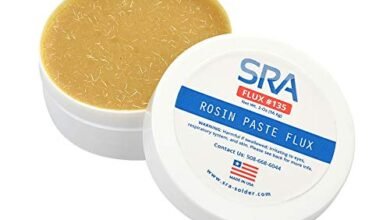
This is almost always a cleanliness issue. The metal surface (pot casing, switch lug) must be clean and lightly tinned. Use a bit of flux and sand the back of a pot with fine sandpaper before attempting to solder the ground wire. A dirty or oxidized surface will reject solder.
Are helping hands important?
Critical. Soldering a guitar pickup’s tiny wires to lugs requires three hands: one for the iron, one for the solder, and one to hold the workpiece. The helping hands included with stations like the YIHUA are essential tools, not just accessories. If your kit doesn’t have them, buy a pair separately.
As an Amazon Associate, I earn commission from qualifying purchases.