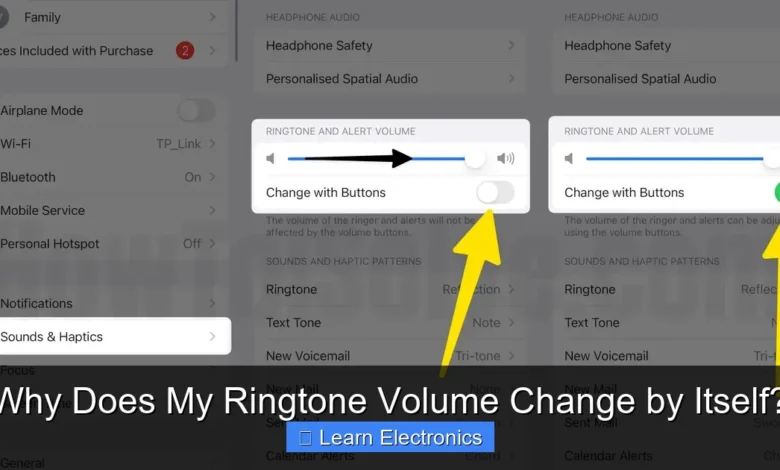
Why Does My Ringtone Volume Change by Itself? is a common frustration often stemming from dynamic software settings, app conflicts, or sensor interactions within your device. This phenomenon can disrupt important calls and create confusion regarding your phone’s audio behavior.
Understanding the underlying causes behind these unexpected volume shifts is crucial for diagnosing and resolving the issue, restoring reliable notification management to your smartphone experience.
Quick Answers to Common Questions
Why does my ringtone volume change by itself when I pick up the phone?
Many phones have smart features like “pocket mode” or “raise to ear” that intelligently lower the **ringtone volume change by itself** when it detects you’re picking it up or bringing it to your face. This prevents an ear-splitting ring once you’re aware of the incoming call.
Can apps on my phone cause the ringtone volume to change automatically?
Absolutely! Certain apps, especially those for scheduling, silent modes, or even some communication apps, can adjust your **ringtone volume change by itself** based on your calendar or location settings. Always check app permissions if you suspect an app is the culprit.
Is it possible my phone is just buggy, or are there settings I can check?
While a software glitch is possible, often the **ringtone volume change by itself** is due to specific settings! Look for features like “Adaptive Ringtone,” “Pocket Mode,” “Flip to Silence,” or “Do Not Disturb” schedules in your phone’s sound or accessibility settings.
📑 Table of Contents
- Software Settings and Configurations: Understanding Why Your Ringtone Volume Changes by Itself
- App Interference and Permissions
- Proximity Sensors and Smart Features
- Hardware Issues and Malfunctions
- Environmental Factors and Connectivity
- Troubleshooting Steps: Diagnosing Why Your Ringtone Volume Changes by Itself
- Conclusion
Software Settings and Configurations: Understanding Why Your Ringtone Volume Changes by Itself
Many modern smartphones incorporate intelligent features designed to enhance user experience, but these can sometimes inadvertently lead to ringtone volume adjustments. These settings, while often beneficial, can be a primary culprit when you find your audio levels fluctuating without direct input.
Do Not Disturb (DND) and Silent Modes
Your phone’s “Do Not Disturb” mode is designed to silence calls and notifications during specific times or events. If activated manually or through a schedule, it can significantly lower or mute your ringtone volume. Similarly, various silent or vibrate-only modes can override your default volume settings.
- Scheduled DND: Check your device’s settings for any scheduled DND periods, often configured for nighttime or work hours.
- Focus Modes: Newer operating systems include “Focus Modes” (iOS) or advanced DND settings (Android) that can be triggered by location, app usage, or time, altering ringtone volume.
- Quick Settings: Accidental taps on quick settings toggles for silent or vibrate mode are a common cause of temporary volume changes.
Adaptive Sound and Smart Features
Some devices employ adaptive sound technologies that attempt to adjust audio levels based on your environment or how you’re interacting with the phone. This approach aims to provide optimal sound, but can feel unpredictable.
- Pocket Mode: Certain phones have a “pocket mode” or “prevent accidental touches” feature that might lower ringtone volume when the device detects it’s in a pocket or bag to prevent loud ringing in inappropriate situations.
- Attention Aware Features: Features like “Attention Aware” on iPhones use the front camera to detect if you’re looking at the screen, potentially lowering notification volume if it senses your attention.
- Sound Profiles: Older phones, and some newer ones, allow you to create custom sound profiles (e.g., “Meeting,” “Outdoor”) that have their own predefined volume levels. Switching between these can change your ringtone volume.
App Interference and Permissions
Third-party applications can exert significant control over your device’s settings, including audio volumes. Malicious apps or even well-intentioned but buggy ones can cause your ringtone volume to change unexpectedly.
Volume Control Apps and Widgets
Many apps offer advanced volume control, often with features like automatic adjustment, scheduling, or linking volume types. While useful, these can override native settings.
- Sound Managers: Apps designed to manage sound profiles or equalize audio can sometimes conflict with system settings, leading to unintended volume shifts.
- Utility Apps: Some utility or customization apps might include volume control features as part of their suite, and their background processes could be adjusting levels.
Media Players and Communication Apps
Apps that handle media playback or voice communication can temporarily seize control of audio output and inputs, sometimes affecting ringtone levels.
- Streaming Apps: Music or video streaming apps might lower notification volumes during playback to prevent interruptions.
- VoIP/Messaging Apps: Apps like WhatsApp, Skype, or Google Meet handle their own call volumes, and sometimes this can interfere with or reset the system’s ringtone volume after a call.
- Permissions Check: Regularly review app permissions, especially for apps requesting access to “modify system settings” or “control media playback.” Restricting these for suspicious apps can help.
Proximity Sensors and Smart Features
Modern smartphones are equipped with various sensors that enable smart interactions. The proximity sensor, in particular, plays a role in how your phone handles calls and notifications.
Muting During Calls
The proximity sensor, typically located near the earpiece, detects when the phone is held against your ear. Its primary function is to turn off the screen during a call to prevent accidental touches. However, in some implementations, it can also influence ringtone behavior.
- Flip to Silence/Raise to Listen: Some devices have “smart” gestures where flipping the phone over silences it, or picking it up from a flat surface can reduce ringtone volume. These features rely on motion and proximity sensors.
- Sensor Malfunction: A faulty proximity sensor might incorrectly detect an object, leading to unintended muting or volume reduction even when the phone isn’t against your ear.
Hand Gestures and Smart Alerts
Beyond proximity, other sensors and associated software features can contribute to volume changes.
- Gesture Controls: Some phones offer air gestures or hand wave controls that could potentially interact with volume, though this is less common for ringtones specifically.
- Smart Alerts: Features that aim to alert you more gently when you’re nearby, often combine proximity and motion sensing to reduce the urgency or loudness of notifications.
Hardware Issues and Malfunctions
While software and settings are often the primary culprits, physical hardware problems can also explain why your ringtone volume changes by itself.
Stuck or Malfunctioning Volume Buttons
The physical volume buttons on your phone are mechanical components that can wear out, get stuck, or become dirty. A persistently depressed or erratic volume button can send continuous signals to the phone, altering the volume.
- Dirt and Debris: Dust, lint, or small particles can get lodged under the volume buttons, causing them to stick or register false presses.
- Physical Damage: Drops or impacts can damage the internal mechanism of the volume buttons, leading to intermittent or constant volume adjustments.
- Test the Buttons: Manually press each volume button multiple times to check for stickiness or unusual resistance.
Internal Speaker and Audio IC Issues
Less common, but possible, are issues with the internal audio components themselves. The speaker or the audio integrated circuit (IC) that processes sound can fail.
- Loose Connections: Internal connectors to the speaker or volume controls can become loose, leading to inconsistent audio output.
- Water Damage: Exposure to liquids can corrode internal components, including the audio IC or speaker, causing erratic volume behavior.
- Manufacturing Defects: Rarely, a phone might have a manufacturing defect in its audio hardware that manifests as unpredictable volume changes over time.
Environmental Factors and Connectivity
Your phone’s connection to external devices and its environment can also play a role in how its ringtone volume behaves.
Bluetooth Devices and Headphones
When your phone is connected to Bluetooth headphones, speakers, or car systems, it often prioritizes the external audio device. Disconnecting from these devices can sometimes cause a temporary reset or misconfiguration of the phone’s internal volume settings.
- Bluetooth Disconnection Glitches: An abrupt or faulty disconnection from a Bluetooth device might leave the phone’s volume in an unexpected state.
- Volume Sync: Some Bluetooth devices attempt to sync their volume levels with the phone, and this sync can occasionally lead to inconsistencies.
- Forget and Re-pair: If you suspect a Bluetooth device, try “forgetting” it from your phone’s Bluetooth settings and then re-pairing it.
Car Systems and Android Auto/Apple CarPlay
Integration with car infotainment systems, especially through Android Auto or Apple CarPlay, gives the car significant control over your phone’s audio. These systems often have their own volume controls and profiles.
- Car-Specific Profiles: Your phone might enter a “car mode” or car-specific profile when connected, which could have predefined notification and ringtone volumes.
- Disconnecting from Car: Issues can arise when disconnecting from the car system, where the phone doesn’t correctly revert to its default standalone volume settings.
Troubleshooting Steps: Diagnosing Why Your Ringtone Volume Changes by Itself
When faced with this perplexing issue, a systematic approach to troubleshooting can help pinpoint the cause and restore stability to your phone’s audio. It can be frustrating to constantly adjust your phone’s audio, but these steps offer a clear path to resolution.
Initial Checks and Software Refresh
Start with the simplest solutions, as these often resolve common glitches.
- Restart Your Phone: A simple restart can clear temporary software bugs and refresh system processes.
- Check DND/Silent Modes: Ensure “Do Not Disturb,” Focus Modes, or any silent profiles are deactivated or set correctly.
- Review Volume Sliders: Go to your phone’s sound settings and manually adjust all volume sliders (ringtone, media, alarm) to your desired levels.
- Update Software: Ensure your phone’s operating system (iOS or Android) is updated to the latest version, as updates often include bug fixes for common issues.
App and Sensor Investigations
If basic checks don’t work, delve deeper into app and sensor-related causes.
- Boot into Safe Mode (Android): Safe Mode temporarily disables all third-party apps. If the volume issue stops in Safe Mode, a recently installed or misbehaving app is the culprit. You can then uninstall apps one by one to identify the problematic one.
- Review App Permissions: Check which apps have permission to “modify system settings” or “control media volume.” Revoke these permissions for any suspicious or unnecessary apps.
- Disable Smart Features: Temporarily turn off features like “Attention Aware,” “Pocket Mode,” “Flip to Silence,” or “Raise to Listen” in your phone’s settings to see if they are causing the problem.
- Clean Volume Buttons: Carefully inspect your physical volume buttons for dirt or stickiness. You can try cleaning around them gently with a dry, soft brush or a cotton swab dipped in a small amount of isopropyl alcohol (ensure the phone is off).
Advanced Solutions and Hardware Considerations
For persistent problems, more advanced steps might be necessary.
- Reset All Settings (Without Data Loss): On both iOS and Android, there’s an option to reset all system settings without erasing your personal data. This can fix software configuration errors.
- Factory Reset (Last Resort): If all else fails, a factory reset (which wipes all data) can resolve deep-seated software issues. Back up your phone completely before attempting this.
- Hardware Diagnostics: If the issue persists after a factory reset, it’s likely a hardware problem. Consider taking your phone to an authorized service center for diagnostic testing of the volume buttons, proximity sensor, or audio components.
Summary of Common Causes and Quick Fixes
Here’s a quick reference table to help diagnose common issues:
| Common Cause Category | Specific Example | Quick Fix / Check |
|---|---|---|
| Software Settings | Scheduled Do Not Disturb (DND) | Check DND schedules and Focus Modes. |
| App Interference | Volume manager app conflict | Boot into Safe Mode; review app permissions. |
| Smart Features | Proximity sensor error | Disable “Smart” features like Attention Aware or Pocket Mode. |
| Hardware Issues | Stuck volume button | Inspect and clean physical volume buttons. |
| Connectivity | Bluetooth device disconnection glitch | Forget and re-pair problematic Bluetooth devices. |
Conclusion
Dealing with a ringtone volume that changes by itself can be incredibly frustrating, often leading to missed calls or embarrassing loud alerts. The causes are diverse, ranging from subtle software settings and app conflicts to more significant hardware malfunctions and external device interference. By methodically working through your phone’s settings, reviewing app behaviors, and performing diagnostic checks, you can identify and rectify the root cause.
Remember to start with the simplest troubleshooting steps and progressively move to more complex solutions. Most often, a minor software adjustment or an app permission tweak is all it takes to regain full control over your phone’s audio, ensuring your ringtone behaves exactly as you intend it to.
Frequently Asked Questions
Why Does My Ringtone Volume Change by Itself?
Your ringtone volume might change automatically due to several reasons, including smart volume features, conflicting app settings, or accidental button presses. Sometimes, environmental factors or specific phone modes can also influence its behavior without direct user input.
Are there specific phone settings that automatically adjust ringtone volume?
Yes, many smartphones include “adaptive sound,” “smart volume,” or “pocket mode” features designed to alter your ringtone volume. These settings can dynamically adjust the sound level based on whether the phone is in your pocket, face down, or detects a noisy environment.
Can certain apps cause my ringtone volume to change unexpectedly?
Absolutely. Some third-party applications, especially those related to sound profiles, automation, or even communication, might override your system volume settings. It’s wise to review the permissions for recently installed or updated apps if you suspect this is the cause of your ringtone volume fluctuations.
Why does my ringtone volume sometimes get very low or high on its own?
This can often be attributed to smart features like “Raise to Listen” or “Flip to Shhh,” which reduce the ringtone volume when you interact with your phone. Additionally, software glitches or conflicting apps can sometimes lead to these extreme volume changes without you touching the controls.
How can I troubleshoot if my ringtone volume keeps changing by itself?
Begin by checking your phone’s sound settings for any adaptive volume features and disable them temporarily. Next, review recently installed or updated apps for conflicting permissions or abnormal behaviors. A simple restart can also sometimes resolve temporary software glitches affecting your ringtone volume.
Could physical issues with my phone’s volume buttons cause the volume to change?
Yes, a malfunctioning or stuck physical volume button can indeed simulate phantom presses, leading to your ringtone volume changing unexpectedly. If software checks don’t resolve the issue, a hardware problem with the buttons might be the underlying cause.
As an Amazon Associate, I earn commission from qualifying purchases.