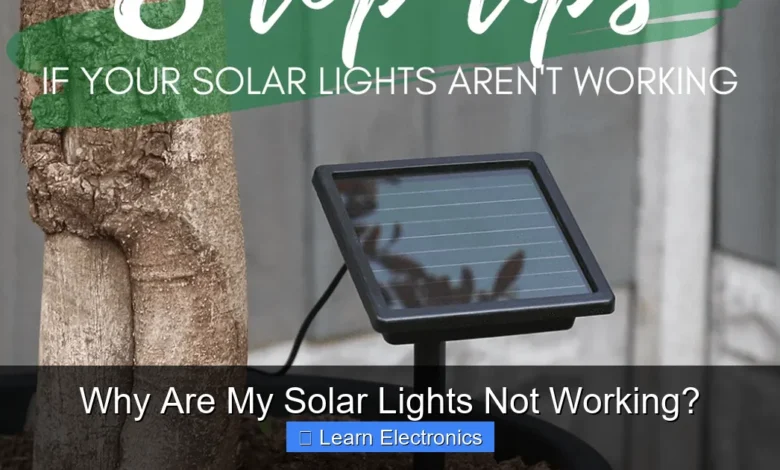
Why Are My Solar Lights Not Working? is often due to a handful of common, easily fixable issues that prevent proper charging or illumination. Troubleshooting these outdoor devices can usually restore their function quickly, saving you the cost of replacement. Understanding the underlying problems with these illuminating methods will empower you to bring light back to your garden or pathway with minimal effort.
From simple environmental obstructions to more intricate component failures, there are various reasons why your solar-powered lights might cease to operate. This guide will walk you through the most frequent culprits and provide actionable steps to diagnose and resolve these issues, ensuring your outdoor lighting continues to brighten your evenings.
Quick Answers to Common Questions
Why aren’t my solar lights charging up?
Often, the problem is insufficient sunlight! Make sure your solar panel is clean and placed where it gets at least 6-8 hours of direct sun daily, free from obstructions, so your solar lights can fully charge.
Could a dead battery be why my solar lights aren’t working?
Absolutely! Solar light batteries typically last 1-2 years. If your solar lights are older, try replacing the rechargeable AA or AAA battery inside – it’s a very common fix!
I’ve checked the sun and the battery, what else should I look for?
Don’t forget the basics! Many solar lights have a small ON/OFF switch, sometimes hidden or hard to find. Ensure it’s in the ‘ON’ position, especially after unboxing new solar lights or if they’ve been stored.
📑 Table of Contents
Solar Panel Issues: The Heart of the Charging System
The solar panel is the primary component responsible for converting sunlight into electrical energy, which then charges the battery. If this process is interrupted, your lights won’t function.
Blocked Sunlight and Dirt Accumulation
One of the most common reasons for a solar light’s failure is insufficient sunlight reaching its panel. Dust, dirt, leaves, bird droppings, or even snow can significantly obstruct the panel’s ability to absorb solar energy. Over time, a film can build up, drastically reducing efficiency.
- Practical Tip: Regularly inspect and clean the solar panel. Use a soft, damp cloth to gently wipe away any accumulated grime. Avoid abrasive cleaners that could scratch the panel surface.
Panel Degradation and Damage
Over years of exposure to the elements, solar panels can degrade. The protective clear coating might become cloudy, scratched, or cracked, reducing light transmission. Physical damage from impacts can also impair the panel’s ability to generate power.
- What to Look For: Check for visible cracks, chips, or a hazy appearance on the panel. While some minor degradation is normal with age, severe damage often requires replacing the entire light unit if the panel isn’t replaceable.
Battery Problems: The Energy Storage Unit
The battery stores the energy collected by the solar panel during the day and powers the LED at night. It’s often the first component to fail in a solar light system.
Dead or Degraded Rechargeable Batteries
Solar lights typically use rechargeable NiMH (Nickel-Metal Hydride) or Li-ion (Lithium-ion) batteries. These batteries have a finite number of charge and discharge cycles, usually lasting 1-3 years depending on quality and usage. After this period, they lose their capacity to hold a charge effectively, leading to dim lights or short illumination times.
- Signs of Failure: Your light might glow very faintly, only stay on for a short period after dark, or not turn on at all.
- Replacement Process:
- Locate the battery compartment, usually on the underside or back of the light fixture.
- Carefully open it and remove the old battery.
- Note the battery type (e.g., AA, AAA, 18650) and voltage (e.g., 1.2V NiMH, 3.7V Li-ion).
- Replace it with a new rechargeable battery of the same type and voltage. Matching the mAh (milliampere-hour) rating is also beneficial for optimal performance.
- Ensure proper polarity when inserting the new battery.
Why Are My Solar Lights Not Working?: Battery Corrosion and Connection Issues
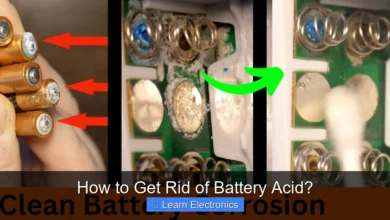
Moisture can sometimes seep into the battery compartment, leading to corrosion on the battery terminals or the battery itself. Corroded contacts prevent the battery from properly connecting to the circuit, halting the flow of power. Loose battery connections can also cause intermittent operation or complete failure.
- Troubleshooting Steps:
- Remove the battery and inspect the terminals (the metal contact points) for any green or white powdery residue, which indicates corrosion.
- Gently clean corroded contacts using a small brush, a pencil eraser, or fine-grit sandpaper.
- Ensure the battery is firmly seated in its compartment and makes good contact with the terminals.
LED and Wiring Malfunctions: The Light Emitter
While less common, issues with the LED bulb or internal wiring can also be the reason your solar lights aren’t illuminating.
Faulty LED Bulb
LEDs are known for their long lifespan, but like any electronic component, they can fail. A faulty LED will simply not light up, even if the battery is fully charged and the panel is working.
- Diagnosis: If you’ve ruled out panel and battery issues, a faulty LED is a possibility. In most consumer-grade solar lights, the LED is integrated and not easily replaceable.
Internal Wiring Problems
Over time, internal wiring can become loose, corroded, or damaged, especially in units exposed to harsh weather or physical stress. Rodent activity can also chew through wires.
- What to Look For: For sealed units, internal wiring issues are difficult to diagnose or repair without specialized tools. If your light is designed to be opened, carefully check for any disconnected or visibly damaged wires.
Environmental Factors and Placement
The physical environment where your solar lights are placed plays a crucial role in their functionality.
Insufficient Sunlight Exposure
Even if the panel is clean, if the light fixture is positioned in a constantly shaded area, it won’t receive enough direct sunlight to charge its battery fully. This can happen due to trees, bushes, buildings, fences, or even seasonal changes in the sun’s path.
- Relocation Advice: Ensure your solar lights are placed in a location that receives at least 6-8 hours of direct, unobstructed sunlight daily. Observe the area throughout the day to identify potential shade sources.
Water Damage and Extreme Weather
Poorly sealed fixtures or those with cracked casings can allow water to seep in, damaging the internal electronics, battery, and wiring. Extreme temperatures, especially freezing conditions, can significantly reduce battery performance and even cause physical damage to components.
- Preventive Measures: Choose solar lights with a good IP (Ingress Protection) rating for outdoor use. Regularly inspect casings for cracks. In areas with harsh winters, consider bringing lights indoors during the coldest months.
Advanced Troubleshooting and Maintenance Tips
Beyond the primary components, a few advanced checks and routine maintenance practices can significantly extend the life and reliability of your solar lights.
Resetting the Light and Photocell Sensor Check
Sometimes, a simple reset can resolve inexplicable issues. Most solar lights have a small on/off switch. Try turning the light off for a few minutes, then turning it back on. You can also try temporarily removing the battery for a minute or two to perform a hard reset.
Solar lights activate based on a photocell sensor that detects ambient light. If this sensor is dirty or obstructed, it might incorrectly perceive daylight and prevent the light from turning on. Clean the sensor or try covering it completely in a dark room to see if the light activates.
Regular Cleaning and Inspection
Routine maintenance is key. Beyond cleaning the solar panel, periodically wipe down the entire fixture, checking for cracks in the casing, loose screws, or any signs of wear and tear. This proactive approach can catch minor issues before they escalate into complete failures.
Why Are My Solar Lights Not Working?: A Data Table of Common Problems and Solutions
This table summarizes the most frequent issues and their corresponding fixes for quick reference.
| Problem Category | Specific Issue | Symptom | Solution | Difficulty |
|---|---|---|---|---|
| Solar Panel | Dirt/Obstruction | Light is dim or doesn’t turn on | Clean panel, remove obstructions | Easy |
| Solar Panel | Degradation/Damage | Panel cloudy, cracked, low output | Replace unit or panel (if possible) | Medium-Hard |
| Battery | Dead/Worn Out | Light very dim, short duration, no light | Replace with new rechargeable battery (same type/voltage) | Easy |
| Battery | Corrosion/Loose Contact | Intermittent light, no light, flickering | Clean contacts, ensure snug fit | Easy |
| LED/Wiring | Faulty LED | No light, other components functional | Replace unit (LED usually integrated) | Hard |
| Environmental | Insufficient Sunlight | Light is dim or doesn’t turn on | Relocate light to a sunnier spot | Easy |
| Environmental | Water Damage | Corrosion, unit stops working after rain | Inspect seals, dry out, replace if severe damage | Medium |
When to Consider Replacement
While many solar light problems are fixable, there comes a point where replacing the unit becomes more practical and cost-effective than attempting repairs.
Age and Wear
If your solar lights are several years old and exhibiting multiple issues (e.g., degraded panel, failing battery, dim LED), it might be more economical to purchase a new set. Technology improves rapidly, and newer models often offer better efficiency and brighter output.
Cost-Effectiveness of Repair
For cheaper, mass-produced solar lights, the cost of replacement parts (if available) and the time spent on repair might exceed the cost of a new light. Consider the value of your time and the availability of components before embarking on extensive repairs.
Ultimately, most instances of solar lights not working can be traced back to a few common causes. By systematically checking the solar panel, battery, and placement, you can often restore your lights to full functionality. Regular cleaning and proactive maintenance will also ensure your lights provide years of reliable, energy-efficient illumination. Don’t be too quick to discard a non-functioning unit; a little investigation often goes a long way in bringing light back to your outdoor spaces.
Frequently Asked Questions
Why aren’t my solar lights charging properly?
Your solar lights need direct sunlight for at least 6-8 hours daily to fully charge their internal battery. Obstructions like trees, buildings, or even dirt on the solar panel can significantly reduce their charging capability. Try relocating them to a sunnier spot or cleaning the panel.
Could a dirty panel be why my solar lights stopped working?
Yes, absolutely. Dust, dirt, pollen, and even bird droppings can accumulate on the solar panel, creating a barrier that prevents sunlight from reaching the solar cells efficiently. Regularly clean the solar panel with a soft, damp cloth to ensure optimal charging.
My solar lights aren’t turning on; is it the battery?
The battery is a frequent culprit. Solar lights rely on rechargeable batteries that degrade over time, typically lasting 1-2 years. Check if the battery is inserted correctly, free of corrosion, and consider replacing it with a new, compatible rechargeable battery (NiMH usually) to restore functionality.
Is there an on/off switch I’m missing on my solar lights?
Many solar lights have a small manual on/off switch, often located near the battery compartment, that needs to be in the “on” position for them to function. Also, ensure the light sensor (photocell) isn’t obstructed or faulty, as this sensor detects darkness to activate the light.
Could water damage be affecting my solar lights?
Although designed for outdoor use, prolonged exposure to heavy rain, snow, or improper sealing can lead to water ingress and damage the internal wiring or circuit board. If you suspect water damage, carefully inspect the unit for moisture or corrosion inside the casing.
Why do my solar lights not turn on at night, even after charging?
Solar lights are designed to detect darkness before illuminating. If they are placed too close to other strong light sources like streetlights, porch lights, or even a bright moon, their light sensor might interpret it as daytime, preventing them from turning on automatically. Try repositioning them away from competing light sources.
As an Amazon Associate, I earn commission from qualifying purchases.