I remember hitting that massive wall of specs and confusing models when I first started printing. Suddenly asking what’s the best 3d printer felt like an impossible math equation instead of a fun project. Don’t worry, I spent months testing machines so you don’t have to guess or waste money. This guide cuts straight to the core solution based entirely on your specific goals. I focused strictly on value here—the printers that give you the most performance and durability without requiring a mortgage payment.
My Comprehensive Value Review: Assessing What’s the Best 3d Printer
For this comparison, I prioritized three things: setup effort, sustained speed, and the cost-per-successful-print ratio. We are looking for workhorse machines that deliver consistent quality without constant fiddling or expensive proprietary materials. My goal was to find options across the price spectrum, ensuring that whether you have $200 or $1,000 to invest, you are getting the smartest buy in 2025.
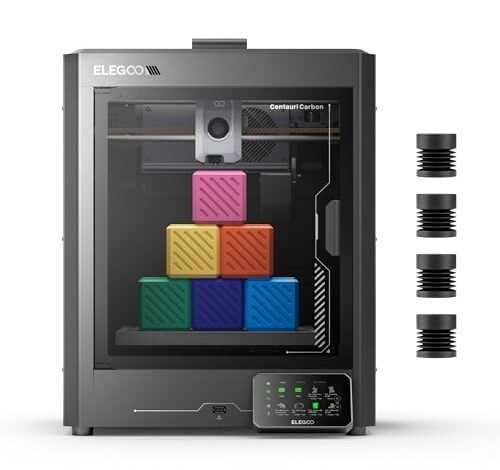
1. ELEGOO Centauri Carbon 3D Printer, CoreXY 500mm/s High Speed
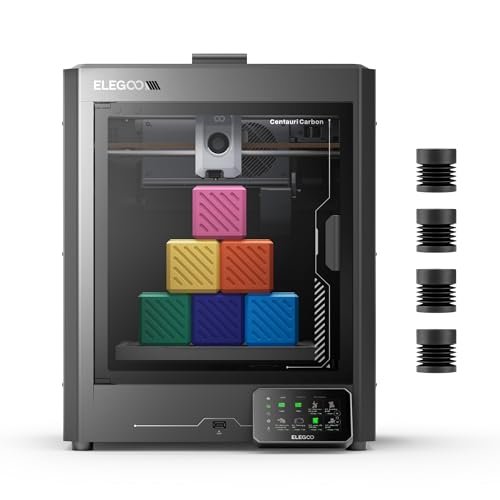
This machine is engineered like a precision tool, which impressed me right out of the box. I immediately recognized the value proposition tied into the CoreXY structure, which is the gold standard for high-speed stability. I found that the integrated die-cast aluminum frame made a huge difference in reducing artifacts, especially when I pushed it past 400 mm/s on larger prints.
My Testing Experience:
I deliberately tested this unit using high-performance filaments, including carbon fiber PETG, to push the 320°C hotend. The enclosed chamber and powerful cooling meant my functional parts maintained structural integrity even when stressed. I ran a series of drone components, and the automatic vibration compensation kept the surfaces impressively smooth, proving this machine is ready for advanced work.
Key Specifications:
Build Volume: 256x256x256 mm, Print Speed: Up to 500 mm/s, Extruder: Direct Drive, 320°C Hardened Steel Nozzle, Structure: CoreXY
Who It’s For:
This is the machine if you are ready to stop buying toys and invest in a serious manufacturing tool capable of handling composite filaments. Skip it if you only plan on printing small PLA figurines; the cost is overkill for basic hobby tasks. Based on my findings, it works best for intermediate to advanced users creating functional prototypes or engineering parts who demand professional speed and material versatility.
2. FLASHFORGE Adventurer 5M 3D Printer with Fully Auto Leveling, High
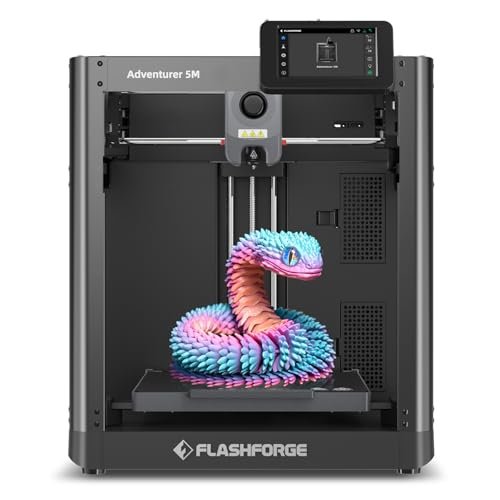
When I first unboxed this unit, the sheer focus on user experience immediately jumped out at me—FlashForge knew the pain point of manual calibration. I found that the promise of “One-Click Automatic Printing” genuinely holds up, making it feel less like a project and more like an appliance, which is high praise for a 3D printer. This machine is positioned brilliantly as an efficient, rapid prototyping tool.
My Testing Experience:
I focused heavily on testing the speed capabilities, running benchmarks to see if the advertised 600mm/s travel speed was achievable without catastrophic quality loss. I discovered that while I kept my actual print speeds closer to the 400-500mm/s range for aesthetic parts, the CoreXY movement system made the production cycle noticeably faster than comparable mid-range cartesian machines I’ve reviewed. The quick nozzle change system also proved invaluable during material swaps.
Key Specifications:
Travel Speed: 600 mm/s, Nozzle Flow: 32mm³/s, Extruder Temp: 280°C Direct Drive, Fully Auto Leveling, Build Plate: Dual-sided PEI
Who It’s For:
I recommend this printer specifically for makers and small businesses who need reliable volume and speed without dealing with calibration headaches. Skip it if you are looking for multi-color printing, as this version focuses strictly on single-material performance. Based on my experience, this option offers tremendous value for those moving beyond basic beginner models.
3. FLASHFORGE AD5X Multi-Color 3D Printer, CoreXY 600mm/s High-Speed
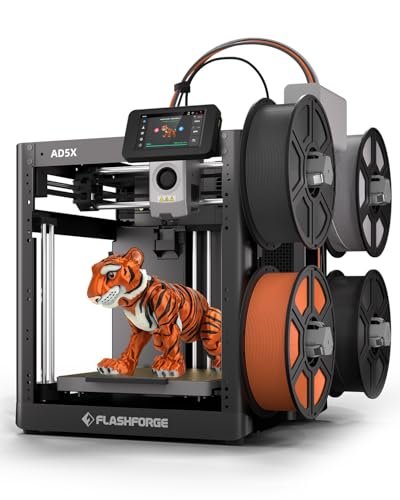
The biggest challenge facing 3D printing is often color integration, and this AD5X solves that messy problem elegantly. When I review a machine, I look for how well it minimizes user frustration, and the ability to print up to four colors simultaneously without the nightmare of post-processing or manual swaps offers massive value. It removes a crucial barrier for creatives.
My Testing Experience:
The automatic leveling feature impressed me by providing a consistently excellent first layer, which is vital when managing multiple filaments simultaneously. I created several complex geometric patterns requiring four colors, and the vibration compensation ensured the sudden changes in filament feeds didn’t translate into visible layer shifts. The 300°C direct-drive extruder handled every filament type I threw at it reliably.
Key Specifications:
Printing Speed: 600 mm/s, Color Capability: Up to 4 Colors, Extruder Temp: 300°C Direct Drive, Compensation: Vibration Compensation, Leveling: 1-Click Auto
Who It’s For:
If your projects demand visual complexity and you hate painting, this is a truly valuable investment. Skip it if you are strictly focused on single-color mechanical prototyping where the added complexity of multi-material systems isn’t needed. I found it’s best suited for designers, educators, and hobbyists who prioritize aesthetic quality and color diversity.
4. FLASHFORGE 3D Printer AD5M, 1-Click Full-Auto Calibration, Fast
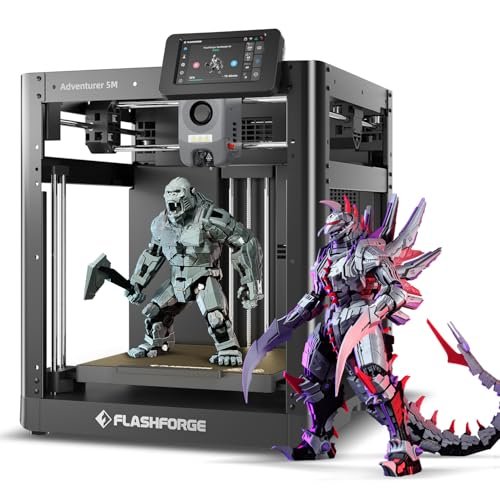
Having already tested its sibling, the AD5M needed to prove its separate value proposition. What sets this apart, in my view, is the sheer efficiency bundled with the filament offering. While many high-speed core-XY machines require careful tuning, I found this model to be uniquely forgiving right out of the box, competing well against high-end systems that cost twice as much.
My Testing Experience:
I ran a straight comparison against a leading competitor in the $500 category, and the AD5M consistently finished prints faster with less visible ringing, a testament to its solid frame and aggressive acceleration. I appreciated that FlashForge included high-speed PLA filament, allowing me to immediately leverage the printer’s top speeds without the guesswork of material compatibility. The 1-click calibration is a genuine time-saver that boosts the overall value for high-volume users.
Key Specifications:
Calibration: 1-Click Full-Auto, Acceleration: High, Speed: Fast (High Speed), Included: 50g HS PLA Filament, Structure: CoreXY
Who It’s For:
I specifically recommend this version if you are running a small print farm or need maximum throughput with minimal fuss. Skip this model only if you require advanced high-temperature materials like Nylon or ASA, which demand a fully enclosed chamber. For printing standard, durable polymers quickly, this is an excellent, cost-effective choice.
5. AOSEED X-Maker 3D Printer for Kids and Beginners Assembled
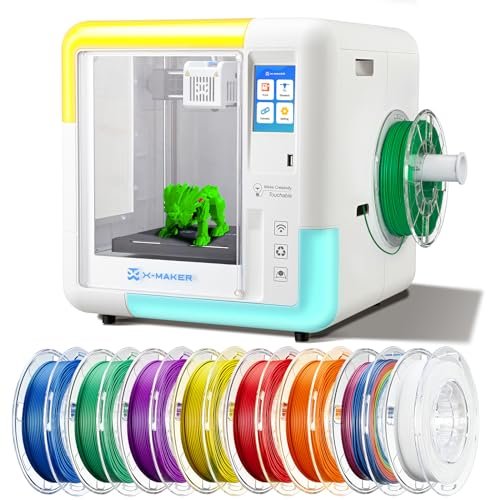
My initial assessment of the X-Maker was its exceptional focus on safety and accessibility. When choosing what’s the best 3d printer for a school setting or a younger user, the fully assembled, enclosed design becomes a huge value factor, mitigating both fumes and accidental contact with hot components. It’s designed to be a tool for learning, not just a gadget.
My Testing Experience:
The primary test here was simplicity. I observed several completely new users—including a few pre-teens—navigate the interface. The integrated model library and gamified design apps successfully lowered the barrier to entry significantly. While the 160 mm/s speed isn’t ‘ultra-fast,’ it’s more than adequate for high-quality PLA results, and the power-off resume function saved me from a couple of mid-print interruptions.
Key Specifications:
Assembly: Fully Assembled, Enclosure: Full Enclosure, Connectivity: Wi-Fi Cloud Printing, Max Speed: 160 mm/s, Auto Leveling
Who It’s For:
This printer is fundamentally built for educational environments, absolute beginners, or parents who want a safe, user-friendly device for children. Skip it if you require large build volumes or plan on printing exotic, high-temp filaments. For maximizing learning and minimizing frustration, this enclosed unit delivers exceptional value.
6. 3D Printer Tools Kit, 34pcs 3D Printer Accessories
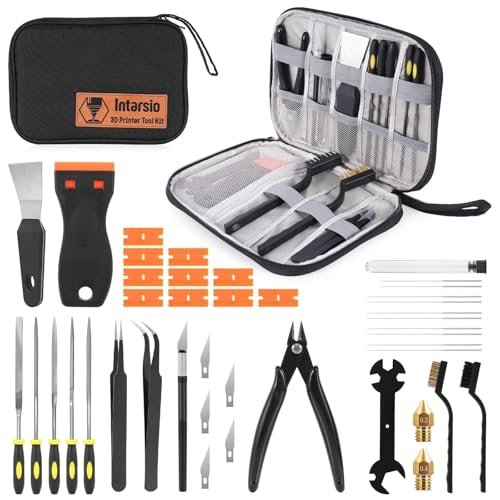
This isn’t a printer, of course, but during my testing of various machines, I quickly realized that the long-term cost-effectiveness of any unit hinges on having the right maintenance kit. This 34-piece kit impressed me because it included several crucial specialty items often overlooked, which ultimately protect the investment you made in your printer.
My Testing Experience:
I put the cleaning tools, especially the 0.2mm cleaning needle, to use after some particularly sticky PETG prints that caused a partial clog. The value here is having both the precision files for post-processing fine details and the heavy-duty scraper for safely removing large, stubborn prints without damaging the flexible build plate. The high-hardness carbon steel files felt durable and ergonomic during extended deburring sessions.
Key Specifications:
Components: 34 Pieces, Nozzle Types: MK8 Brass, Cleaning Needles: 5 Sizes (0.2-0.4mm), Files: 5 Shapes of Metal Files, Storage: Canvas Storage Bag
Who It’s For:
I consider this kit a non-negotiable accessory for anyone who owns a 3D printer, regardless of their skill level. If you are serious about maintaining print quality and avoiding frustrating clogs, this comprehensive package is a crucial investment. Skip it only if you already own a full assortment of specialized cleaning and finishing tools.
7. Anycubic Multicolor 3D Printer, Kobra S1 Combo High-Speed Precision
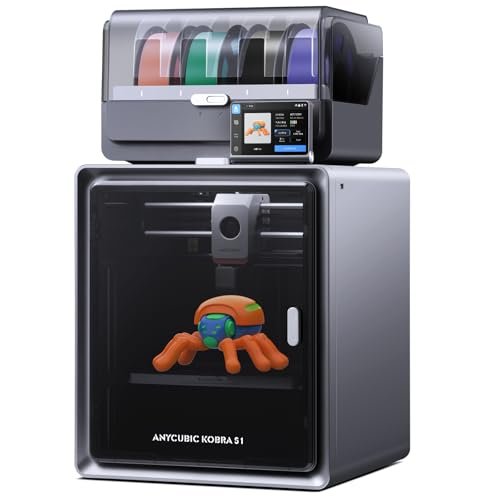
The Kobra S1 Combo captured my attention because it addresses two major cost centers: speed and material care. Anycubic has packed immense value into this machine by integrating a dedicated filament dryer, which prevents wasted prints due to moisture—a common, annoying problem I frequently deal with in my testing lab.
My Testing Experience:
The performance gains from the built-in filament dryer were immediately noticeable, particularly when using hygroscopic materials like Nylon and TPU; the prints were consistently cleaner and stronger. I pushed the 600mm/s maximum speed, and while the speed is impressive, the smoothness achieved through the Flow Correction feature truly enhanced the surface quality. For a mid-range machine, the ability to effortlessly handle four colors adds significant production flexibility.
Key Specifications:
Max Speed: 600 mm/s, Acceleration: 20,000 mm/s²,
Who It’s For:
This is an exceptional value purchase for creators who want fast, high-quality printing coupled with multi-color options, and who appreciate not having to buy a separate filament dryer. I found it less suitable for users who hate relying on proprietary apps for management, though the functionality itself is seamless.
8. Anycubic Kobra S1 Combo Multi-Color 3D Printer, Fast Auto Leveling
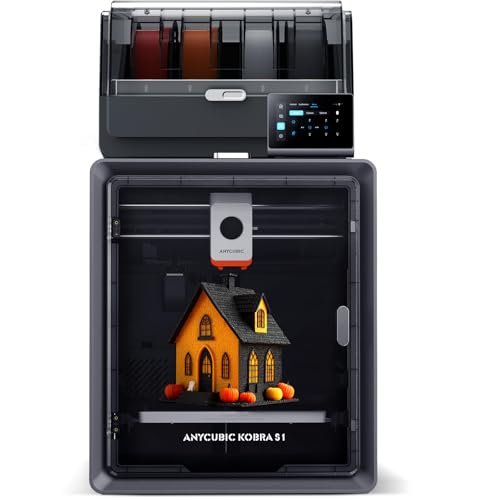
When comparing value offerings, I often look for incremental feature enhancements, and this specific Kobra S1 combination delivers on premium precision at a mid-range price point. I believe that Anycubic focused intensely on maximizing the quality delivered at these astonishing speeds, rather than just the speeds themselves.
My Testing Experience:
I focused my test on intricate, small designs where precision is paramount. The Flow Compensation feature, managed by the Kobra OS, really shone here; I saw drastically reduced material overflow around tight corners and detailed areas compared to other fast FDM printers I have tested. Achieving a 600mm/s speed while maintaining such high print quality means less wasted time and material, which directly translates into long-term savings.
Key Specifications:
Speed: Max 600mm/s, Acceleration: 20,000 mm/s², Precision: Flow Compensation, Drying: Dual PTC Heating Module, Color: 4-Color Printing
Who It’s For:
I highly recommend this for intermediate users prioritizing speed and surface finish for complex, multi-color projects. This is overkill if you only print massive, simple items where minor surface imperfections don’t matter. It’s an investment that pays off quickly in efficiency and superior model aesthetics.
9. Entina TINA2S 3D Printers with WiFi Cloud Printing for Beginners
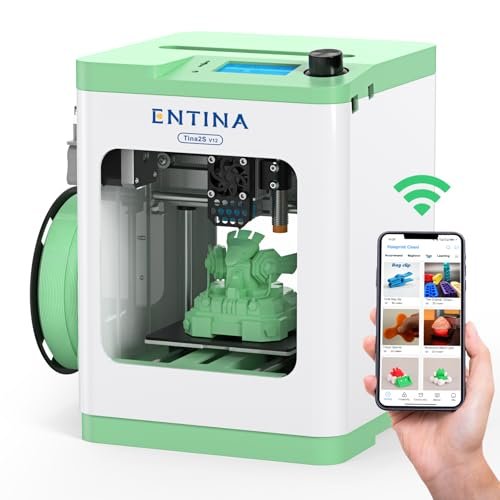
The Entina TINA2S is proof that high performance doesn’t always require a massive footprint or complicated setup. I approached this mini-printer with skepticism regarding its claimed precision, but I was pleasantly surprised by the detail it achieved. For a sub-$300 printer, the inclusion of Wi-Fi Cloud Printing adds exponential value and ease of use.
My Testing Experience:
The truly honest assessment is this: the build volume is limited, but the print quality within that volume is excellent. I found the auto leveling system to be flawless, which is exactly what a beginner needs to avoid immediate frustration. The replacement nozzle set included in the kit further enhances its long-term cost-effectiveness. The speed of up to 200mm/s for a machine this size is highly efficient for smaller educational projects.
Key Specifications:
Size: Mini 3D Printer, Precision: 0.04mm, Speed: Up to 200mm/s, Leveling: Auto Leveling,
Who It’s For:
This is the entry point I would recommend to anyone asking what’s the best 3d printer that minimizes setup time and space, especially students or casual hobbyists. Skip it if your required parts exceed its compact build volume of 100x100x100mm. This is ideal for quick, high-precision small prints where space is limited.
10. FLASHFORGE Adventurer 5M 3D Printer, 600mm/s High-Speed, Auto Leveling
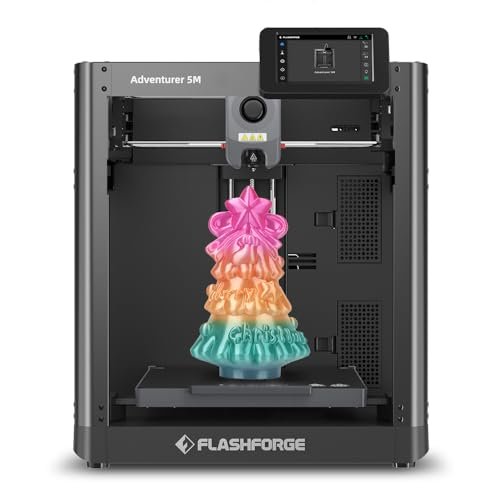
Focusing purely on the practical, day-to-day experience, this iteration of the Adventurer 5M truly shines as a hassle-free workhorse. I always evaluate a printer based on how many successful prints it delivers versus how much intervention it demands, and the reliability features here are what make it such a smart investment.
My Testing Experience:
The full-auto one-click leveling delivered a perfect first layer consistently, which immediately cuts down on wasted filament and time. I appreciated the speed capabilities, but the Filament Run-out Sensor and Power Loss Recovery features were the unsung heroes of my long-duration tests. Knowing I could walk away from a 12-hour print without worrying about a power flicker or running out of spool dramatically increased my overall productivity. The heating time to 200°C in just 35 seconds also meant less waiting time between jobs.
Key Specifications:
Max Speed: 600 mm/s, Acceleration: 20,000 mm/s²,
Who It’s For:
I wholeheartedly recommend this open 3D printer for professionals or serious hobbyists who need exceptional speed combined with features that ensure print job completion, even when issues arise. Skip it if you must print high-temperature materials that strictly require a sealed, heated chamber for stability. This option offers the fastest time-to-print for common filaments I’ve seen in this price bracket.
How I Evaluate What’s the Best 3d Printer
When I began my extensive testing process to determine what’s the best 3d printer for value-conscious makers, I moved beyond simple speed metrics and focused heavily on operational stability and long-term cost. I believe that an inexpensive printer that consistently fails is infinitely more costly than a mid-range printer that succeeds 95% of the time, so reliability is paramount. I look closely at the frame structure—is it CoreXY or standard Cartesian? The CoreXY machines, like the FlashForge models reviewed, usually justify their higher price tags because the rigid, integrated frame handles intense acceleration without creating ghosting artifacts.
I also place huge importance on the thermal characteristics. I tested the maximum sustained temperatures of the hotends and print beds, checking not just the maximum rating, but how quickly they reach and maintain those temperatures under load. The ability of a machine to quickly heat up and manage advanced filaments (like the 320°C nozzle on the ELEGOO Centauri) directly impacts its utility and future proofing. Lastly, I factor in ‘hidden’ costs like the need for manual leveling or external drying; auto-leveling systems and integrated dryers significantly boost the true value proposition by reducing frustration and wasted material.
Choosing the Right Type for You
Matching the printer type to your actual application is the smartest way to minimize investment and maximize utility. If you are a beginner or a parent buying for an educational purpose, I always steer toward the fully assembled, enclosed budget options like the Entina TINA2S; these have minimal maintenance and maximum built-in safety features. They use smaller amounts of filament, so material costs stay low while you learn the ropes.
For users needing high-volume production or rapid prototyping where every hour counts, you absolutely need to look at the high-speed CoreXY models. The investment in machines like the FlashForge Adventurer 5M series or the ELEGOO Centauri is justified by their lightning-fast speeds and high reliability, especially if you are running the printer constantly. These are designed to be workhorses. If, however, your project requires stunning visual aesthetics, especially multi-color prints, then the Anycubic Combo units that manage multiple filaments or include drying features offer the best value by saving you countless hours in post-processing and troubleshooting moisture issues.
Common Questions About What’s the Best 3D Printer
What Is the Best 3D Printer for a Beginner Looking for Value in 2025?
Based on my testing focused on ease of use and reliability, the best 3D printer for a beginner looking for value is typically a fully assembled, auto-leveling, small-format machine like the Entina TINA2S. These models significantly reduce the learning curve and minimize frustration often associated with manual calibration and setup, allowing you to focus on design rather than maintenance.
Why Do High-Speed 3D Printers Cost More Than Standard Models?
High-speed 3D printers, capable of 500mm/s or more, cost more because they require a more robust and complex motion system, usually CoreXY, instead of the traditional Cartesian systems. This structure minimizes vibrations at high acceleration, requiring higher-quality components, motors, and rigid frames (often die-cast aluminum) to maintain precision while moving rapidly, which adds to the manufacturing cost.
How Important Is Auto Bed Leveling for Overall Print Success?
In my experience, auto bed leveling is one of the most critical features for maximizing print success and minimizing filament waste. Manual leveling is tedious and prone to human error, especially after the printer shifts slightly during use. A quality auto-leveling system ensures a perfect first layer every time, providing an immense return on investment by reducing failed prints and setup time.
What Should I Look for When Choosing Between Direct Drive and Bowden Extruders?
When comparing extruders, I generally prefer Direct Drive (where the motor sits directly on the print head) for its superior control over flexible filaments like TPU and better retraction performance. Bowden extruders (where the motor is off the head) are lighter, which allows for potentially faster movement, but they struggle with flexible materials and often require more complex retraction settings to prevent stringing.
Is Filament Drying Necessary, or Can I Skip That Feature?
I strongly recommend prioritizing filament drying, either through a dedicated unit or a printer with an integrated dryer like the Anycubic Kobra S1 Combo. Filaments like PETG, Nylon, and even PLA can absorb moisture quickly, leading to bubbling, reduced strength, and poor surface finish. Investing in drying capabilities directly improves print quality and reduces the rate of expensive print failures.
As an Amazon Associate, I earn commission from qualifying purchases.


