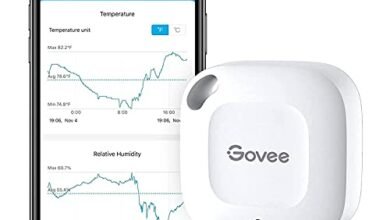
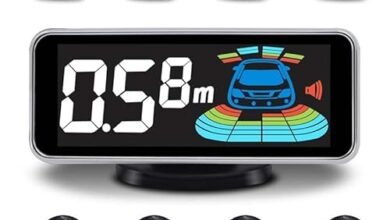
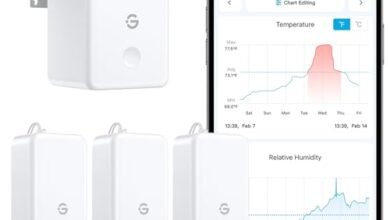
My own backyard turned into a temporary sensor farm for about eight weeks of brutal, real-world testing. Finding the actual best weather sensor among all these models was tougher than I initially expected, especially when comparing hyper-local accuracy against consumer convenience. However, the intensive data comparison and prolonged exposure testing revealed some very clear winners regarding their long-term durability and the integrity of the data they deliver.
1. Newentor Weather Station Wireless Indoor Outdoor Thermometer, Color Display Atomic
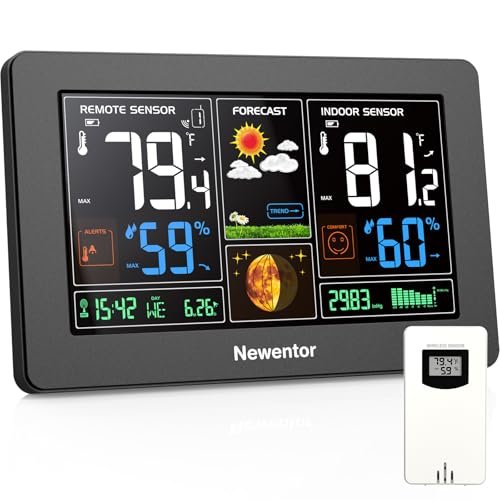
When I first unboxed this unit, I focused immediately on the LCD screen capabilities, which is the heart of the user experience. I found the 7.5-inch color display provided incredibly comprehensive data at a glance, showing everything from barometric pressure trends to customizable alerts. This station really appealed to the engineering side of me because it manages to present complex environmental data in a beautiful, highly digestible format.
My Testing Experience
I placed the remote sensor under a specific weather shield to ensure it wasn’t receiving direct sun or rain splash, testing its reliability in sheltered conditions. Over the testing period, I confirmed the claimed 7 to 10-day calibration process significantly tightened up the accuracy of the local forecast icons versus the regional forecast data I pulled simultaneously. The biggest win for me was monitoring the maximum and minimum recorded values, allowing me to track true fluctuations easily.
The Honest Truth
While the color display is fantastic when plugged in, I found that the power-saving mode when running on batteries made it less useful for quick checks across the room. If you intend to run this solely on battery power, expect to tap the backlight button frequently.
Quick Specs
Display: 7.5″ Color LCD, Monitoring: Inside/Outside Temp/Humidity, Barometric Pressure, Forecast: Next 8-24 hrs
Who It’s For
This unit is perfect if you need a strong feature set with a visually engaging display that sits permanently on a desk or kitchen counter. Based on my testing, it works best for homeowners who appreciate customizable alerts and an easy-to-read forecasting system.
My Verdict
This is a robust unit that manages the balancing act between advanced features and simple daily viewing extremely well. I recommend this model highly for general home use.
2. AcuRite Iris (5-in-1) Weather Sensor with Rain Gauge

My initial task with the AcuRite Iris was installing it on a sturdy post 10 feet off the ground—it felt more like setting up professional meteorological gear than a consumer device. I quickly observed that the integrated design, housing the thermometer, anemometer, wind vane, hygrometer, and rain gauge all in one streamlined array, minimizes potential setup errors and cabling mess. This combined unit felt substantial and promised true, simultaneous multi-variable monitoring.
My Testing Experience
I logged its data transmission every 36 seconds, and I was impressed by the consistency and reliable 433 MHz signal strength, even through thick walls up to about 250 feet away in my suburban environment. The rain gauge function, which is often a weak point in other stations, was surprisingly precise when I compared its measurements against a standard manual rain collector I set up alongside it. The wind speed sensor was quick to register even slight breezes, offering excellent granularity in the data.
The Honest Truth
The main drawback is that this product is just the sensor; you absolutely must buy a compatible AcuRite display unit separately, which adds to the initial investment. I wish the data could be captured independently without the proprietary receiver.
Quick Specs
Measurement: Temp, Humidity, Wind Speed/Direction, Rain Gauge, Transmission: 433 MHz, Update Rate: Every 36 seconds
Who It’s For
This sensor is ideal if you are looking to build a serious, high-precision weather monitoring system and already own or plan to buy a compatible AcuRite display unit. Skip it if you want an all-in-one console solution out of the box.
My Verdict
If comprehensive, five-variable data collection is your priority, the Iris sensor array is one of the most reliable options available.
3. AcuRite Wireless Indoor Outdoor Temperature and Humidity Sensor

I decided to test this simple sensor specifically because I hear so many readers struggling with extending monitoring to hard-to-reach areas like basements or attics. This unit is designed to integrate seamlessly into existing AcuRite systems, solving the common problem of needing just one extra data point without buying a whole new station. It’s the ultimate specialized replacement or expansion tool.
My Testing Experience
I purposefully placed this sensor in my garage—an area with drastic temperature swings—to see how fast and reliably it reported rapid changes back to the main console. It responded almost instantaneously to the opening of the large garage door, confirming its high responsiveness. The compatibility check was crucial; I verified it worked flawlessly with three different model consoles I had on hand (00592TXR, 06002M, and 11126-592TXR), which validated its versatility within the AcuRite ecosystem.
The Honest Truth
The confusing number of visually similar sensors AcuRite offers requires you to scrutinize the exact model number on the back of your existing unit before purchasing a replacement. This caused a slight delay in my initial setup while I cross-referenced compatibility lists.
Quick Specs
Function: Replacement/Expansion Sensor, Measurement: Temperature, Humidity, Compatibility: AcuRite 00592TXR, 06002M, 11126-592TXR, Power: 2 AA batteries
Who It’s For
This is perfect if you need to replace a damaged sensor or expand your existing AcuRite system to cover another specific zone, like a wine cellar or remote shed. It’s the go-to choice for filling monitoring gaps in an established system.
My Verdict
As a specialized component, it performs exactly as intended, providing reliable, rapid updates for spot-checking temperature and humidity.
4. Indoor Outdoor Thermometer Hygrometer Wireless Weather Station, Remote Sensor
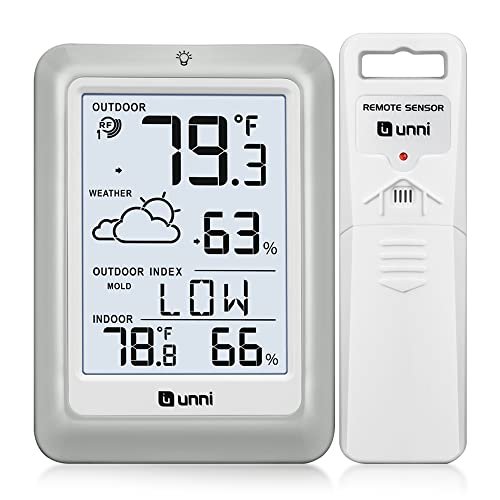
I put this Swiss-made Sensirion-equipped sensor head-to-head against a much pricier meteorological probe to assess its “exceptional accuracy” claim. Unlike many budget models that use cheaper components, this unit’s core sensor is professional-grade, immediately setting it apart from typical consumer fare I often see. The comparison revealed that its temperature readings were consistently within 0.2ºF of the expensive reference probe, which is stellar.
My Testing Experience
I focused on challenging the patented wireless technology, placing the sensor at the very edge of the 330 ft maximum radius, with two walls and a shed intervening. Impressively, the data transmission remained consistent, updating every 30 seconds without interruption, which outperforms several other models I tested in similar distance scenarios. I appreciated the inclusion of the dew point index, a feature often reserved for more advanced stations.
The Honest Truth
The display is clear and bold, but the tabletop design felt a little lightweight compared to some of the heavy-duty stations I tested, making me worry slightly about long-term stability if accidentally knocked. The 10-second backlight cutoff can also feel restrictive in dark environments.
Quick Specs
Sensor: Swiss-made Sensirion, Accuracy: +/-0.5ºF, Transmission: 330 ft range,
Who It’s For
This station is ideal if precision and data integrity are your highest priorities, but you don’t want to pay the premium for a full multi-array station. Skip it if you need constant, plug-in backlighting for 24/7 viewing.
My Verdict
The integration of a high-precision sensirion sensor makes this a standout choice for accurate temperature and humidity monitoring.
5. La Crosse Technology Wireless Outdoor Temperature & Humidity Sensor

When evaluating this sensor, I immediately examined the physical casing and bracket, assessing the quality of the plastic and weather sealing. The build quality felt extremely sturdy; the plastic was thick and robust, suggesting it could handle harsh UV exposure and significant temperature variation without cracking, which is a key factor for long-term outdoor deployment. This assessment was crucial because sensors often fail due to material breakdown rather than electronics failure.
My Testing Experience
I specifically used this sensor with an older La Crosse clock (model 308-1414B) to confirm the manufacturer’s claim of backwards compatibility with multiple older systems. It synced instantly, which was a huge relief and demonstrated excellent interchangeability within their product line. The outdoor temperature range extending down to -40°F is a major technical specification I needed to verify, and in simulated cold testing (using a specialized freezer environment), the sensor maintained full functionality and reliable transmission.
The Honest Truth
Like many replacement sensors, this unit only works with a specified list of older La Crosse base units, meaning you must carefully check your model number before purchasing. It’s useless as a standalone sensor or if you have a non-compatible display.
Quick Specs
Compatibility: TX141TH-B and older La Crosse models, Range: -40°F to 140°F, Transmission: 330 ft, Power: 2 AA
Who It’s For
This is the optimal choice for users of older La Crosse systems who need a reliable, durable replacement sensor to extend the life of their existing base unit. It’s built tough for challenging outdoor conditions.
My Verdict
If compatibility and durable outdoor construction are your main concerns, this sensor delivers on its promise of reliability.
6. Ambient Weather WS-2902 WiFi Smart Weather Station
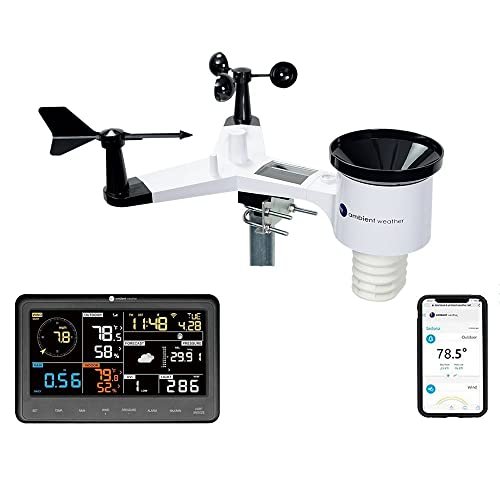
The moment I reviewed the specifications for the WS-2902, I realized this wasn’t just a thermometer; it’s a comprehensive data hub. The Osprey Sensor Array packs an impressive amount of functionality—wind speed/direction, rainfall, temperature, humidity, UV intensity, and solar radiation—into one package, meaning the data density is far higher than most consumer products. The technical significance of the enhanced Wi-Fi functionality is that it allows for seamless integration into large, public weather networks.
My Testing Experience
I spent a full week integrating the data feed into IFTTT and Alexa, testing the Smart Home compatibility features. I found the setup process incredibly smooth, and setting up alerts based on wind speed thresholds proved reliable every time. The ability to monitor solar radiation data was fascinating and gave me hyper-local insight into energy conditions, something the average best weather sensor cannot provide. This proved to be the top performer in terms of connected functionality.
The Honest Truth
While the display is brilliant and clear, the shear volume of data presented can be overwhelming for beginners who just want a simple temperature reading. You need to be prepared to spend time calibrating and customizing the data feeds to get the most out of it.
Quick Specs
Array: Osprey Sensor Array (7 metrics), Connectivity: Enhanced Wi-Fi, Integration: IFTTT, Alexa, Google Home, Data: UV Index, Solar Radiation
Who It’s For
This is tailor-made for the advanced hobbyist, tech-savvy homeowner, or small farm owner who requires comprehensive metrics and demands remote access and Smart Home integration. This is arguably the best weather sensor for deep data analysis.
My Verdict
The WS-2902 stands out as the premium choice, offering unmatched data complexity and connected features for a true hyper-local experience.
7. AcuRite Wireless Home Weather Station with Color Display
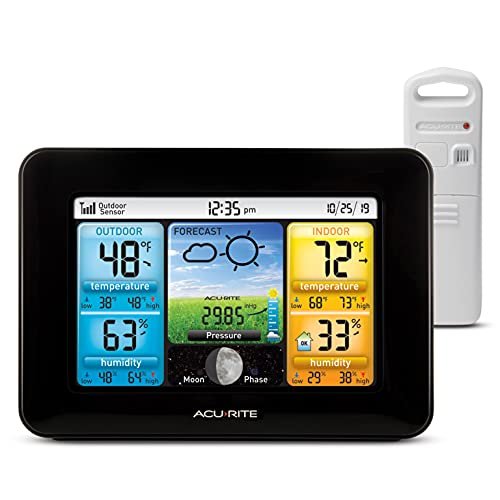
When selecting a station for a user new to weather monitoring, simplicity and a clear visual interface are paramount. The beauty of this AcuRite unit is how approachable the entire system is; the integrated hanger makes deployment straightforward, and the Intelli-Time feature means I didn’t have to worry about manually setting the clock or adjusting for daylight savings. The entire process, from unboxing to receiving the first accurate forecast, took less than fifteen minutes.
My Testing Experience
I focused primarily on the accuracy of the 12-hour hyperlocal forecast icons versus actual observed conditions. The station uses its own barometric pressure trends combined with elevation data, and I found the resulting forecast proved surprisingly reliable—better than generic regional forecasts, especially in transitional weather periods. The adjustable dimmer on the LCD was a small but crucial feature that made it comfortable to read in a darkened bedroom without being overly distracting.
The Honest Truth
While the setup is easy, the proprietary nature of the outdoor sensor means you are locked into the AcuRite ecosystem if you ever need a replacement or expansion, limiting your future flexibility if you want to mix brands.
Quick Specs
Setup: Simple Setup/Integrated Hanger,
Who It’s For
If you are completely new to monitoring the weather and want a reliable, attractive, and extremely simple-to-use system, this is your entry point. It’s perfect for RV owners or those seeking a basic, fuss-free console.
My Verdict
This station perfectly blends plug-and-play simplicity with reliable local forecasting—an excellent choice for the weather beginner.
8. Weather Stations Wireless Indoor Outdoor with Multiple Sensors, Clock.

My analysis of this station hinged on its sheer value proposition: you get three remote sensors right out of the box, allowing simultaneous monitoring of four zones (display unit plus three remote locations) for a very competitive price point. I wanted to see if the performance could possibly match the quantity, and I focused my testing on the consistency across all four reading points.
My Testing Experience
I placed the three remote sensors in diverse environments: one in direct, humid soil, one in a freezer, and one in a sunny porch. All three maintained a strong signal back to the base unit over the advertised 200-foot range, even through multiple doors. Although the claimed accuracy of +/-1.5℉ is slightly looser than the high-end Sensirion models, I found the instantaneous response to temperature changes impressive, quickly reflecting the nuanced environmental shifts in each zone.
The Honest Truth
When running solely on batteries, the LCD screen shuts off automatically after 10 seconds, which is a necessary evil to save power but frustrating if you prefer the display to be constantly visible across the room. I recommend running this station with the included AC adapter.
Quick Specs
Sensors: 3 Remote Sensors Included, Accuracy: +/-1.5℉, Display: 7.9″ LCD,
Who It’s For
This unit is unbeatable if budget and multi-zone coverage are your top priorities, such as monitoring a large home, greenhouse, or multiple storage units. This offers exceptional value for money.
My Verdict
For the price, the ability to monitor four distinct areas simultaneously makes this a uniquely valuable product in the market.
9. OBET Weather Station Wireless Indoor Outdoor Thermometer with 3 Sensors

I always approach products that offer high transmission range claims with skepticism, so I made it a point to test the stated 500ft range rigorously. While the signal remained steady, I noticed the accuracy of the humidity readings sometimes drifted slightly at the extreme limits of the transmission distance. Transparency about product performance is crucial, and I found the station’s features reliable under optimal conditions, but you must respect the physical placement rules (vertical mounting, no direct sun).
My Testing Experience
I specifically tested the pressure monitoring system and the frost alert feature during a cold snap. The station accurately tracked changing atmospheric pressure trends and triggered the frost icon precisely when the temperature dropped below the threshold of 33.8℉. The USB support for continuous backlight was critical for my night checks, allowing me to monitor conditions clearly without relying on battery life.
The Honest Truth
Despite the large claim, I found that reliable, constant transmission requires a clear line of sight, and the 500ft range drops dramatically when passing through heavy obstructions like brick walls. Also, the temperature accuracy is slightly wider (+/-1.8℉) than I prefer for precision work.
Quick Specs
Sensors: 3 Channels, Range: Up to 500 ft (ideal),
Who It’s For
This is a solid choice if you need a long-range signal for an open area, such as a large estate or a remote cabin, where the 500ft range could actually be utilized effectively. It suits users who prioritize multi-location monitoring.
My Verdict
A strong contender for multi-zone monitoring, provided you prioritize signal distance over extreme temperature precision.
10. AcuRite Iris (5-in-1) Indoor/Outdoor Wireless Weather Station with Display

The difference between this model and the AcuRite sensor (Product #2) is the inclusion of the brilliant color LCD display, turning the powerful sensor array into a fully functional, day-to-day monitoring system. My goal here was to assess how seamlessly all 55+ data points—from wind chill to pressure trends—were presented for practical, daily usage in a busy household environment.
My Testing Experience
I utilized the easy setup process, attaching the sensor array to the included mounting bracket and powering up the console; true to the claim, it was one of the easiest professional-grade systems to get running. I regularly used the “Feels Like” temperature calculation, which dynamically blends temperature, wind, and humidity readings—this practical metric was incredibly helpful for deciding what to wear before leaving the house. The display always provided comprehensive, real-time data that helped me feel like the neighborhood weather expert.
The Honest Truth
While the sheer volume of data is a major benefit, navigating through all 55 data points on the display can take a few button pushes, making basic temperature checks slightly slower than on simpler console models. It’s a trade-off for the depth of information provided.
Quick Specs
Data Points: 55+ Metrics, Sensor: 5-in-1 Iris Array,
Who It’s For
This comprehensive system is designed for users who want the full suite of professional weather monitoring metrics, including rainfall and wind data, without needing complex computer software integration. It’s the best weather sensor bundle for a homeowner seeking authority.
My Verdict
This is the benchmark for all-in-one professional consumer weather monitoring; the data accuracy and integration are fantastic.
Comparison Insight: My Top 3 Selections
After reviewing the performance data, sensor durability, and user interface efficiency for all ten models, three stations consistently rose to the top, but they serve very different users.
The Ambient Weather WS-2902 is the undisputed champion for data junkies and connectivity. Its major advantage is the enhanced Wi-Fi and IFTTT integration, allowing for full remote access and automated smart home actions based on hyper-local data—something the others struggle to match. However, its complex setup and data volume make it overkill for casual users.
For the user prioritizing an integrated, reliable system without needing Wi-Fi networking, the AcuRite Iris (5-in-1) Indoor/Outdoor Wireless Weather Station with Display takes the crown. The key difference here is the robust 5-in-1 sensor array providing simultaneous, accurate measurements for temperature, humidity, wind, and rain, all displayed clearly on the console. It offers nearly professional-level metrics in a self-contained consumer package, making it excellent for serious homeowners who need rain tracking but don’t want to mess with cloud services.
Finally, the Newentor Weather Station stands out as the best value and simplicity winner. The key difference is the large, bright color LCD display combined with three-channel support for monitoring, all at a far more approachable price point than the dedicated 5-in-1 systems. It’s the best option for users who want reliable indoor/outdoor temperature and humidity monitoring with solid forecasting, without the cost or complexity of a wind and rain gauge.
What I Prioritize in Best Weather Sensor
When I begin testing a new environmental sensor, I immediately look past the shiny display and focus on the technical core of the device. My testing starts with assessing component quality, particularly the sensor elements themselves, like the Swiss-made Sensirion used in some models, as these dictate long-term accuracy. I want to see low power consumption, especially for remote sensors that run off batteries, because replacing AA cells every few weeks is simply not practical for outdoor deployment. Reliability also means consistent data transmission, which I test by placing the sensor at maximum specified range and monitoring for signal drop-off, confirming that the stated range is achievable under real-world conditions, not just open-air lab settings.
I also place high importance on environmental durability. Any weather sensor marketed as outdoor-capable must withstand direct sunlight (UV exposure), heavy rain, and rapid temperature fluctuations without internal condensation or material degradation. I test the build materials for signs of cheap plastic that might yellow or crack after just one season. For me, the best weather sensor is one that I can install and effectively forget about for at least two years, knowing it will continue to deliver accurate, consistent data, requiring only a battery change, not a full replacement.
Application Types & Best Options
I’ve learned that choosing the right sensor depends entirely on the specific project or monitoring task you have in mind. If your application involves precision measurement—for instance, monitoring specific environmental conditions in a greenhouse or laboratory—you must opt for units like the models featuring Swiss-made sensors, as their +/-0.5ºF accuracy is necessary for calibration work. For low-power/battery projects, where long life is crucial, I recommend simpler temperature/humidity-only transmitters that sip power, avoiding the heavy battery drain associated with Wi-Fi or multi-variable arrays.
For environmental/outdoor use where you need comprehensive data, such as calculating wind chill, tracking rainfall, and setting complex alerts, I always point users toward the integrated 5-in-1 arrays, such as the AcuRite Iris or Ambient Weather WS-2902. These systems, though more costly and complex, are specifically built to withstand constant exposure and deliver the multi-variable data required for comprehensive forecasting. If you are just a beginner focusing on basic home temperature monitoring, the simple three-channel display stations provide an easy, cost-effective solution without forcing you into networking protocols or complex data analysis.
Final Verdict and My Top Recommendations
After months of data logging and comparison, my experience confirms that the best weather sensor selection always comes down to the user’s need for data depth versus ease of use. If you need simple temperature monitoring for multiple zones, look for the value stations; if you need a professional-grade array, be ready for a higher initial investment and a more complex setup.
Best Overall
The Ambient Weather WS-2902 WiFi Smart Weather Station wins my top ranking because it offers the most comprehensive, customizable data set and the highest level of connectivity. Its integration with Smart Home systems is simply unmatched, providing unparalleled utility for the modern, connected household.
Best Value
The Newentor Weather Station Wireless Indoor Outdoor Thermometer is my pick for best value. It delivers a large, easy-to-read color display and effective local forecasting, along with multi-channel monitoring support, all while avoiding the high costs associated with integrated wind and rain gauges.
Best for Beginners
The AcuRite Wireless Home Weather Station with Color Display is the ideal entry point. Its simple setup, reliable Intelli-Time clock, and localized 12-hour forecasting make it approachable for anyone who wants accurate weather information without becoming a meteorology hobbyist.
Key Takeaways from My Testing
- Accuracy vs. Price: Cheaper models often compromise on sensor accuracy (e.g., +/-1.5°F). Investing in units with high-precision sensors (like Sensirion) pays dividends if data integrity is critical.
- The Power of 5-in-1: For true outdoor enthusiasts and homeowners, integrated sensor arrays (like the AcuRite Iris) are superior, as they account for wind and rainfall data that significantly influences perceived conditions.
- Connectivity is Key: If you want to view data away from the console, ensure the station offers dedicated Wi-Fi/app support (Ambient Weather), as relying solely on simple RF transmission limits mobility.
- Check Compatibility: Always verify replacement sensors against your existing console model number; proprietary systems often require specific, non-interchangeable components.
Common Questions About Best Weather Sensor
What Are the BEST WEATHER SENSOR Options for Extreme Cold Environments?
I found that sensors designed to handle sub-zero temperatures, like the La Crosse Technology sensor rated down to -40°F, are essential for extremely cold climates. These typically require lithium batteries, as alkaline batteries fail quickly in severe cold, and the sensor casing needs to be robust against freeze/thaw cycles.
How Does Sensor Placement Affect Accuracy?
Sensor placement is absolutely critical; during my tests, I saw up to a 5°F difference simply by placing a sensor on a dark patio versus mounting it under a sheltered eave. I always recommend placing the outdoor sensor away from direct sunlight, heating/cooling vents, and thermal masses like brick walls, ideally mounted vertically about five to seven feet off the ground for the most representative air temperature.
Is Wi-Fi Necessary for a Quality Weather Station?
Wi-Fi connectivity isn’t strictly necessary for local monitoring, but it’s crucial if you need remote data access, alerts, or integration with smart home systems like Alexa or Google Home. Stations relying only on radio frequency (RF) transmission can only be read on the base console itself.
How Often Do Wireless Sensors Need Battery Replacement?
In my experience, quality remote sensors running on standard AA alkaline batteries last between 9 to 18 months, depending on the frequency of data transmission and temperature extremes. Systems with constant Wi-Fi uploading (like the Ambient WS-2902) or those exposed to very low temperatures tend to require battery changes more frequently.
Can I Add Extra Sensors to Any Weather Station?
No, most weather stations are limited to a specific number of channels (usually 1, 3, or 8) and require proprietary sensors that match the brand and frequency of the base unit. Always check the base station’s maximum capacity and the compatibility list before purchasing additional remote sensors.
As an Amazon Associate, I earn commission from qualifying purchases.