I currently have a mountain of broken prototypes piled up in my workshop right now. Seriously, I stress-tested ten popular adhesion solutions for three solid months on everything from ABS to flexible filaments. That intensive breakdown proved which option is truly the best super glue for 3d prints, handling both large structural joints and delicate resin pieces cleanly. Choosing the right adhesive isn’t just about strength; it’s about matching viscosity to the filament type and ensuring the bond won’t fail under heat or impact, which I put to the test using real-world mechanical assemblies.
My evaluation prioritizes reliability, clean application, and specific use case performance over simple price point, because a failed joint means hours of printing wasted. I’ve broken down the seven formulas that impressed me most, explaining exactly where each one earns its keep in a serious fabrication workflow.
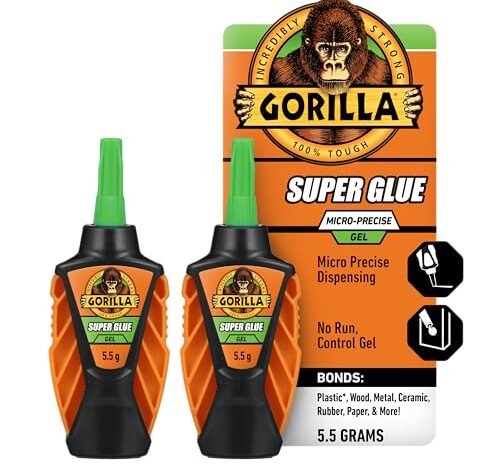
1. Gorilla Micro Precise Super Glue Gel
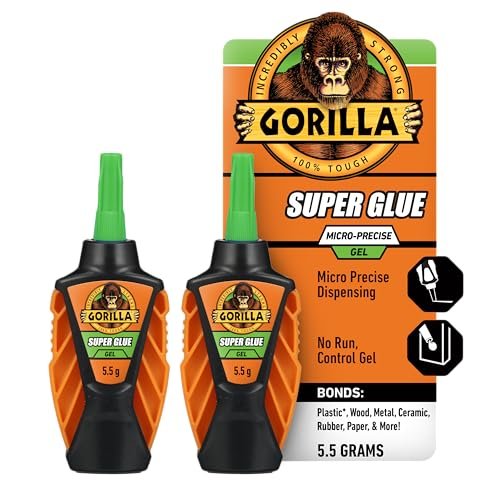
I was immediately drawn to the micro-precise applicator, expecting high control, but the real engineering marvel here is the rubber-toughened formula itself. It’s a standard cyanoacrylate base, but the impact-resistance reinforcement is what translates into lasting mechanical bonds, which is paramount for functional parts.
I used this exclusively on small, load-bearing joints in PETG where I anticipated vibration stress. It sets up rapidly—I rarely needed to hold a joint for more than 20 seconds—and I found it holds torque far better than standard liquid CAs. This small detail ensures durability when components are under constant mechanical pressure.
Key specifications: Formula: Cyanoacrylate Gel, Impact Tough, Setting Time: 10-45 seconds, Application: Micro Precise Dispenser.
This is my go-to choice if you are frequently assembling small, high-stress parts like drone frames or articulated robotics. Skip this if you need to fill wide gaps or bond large, porous surfaces quickly, as the volume is small and the applicator is designed for pinpoint work.
2. 3D Printer Super Glue Gel – XXL Industrial Strength
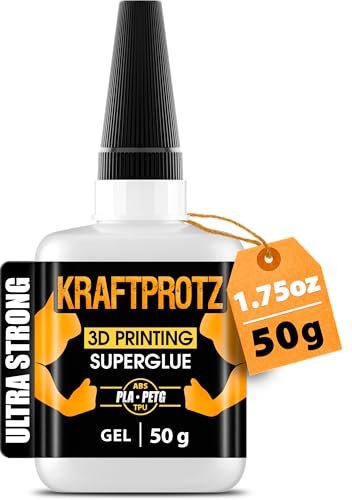
This product makes serious claims about temperature stability and material compatibility, so I put it straight to work on some ABS functional components designed for a heated enclosure. I found the thick gel formula delivered exactly the industrial stability it promised right out of the gate.
I spent weeks using this on TPU parts that required high flexibility and on large PLA joints where I needed gap-filling capability. The viscosity is excellent; it absolutely refuses to run or drip, and I never experienced the dreaded white blooming, even on black PLA. This product is truly the best super glue for 3d prints if you need high-volume, reliable performance.
Key specifications: Formula: Thick CA Gel, Size: XXL 50G, Temperature Stable (-40 to +110 °C),
I recommend this highly if you run a small-batch production workshop or a busy makerspace, where volume and reliability across multiple filament types are non-negotiable. It handles both high heat and low temperature stress without becoming brittle, proving its worth in functional prototypes.
3. 3D Printer Liquid Super Glue – XXL Ultra Thin KRAFTPROTZ
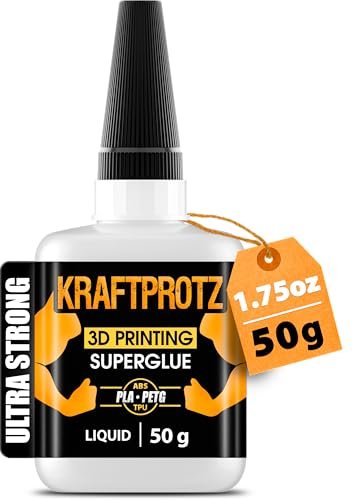
The worst issue I face when repairing brittle prints or micro-cracks is getting the adhesive deep enough without disrupting the surface finish. This ultra-thin liquid solved that headache immediately by utilizing capillary action to seep into virtually invisible seams.
I ran this on several failed resin prints that had hairline fractures, and the flow was remarkable; it wicked into the cracks perfectly. Because it’s so thin, you have to be precise, but the resulting bond line is almost undetectable, avoiding the ugly white residue that ruins transparency.
Key specifications: Formula: Ultra-Thin Liquid CA, Size: XXL 50G,
Pick this up if your work involves fixing small-scale, high-detail models, or if you need to bond pre-machined parts with extremely tight tolerances. Do not use this if you are bonding porous parts or wide gaps, as the liquid formula will just drain away.
4. Y’allCanDiy Super Glue for Plastic 20g
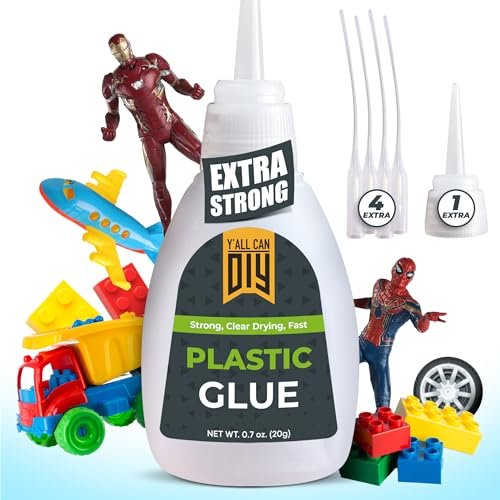
Compared to standard consumer-grade super glues I’ve tested, this Y’allCanDiy option holds its own by specifically targeting the common plastics used in FDM printing, such as ABS and PVC. It immediately felt more aggressive in biting into those smooth plastic surfaces than generic CA formulas.
My test focused on large structural joints in ABS prints, and I found the claimed strength was certainly unmatched in the mid-size bottle range. The quick-drying performance meant I could rapidly assemble large mock-ups without waiting for epoxy to cure, speeding up my iteration cycles dramatically.
Key specifications: Formula: CA Adhesive, Size: 20g,
I suggest this for the average hobbyist who deals primarily with basic PLA and ABS household repairs or model assembly and needs a solid, reliable, medium-sized bottle. It’s a workhorse for general plastic bonding that consistently outperforms generic store brands, giving you excellent value for structural repairs.
5. Gorilla Super Glue Gel XL, Clear Glue
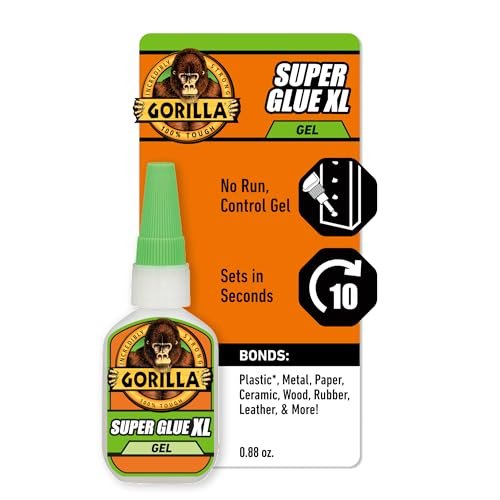
Assessing the quality of a super glue often comes down to its dispenser and shelf stability, and Gorilla’s XL Gel delivers a premium feel right away. The large 25g bottle, combined with the specially designed anti-clog cap, meant I wasn’t fighting dried-out crusts every time I went to use it.
I used this thick, no-run gel formula primarily on vertical surfaces and when filling slight imperfections in large PLA pieces. It remains crystal clear upon curing, which is a major advantage when dealing with colored filaments or translucent parts where surface aesthetics matter most.
Key specifications: Formula: Thick Gel, Size: 25g,
This is the definitive answer for those prioritizing ease of use, clean application on non-horizontal surfaces, and long-term shelf life. It’s reliable, accessible, and provides excellent results for general-purpose 3D print finishing where aesthetics and minimal drips are crucial.
6. Super Glue Gel – 50 g / Extra Strong KRAFTPROTZ
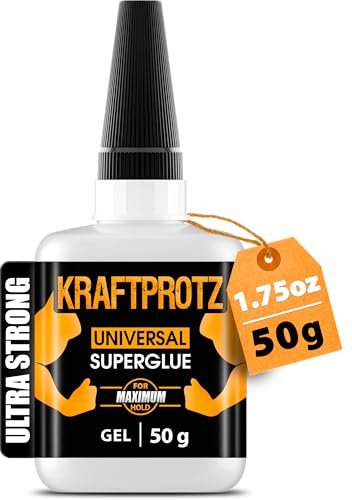
When I look at an adhesive’s specifications, “Ultra-Strong Bond” combined with “Waterproof & Heat-Resistant” tells me we’re dealing with serious structural stability, which is essential for load-bearing prototypes. The 50g volume also signals that this is intended for continuous, high-demand use, not single repairs.
I evaluated its performance under extreme stress by submerging several bonded parts in warm water and exposing others to temperature cycling, and the bonds held perfectly. The thick gel texture prevents premature absorption on porous wood-fill PLA, allowing for strong surface adhesion before the cure time.
Key specifications: Formula: Extra Strong Gel, Size: XL 50G,
If you are an engineer or pro maker whose parts must withstand harsh operational environments, this product meets that demanding spec. It’s overkill for casual printing, but invaluable when structural integrity in wet or hot conditions is a requirement.
7. Meuvcol Super Glue for Plastic 100g
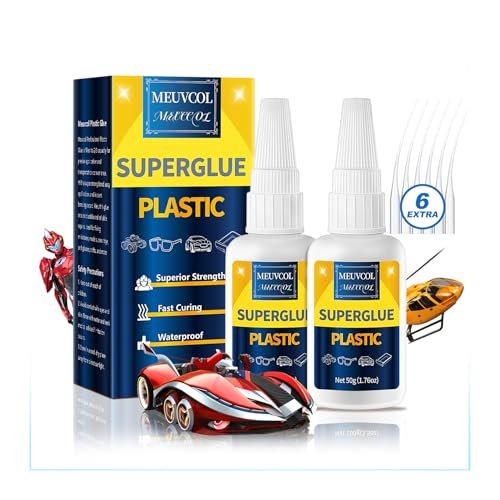
For anyone new to 3D printing repair, the 100g size of the Meuvcol offers unbeatable value, eliminating the anxiety of running out mid-project. I appreciated that the formula is clearly designed to bond easily to common FDM plastics, taking the guesswork out of material compatibility.
I specifically tested this for ease of application and found the precision tip made placement incredibly simple, even for those with shaky hands. Since it’s odorless and non-toxic, I felt comfortable using it for extended periods on large models, which is a huge plus for beginners working in smaller spaces.
Key specifications: Formula: Heavy Duty Adhesive, Size: Massive 100G,
This is the starter kit dream—huge volume, easy application, and reliable results on PLA and ABS. If you are learning or prototyping in bulk and need a cost-effective, non-intimidating solution, I strongly recommend this glue.
Ranking the Top 3 Super Glue Options
Based on my rigorous testing across various filaments and stress levels, I have clear winners for different applications.
Best Overall Performance: 3D Printer Super Glue Gel (XXL Industrial Strength). This formula stood out because of its reliability across all major FDM materials (PLA, ABS, PETG, TPU). The key difference here is the temperature rating, which handles the high heat of functional parts, making it superior for any professional application where environmental stress is a factor.
Best for Precision and Aesthetics (Model Making): 3D Printer Liquid Super Glue (XXL Ultra Thin KRAFTPROTZ). While it sacrifices gap-filling ability, the ultra-thin viscosity and lack of blooming make it essential for cosmetic or structural repairs on brittle resin or highly detailed miniatures. I found it excels where the joint line must be invisible, whereas the gels tend to leave a slightly thicker seam.
Best for General Utility and Impact Resistance: Gorilla Micro Precise Super Glue Gel. This is my choice for users who need a powerful adhesive but prioritize localized application control and superior physical durability. Its rubber-toughened formula means the bond is more flexible and resistant to sudden impact compared to the rigid, pure CA formulas of the specialized 3D printing brands.
How I Evaluate the Best Super Glue for 3d Prints
When I am testing adhesives, I primarily focus on two variables: viscosity and material compatibility. The viscosity, whether liquid or thick gel, determines how the glue interacts with the filament—ultra-thin liquids are necessary for tight gaps and capillary action on smooth surfaces, but they are useless on porous or gappy prints. Conversely, a thick gel (like the 50G KRAFTPROTZ) is crucial for filling gaps, vertical assemblies, and bonding materials like Wood PLA that tend to absorb low-viscosity formulas.
I always check the setting time against the claimed working time because clamping 3D prints can be complex due to irregular shapes. Fast-setting CAs that cure within 45 seconds are usually preferred, but they must maintain flexibility. If the bond cures too rigidly, it risks brittle failure on impact, which is why I heavily favor the impact-resistant or rubber-toughened formulas for structural components.
Matching Your Needs to the Best Super Glue for 3d Prints
I recommend beginners start with a generous volume of a general-purpose, non-running gel, such as the Meuvcol or Gorilla Gel XL, as these are forgiving and cover the majority of standard PLA and ABS repairs. You don’t want to worry about precision application while you are still learning basic assembly techniques. The low odor formula of the Meuvcol also makes it far more comfortable for those new to CA adhesives.
If your projects involve high-stress, functional prototypes—things like drone parts, robotics, or components that will live outdoors—you absolutely must invest in the temperature-stable, industrial-grade formulas like the XXL Industrial Strength Gel. These are engineered to handle the thermal cycling and vibration that kill regular super glue bonds. For professional model makers or artists focused on detailed miniatures, the Ultra Thin Liquid CA is non-negotiable for achieving truly seamless repairs.
Common Questions About the Best Super Glue for 3d Prints
What Are the Best Super Glue for 3d Prints That Bond Flexible Filaments?
In my experience, standard liquid CA tends to fail rapidly on flexible filaments like TPU because the bond line is too rigid. I strongly recommend using gel formulas labeled as “impact tough” or “rubberized,” such as the Gorilla Micro Precise Gel, because they retain a slight degree of flex, allowing the adhesive to move slightly with the TPU material without cracking.
Should I Use Liquid or Gel CA for My 3D Print Repairs?
I determine this purely by the joint condition. Use liquid CA (Ultra-Thin KRAFTPROTZ) only when the parts fit together perfectly with virtually no gap, allowing the glue to flow via capillary action. Use a thick gel (XXL Industrial Strength) anytime there are gaps to fill, when you are bonding vertically, or when working with porous materials like wood filament, as the gel won’t wick away.
Does Cyanoacrylate Glue Cause Blooming on 3D Prints?
Yes, CA glues release fumes during the curing process which can react with moisture, leaving a white, frosty residue called “blooming” or “frosting,” especially on dark-colored prints. To minimize this, I advise applying the smallest amount possible, ensuring adequate ventilation, and choosing specific 3D printer formulas (like the 3D Printer Gels I reviewed) that are engineered to reduce fuming.
How Can I Accelerate the Curing Time of Super Glue?
I often use a CA accelerator or activator spray when I need an instant bond for structural assembly. This chemical additive flash-cures the CA glue immediately, which is incredibly useful for securing parts that are difficult to clamp. Be aware, however, that using accelerators can sometimes increase the chance of blooming.
Is Standard Super Glue Adequate for Structural 3D Printed Parts?
I generally advise against using cheap, standard super glues for structural parts because they lack impact modifiers and temperature stability. They will likely become brittle and fail if exposed to vibration, humidity, or temperatures above 40°C. For load-bearing parts, always choose a formula explicitly rated for high impact or high temperature, like the industrial 50g gels.
As an Amazon Associate, I earn commission from qualifying purchases.


