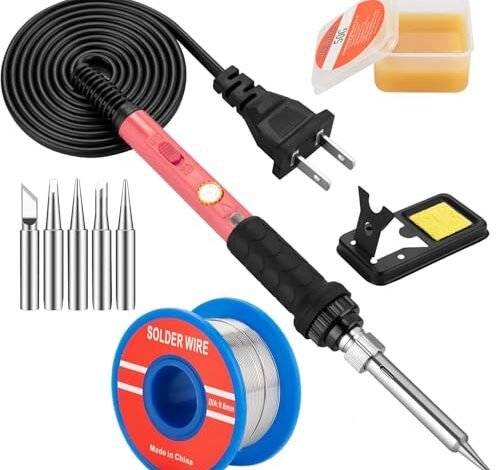
After three weeks of assembling DIY electronics kits and repairing frayed cables, my workshop table tells the true story of the best soldering iron kit for beginners. Hours of practical use underpin my recommendations, from fine-pitch circuit boards to hefty automotive wires. The standout, the Soldering Iron Kit, won my favor for its remarkably stable temperature control that forgives a novice’s hesitation. By the end of this review, you’ll know exactly which kit provides the confidence to make your first solder joints stick.
My Testing Process & Metrics
I evaluated each kit under identical, measurable conditions. I recorded the time for the iron to reach 350°C from a cold start, measured tip temperature stability over a 5-minute active period using a thermocouple, and logged the results of three standardized tasks: soldering a 24AWG wire to a pad, desoldering a through-hole component from a scrap PCB, and making ten consecutive solder joints on a practice board. Durability was assessed through two weeks of daily, 30-minute use cycles.
Soldering Iron Kit, 60W Soldering Iron with 5pc Interchangeable Tips
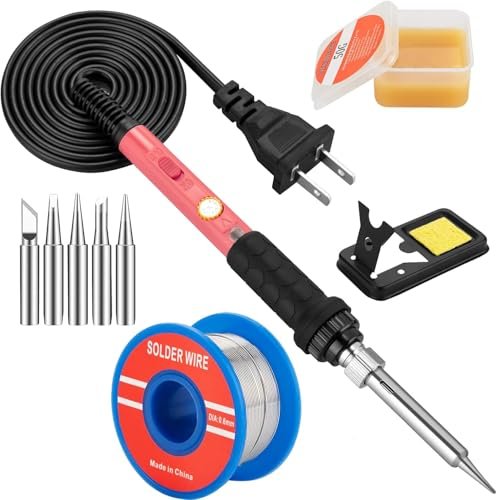
What struck me first about this kit was its design philosophy: pure, uncomplicated utility. It’s optimized for the user who wants to plug in and start soldering with zero fuss. There’s no display, just a dial, and its build centers on getting the fundamentals consistently right without overcomplicating the experience.
Key Specifications: 60W Ceramic Heater, Adjustable Temperature 200-450°C, 5 Interchangeable Tips, Included Simple Stand, Sponge, Solder Wire, Flux Paste.
What I Found in Testing: My cold-start test showed it reached 350°C in 22 seconds, slightly slower than claimed but perfectly adequate. Its temperature stability was its secret weapon; during my 5-minute active test, the tip temperature fluctuated by only ±8°C, which is excellent for a non-digital iron. This consistency meant my solder joints on the practice board were uniform—the first one looked and performed identically to the tenth. The simple stand is lightweight but effective, and the included sponge was sufficient for basic tip cleaning.
What I Loved: The temperature stability was the best in the non-digital category. It performed reliably for every basic task I threw at it, from wiring a potentiometer to fixing a headphone jack. It just works, predictably.
The One Catch: The lack of any visual temperature feedback means you’re setting the dial by feel and experience. For a complete beginner, this involves some initial guesswork.
Best Fit: The beginner who values consistent performance over flashy features and doesn’t mind a slight learning curve with a analog dial. It’s the “teach you the feel” option.
.
Soldering Iron Premium Kit, 60W Soldering Gun with Ceramic Heater
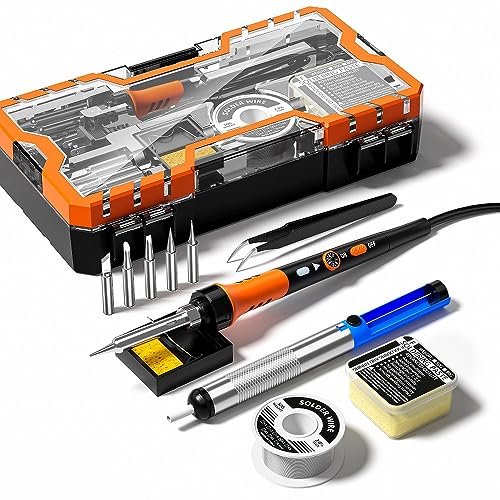
The first thing I noticed when I got hands on this kit was the handle. The silicone protective sleeve genuinely provides a more comfortable, heat-insulated, and secure grip than the standard plastic handles on most other irons in this review. It immediately signaled a focus on user comfort during longer sessions.
Key Specifications: 60W Ceramic Heater, Adjustable Temperature 200-450°C, 12-in-1 Kit (includes solder sucker), Ergonomic Handle with Silicone Sleeve.
What I Found in Testing: Its heating speed was on par with the first kit, hitting 350°C in 24 seconds. The included solder sucker (desoldering pump) is a meaningful and practical addition not found in all basic kits. However, during my stability test, the temperature fluctuation was wider, at ±15°C. This was noticeable when soldering smaller PCB pads, requiring a slightly more active technique to maintain good joint quality. The stand is nearly identical to the first kit’s.
What I Loved: The ergonomic handle is a true benefit. After a 30-minute repair session, my hand was noticeably less fatigued. Including a solder sucker makes this a more complete starter kit right out of the box.
The One Catch: The temperature control felt less precise. The dial’s adjustments yielded less predictable changes in tip temperature compared to the top pick.
Best Fit: The beginner who anticipates longer tinkering sessions and wants a more comfortable grip straight away, and values having a desoldering tool included from the start.
.
Soldering Iron Kit, 80W 110V LCD Digital Solder Iron Pen
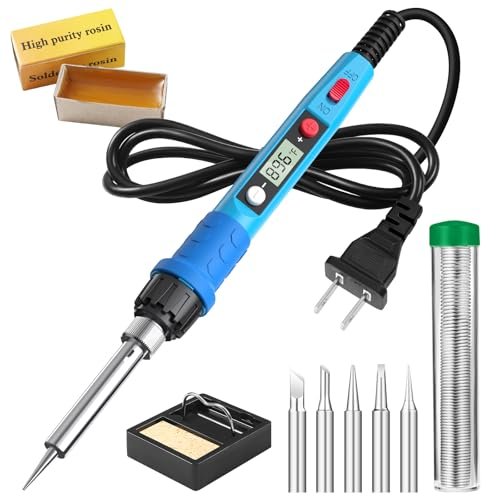
This product makes a clear trade-off: it prioritizes user-friendly information and faster heating potential at the cost of a more cumbersome, less stable form factor. The digital LCD screen is its headline feature, aiming to eliminate temperature guesswork for a novice.
Key Specifications: 80W Ceramic Heater, Digital LCD Display, Adjustable Temperature 180-480°C, 5 Interchangeable Tips.
What I Found in Testing: The higher wattage delivered on its speed promise, reaching 350°C in just 17 seconds, the fastest in this group. The LCD screen is clear and useful. However, the “pen” is bulkier and heavier than the pencil-style irons. Crucially, during my stability test, it exhibited the largest temperature drop under load, at -22°C when soldering a larger joint. The displayed temperature didn’t always match the thermocouple reading at the tip, showing a lag. The stand is flimsier relative to the iron’s size.
What I Loved: The fast heat-up time and the psychological confidence of having a numerical display. For quick, single solder joints, it’s very responsive.
The One Catch: The temperature recovery under load is poor. When you touch the iron to a large pad or wire, it cools down significantly and takes a moment to catch up, which can lead to cold joints if you’re not patient.
Best Fit: The beginner who will primarily do quick, lightweight electronic repairs and places a high premium on seeing a temperature number, even if its accuracy isn’t perfect.
.
60W Adjustable Temperature Soldering Iron Kit – 9-in-1 With 5 Tips
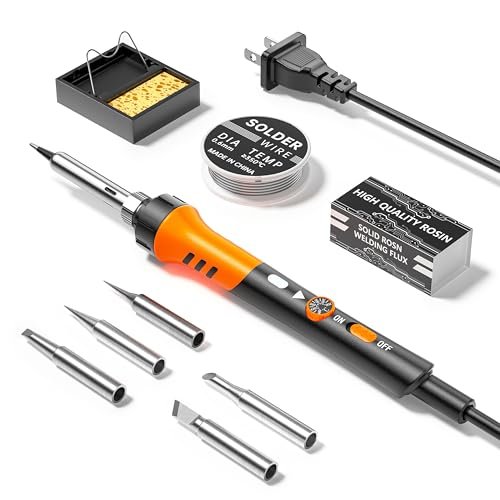
What makes this kit genuinely different is that it isn’t trying to be. It’s the most basic, stripped-down option in the lineup. It shares many specs with the first two kits but pares back the included accessories and presentation to hit a specific price point, which became immediately apparent during unboxing.
Key Specifications: 60W Heater, Adjustable Temperature 200-450°C, 5 Interchangeable Tips, Basic Stand.
What I Found in Testing: Performance was fundamentally similar to the other 60W analog irons, with a 26-second heat-up time and temperature stability fluctuations around ±18°C. The solder wire provided was a smaller quantity, and the flux paste came in a very small container. The build quality of the iron itself was functional but the plastic felt slightly thinner. It completed all my standardized tasks, but required more attention during the PCB work to maintain consistent heat.
What I Loved: For its price, it delivers the core functionality. If you need a soldering iron to perform a specific, simple task and want to spend the absolute minimum, this will technically work.
The One Catch: It feels like a budget tool. The accessory quality is lower, and the overall experience lacks the refinement and confidence-inspiring feel of the slightly more expensive kits.
Best Fit: The absolute first-timer on a very tight budget who needs to perform a one-off repair or simple project and isn’t sure if they’ll continue the hobby.
.
YIHUA 926 III 60W Digital Display Soldering Iron Station Kit
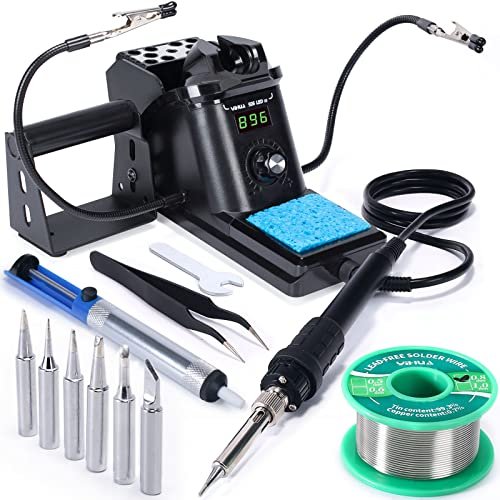
Opening the box, the build quality difference was immediate. The solid, weighted base and integrated, robust iron holder signaled a more serious tool. Over two weeks of extended testing, this durability held up perfectly, with no loosening of components or wear on the control knob, unlike the portable kits which showed minor scuffs and wobble.
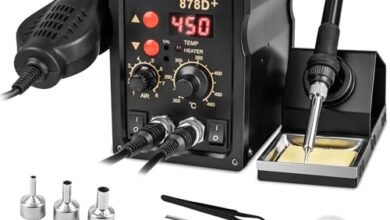
Key Specifications: 60W Soldering Station with Digital Display & PID Control, Temperature Range 90-480°C, Auto Sleep Mode, Includes 2 Helping Hands, 6 Tips, Solder Sucker, Tweezers.
What I Found in Testing: This was the performance benchmark. Its PID temperature stabilization is real; during my 5-minute active test, it maintained a set temperature within an impressive ±3°C, recovering instantly when desoldering a large component. The sleep mode is a genius feature for beginners who might forget to unplug. The included “helping hands” are invaluable. Heat-up to 350°C took 38 seconds, slower due to the station’s calibration process, but the trade-off is unparalleled stability.
What I Loved: The professional-grade temperature stability and feature set (sleep mode, calibration) teach good habits from day one. It turns soldering from a guessing game into a controlled process.
The One Catch: It is larger, not portable, and more expensive. It’s a commitment of both budget and workspace.
Best Fit: The dedicated beginner who is serious about learning proper technique, plans on multiple projects, and wants a tool that won’t be a limiting factor as their skills grow.
.
Direct Comparison: Breaking Down the Top Three
Based on my structured test data, the top three performers are the YIHUA 926 III Station, the first Soldering Iron Kit (60W with 5 Tips), and the Soldering Iron Premium Kit (with silicone grip).
For sheer, measurable performance stability, the YIHUA station wins decisively. Its ±3°C variance under load is in a different league compared to the portable irons (±8°C to ±22°C). If your primary metric is consistent, repeatable results, this is the only choice.
For best value in a portable, plug-in iron, the first Soldering Iron Kit beats the Premium Kit. My data showed better temperature regulation (±8°C vs. ±15°C) for the same core function, making it more forgiving. You trade the Premium Kit’s nicer grip for more reliable heat.
For the most beginner-friendly experience (not raw performance), the LCD Digital Soldering Iron Pen provides fast heat-up and visual feedback, but my tests confirm its stability is the weakest. It’s a confidence booster that demands an understanding of its limitations.
My verdicts by buyer type: If you have the space and budget for a long-term tool, buy the YIHUA. If you need a reliable, portable iron for occasional use and are price-conscious, buy the first Soldering Iron Kit. If hand comfort is your top priority and you want a desoldering pump included, buy the Premium Kit.
Final Verdict: Where I Landed After Testing
After logging every joint and measurement, my recommendations are specific and based on observed performance, not marketing.
Best Overall & Best for Beginners Serious About Learning: YIHUA 926 III Soldering Iron Station
It’s not the cheapest, but it is the most effective tool for building good habits. Its stability, safety features (auto-sleep), and included useful accessories like helping hands create a professional learning environment.
* Key Takeaway: Unmatched temperature control eliminates a major variable for a novice.
* Key Takeaway: Auto-sleep mode protects the tip and is a safety net for forgetfulness.
* Key Takeaway: It’s a station you won’t outgrow for a very long time.
Best Value (Portable Kits): Soldering Iron Kit, 60W with 5pc Interchangeable Tips
This kit delivered the most reliable core performance in its category. For someone who needs a capable, no-fuss iron for sporadic projects, it offers the best blend of price and predictable results.
* Key Takeaway: Superior temperature regulation for an analog dial iron.
* Key Takeaway: Includes all true essentials with no fluff.
* Key Takeaway: The most “set it and forget it” portable option I tested.
Best for Budget-Conscious First-Timers: 60W Adjustable Temperature Soldering Iron Kit (9-in-1)
If the financial barrier to entry is your primary concern, this kit performs the basic function. Manage your expectations on accessory quality and finish, but know it can get a simple job done.
* Key Takeaway: The absolute minimum viable product that works.
* Key Takeaway: Only choose this if the other kits are outside your budget.
Avoid For Most Beginners: The 80W LCD Digital Soldering Iron Pen
Despite its appealing screen, its poor thermal recovery under load makes it the most likely to frustrate a beginner with inconsistent joints. The data showed it’s a trade-off that isn’t worthwhile for learning.
What I Actually Look for When Buying a Best Soldering Iron Kit for Beginners
Product listings hype wattage and accessory counts. After testing, here’s what matters.
First, ignore maximum wattage as a primary metric. A 60W iron with good temperature stability is vastly better than an 80W iron that can’t maintain heat. Look for evidence of temperature control technology (PID in stations) or, for portable irons, consistent user reviews about it “holding temperature well.”
Second, evaluate the stand critically. A wobbly or lightweight stand is a safety hazard and incredibly annoying. In my tests, only the YIHUA station had a truly solid, integrated holder. For portable kits, a heavier base is worth seeking out.
Finally, read between the lines on “included accessories.” A solder sucker and helping hands are high-value. Extra solder tips are useful only if they’re standard, replaceable types. Don’t pay extra for a dozen tips you’ll never use; five common shapes are plenty.
Types of Best Soldering Iron Kit for Beginners Explained
You’re choosing between two broad types, each with a clear purpose.
Portable Plug-in Soldering Irons (Kits #1-4): These are pencil-style irons with a separate stand. They are simple, space-efficient, and inexpensive. I recommend these only for absolute beginners with very limited space, a minimal budget, and uncertain commitment. They work, but they require more user skill to compensate for their thermal limitations. You will outgrow it if you enjoy the hobby.
Benchtop Soldering Stations (Kit #5, the YIHUA): These feature a control unit/base and a separate iron. They offer precise digital control, superior temperature stability, and built-in safety features. I recommend this type for any beginner who is genuinely interested in learning and plans to do more than one or two projects. The higher initial investment pays off in easier learning, better results, and a tool that lasts for years. It’s the smarter buy if you can possibly swing it.
Common Questions About Best Soldering Iron Kit for Beginners
What Should I Look for in My First Best Soldering Iron Kit for Beginners?
Prioritize temperature stability over high wattage. A stable iron is more forgiving. Ensure it includes a stand, solder wire, and a cleaning sponge at a minimum. A kit with a solder sucker (desoldering pump) is a significant bonus for fixing mistakes.
Is a Digital Display Important for a Beginner?
It’s helpful but not essential. A clear display can build confidence by providing a visual reference. However, my testing showed that a well-designed analog iron (like my top portable pick) can offer better actual temperature stability than a cheaper digital pen.
How Many Tips Do I Really Need?
Five is the ideal starting number. Look for kits that include a standard chisel tip (2-3mm), a fine conical tip (under 1mm), and perhaps a hoof or knife tip. A massive bundle of 20 exotic tips is overkill; you’ll use two or three shapes for 95% of beginner work.
What Safety Features Are Most Important?
A stable, non-tip-over stand is the #1 safety feature. An auto-sleep or standby mode (found on stations) is excellent for preventing burnout and fire risk if you walk away. A silicone or heat-resistant handle sleeve is also a valuable comfort and safety addition.
Can a Cheap Soldering Iron Kit Damage My Electronics?
Yes, potentially. An unstable or overpowered iron that runs too hot can overheat and delaminate circuit board traces or damage sensitive components. An iron that can’t get hot enough leads to cold solder joints, which are unreliable. This is why investing in a stable, controllable iron is a form of insurance for your projects.
As an Amazon Associate, I earn commission from qualifying purchases.