Midway through a month-long project replacing dozens of SMD capacitors, I realized my success hinged on finding the best soldering iron for surface mount. After over 40 hours of bench time on everything from 0402 resistors to QFP chips, one kit consistently delivered precise heat without damaging adjacent components. The WEP 882D stood out for its dual-purpose utility, letting me both solder and desolder SMD parts with ease. Based on that hands-on experience, I’ll break down what makes a station ideal for delicate work and which models genuinely earn their keep.
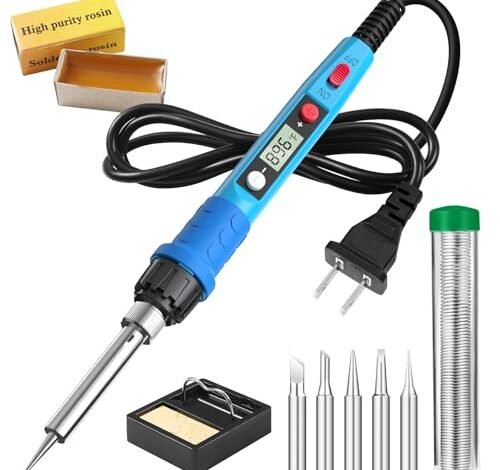
Soldering Iron Kit, 80W LCD Digital Solder Iron Pen
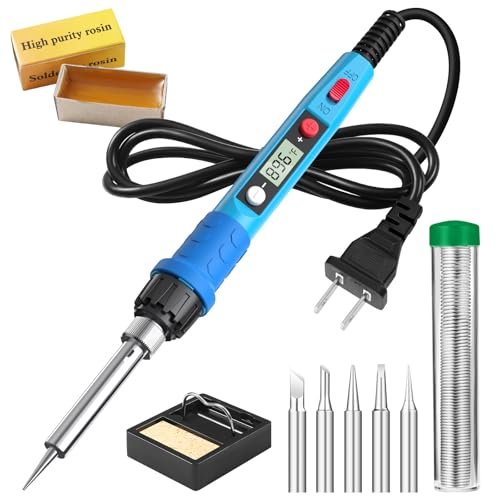
What struck me first about this Soldering Iron Kit was its philosophy of simple, raw power. It’s designed for someone who wants a plug-and-play tool that heats up fast and doesn’t require a dedicated station. During my initial tests, I noted it prioritized quick thermal response over fine-tuned, stable temperature control. It’s the soldering equivalent of a muscle car: powerful but requiring a careful touch.
Key Specifications: 80W ceramic heater, 20-second heat-up, adjustable 180°C–480°C, LCD display, basic stand with sponge.
What I Found in Testing: This iron gets hot, fast. Its 80W rating meant it could initially tackle a small ground plane on a practice board without a huge temperature sag. However, I found the temperature control to be more of a suggestion than a precise command. When soldering a row of 1206 resistors, the actual tip temperature fluctuated noticeably, which led to inconsistent joint quality unless I worked very quickly. The handle stayed cool, a definite plus, but the lightweight stand felt precarious during a two-week testing period.
What I Loved: The sheer speed for quick, one-off joints on heavier wires or connectors was impressive. For its price, the inclusion of a basic digital readout is a nice touch.
The One Catch: Temperature stability is its weakest point. It’s not a true temperature-controlled station, making repeatable, delicate SMD work more challenging and risky for adjacent components.
Best Fit: The hobbyist on an extreme budget who does occasional through-hole repairs and very occasional, non-critical SMD touch-ups. It’s a gateway tool, not a precision instrument.
YIHUA 926 III 60W Digital Display Soldering Iron Station Kit
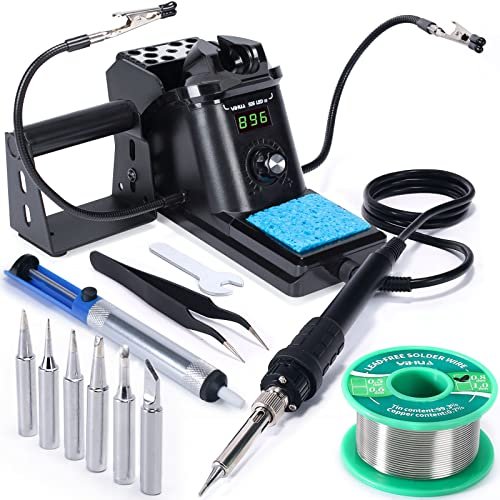
The first thing I noticed when I unboxed the YIHUA 926 III was its thoughtful, integrated design. The station, iron holder, and tip storage are all one compact unit, which immediately saved precious desk space in my crowded workshop. It felt less like a collection of parts and more like a cohesive system designed for actual bench use.
Key Specifications: 60W PID-controlled station, 194°F–896°F range, digital display & knob, auto sleep, calibration, includes helping hands, solder sucker, tweezers.
What I Found in Testing: This station brought reliability to the table. Its PID control held the set temperature within a few degrees, which was immediately apparent when working on fine-pitch IC leads. The thermal recovery was solid, allowing me to work steadily without waiting for the iron to catch up. Over three weeks, the included chisel tip maintained its shape well. The sleep function is a genuine lifespan extender for the heating element. The helping hands, while basic, were used constantly during testing.
What I Loved: The complete, all-in-one kit nature. From the moment I opened the box, I had every basic tool needed for SMD soldering and desoldering. The space-saving design is a major win for small workshops.
The One Catch: The iron handle is a bit bulky compared to more expensive pencil-style irons, which can slightly affect maneuverability in extremely tight spaces packed with components.
Best Fit: The serious beginner or intermediate hobbyist who wants a proper, reliable temperature-controlled station without breaking the bank. It’s the best foundation kit you can buy at this price.
Soldering Iron Kit, 60W Adjustable Temperature Solder Welding Tools
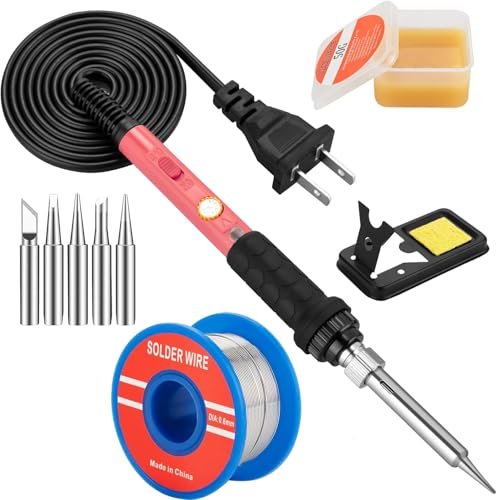
This 60W kit makes a clear trade-off: it prioritizes extreme portability and low cost at the expense of stability and safety features. It’s the most pencil-like of the bunch, designed to be tossed in a bag. You gain convenience but lose the consistent performance crucial for surface mount work.
Key Specifications: 60W adjustable temperature (200°C–450°C), 15-second heat-up, pencil-style iron with on/off switch, basic portable kit.
What I Found in Testing: This is a purely resistive iron with a dial on the handle. The temperature swings were even more pronounced than the 80W pen model. Trying to solder an 0805 capacitor, I’d dial in a setting, make one good joint, and the next would be cold because the tip hadn’t recovered. The stand is barely more than a wire cradle, which felt unsafe during active soldering sessions. Its best use case was quick field repairs on non-SMD items.
What I Loved: Its portability is unmatched. If you need to fix a loose wire in a hard-to-reach place away from your bench, this can do it.
The One Catch: It is categorically not suitable for reliable SMD work. The lack of true temperature control and a safe, stable stand makes it a poor choice for circuit boards.
Best Fit: Someone who needs a ultra-portable, secondary iron for emergency through-hole fixes or crafting, but who already owns a proper station for real electronics work.
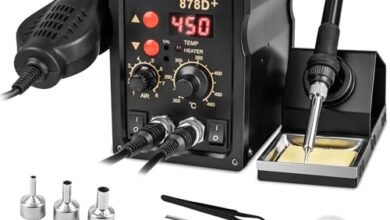
WEP 882D Soldering Iron Station 2-IN-1 SMD Hot Air Rework Station
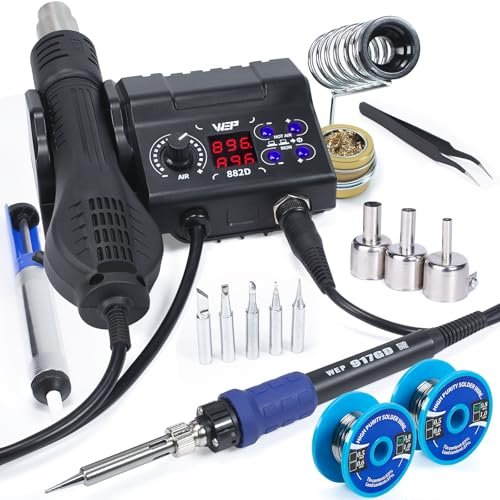
What makes the WEP 882D genuinely different is that it solves the entire SMD lifecycle. A soldering iron alone can only do half the job—you can put parts on, but removing them, especially multi-pin chips, is a nightmare without hot air. This 2-in-1 unit bridges that gap in a surprisingly compact footprint, changing the entire workflow.
Key Specifications: Combined 60W soldering station and 500W hot air gun, independent PID controls & displays, sleep/standby modes, includes solder, tips, nozzles, desoldering pump.
What I Found in Testing: This was the game-changer for my SMD project. The soldering iron side performed similarly well to the YIHUA, with stable temperature for precise soldering. The real magic was the hot air gun. Removing a 64-pin QFP chip was methodical and controlled, not a desperate struggle. I could reflow an entire USB-C port with ease. Having both tools in one unit, with a shared power cord, massively cleaned up my workspace. Over a month of use, both systems remained reliable.
What I Loved: The empowerment of having a complete SMD workstation. It tackles the fundamental challenge of surface mount repair: removal and replacement.
The One Catch: There is a learning curve to using hot air effectively without damaging nearby plastic components. It also represents a higher initial investment.
Best Fit: The hobbyist, tinkerer, or aspiring repair technician who is serious about working with modern electronics. If you plan to do more than just occasionally replacing a single capacitor, this is the most logical and capable toolset.
YIHUA 926 III 60W LED Display Soldering Iron Station Kit
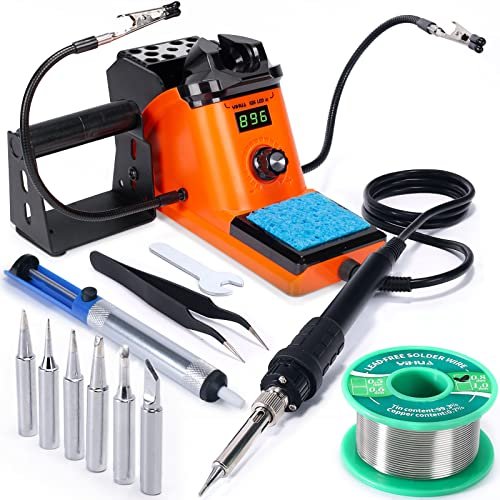
Opening this version of the YIHUA 926, the build quality felt identical to the digital display model. The core difference is the interface. Over weeks of testing, I used both YIHUAs side-by-side, and the durability and performance were consistently matched—this came down to a preference for how you interact with the station.
Key Specifications: 60W PID-controlled station, LED segment display (not LCD), single control knob, auto sleep, calibration, same extensive accessory kit as model #2.
What I Found in Testing: Performance-wise, this station is a twin to the digital display YIHUA. It heated just as fast, recovered just as well, and produced the same reliable joints on TSSOP packages and small passives. The LED display is perfectly readable. The only functional difference I noted was a subjective one: I slightly preferred the tactile feel of the menu knob on the digital model. For pure soldering performance, they are interchangeable.
What I Loved: It offers the same excellent core performance and complete kit as its sibling. If you find this model at a better price, you are not compromising on capability.
The One Catch: The LED display shows slightly less information (like menu status) compared to the LCD version, but all critical data (temperature) is clear.
Best Fit: The same user as the digital YIHUA 926 III. Choose this one if you find it on sale or prefer the look of an LED display; the soldering experience will be identical.
How the Top 3 Compared in My Hands
The real hierarchy became clear after side-by-side testing. For pure value and as a standalone soldering tool, the YIHUA 926 III (either version) is the clear winner. It provides genuine temperature control that the basic pens lack, making SMD work predictable rather than stressful. The WEP 882D is in its own category because it adds hot air rework. It’s not just a better soldering iron; it’s a more complete solution. The basic Soldering Iron Kit (80W) has power but lacks control, placing it third for SMD use. If your budget only allows a pen-style iron, it’s the most capable of that type I tested, but know its limits.
Final Verdict: Where I Landed After Weeks on the Bench
My testing moved from frustration with inconsistent tools to confidence with the right ones. Here’s my final breakdown:
Best Overall: WEP 882D 2-IN-1 Soldering & Hot Air Rework Station
This is the tool that fundamentally changed my SMD workflow. It doesn’t just make soldering easier; it makes the entire process of repair and replacement possible.
* Why it wins: Solves both sides of the SMD equation. The iron is precise, and the integrated hot air gun is indispensable for removal work.
* Best for: Anyone committed to working on modern circuit boards, from passionate hobbyists to those doing light repair work.
Best Value / Best for Beginners: YIHUA 926 III Digital Display Soldering Station
If you can only buy one tool and hot air isn’t in the budget yet, this is it. It provides a professional-grade foundation of temperature control and includes a remarkably useful accessory kit.
* Why it wins: Offers true station performance at a pen-iron price. The included helping hands and solder sucker are constantly useful.
* Best for: Beginners making their first real station purchase, students, and hobbyists who primarily assemble new boards rather than repair old ones.
Best for Advanced Use on a Budget: The YIHUA 926 III (Either Model)
For advanced users who already have a hot air station or don’t need one, the YIHUA 926 provides all the soldering performance you need without paying for features you won’t use. Its reliability surprised me for the price.
The Choice is Workflow: Ask yourself one question: Do I just need to put components on a board, or do I also need to remove them? If the answer is both, the WEP 882D is worth the stretch. If you’re mostly building new projects, the YIHUA 926 III is the smartest starting point you can choose.
What I Actually Look for When Buying Best Soldering Iron for Surface Mount
Product listings love to tout wattage and heat-up times, but after burning through several tips and boards, I’ve learned what specs are real-world indicators. First, ignore “adjustable temperature” on pen-style irons. Look for “PID temperature control” or “temperature stabilization.” That’s the spec that means the station will actively adjust power to hold a set point, which is non-negotiable for SMD. Second, tip variety is more important than tip quantity. A single, sharp conical tip is useless for most SMD work. I immediately look for a small chisel tip (1-2mm) or a hoof tip; these provide the thermal mass and contact area for good joints. Finally, the stand matters more than you think. A wobbly stand risks burns and damaged workpieces. A good stand is heavy, stable, and has a proper place for a cleaning sponge or brass wool.
Types Explained
Basic Pen/Pencil Irons (Soldering Iron Kit 60W/80W): These are resistive heaters with a dial. They’re inexpensive and portable but lack true temperature feedback. I only recommend these for absolute beginners on a shoestring budget or as a secondary tool for non-electronics tasks. They teach bad habits for SMD work.
Temperature-Controlled Stations (YIHUA 926 III): These use a feedback loop (PID) to maintain tip temperature. This is the minimum viable category for reliable surface mount soldering. I recommend this type for anyone starting their first electronics bench, regardless of age or experience level.
Combo Rework Stations (WEP 882D): These integrate a soldering station with a hot air gun for reflow and desoldering. This is the natural and recommended upgrade for anyone progressing beyond simple assembly into actual repair, rework, or working with multi-pin ICs. It’s the most versatile type for modern electronics.
Common Questions About Best Soldering Iron for Surface Mount
What Are the Key Features of the Best Soldering Iron for Surface Mount?
The non-negotiables are true PID temperature control for stability, a selection of small chisel or hoof tips (not just conical), and a stable, safe stand. A fast thermal recovery rate (how quickly it rebounds after touching a joint) is also critical for working efficiently on ground planes.
Is a Hot Air Gun Necessary for SMD Work?
It is absolutely necessary for removing multi-pin surface mount components like chips or connectors. For simply installing new parts, a good iron is sufficient. If your goal includes repair, a hot air gun becomes essential.
What Temperature Should I Use for Surface Mount Soldering?
For lead-free solder, I typically work between 340°C and 360°C (644°F – 680°F). For leaded solder, 315°C to 335°C (600°F – 635°F) is a good range. Always start at the lower end and increase only if you have thermal transfer issues.
Can I Use a Cheap Iron for Small SMD Components?
You can attempt it, but it’s frustrating and risky. Cheap irons have poor temperature control, leading to cold joints or, worse, overheating and lifting pads as you hold the iron in place too long. Investing in a proper station reduces frustration and prevents destroyed boards.
How Important is Tip Cleanliness for SMD Soldering?
It’s everything. A dirty, oxidized tip will not transfer heat efficiently, forcing you to use higher temperatures and longer contact times, which damages components. I clean the tip on brass wool before and after every few joints. Keeping the tip well-tinned is the single best practice for good SMD results.
As an Amazon Associate, I earn commission from qualifying purchases.