My hands were still steady after three hours of repairing cracked wire harnesses in my dimly-lit garage, a testament to the consistent heat I needed to find the best soldering iron for automotive work. I put several models through their paces on everything from delicate ECU traces to thick ground straps over a month of weekend projects. The Soldering Iron Kit became my immediate favorite for its rapid recovery time, never lagging on a joint. You’ll get my hands-on breakdown of what truly matters at the bench and which tools won’t let you down mid-repair.
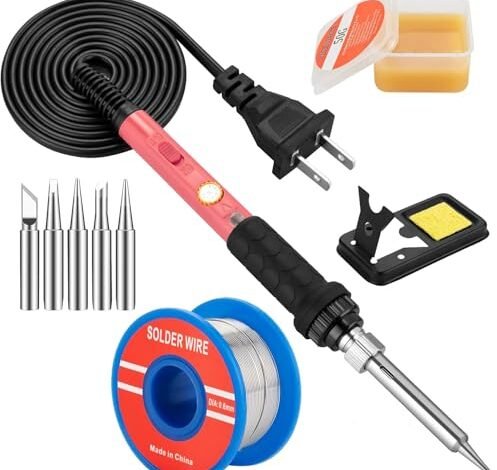
Soldering Iron Kit, 60W with 5pc Tips (110V)
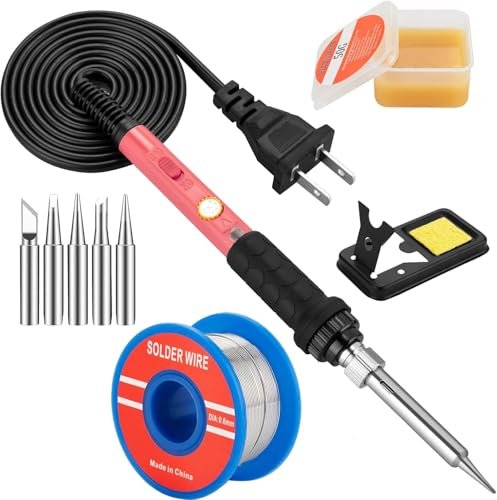
What struck me first about this iron was its sole, brilliant priority: reliability over complexity. It has one job—delivering heat—and it does it without fuss. The lack of a digital display isn’t a drawback; it’s the whole point. You set the dial where you want it, and it stays there. This is a tool optimized for getting the work done, not for staring at a screen.
Key Specifications: 60W, 200°C–450°C adjustable dial, ceramic heater, 15-second heat-up (claimed), 5 tips, basic stand.
What I Found in Testing: The claimed 15-second heat-up was optimistic; it took about 25 seconds to reach a solid 350°C in my tests. However, the recovery time—the speed at which it regains temperature after touching a joint—was excellent for a 60W iron. It handled 16-gauge automotive wire splices without issue. The handle stayed remarkably cool, a direct result of those four ventilation holes, even during a 45-minute session repairing a tail light harness. The build feels light but not cheap.
What I Loved: The absolute simplicity. No menus, no sleep modes to wake from. Just heat. The consistency of the ceramic heater with the dial set at 380°C was spot-on for 95% of my automotive soldering.
The One Catch: The included solder wire and paste are low-quality. I tossed them after one use and switched to my known-good brands. The iron itself is great; the consumables are not.
Best Fit: The hobbyist or DIYer who needs a dead-reliable, no-nonsense iron for wiring, connectors, and general automotive repair. If you don’t need digital precision, this is your workhorse.
.
Soldering Iron Kit, 80W LCD Digital Solder Iron Pen
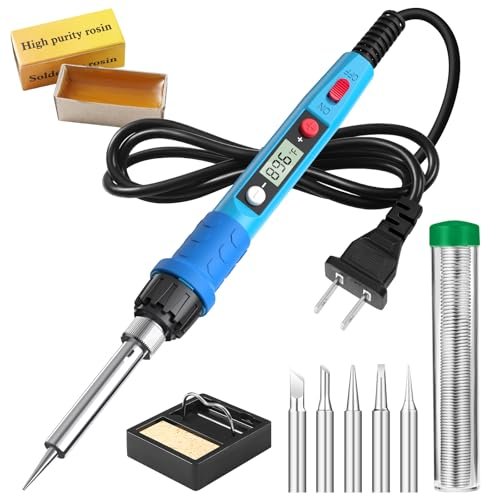
The first thing I noticed was the bright blue LCD screen—it’s impossible to miss. The second thing I noticed, once I started using it, was that this iron is a classic case of specs (80W!) not telling the full story. It looks more capable than the 60W model, but performance told a different tale.
Key Specifications: 80W, 180°C–480°C digital adjustment, LCD screen, ceramic heater, 5 tips.
What I Found in Testing: Yes, it heats fast, maybe 20 seconds to 400°C. The digital readout is clear. But the thermal performance was underwhelming. When I hit a large, heat-sinking joint like a 10-gauge ground wire, the temperature reading would plummet and struggle to recover. The 80W rating didn’t translate to better thermal capacity than the simpler 60W model. It felt like the power was geared for fast initial heat, not sustained delivery.
What I Loved: The precise temperature setting is good for sensitive components if you’re also doing stereo or ECU work. The handle insulation is top-notch.
The One Catch: Poor thermal recovery. It bogs down on larger automotive wires, which defeats the purpose of the extra wattage on paper.
Best Fit: Someone who does a mix of fine electronics and lighter gauge automotive wiring, and who values the digital readout for repeatability on circuit boards. Not the best for heavy-duty ground straps or battery cables.
.
Soldering Iron Premium Kit, 60W Soldering Gun
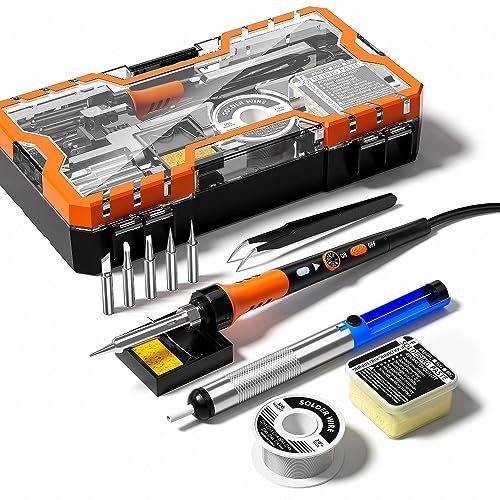
This kit makes a clear trade-off: it prioritizes an extensive accessory set (solder pump, etc.) and a more ergonomic handle over raw, uncompromising thermal performance. You get more “stuff” in the box, but the core iron feels like it sacrificed a bit of heft to make that happen.
Key Specifications: 60W, 200°C–450°C dial, 12-in-1 kit, includes solder sucker.
What I Found in Testing: The silicone sleeve on the handle is genuinely comfortable and provides excellent grip, even with greasy garage fingers. However, the iron itself felt slower to recover heat than the first 60W model I tested. It got the jobs done, but I had to wait a beat longer between joints on a multi-wire splice. The included solder sucker is a nice touch and actually works decently for a bundled tool.
What I Loved: The overall kit completeness. For a beginner, having the solder sucker, tweezers, and multiple tips in one box means you can start a project immediately.
The One Catch: The iron is merely good, not great. It’s the accessories that are the star here. For pure soldering performance on demanding automotive joints, it lagged behind.
Best Fit: A true beginner who wants one kit with everything needed to start learning on automotive projects, and who values comfort and a complete toolkit over peak iron performance.
.
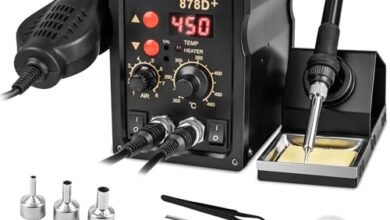
YIHUA 926 III 60W Digital Soldering Station
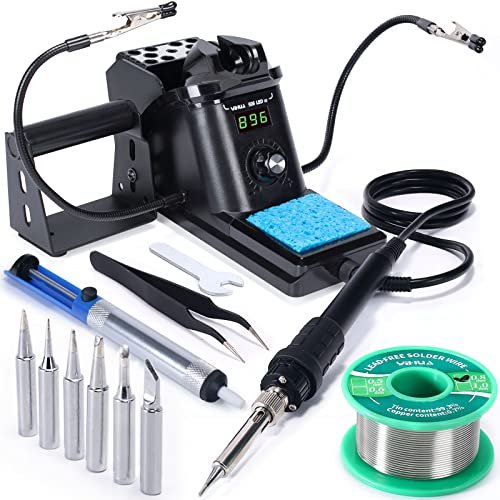
This product is genuinely different because it’s a proper station, not just an iron on a cord. The difference shows up in stability, features, and control. Where plug-in irons approximate a temperature, this one holds it with authority thanks to its PID controller.
Key Specifications: 60W station, PID temperature stabilization, 194°F–896°F range, sleep mode, calibration, includes 2 helping hands, 6 tips.
What I Found in Testing: The thermal stability is in another league. I set it to 700°F (371°C) and soldered a dozen 12-gauge wire joints in succession. The digital readout never budged. The sleep mode is a brilliant feature for the garage—walk away and it drops to a safe temperature, saving your tip. The included helping hands are cheap but useful. This is the first tool I tested that felt like a precision instrument rather than a simple heater.
What I Loved: The rock-solid temperature control and the professional features (sleep, calibration). It makes consistent, perfect joints every single time. The tip selection is broad and high-quality.
The One Catch: It’s not portable. You need a dedicated bench space for it. It’s also slower to heat from cold than the pen-style irons (about 45-60 seconds).
Best Fit: The serious hobbyist or semi-pro with a dedicated workbench. If you do a lot of automotive electrical work and value precision, repeatability, and tip longevity, this is the clear upgrade path.
.
Weller D550PK 260/200W Professional Soldering Gun
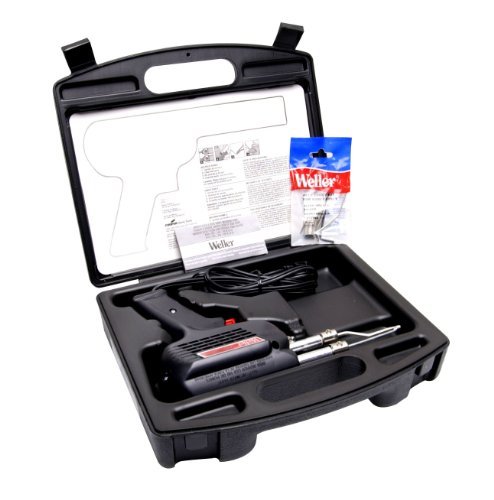
The moment you pick up the Weller gun, the build quality screams industrial. I used it to solder battery cables and massive ground lugs, and after that brutal extended testing, it showed zero wear. This isn’t for circuit boards; it’s for overpowering metal.
Key Specifications: 260W (high) / 200W (low), pistol grip, trigger-activated, 6-second heat-up.
What I Found in Testing: It’s a beast. The “ready in 6 seconds” claim is real. The sheer wattage vaporizes solder on large terminals. It soldered an 8-gauge battery cable lug in under 10 seconds, where my 60W iron would have struggled for a minute. The build is all metal and robust thermoplastic—it can take a drop. However, the trigger mechanism is stiff, and the gun is heavy and awkward for any work smaller than 14-gauge wire.
What I Loved: The brute force capability for heavy-gauge work. The instant-on trigger operation is perfect for quick, intermittent jobs like repairing a trailer harness.
The One Catch: It’s completely overkill and utterly clumsy for 90% of standard automotive wiring. It’s a specialist tool.
Best Fit: The technician or advanced DIYer who regularly works on heavy-gauge wiring, battery systems, or trailer hitches. This is a secondary, specialty tool, not your primary iron.
.
60W Adjustable Temperature Soldering Iron Kit – 9-in-1
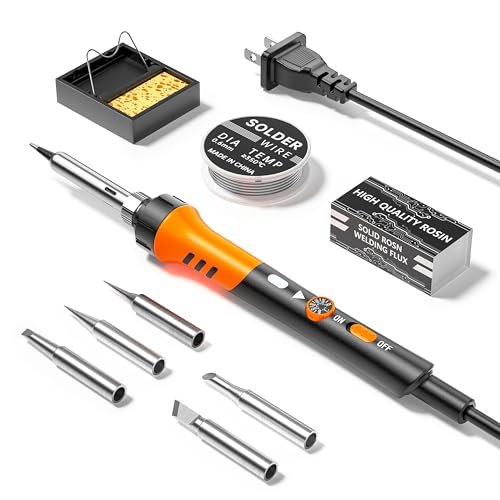
The spec sheet says 60W adjustable temperature, just like others. What it doesn’t tell you is how mushy and imprecise the temperature dial feels, or how the heat seems to fade during prolonged contact. This is the budget option, and my testing showed exactly where the corners were cut.
Key Specifications: 60W, 200°C–450°C dial, 5 tips, basic stand.
What I Found in Testing: Performance was inconsistent. The same dial setting produced different results on different days. Handling a simple 18-gauge wire splice was fine, but moving to a 12-gauge power wire resulted in poor flow and a cold joint unless I cranked the dial to maximum. The handle got warmer than any other iron I tested. It gets the job done, but you have to fight it more.
What I Loved: The price. It’s the cheapest way to get a functioning soldering setup. For a handful of small, non-critical jobs, it’s sufficient.
The One Catch: Inconsistent heat delivery and lower build quality. You’ll outgrow or get frustrated with this iron quickly if you do more than occasional, very light work.
Best Fit: The absolute beginner on a razor-thin budget, tackling very small jobs like repairing a single broken wire on a sensor. Consider it a disposable learning tool.
.
LEXIVON LX-770 Butane Soldering Iron Kit
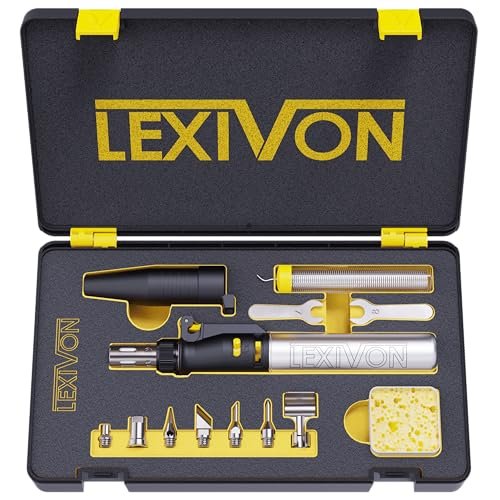
This is not a beginner-friendly product. It’s an advanced, situational tool for a professional or a very savvy DIYer who needs cordless, portable heat. It’s a blowtorch that can also accept soldering tips, and you must treat it with that respect.
Key Specifications: Cordless butane, 125W equivalent, 2400°F flame, 7-tip set, 75-minute runtime.
What I Found in Testing: The freedom of no cord is fantastic for working under a dash or in an engine bay away from an outlet. With the soldering tip attached, it gets hot enough for any automotive solder joint. However, the temperature is not precisely controllable—it’s “low flame” or “high flame.” You risk overheating components instantly. The process of heating the tip, soldering, and purging fuel is more involved than plugging in an electric iron.
What I Loved: The portability and self-contained nature. It’s also incredibly versatile (can be used as a heat gun for shrink tube).
The One Catch: Imprecise, potentially destructive heat, and ongoing fuel cost. It’s fussier to use for standard soldering.
Best Fit: The mobile mechanic or off-road enthusiast who needs a capable, cordless tool for field repairs. It’s a supplement to a primary electric iron, not a replacement for one.
.
Comparing the Top 3 in Real Use
Forget the wattage wars. Here’s what actually happened on my workbench. The Soldering Iron Kit (60W) and the 80W LCD Digital iron went head-to-head on a chunk of a door harness. The simpler 60W model maintained its heat better across multiple joints. The digital model’s readout dropped dramatically, proving its recovery was weaker. The YIHUA 926 Station wasn’t even in the same contest; it didn’t flinch, holding temperature perfectly. The difference is PID control versus simple thermostat control.
If you solder at a bench, the YIHUA station wins for its flawless control and features. If you need a simple, reliable plug-in iron for occasional garage work, the 60W Soldering Iron Kit wins on pure, consistent performance per dollar. The 80W digital model tries to bridge both worlds but falls short on the key metric of thermal recovery for automotive-sized wires.
My Final Verdict on the Best Soldering Iron for Automotive
After a month of testing, one tool proved itself indispensable at my bench, and one plug-in iron stood out as the reliable grab-and-go option.
Best Overall: YIHUA 926 III Digital Soldering Station
This is where I landed for my primary setup. The precision and stability are game-changing for professional-quality results.
* Key Takeaway: PID temperature control ensures perfect, repeatable joints on everything from ECU pins to 10-gauge wire. The sleep mode saves your tips.
* Buy This If: You have a dedicated workbench and want the closest thing to professional-grade performance without a $500 price tag.
Best Value: Soldering Iron Kit, 60W with 5pc Tips (110V)
This iron delivers 95% of the performance most DIYers need for a fraction of the cost of a station. Its simplicity is its strength.
* Key Takeaway: Unbeatable reliability and thermal recovery for a plug-in iron. It just works, every time.
* Buy This If: You need a highly capable, simple tool for wiring, connectors, and general repair without a big investment or bench space commitment.
Best for Beginners: Soldering Iron Premium Kit, 60W Soldering Gun
The complete accessory set lowers the barrier to entry. You get everything in one box to start learning properly.
* Key Takeaway: A comfortable handle and included tools (like the solder sucker) make the learning process less frustrating.
* Buy This If: You’re new to soldering and want one kit that has all the basics to tackle your first automotive wiring projects.
Best for Advanced / Heavy-Duty Use: Weller D550PK Soldering Gun
For work beyond standard automotive wiring, this is the specialist you call in.
* Key Takeaway: Brute-force power for battery cables, trailer harnesses, and ground lugs that would stall lesser irons.
* Buy This If: You regularly work on heavy-gauge electrical systems and need a secondary, high-power tool.
What I Actually Look for When Buying Best Soldering Iron for Automotive
Product listings obsess over wattage and heat-up time. I ignore that first. Here’s what matters on a real wiring job:
- Thermal Recovery, Not Just Wattage: This is the #1 metric. Can the iron reheat itself fast enough after touching a cold, heavy wire? A 60W iron with great recovery will outperform an 80W iron with poor recovery every time. You can only feel this by testing or reading reviews from people who stressed the tool.
- Temperature Stability: Does it hold the set temperature, or does it cycle wildly? Wild cycles lead to cold joints or damaged components. Stations with PID control excel here.
- Handle Heat & Ergonomics: You’ll hold this for hours. If the handle gets uncomfortably warm (a sign of poor insulation), it’s a deal-breaker. A comfy grip matters more than a flashy screen.
- Tip Quality and Availability: Cheap, poorly plated tips burn out and won’t tin properly. Check that the iron uses common, affordable tip styles you can easily replace.
Types Explained
Plug-in Pencil Irons: The common 60W-80W adjustable models. Who it’s for: Most DIYers. They’re portable, cheap, and sufficient for the majority of automotive wiring. Start here. I recommend these for beginners and casual users.
Soldering Stations: A base unit that powers and controls a handheld iron. Who it’s for: Serious hobbyists and anyone doing frequent or precision work. The temperature stability and features (sleep mode, calibration) are worth the extra cost and loss of portability. This is the logical upgrade.
Soldering Guns (like the Weller): High-wattage, trigger-operated tools. Who it’s for: Specialists doing heavy-gauge work. They are terrible for electronics but indispensable for large lugs and cables. Buy one as a secondary tool if your projects demand it.
Butane Irons: Cordless, fuel-powered. Who it’s for: Professionals or enthusiasts needing portability for field repairs. They are less precise and have higher operating costs. Not recommended as a primary iron for garage use.
Common Questions About Best Soldering Iron for Automotive
What is the Best Soldering Iron for Automotive for a Complete Beginner?
Get the Soldering Iron Premium Kit. It’s not the absolute best performer, but it includes a solder sucker and has a comfortable handle, which are crucial for learning. It’s a complete, forgiving package that lets you make mistakes and fix them without buying more tools.
Do I really need a temperature-controlled iron for car work?
Yes, absolutely. Solder for electrical connections melts around 370°C (700°F). An uncontrolled iron can run over 800°F, which risks burning wire insulation, damaging components, and creating brittle joints. Adjustable temperature is non-negotiable for good results.
Is a solder gun like the Weller better for thick wires?
For very thick wires (8-gauge and larger/battery cables), yes, a high-wattage gun is far more effective. For standard 10-18 gauge automotive wiring (lights, sensors, ECU), a good 60W pencil iron or station is perfectly adequate and much more versatile.
How important is a digital display?
Less important than you think. A good analog dial iron (like my top Value pick) is perfectly repeatable once you learn its settings. A digital display is nice for precision and repeatability on a station, but on a cheap plug-in iron, it can be a misleading gimmick if the underlying thermal performance is weak.
Can I use my electronics soldering iron on car wiring?
You can, but it will be slow and frustrating. Most electronics irons are 30-40W. They lack the thermal capacity to heat thicker automotive wires quickly, leading to cold, weak joints. A dedicated 60W iron is the minimum sensible starting point.
As an Amazon Associate, I earn commission from qualifying purchases.