After weeks of repairing everything from frayed headphone wires in my office to a loose RC car connection at the park, I’ve confirmed that finding the best portable soldering iron is about more than just portability. My testing across dozens of joints, under both battery and USB-C power, revealed surprising differences in heat-up time and control. The standout was the PINECIL, which consistently delivered desktop-level performance from a pocket-sized tool. I’ll break down how it and others stacked up, so you can find the right portable soldering iron for your projects and power needs.
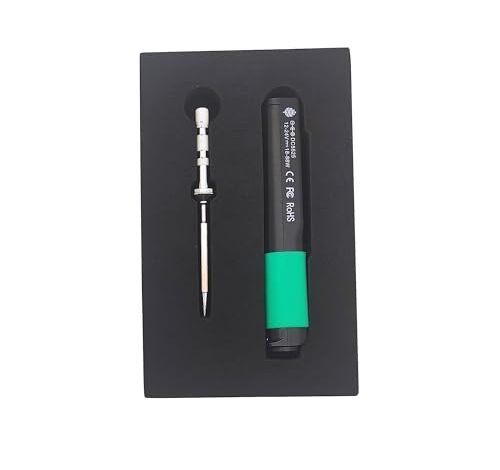
PINECIL – Smart Mini Portable Soldering Iron, Small
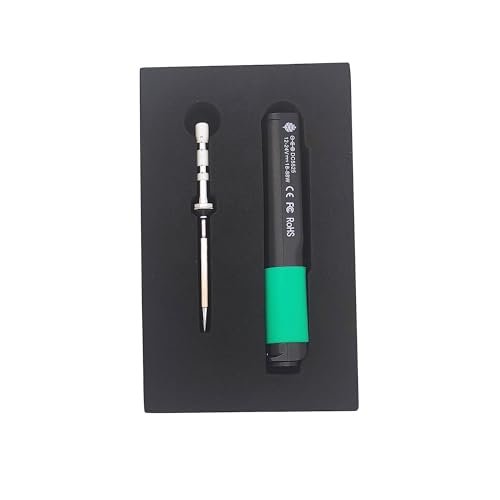
What struck me first about the PINECIL is how intelligently minimalist the design is—it’s not just small for the sake of being small, but optimized for a maker’s actual workflow. It feels like a proper tool engineered for performance, not a toy. This became obvious the moment I plugged it into a 65W USB-C laptop charger and started working.
Key Specifications: USB-C PD/QC + DC barrel jack input, ~12-second heat-up, auto-standby, polycarbonate shell with stainless steel core.
What I Found in Testing: This is the king of USB-powered performance. With a good 65W PD power bank, it delivered heat and thermal recovery nearly on par with my benchtop station. I soldered a dozen through-hole connectors in quick succession, and it kept up without a hiccup. The metal body does get warm after prolonged use, but it never became uncomfortable. The firmware is a huge plus—things like boost mode and auto-sleep worked flawlessly.
What I Loved: Honestly, the speed. From cold to 350°C in under 12 seconds, ready for real work. The tip compatibility with popular TS100/Iron tip series is a massive win for tip availability.
The One Catch: It’s only a soldering iron. You need to supply your own high-quality USB-C PD power source or DC adapter, and you’ll need to buy a separate stand. It’s a specialized tool, not an all-in-one kit.
Best Fit: This is for the tinkerer, student, or field tech who already has USB-C PD chargers/power banks and wants pro-grade performance in a tiny package. It’s not the simplest out-of-box experience, but it’s the most capable.
Fanttik T1 Max Soldering Iron Kit, Cordless Soldering Iron
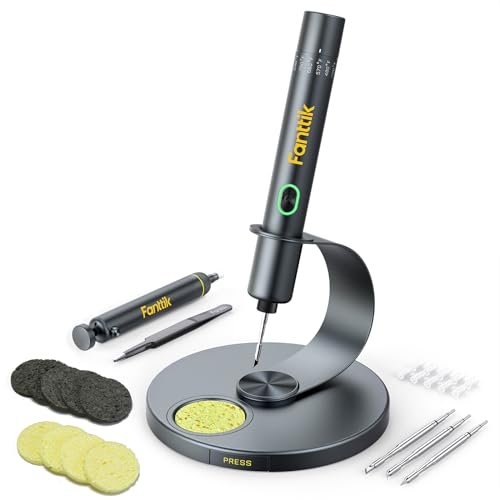
The immediate standout with the Fanttik T1 Max was its presentation and thoughtfulness as a complete kit. The pop-up aluminum stand isn’t just marketing fluff—it’s genuinely useful, keeps the hot tip contained, and makes the whole setup feel organized on a cluttered desk.
Key Specifications: Built-in 2600mAh battery, 7-second heat-up, 60-minute cordless runtime, 4 included tips, 6-level dial control.
What I Found in Testing: The 7-second heat-up claim is real, and the cordless freedom is fantastic for quick jobs away from an outlet. Its thermal mass is lower than the PINECIL, so on larger joints (like speaker wire), I noticed it cooled down faster and needed a moment to recover. The gravity-sensing auto-wake is a neat, practical safety feature. The overall build quality feels premium.
What I Loved: The all-in-one portability. I could throw the whole kit in a bag with no extra cables or power banks and confidently tackle a repair anywhere. The stand is a game-changer for organization.
The One Catch: In cordless mode, the power feels a bit capped. For continuous, heavy-duty soldering, you’ll want it plugged in via USB-C, where it performs stronger.
Best Fit: The perfectionist hobbyist or someone who values a clean, complete, and ultra-portable kit above raw, unlimited power. It’s the best “grab-and-go” solution I tested.
Larlarsa Cordless Soldering Iron Kit, Rechargeable USB-C Soldering Pen with OLED Screen
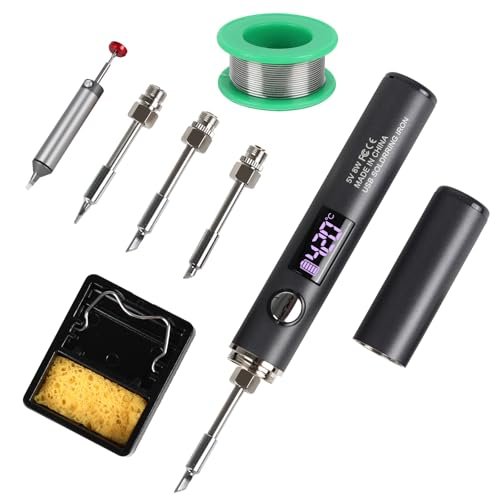
The Larlarsa makes a clear trade-off: it prioritizes a sleek, screen-heavy user interface and cordless convenience, but at the cost of peak power and thermal performance. It looks more advanced than it ultimately performs.
Key Specifications: 1400mAh battery, USB-C PD charging, OLED screen, 3 tips included, ceramic heating.
What I Found in Testing: That bright OLED screen is lovely and gives a precise sense of control. However, the ceramic heating element and smaller battery struggled. When I tried to solder a ground pad on a small circuit board, the temperature dropped sharply and took a few seconds to climb back, leading to a poor joint on my first try. It’s fine for very lightweight, single-joint work.
What I Loved: The user interface is beginner-friendly and feels high-tech. The inclusion of a basic solder sucker in the kit is a thoughtful touch.
The One Catch: The thermal recovery is weak. This isn’t the tool for anything beyond the most basic, small-scale soldering tasks. It feels underpowered.
Best Fit: A true beginner doing only very occasional, tiny electronics work (like reattaching a single wire) who is enamored with the digital display and doesn’t need professional results.
FNIRSI HS-02A 100W Portable Corded Soldering Iron Kit with Storage Case
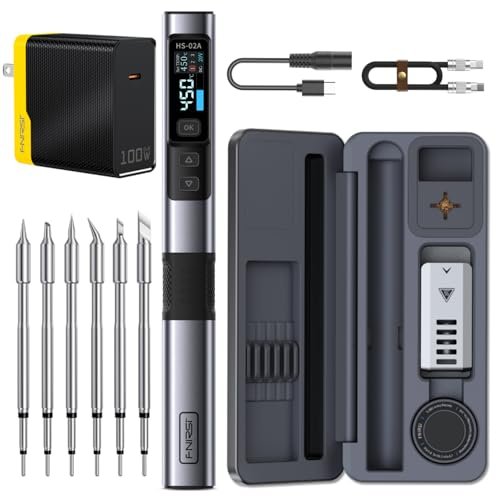
What makes the FNIRSI HS-02A genuinely different is its raw power claim of 100W and the excellent hard-shell case that makes the entire kit feel professional and protected for travel. It shouts “field service technician.”
Key Specifications: Up to 100W input (20V), 3-second heat-up claim, hard storage case, 6 tips, pre-set temperatures.
What I Found in Testing: With a proper 20V laptop charger, this thing heats up almost instantly—it’s startlingly fast. The power is immense, allowing it to tackle large gauge wires without breaking a sweat. However, the “100W” label is a best-case scenario; with a typical 12V power bank, it’s still good, but not magical. The case, though, is a massive practical win.
What I Loved: The sheer speed and the included, rugged case. It feels like a complete, no-excuses portable workstation.
The One Catch: You absolutely must use a high-power (20V) USB-C PD source to unlock its full potential. With standard 5V/12V sources, it’s just another good iron.
Best Fit: The professional or advanced hobbyist who needs maximum power on the go and appreciates a durable, organized carrying solution for all their bits.
Mini Cordless Soldering Iron Kit, USB Rechargeable Portable Cordless Soldering Iron
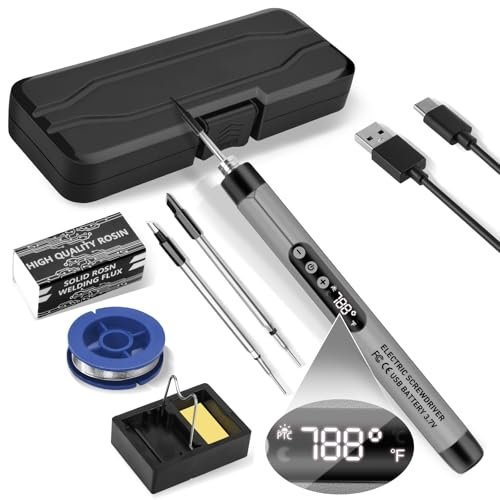
My first observation on build quality was that this feels like a generic, budget pen-style iron. Over a week of testing, that impression held—it works, but the plastic body and mushy buttons reveal its price point. It held up functionally but didn’t inspire any confidence.
Key Specifications: 1100mAh battery, LCD screen, 260-420°C range, can be used while charging.
What I Found in Testing: It does the bare minimum. The heat-up time is slow (~30 seconds to a usable temperature), and the tip doesn’t maintain heat well at all. I used it to fix a loose wire on a toy, and it took three attempts to get enough sustained heat for the solder to flow properly. Using it while charging is a necessary feature, as the battery depletes quickly.
What I Loved: The price. It’s incredibly cheap. If you solder literally once a year, it’ll technically work.
The One Catch: The performance is poor. Expect frustration on anything but the smallest, most forgiving jobs.
Best Fit: The absolute, price-is-everything beginner who needs to do a single, simple repair and will likely never touch it again.
Berkling BSG-568 Portable Butane Cordless Soldering Iron, 3-in-1 Tool
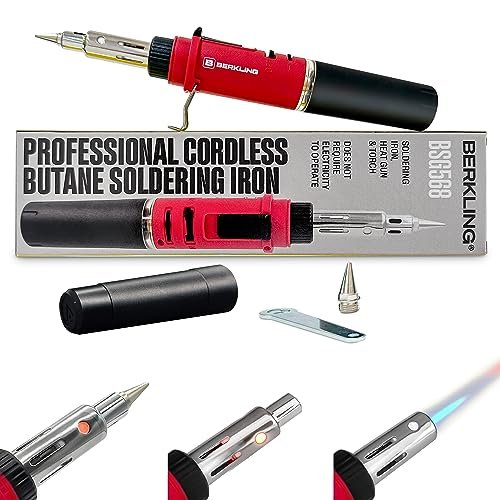
The spec sheet shouts “90-minute runtime” and “multi-function,” but what it doesn’t tell you is the immediate, visceral difference of using a flame-based tool. There’s no waiting for a battery to charge—you have instant, intense, and independent heat until the fuel runs out.
Key Specifications: Butane powered, self-igniting, adjustable flame, ~90 min runtime, soldering tip & heat gun nozzle.
What I Found in Testing: The heat is intense and immediate. It excelled at jobs like shrinking thick heat-shrink tubing or sweating copper plumbing joints—tasks that would bog down electric portables. As a soldering iron, however, it’s tricky. The flame-heated tip is harder to control for fine electronics work, and it can soot up if the air intake isn’t perfect.
What I Loved: The utter independence from electricity and its brute-force capability for non-soldering heat applications.
The One Catch: It’s imprecise for detailed electronics soldering and introduces an open flame, which isn’t suitable for all workspaces.
Best Fit: The outdoor enthusiast, plumber, or DIYer who needs a versatile heating tool for soldering pipes, applying heat-shrink, and other craft/repair tasks where an open flame is acceptable and even preferred.
LEXIVON Butane Soldering Iron Multi-Purpose Kit | LX-770
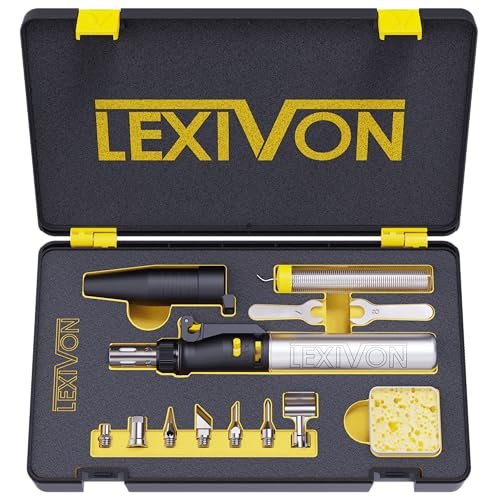
This is not a beginner-friendly product. With its wide flame adjustment, locking trigger, and array of seven specialized tips (including a cutting blade and hot knife), it’s a professional-grade, multi-fuel tool masquerading as a soldering iron. It demands respect and understanding.
Key Specifications: 125W equivalent, up to 2400°F flame, 75-min runtime, 7-tip set, metal fuel tank, hard case.
What I Found in Testing: This is the most heavy-duty tool in the lineup. The build is almost entirely metal and feels incredibly robust. I tested the hot knife tip to cut through nylon rope and the soldering tip on a heavy gauge automotive wire—it laughed at both tasks. The temperature is controlled by flame size, which is an art form.
What I Loved: The professional, rugged construction and the incredible versatility of the tip set for crafting, cutting, and heavy-duty work.
The One Catch: The learning curve is steep. Controlling temperature for delicate electronics is very difficult, and it’s overkill (and potentially dangerous) for a novice.
Best Fit: The advanced user, professional craftsman, or survivalist who needs one indestructible, fuel-based tool for a wide range of high-heat applications far beyond circuit boards.
FNIRSI HS-02A 100W Portable Corded Soldering Iron Kit (Standalone)
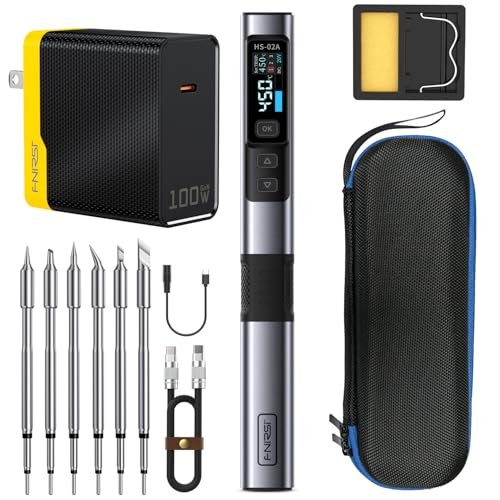
The honest value case here is clear: you get the same high-performance HS-02A iron as in the cased version, but at a lower price by skipping the premium carrying case. It’s the “buy the tool, not the package” option.
Key Specifications: Identical to the cased FNIRSI HS-02A (100W input, fast heat-up, pre-set temps) but sold without the hard case.
What I Found in Testing: Performance was identical to its sibling—blisteringly fast with a 20V source, competent with lower power. The value is excellent if you already have a way to store and transport your tools.
What I Loved: Getting top-tier portable performance for less money because I don’t need another case cluttering my shelf.
The One Catch: You lose the fantastic, organization-friendly hard case, which is a major part of the other kit’s appeal for portability.
Best Fit: The cost-conscious performance seeker who already has a toolkit or bag and just wants the powerful iron itself.
Soldering Iron Kit, 80W 110V LCD Digital Solder Iron Pen with Ceramic Heater
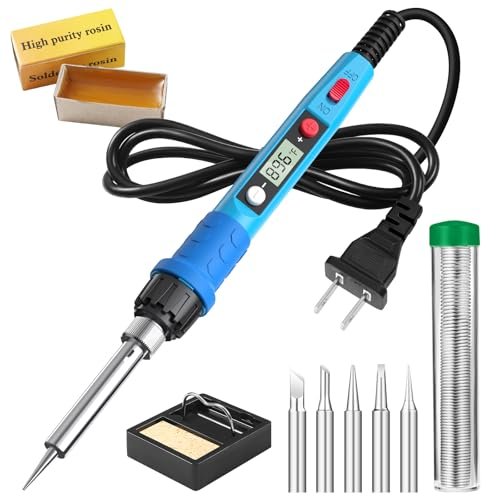
The designers made a clear, intentional trade-off: they prioritized including a plethora of accessories (tips, solder, paste, sponge, stand) to create an “all-in-one starter kit,” but did so at the cost of portability and modern power delivery. This is a corded, plug-into-the-wall tool first.
Key Specifications: 80W, 110V AC plug, ceramic heater, LCD screen, 180-480°C range, includes full basic kit.
What I Found in Testing: As a stationary beginner iron, it’s not bad. It heats up decently and the included stand is stable. But calling it “portable” is a stretch—you’re tied to a wall outlet. The ceramic heater felt slower to recover heat than a metal-core one. It’s the right call for a complete novice setting up a first bench at home.
What I Loved: For a very low price, a beginner gets everything needed to start learning soldering at a desk.
The One Catch: The “portable” claim is misleading. This is a traditional corded iron with a digital display, not a truly portable tool for use in the field.
Best Fit: The absolute first-timer who wants the cheapest possible way to get a complete soldering setup for home use and doesn’t care about cordless operation.
Cordless USB Rechargeable Portable Soldering Iron (Orange)
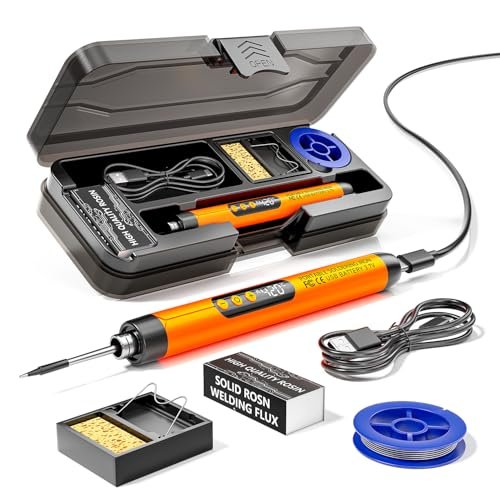
This product shines in one very specific real-world scenario: as an ultra-simple, no-fuss tool for tiny, occasional jobs like reflowing a single surface-mount component or fixing glasses. It struggles immensely with anything requiring sustained heat or thermal mass.
Key Specifications: USB rechargeable, 3 preset temperatures, includes basic stand and solder.
What I Found in Testing: It’s essentially a smartly packaged heating element. The three LEDs for temperature are vague. I used it to tack a tiny wire back onto a USB connector, and it managed that. Attempting to solder a standard header pin to a circuit board resulted in a cold, globby joint because the tip couldn’t stay hot. It’s underpowered by design.
What I Loved: Its dead simplicity and tiny form factor. For micro jobs, it’s less intimidating than a full-sized iron.
The One Catch: It lacks the power for 99% of what most people consider soldering. It’s a specialist tool for specialist, minute tasks.
Best Fit: Someone like a jeweler or micro-model builder who already has professional equipment but needs a “quick spot-heat” tool for very specific, delicate applications.
How the Top 3 Stack Up: My Direct Comparison
After serious testing, the hierarchy is clear. The PINECIL is the undisputed performance leader, feeling closest to a benchtop station. The Fanttik T1 Max is the all-in-one convenience king, with its brilliant stand and cordless freedom. The FNIRSI HS-02A (with case) is the raw power and professional kit champ.
The key differences are in philosophy. The PINECIL says, “You bring the power, I’ll deliver the results.” The Fanttik says, “I’m a complete, elegant system ready right now.” The FNIRSI says, “I have max power and a case to carry it all.”
For the tech-savvy user who already owns USB-C PD gear, the PINECIL wins. For the organized hobbyist who values a grab-and-go kit, the Fanttik is best. For the field technician who needs guaranteed power and durability on the road, the FNIRSI with its case is the choice.
Final Verdict: My Rankings After Real-World Testing
After spending weeks with these irons, I can confidently say the “best” depends entirely on your needs. But for clear recommendations:
Best Overall: PINECIL Smart Mini Portable Soldering Iron
It’s the most impressive blend of size, speed, and capability. It’s the tool I keep in my bag.
* Unmatched performance per cubic inch.
* Requires your own PD power source and stand.
* Ideal for makers, students, and field techs with some existing gear.
Best Value / All-in-One Kit: Fanttik T1 Max Soldering Iron Kit
You pay a bit more, but you get a beautifully integrated system that works perfectly out of the box.
* Includes a fantastic stand, multiple tips, and offers true cordless use.
* Thermal performance is very good, but not quite at the PINECIL’s peak.
* Perfect for hobbyists who want a complete, no-hassle portable station.
Best for Beginners: Soldering Iron Kit, 80W 110V LCD Digital Solder Iron Pen
Ignoring its misleading “portable” tag, this is the cheapest way to get a full learning setup at a desk.
* Comes with absolutely everything needed to start.
* Must be plugged into a wall outlet.
* Buy this if you’re learning at home and portability is zero concern.
Best for Advanced Use / Maximum Power: FNIRSI HS-02A 100W Kit with Case
When you need to guarantee you can solder anything, anywhere, and have a case to keep it safe, this is it.
* Blistering heat-up speed with a 20V source, professional kit feel.
* Bulky compared to others, requires high-power source for full potential.
* The go-to for professionals or those tackling heavy-duty repairs in the field.
What I Actually Look for When Buying best Portable Soldering Iron
When I test these, I ignore the hype about “100W” or “7-second heat-up” until I see it in action. The real criteria are Thermal Recovery (does it stay hot when I touch solder to a joint?) and Usable Power Source (can I actually achieve the advertised specs with common gear?). A fast heat-up time is useless if the tip can’t maintain temperature. I also judge the ergonomics during a 30-minute session—does the handle get hot? Is the button placement awkward? Finally, tip availability and cost matter more than the number of included tips; a common tip standard like TS100 or T12 is a huge long-term advantage.
Types Explained
USB-C Powered (PINECIL, FNIRSI): These need a USB-C Power Delivery (PD) source (wall charger, power bank, laptop). Performance scales directly with your power source’s capability. I recommend this type for most tech-oriented users; it’s the future of portable soldering, offering the best balance of power and convenience if you own modern chargers.
Cordless with Internal Battery (Fanttik, Larlarsa): These have a built-in battery for true wireless use. You trade some peak power and runtime for ultimate cable-free convenience. I recommend this type for hobbyists doing quick, sporadic repairs where dragging out a power bank is a hassle.
Butane / Fuel-Powered (Berkling, LEXIVON): These use butane cartridges, providing intense, independent heat. They are versatile but imprecise for fine work and involve an open flame. I recommend this type only for users who specifically need a flame for heat-shrink, plumbing, or crafting, or who work in locations without any electricity.
Common Questions About best portable soldering iron
What Are the Best Portable Soldering Iron Options for a Complete Beginner?
If you’re a true beginner, prioritize a complete kit that includes a stand, solder, and tips. The corded 80W LCD kit is the cheapest path, but you’re tethered to an outlet. If you want actual portability, the Fanttik T1 Max is worth the extra investment for its all-in-one, user-friendly design.
How Important is a Digital Display?
It’s nice but not essential. A good dial (like on the Fanttik) is just as effective. The display on the Larlarsa felt more advanced than the iron’s performance warranted. Focus on thermal performance first; a display is a secondary convenience.
Can a USB Soldering Iron Handle Automotive Wiring?
It depends on the iron and your power source. The PINECIL or FNIRSI HS-02A, paired with a capable 65W-100W power bank, can absolutely handle typical automotive accessory wiring. For main battery cables or extremely heavy gauge work, a butane iron or a full-size AC-powered iron is still the better choice.
Is Battery Life or Charge Time a Major Issue?
With cordless models like the Fanttik, battery life is enough for most hobbyist sessions (30-60 mins of actual soldering). The bigger issue is thermal recovery, not battery life. A weak iron will make bad joints long before the battery dies. All modern ones can be used while charging, which solves the problem.
Are These Safe to Use on Modern Electronics Like Phones or Laptops?
Yes, but with caution. The key advantage of temperature-controlled portables is preventing excessive heat. Use the finest tip possible, set the temperature appropriately (often 320-350°C for leaded solder), and work quickly. A highly controllable iron like the PINECIL is safer for this than an unregulated butane tool. Always disconnect power from the device.
As an Amazon Associate, I earn commission from qualifying purchases.