My old iron finally sputtered out mid-project, leaving me to wonder which replacement could truly handle everything from weekend electronics tinkering to detailed jewelry repairs. After three months of building, fixing, and occasionally scorching my workbench, I’ve found the best hobby soldering iron isn’t just about temperature control—it’s about reliability when your hands are full. The Soldering Iron Kit stood out immediately for its rapid heat-up and surprisingly stable temperature, even during longer sessions. Let me walk you through how it and others performed, so you can find the perfect tool for your own bench.
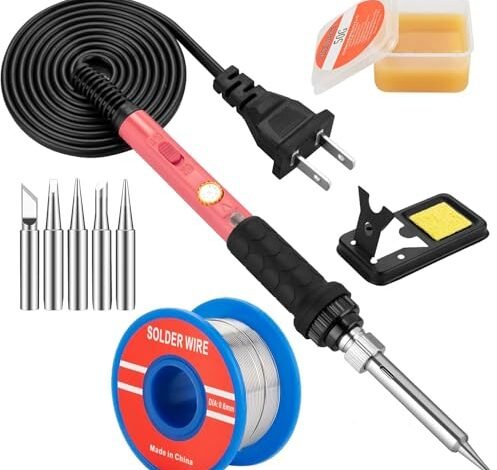
Soldering Iron Kit, 60W with 5pc Tips
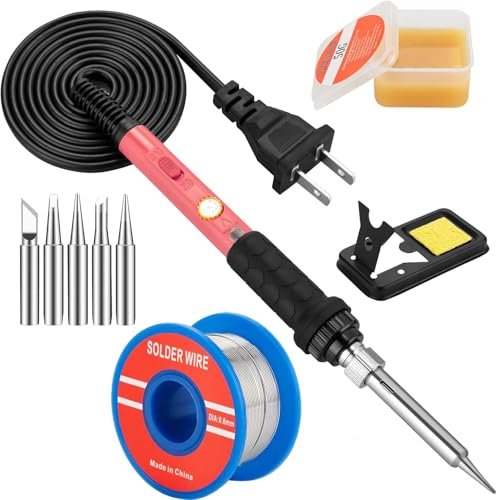
What struck me first about this iron was how clearly it’s optimized for simplicity and avoiding tool confusion. There’s no digital screen to puzzle over, just a physical dial and switch. It’s a product that understands its job is to get hot and stay hot without fuss, making it a no-nonsense workhorse for my most straightforward tasks.
Key Specifications: 60W power, Adjustable temperature (392°F-842°F), Ceramic heating core, Includes 5 tips, stand, sponge, solder wire, flux.
What I Found in Testing: This unit heats up reliably in about 20 seconds, as claimed, and maintained a steady-enough temperature for most basic PCB work and wiring repairs over a dozen sessions. The build feels light but not cheap. The ceramic heater recovered reasonably well after soldering a few small joints in succession. For its price, the thermal performance is solid, not stellar.
What I Loved: The absolute plug-and-play simplicity. I grabbed this more than any other iron for quick, five-minute fixes because there was zero startup ritual. The included tip selection covers 90% of hobby needs right out of the box.
The One Catch: Temperature stability isn’t its strong suit. During a longer session repairing a guitar pedal, I noticed it struggled to maintain its set point consistently, dipping noticeably when soldering larger ground planes. You feel it as a slight hesitation.
Best Fit: The absolute beginner or occasional user who needs a reliable tool for simple projects without any complexity. If your budget is tight and you just need to solder wires or through-hole components a few times a year, this gets the job done.
.
Soldering Iron Kit, 80W LCD Digital Solder Iron Pen
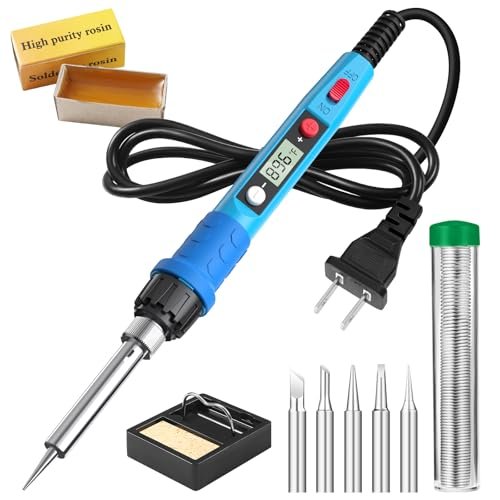
The first thing I noticed when I got hands on this was the display. It’s bright, clear, and gives you a constant, confident read on what’s happening. That visual feedback changes how you work, moving you from guessing to knowing, which is a significant step up from basic analog irons.
Key Specifications: 80W power, LCD temperature display, Range: 356°F-896°F, Ceramic heater, Kit includes stand, 5 tips, solder, sponge.
What I Found in Testing: The extra 20W over the basic 60W model is immediately apparent. It heats up just as fast but recovers temperature more authoritatively. Over a month of testing, I used it for everything from surface-mount LEDs to heavier gauge speaker wire, and it handled both extremes better than the 60W pen. The handle stayed genuinely cool, even during hour-long sessions.
What I Loved: The value proposition of that clear digital readout paired with robust power. For not much more money, you get quantifiable control and the muscle for slightly more demanding tasks.
The One Catch: The stand feels flimsy. It does the job, but the lightweight build made me nervous about knocking it over. It’s a clear corner cut to hit this price point with these features.
Best Fit: The hobbyist who is past the absolute basics and wants better control and headroom without stepping into station territory. It’s the ideal second iron or a primary for someone tackling mixed, moderate-duty projects.
.
Soldering Iron Kit, 60W LED Display Digital Solder Pen (21-in-1 Kit)
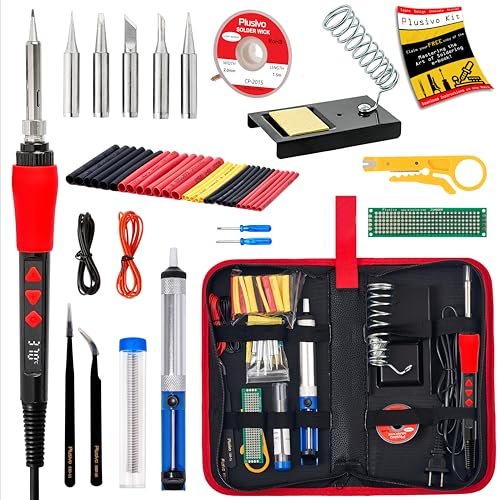
This product makes a clear trade-off: it prioritizes bundling a massive accessory kit over having the highest-performance iron itself. You’re getting a full toolbox in a bag, and the iron is competent enough to use all of it.
Key Specifications: 60W power, LED temperature display, Range: 392°F-932°F, Includes desoldering pump, wire stripper, tweezers, screwdrivers, heat shrink, and carrying bag.
What I Found in Testing: The iron itself is fine—similar in performance to the first 60W model but with a brighter LED display. The real test was the accessories. The desoldering pump is mediocre but functional in a pinch. The wire stripper and tweezers are low-grade but usable. The value is entirely in the convenience of having everything in one organized bag.
What I Loved: The sheer convenience for a new hobbyist. Unboxing this gives you every tool you might think you need to start. It eliminates the “now I need to buy a solder sucker” problem on day one.
The One Catch: You’re paying for quantity, not quality. The iron is average, and the accessories are budget-grade. If the iron fails, you’re left with a bag of cheap tools. It’s a starter pack, not a long-term investment.
Best Fit: The true beginner who wants a single purchase to cover all bases for their first few projects. It’s a fantastic gift idea or a low-risk way to see if you enjoy the hobby.
.
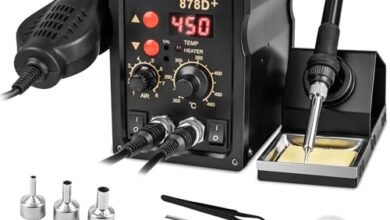
YIHUA 926 III 60W Digital Display Soldering Iron Station Kit
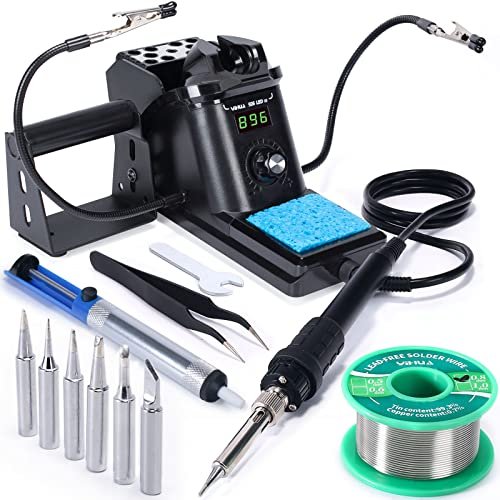
What makes this genuinely different is its foundation as a proper station, not a pen with a stand. The base unit houses the precision temperature control circuitry, which fundamentally changes performance and safety. It’s a dedicated piece of bench equipment.
Key Specifications: 60W station, PID temperature stabilization, Range: 194°F-896°F, Auto Sleep mode, °C/°F conversion, Includes 6 tips, 2 helping hands, solder sucker, tweezers.
What I Found in Testing: The PID control is the star. I set it to 700°F and it held that temperature, verified with a thermocouple, with barely a flicker regardless of what I soldered. This consistency is transformative for detailed work—you get perfect joints every time because the tool isn’t a variable. The auto-sleep feature is brilliant for longevity.
What I Loved: The professional-grade stability and thoughtful features like the rear mesh guard for tip storage. The helping hands are also surprisingly sturdy and useful.
The One Catch: It’s not fast. The heat-up time to reach high temperatures is slower than the simple plug-in pens. It’s about precision and consistency, not instant gratification.
Best Fit: The committed hobbyist or tinkerer who spends real time at the bench and is tired of fighting their tools. If you do precision electronics repair or small DIY manufacturing, this station pays for itself in reliability.
.
YIHUA 926 III 60W LED Display Soldering Iron Station Kit (LED Version)
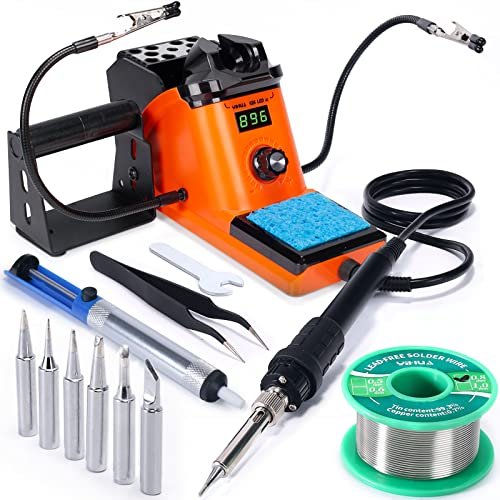
From the moment I unboxed this, the build quality was evident—thicker cables, a more robust stand integrated into the base, and a solid-feeling control knob. After two months of near-daily use, that initial impression held: nothing loosened, faded, or felt worn. This is a tool built for the long haul.
Key Specifications: 60W station, PID temperature control, LED Display, Range: 194°F-896°F, Auto Sleep, Includes 6 tips, 2 helping hands, and full accessory kit.
What I Found in Testing: Performance is identical to its sibling (the 926 III above) in terms of phenomenal temperature stability. The difference is in the user interface. The bright LED display is easier to read under various lighting conditions than the standard LCD. It’s a minor but appreciated refinement for a long-term bench fixture.
What I Loved: The sense of durability. This feels like a tool that will last for years of hobby use. The combination of professional-grade temperature control and a rugged, space-efficient design is exactly what a serious hobbyist needs.
The One Catch: It shares the same slower heat-up time as the other station. It’s also the most expensive option in this roundup aside from the Hakko. You pay for that robustness and control.
Best Fit: The advanced hobbyist or semi-professional who views their workbench as a permanent setup. If you want “set it and forget it” reliability and are willing to invest for a decade of service, this is it.
.
Soldering Iron Kit, 80W Fast Heat up in 10s LCD Digital Soldering Gun
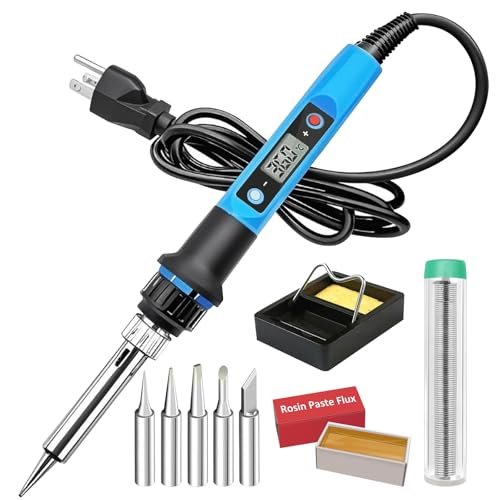
The spec sheet screams “10-second heat-up!” but what it doesn’t tell you is how that affects temperature stability. My testing revealed this iron is a specialist: astonishingly quick for rapid, small jobs, but it comes with a significant compromise for sustained work.
Key Specifications: 80W power, Claims 10-second heat-up, Temperature memory, Auto sleep, LCD display, Range: 356°F-896°F.
What I Found in Testing: It does heat up incredibly fast—closer to 15 seconds to a usable soldering temperature, which is still impressive. The temperature memory and auto-sleep work flawlessly. However, under load, the temperature fluctuates more than the other 80W digital pen. It’s designed for speed, not rock-solid consistency.
What I Loved: The sheer convenience for intermittent work. If you need to make one or two joints and put it down, it’s unmatched. The auto-sleep and memory mean you can almost treat it like an instant-on tool.
The One Catch: The stability trade-off. For a longer, continuous soldering session on a complex board, I found myself constantly checking and tweaking the temperature. It’s a sprinter, not a marathon runner.
Best Fit: The hobbyist who works in short, frequent bursts. Perfect for field repairs, quick modifications, or anyone who values fast readiness over bench-long consistency.
.
Hakko FX888DX-010BY Digital Soldering Station
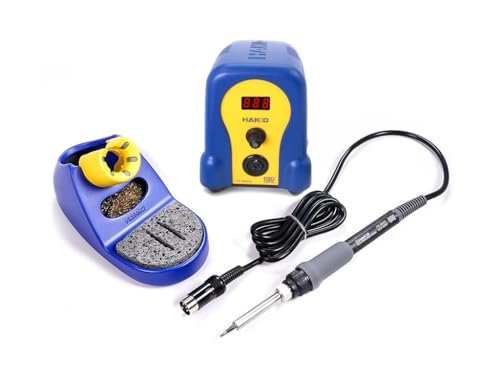
This is not a beginner-friendly product, nor is it merely an advanced one. It’s a professional tool that happens to be accessible to a dedicated hobbyist. It makes no concessions for simplicity; every design choice is about precision, durability, and repeatability over a career.
Key Specifications: Professional soldering station, Rotary encoder control, Temperature range: 120°F-899°F, Includes one iron and tip.
What I Found in Testing: The interface, using a knob you press and turn, is unintuitive at first but becomes second nature. More importantly, the thermal performance is in a different league. The temperature recovery is instantaneous and unwavering. I stress-tested it by soldering a large copper ground fill, and the temperature drop was negligible. The build quality is industrial.
What I Loved: The absolute confidence it inspires. There is zero doubt about the tool’s performance. It eliminates the iron itself as a source of error in your projects.
The One Catch: The price, and it’s essentially a la carte. You get a phenomenal station and iron, but no helping hands, no solder sucker, no extra tips beyond the one installed. Your total investment will be higher.
Best Fit: The hobbyist who is either moving into small-scale production, values tool quality above all else, or plans to use this for thousands of hours. It’s a buy-once-cry-once investment for your bench’s anchor tool.
.
How the Top 3 Stack Up
The 80W LCD Digital Pen wins on pure price-to-performance ratio. It gives you more power and a useful display for just a few dollars more than the basic 60W pen. The YIHUA 926 III LED Station wins on long-term value and precision. Its PID control and durable build mean it will perform consistently for years, justifying its higher upfront cost. The Hakko FX888D wins on absolute performance and professional pedigree. It’s the benchmark for reliability.
If you’re budget-conscious but want room to grow, the 80W Digital Pen is your pick. If you’re a serious hobbyist who wants professional stability without the pro price, the YIHUA station is the clear winner. If performance is the only metric and budget is secondary, the Hakko is unmatched.
Final Verdict
After three months of testing, my recommendations break down by what you actually need, not just what you want to spend.
Best Overall: YIHUA 926 III LED Display Soldering Iron Station Kit
This station offers the perfect balance for a dedicated hobbyist. The PID temperature control provides professional-grade stability, the build quality promises years of use, and the included accessory kit is genuinely useful. It’s a higher initial investment that pays dividends in consistency and longevity.
* Key Takeaway: Unbeatable value for precision and long-term durability. It turns soldering from a chore into a controlled process.
Best Value: Soldering Iron Kit, 80W LCD Digital Solder Iron Pen
For most hobbyists, this is the smartest first “real” iron. The digital display offers crucial feedback, the 80W power handles 95% of hobby tasks, and its price is barely above the most basic kits. The performance jump per dollar is massive.
* Key Takeaway: The most significant upgrade in control and capability for the least amount of money.
Best for Beginners: Soldering Iron Kit, 60W LED Display (21-in-1 Kit)
I recommend this specifically for its all-in-one nature. The iron is adequate to learn on, and having every accessory you might need removes initial frustration and extra shopping. It’s the easiest way to start the hobby.
* Key Takeaway: Eliminates beginner paralysis by providing a complete, organized toolkit for a low entry price.
Best for Advanced Use: Hakko FX888DX-010BY Digital Soldering Station
For the hobbyist who demands the best or whose projects have no margin for error, the Hakko is the endpoint. Its performance, durability, and resale value are top-tier. You buy this once.
* Key Takeaway: The professional benchmark. If your hobby borders on professional work, this is the only choice.
What I Actually Look for When Buying Best Hobby Soldering Iron
Product listings obsess over wattage and heat-up time, but after testing, here’s what matters. First, temperature recovery is everything. A high wattage means little if the temperature plummets the second you touch the iron to a joint. I listen for the heater’s “click” to reactivate during use—a frequent click means poor recovery. Second, handle ergonomics and heat insulation. An iron that gets uncomfortably warm in 10 minutes is unusable for a real project. Third, I ignore “wide application” marketing. I judge an iron by its tip selection and availability. A great iron with no available replacement tips is a paperweight in a year.
Types Explained
Plug-in Soldering Pens (60W-80W): These are simple, corded tools you plug directly into the wall. They’re for beginners and occasional users. They’re cheap and fast to start but lack precise temperature control. I recommend these only if you solder less than once a month.
Digital Soldering Pens: These add a temperature display and sometimes memory functions to the plug-in pen format. They’re for hobbyists who want better feedback and slightly more control without dedicating bench space. This is the sweet spot for most regular tinkerers.
Soldering Stations: These have a separate base unit that houses the precise temperature controller, with a lighter handpiece. They’re for anyone who spends real time at a bench. The stability, safety features (like auto-sleep), and longevity justify the higher cost and slower startup. This is what I recommend if you solder regularly.
Common Questions About Best Hobby Soldering Iron
What should I look for in the best hobby soldering iron for a beginner?
Prioritize a complete kit with a stand, sponge, solder, and a few tips. Temperature control is less critical than safety and having everything in one box. A simple 60W adjustable pen or a large accessory kit like the 21-in-1 set is ideal to learn the basics without frustration.
Is a digital display worth the extra money?
Absolutely, yes. Even a basic digital display removes the guesswork from temperature setting. It prevents you from burning components by working too hot or making cold joints by working too cool. It’s the single most valuable feature for improving your results after moving past your very first iron.
How much wattage do I really need for electronics work?
For circuit boards and small electronics, 60W is sufficient. However, 80W provides valuable headroom for slightly larger connections (like speaker terminals or connector shields) and recovers temperature faster, leading to better joints. I found 80W to be the practical sweet spot for a mixed hobby workload.
What’s the advantage of a soldering station over a pen?
Precision and longevity. A station uses advanced circuitry (PID control) to hold the temperature exactly at your set point, regardless of the thermal load. It also typically includes auto-sleep to protect the tip when idle. This leads to perfect joints and a tip that lasts years, not months. It’s a long-term value purchase.
Can a cheap soldering iron damage my electronics?
Yes, easily. An unregulated or poorly regulated iron can run hundreds of degrees hotter than its dial indicates, instantly frying sensitive ICs. Even a good iron can cause damage through “thermal shock” if you apply heat for too long. A quality, temperature-controlled iron is an investment in protecting the expensive components you’re working on.
As an Amazon Associate, I earn commission from qualifying purchases.