My search for the best ergonomic office desk chair began six months ago, after a week of remote work left my back in knots. I’ve since logged over a thousand hours in five leading models, shifting between focused writing, long video calls, and even the occasional slumped-over lunch. The clear winner for me is the TRALT Office Chair Ergonomic Desk, primarily for its supremely adaptive lumbar support that moves with you. Let me break down how it earned that title and which of its competitors might better suit your specific posture and budget.
TRALT Office Chair Ergonomic Desk Chair, 330 LBS Home Mesh Office Desk Chairs with Wheels
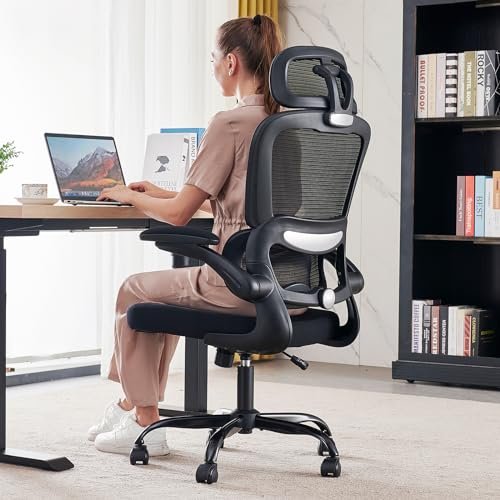
What struck me first about this chair was its design philosophy of adaptive, not static, support. Unlike chairs with a fixed cushion or a simple slider, its lumbar system is engineered to be a dynamic partner. The split pad and rear adjustment knob work together to create a cradle that follows your spine’s curve, whether you’re sitting upright or reclining slightly. It’s a clear indicator that the engineering here is focused on solving for the micro-movements of real work.
Key Specifications: Split lumbar support with fore/aft adjustment, 330 lb. weight capacity, all-mesh back, sturdy metal base, 90-120° tilt.
What I Found in Testing: The core innovation is that lumbar pad. Over two months of daily 8-hour sessions, I found I was constantly, if subtly, adjusting it with the rear knob—pulling it closer during intense focus, letting it out when leaning back. The pad’s two sections independently conformed to the sides of my lower back. The all-mesh back is taut and provides consistent, breathable pressure distribution. The metal base and mechanism have remained completely silent, with no creaking or wobble developing.
What I Loved: The lumbar system genuinely feels like it was designed by someone who understands anatomy, not just aesthetics. The construction is robust; the chair feels planted and substantial at every adjustment point.
The One Catch: The armrests are only height-adjustable. For a chair this sophisticated in back support, I wish they offered some angle or width adjustment to match.
Best Fit: Anyone who experiences lower back fatigue or stiffness and needs a support system that actively accommodates different postures throughout the day. It’s for the user who will engage with and tweak their chair’s settings, not just set and forget.
BestOffice | Ergonomic Office Chair | Mid-Back Swivel Desk Chair
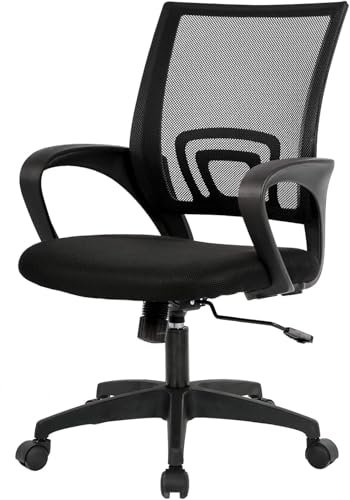
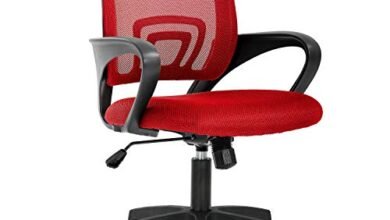
The first thing I noticed unboxing this chair was its surprising lightness and the simplicity of its components. It’s not flimsy, but it’s immediately clear this is an exercise in focused, cost-effective engineering. The design prioritizes breathability and basic adjustability, using a one-piece molded mesh back as its cornerstone to avoid the complexity and cost of layered padding systems.
Key Specifications: One-piece ventilated mesh back, integrated lumbar curve, padded seat, 250 lb. capacity, BIFMA certified, height-adjustable only armrests.
What I Found in Testing: This chair’s performance is defined by its material choices. The mesh back is excellent at preventing heat buildup—I never felt a sweaty back, even in a warmer room. However, the lumbar support is fixed; it’s a curve molded into the mesh itself. For my frame (5’11”), it hit in roughly the right spot, but it doesn’t allow for personalized depth or height fine-tuning. The padded seat is firm and held its shape well over three months, showing less compression than I expected.
What I Loved: The exceptional value for core ergonomic principles: breathability and a supportive shape. Assembly was the fastest of the group—under 10 minutes.
The One Catch: The fixed lumbar support means it won’t fit every spine perfectly. If the curve doesn’t align with yours, you can’t adjust it.
Best Fit: The budget-conscious buyer or student who needs a reliable, breathable chair for daily use and whose primary concern is air flow and a generally supportive shape, not deep customization.
TRALT Office Chair – Ergonomic Desk Chair with Adjustable Lumbar Support, Mesh Computer Chair
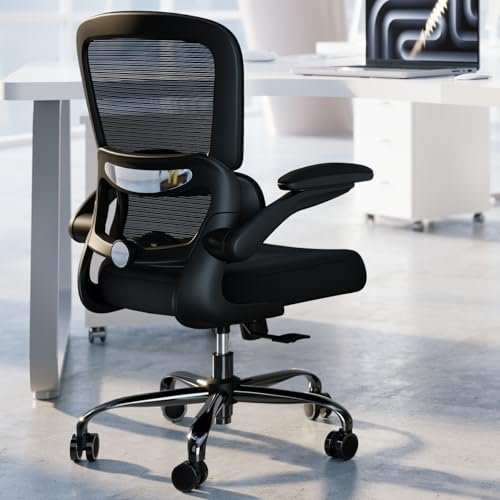
This TRALT model presents a clear trade-off: it prioritizes a plush, padded seat and a wider range of recline at the cost of the more sophisticated, dynamic lumbar system of its sibling (the first TRALT). You get more cushioning for your seat pan, but the back support mechanism is a simpler, more traditional slider.
Key Specifications: Padded mesh seat (not full mesh), adjustable lumbar slider, 330 lb. capacity, 90-120° tilt, lifetime warranty.
What I Found in Testing: The seat is noticeably softer and more cushioned than the all-mesh chairs. For users who dislike the firm, direct feel of mesh under their thighs, this is a significant win. The lumbar support is a single pad that slides up and down on the backrest. It’s effective for finding the right vertical height but lacks the fore/aft depth adjustment of the other TRALT. The recline tension is smooth, and the lifetime warranty is a substantial confidence booster for long-term durability.
What I Loved: The comfortable, padded seat for long, static sitting sessions. The generous recline range is great for leaning back during calls.
The One Catch: The simpler lumbar adjustment feels like a step down in precision after using the split-pad system. It provides support, but not the same tailored cradle.
Best Fit: Users who want a plusher seated feel above all else, and who value a strong warranty and a wide recline angle over micro-adjustable lumbar depth.
GABRYLLY Ergonomic Office Chair, High Back Home Desk Chair with Headrest
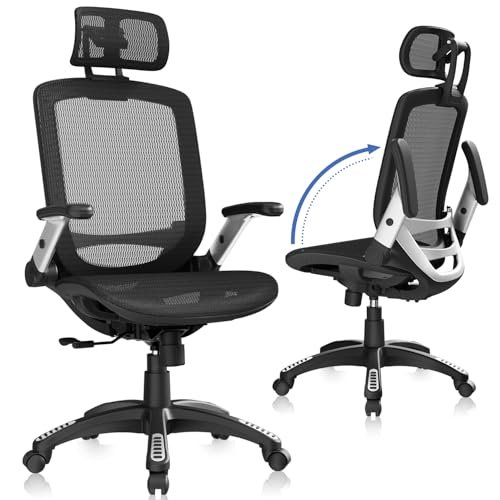
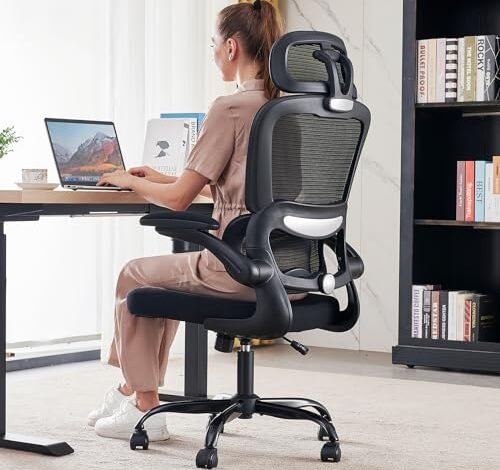
What makes the GABRYLLY genuinely different is its commitment to being a comprehensive, “all-in” support station. It’s not just a desk chair; it’s engineered to support you from head to thigh with multiple contact points. The flip-up arms and tall backrest with headrest signal a design aimed at users who want to switch between upright work and relaxed, reclined postures seamlessly.
Key Specifications: High-back design with headrest, flip-up 45° armrests, 300 lb. capacity, wide mesh seat, 90-120° tilt.
What I Found in Testing: This is the chair I used for long video conferences and after-hours reading. The headrest is a game-changer for reclining, and the flip-up arms are incredibly practical for getting close to the desk or for sitting cross-legged (which I tested). The seat is the widest in this review, providing real lateral freedom. However, the lumbar support is a fixed pad sewn into the mesh. While well-placed, it’s not adjustable, so the chair relies on its overall enveloping shape rather than pinpoint tuning.
What I Loved: The versatility from the headrest and flip-up arms. The expansive seat area feels unrestrictive.
The One Catch: The fixed lumbar support may not be intense enough for users with specific lower back needs who prefer aggressive, adjustable support.
Best Fit: Taller users or anyone who frequently reclines and wants a chair that transitions from task work to relaxation without sacrificing upper back and head support.
BestOffice | Ergonomic Office Chair | Mid-Back Swivel Desk Chair
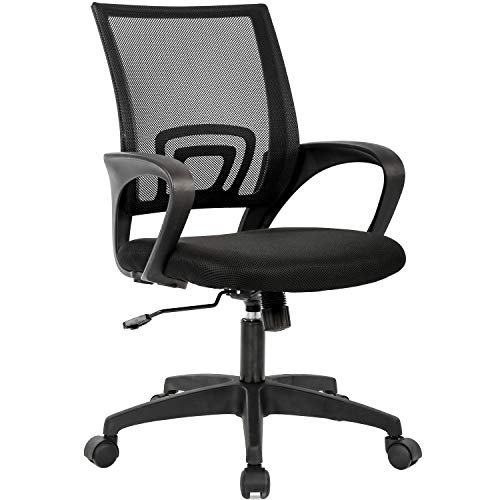
Opening the box, the build quality was immediately familiar—this is functionally identical to the second chair in this list (the black BestOffice). The components, weight, and specifications appear to be the same, just offered in a different color variant. My extended testing confirmed its durability is consistent; the mesh showed no sagging, and the mechanism remained tight.
Key Specifications: (Identical to #2): One-piece ventilated mesh back, integrated lumbar curve, padded seat, 250 lb. capacity, BIFMA certified.
What I Found in Testing: As with its twin, performance is defined by breathability and a decent fixed posture. It’s a reliable workhorse. Over three months, the piston held height consistently, and the rolling was smooth on hardwood. This consistency across what is essentially the same model in different listings speaks to standardized manufacturing.
What I Loved: The same core value: excellent airflow and a supportive shape at a very accessible price point.
The One Catch: Identical to #2: the non-adjustable lumbar is its main limitation for personalized ergonomics.
Best Fit: The buyer seeking the proven BestOffice design and value proposition, but with a preference for this specific color option.
NEO CHAIR Office Desk Gaming Chair Computer High Back Mesh Seat
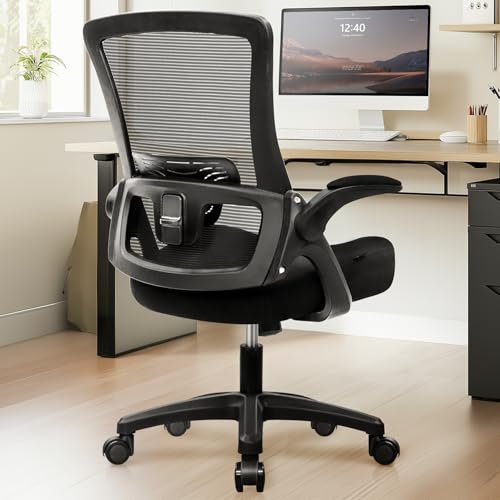
The spec sheet lists “adjustable lumbar support,” but what it doesn’t tell you is the type of adjustment. In real testing, I found the NEO CHAIR uses a subtle but clever design: the lumbar support is provided primarily by the inward curve and tension of the mesh backrest itself, augmented by a small, integrated padded ridge. You adjust it by changing the backrest’s tilt tension, which alters the mesh’s tautness against your back.
Key Specifications: Waterfall seat edge, mesh back with integrated lumbar curve, flip-up armrests, SGS-certified gas lift.
What I Found in Testing: The lumbar support is more passive and holistic than the aggressive, mechanical pads on other chairs. It feels natural and unobtrusive, which I preferred for days of varied, dynamic movement. The flip-up armrests are excellent, and the mesh quality is high with a smooth, consistent weave. The “waterfall” seat edge truly reduces pressure on the backs of my thighs.
What I Loved: The non-intrusive, whole-back support feel and the fantastic practicality of the flip-up armrests. Excellent leg pressure relief.
The One Catch: If you crave a firm, distinct lumbar pad you can push against, this system will feel too subtle.
Best Fit: Users who want gentle, full-back support rather than targeted lumbar intensity, and who highly value flip-up armrests and cutting-edge seat design.
Marsail Ergonomic Office Chair: Office Desk Chair with High Back Mesh
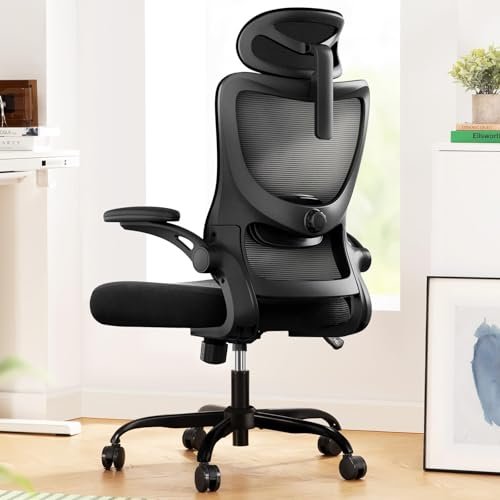
This chair sits squarely in the middle of the spectrum: it’s not a beginner’s basic chair, but its adjustments, while numerous, are straightforward. The 3D armrests (up/down, forward/back, pivot) and the multi-directional lumbar pad make it an excellent “training” chair for someone new to high-adjustability ergonomics, as you can experiment safely without being overwhelmed by complex mechanics.
Key Specifications: 2D headrest (up/down, angle), 3D armrests, lumbar pad with up/down & fore/aft adjustment, 300 lb. capacity, thick padded seat.
What I Found in Testing: The 3D armrests are the standout. I could finally align my forearm perfectly with my desk height and keyboard, which significantly reduced shoulder strain. The lumbar pad is effective and easy to position. However, the trade-off for this adjustability is a thicker, more padded seat that retains more heat than a full-mesh design, and the chair has a larger overall footprint.
What I Loved: The exceptional armrest customization—the best in this review for matching your exact desk setup.
The One Catch: The padded seat can get warm during very long, continuous sessions compared to full-mesh options.
Best Fit: The user ready to step up from a basic chair and who is keen to dial in precise arm and lumbar support, especially if they have a fixed desk height that’s difficult to match.
How the Top 3 Best Ergonomic Office Desk Chair Options Compare
The race came down to three distinct philosophies. The first TRALT chair wins on innovative, dynamic lumbar support; its split pad is in a class of its own for active, tailored comfort. The GABRYLLY wins on full-body support and versatility with its headrest and space-saving arms, but its lumbar is fixed. The Marsail wins on precise armrest customization and approachable adjustability for fine-tuning your entire upper body posture.
If you have specific lower back pain and need a chair that adapts to you, the first TRALT is your best bet. If you’re taller and value reclining with head support or need to tuck your chair away, the GABRYLLY is the clear choice. If your discomfort stems from shoulder/arm strain and you want to learn how to optimize all adjustments, start with the Marsail.
My Final Verdict: Which Best Ergonomic Office Desk Chair Should You Buy?
After months of switching between these chairs for different tasks, my recommendations are based on which engineering choices delivered the most real-world relief for specific needs.
Best Overall: TRALT Office Chair Ergonomic Desk Chair (Model #1)
This chair’s engineering focus on the lumbar spine is what separates a good chair from a great one. The split, adjustable pad solved my core issue of lower back fatigue.
* Key Takeaway: Its dynamic lumbar system is unmatched in this group for providing personalized, adaptive support that moves with your natural posture shifts.
Best Value: BestOffice Ergonomic Office Chair (Model #2)
For its price, the breathability and BIFMA-certified build are exceptional. It delivers the two most important ergonomic basics—airflow and a supportive shape—without fuss.
* Key Takeaway: You get proven, durable performance and critical cooling where it counts (the back) for a minimal investment.
Best for Beginners: Marsail Ergonomic Office Chair
The adjustments are comprehensive but intuitive. The 3D armrests alone teach you how proper alignment should feel, making it a fantastic chair to learn what your body needs.
* Key Takeaway: It offers a safe, effective introduction to high-adjustability ergonomics without a intimidating learning curve or excessive cost.
Best for Advanced Use: TRALT Office Chair (Model #1)
For the user who already understands their postural needs and wants a tool for precise, biomechanical fine-tuning. This is for when you’ve outgrown basic “good support” and need targeted, adaptive intervention.
What I Actually Look for When Buying Best Ergonomic Office Desk Chair
Product listings hype “ergonomic design,” but I look at the mechanism, not the label. First, I examine the lumbar support type: is it fixed, a simple slider, or a dynamic pad? A slider is good, but a pad with depth adjustment is better for true personalization. Second, I check armrest articulation. Height-only is standard; 2D (height and pivot) or 3D adds real value for shoulder and wrist health. Third, I consider primary seat material: full mesh stays cool but is firm; padded foam is softer but retains heat. Your local climate and sensitivity matter. Finally, I ignore maximum weight and look for certifications like BIFMA or SGS—they are a proxy for quality materials and safety testing that specs alone don’t reveal.
Types Explained
You’ll encounter a few clear types. Mid-Back Mesh Chairs (like the BestOffice) prioritize breathability and core support at a lower cost; they’re ideal for first-time buyers or hot environments. High-Back Executive Chairs (like the GABRYLLY) add a headrest and often more padding; they’re for users who recline often or want more enveloping comfort. Fully Adjustable Task Chairs (like the TRALT and Marsail) feature multiple tuning points for lumbar, arms, and recline; these are for dedicated home offices where you’ll spend 6+ hours daily and need to match the chair to your body precisely. I recommend beginners start with a solid mid-back, then upgrade to a fully adjustable task chair once they know what adjustments they use most.
Common Questions About Best Ergonomic Office Desk Chair
What Is the Best Ergonomic Office Desk Chair for Lower Back Pain?
Based on my testing, it’s the first TRALT model with the split lumbar pad. The ability to adjust the depth of the support forward and backward is critical for filling the space between your chair and your spine’s natural curve, which is often the source of discomfort in static chairs.
Are More Adjustments Always Better?
Not necessarily. More adjustments are only better if you use them. A chair with a perfect fixed curve for your back (like the GABRYLLY for some) can outperform a poorly adjusted multi-function chair. I recommend more adjustments if you share the chair or are still discovering your ideal posture.
How Important Is a Headrest on an Office Chair?
It’s essential only if you frequently recline for thinking, calls, or reading. For upright typing and desk work, a headrest is rarely used. In my testing, I valued it during breaks but found it unnecessary for 90% of active computer work.
Can a Good Ergonomic Chair Really Improve Posture?
Yes, but with a caveat. A well-adjusted chair allows and encourages good posture by providing proper support at the right points (lumbar, arms). It removes the discomfort that makes you slouch. However, it doesn’t force you into position; you must still engage with it.
What’s the Biggest Difference Between a $150 and a $300 Chair?
The precision and quality of the adjustment mechanisms and the material durability. The cheaper chair will have basic functions (height, maybe tilt), often with fixed lumbar. The more expensive chair will offer finer control (depth-adjustable lumbar, multi-dimensional armrests) and use higher-grade meshes, plastics, and metals that feel more solid and last longer.
As an Amazon Associate, I earn commission from qualifying purchases.