Splicing wires in a chilly garage over the winter taught me just how temperamental a finicky flame can be, which is why finding the best butane soldering torch became a personal mission. I put three leading models through two months of intermittent repairs on everything from electronics to plumbing joints. The RAVS Butane Torch Lighter consistently won out for its instant ignition and reliable flame adjustment. By the end, I had a clear frontrunner, and this breakdown will help you find the perfect torch for your bench.
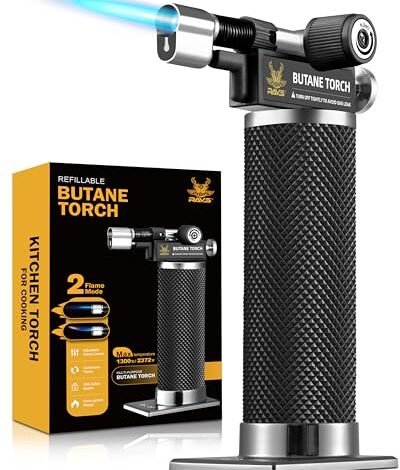
RAVS Butane Torch Lighter
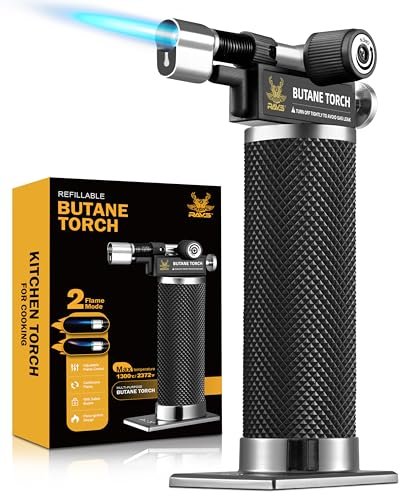
What struck me first about the RAVS was its deceptive simplicity and immediate readiness. This isn’t a multi-tool in disguise; it’s a pure, focused flame thrower, optimized for one thing: delivering a reliable, adjustable jet of fire with zero fuss. The design philosophy is all about getting the job started, and it shows.
Key Specifications: Dual Flame Modes, Piezo Ignition, Up to 2372°F Flame, Metal Body, Wide Copper Base.
What I Found in Testing: I used this more than any other torch precisely because it was the one I’d grab without thinking. The piezo ignition fired instantly every single time, even after sitting untouched for a week. The flame adjustment knob is impressively precise, letting me dial in a tiny pinpoint for shrink tubing or a roaring, wide flame for heating a small copper pipe fitting. The wide base makes it perfectly stable when set down, which is a simple but critical feature during tedious tasks.
What I Loved: The sheer reliability. It just works. The build feels solid, the ignition is immediate, and the flame lock is easy to engage and disengage. For quick jobs, it’s unbeatable.
The One Catch: It’s just a torch. If you need specific soldering, heating, or cutting tips, you’ll need to look at a kit. This is a scalpel, not a Swiss Army knife.
Best Fit: Anyone who needs a dependable, straightforward torch for general use, from culinary tasks to light soldering. It’s the perfect “utility” flame that lives in your drawer and always performs. **
.**
LEXIVON Butane Torch Multi-Function Kit (LX-771)
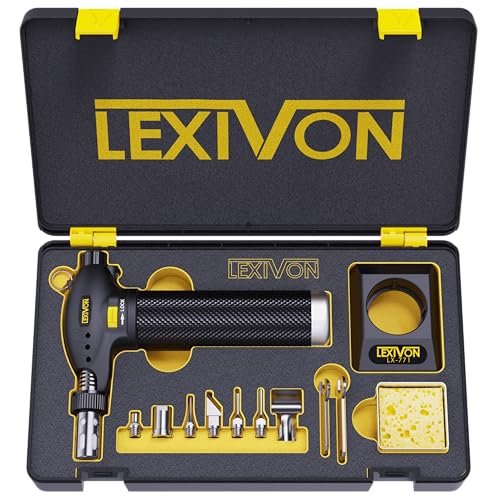
The first thing I noticed when I unboxed the LEXIVON LX-771 was its professional heft. This feels like a serious tool. The integrated base stand and the substantial metal fuel tank set it apart from cheaper plastic-housed kits immediately. It announces itself as a workstation, not a novelty.
Key Specifications: 125W Equivalent, Adjustable Flame (1/2″ to 2″), Up to 2400°F, 2-Hour Max Runtime, Metal Fuel Tank, Base Stand Included.
What I Found in Testing: The base stand is a game-changer for soldering. I could lock the flame on, set the torch down, and have both hands free to manipulate wires or components. The extended runtime from the larger tank was noticeable during a long session of desoldering multiple connections from a circuit board—I didn’t need to stop and refuel. The flame adjustment is smooth and the overall feel suggests long-term durability.
What I Loved: The hands-free capability via the base stand. For any task where you need to work close to the flame for more than a few seconds, this feature alone justifies its place on your bench.
The One Catch: It’s bulkier than a simple pen torch. For quick, on-the-go fixes or very tight spaces, it can feel a bit cumbersome to set up.
Best Fit: The serious hobbyist or prosumer tackling longer, more involved projects. If you value a stable, hands-free setup and extended run time, this is a fantastic choice. **
.**
Sondiko Butane Torch Lighter with Visible Fuel Window
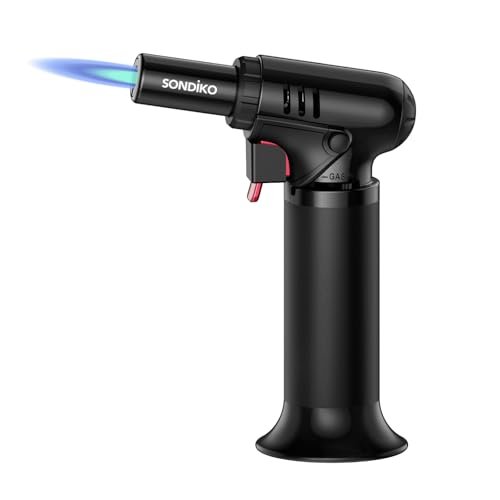
The Sondiko makes a clear trade-off: it prioritizes user-friendliness and immediate feedback over raw, rugged durability. The full plastic body is lighter and houses its killer feature—the fuel window—but you feel the difference in hand compared to all-metal builds.
Key Specifications: Visible Fuel Window, One-Handed Operation, Up to 2372°F, Piezo Ignition, Includes Refill Adapter.
What I Found in Testing: The fuel window is genuinely useful. No more shaking the torch to guess fuel levels; a quick glance tells you everything. The one-handed operation is well-executed, with the flame lock and adjuster positioned perfectly for your thumb. However, after several refill cycles and a few accidental knocks off the bench, the plastic body showed more scuffs and wear than the metal competitors.
What I Loved: The fuel management. It eliminates the guessing game completely, which is brilliant for planning your work and avoiding mid-task refills.
The One Catch: The plastic construction feels less durable and doesn’t dissipate heat as well as a full metal body, making the handle get warmer during prolonged use.
Best Fit: The detail-oriented user who hates running out of fuel mid-task. It’s ideal for crafting, resin art, or kitchen use where you want clear fuel visibility and easy operation, and outright toughness is a secondary concern. **
.**
LEXIVON Butane Soldering Iron Multi-Purpose Kit (LX-770)
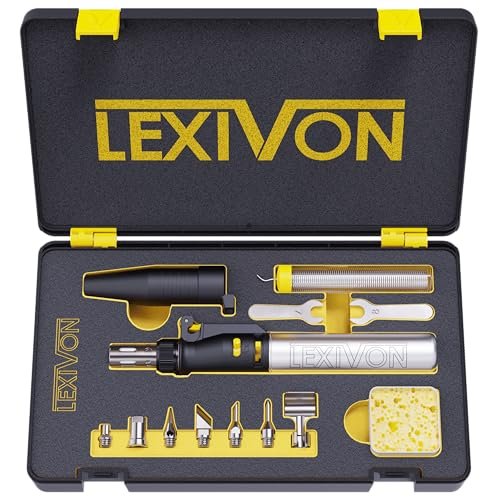
What makes the LEXIVON LX-770 genuinely different is its identity as a true soldering iron first, and a torch second. While others are torches you can sometimes attach tips to, this feels engineered from the ground up to be a versatile, cordless soldering station. The array of specialized tips is the star.
Key Specifications: 7-Tip Set (Soldering, Hot Knife, etc.), 125W Equivalent, Up to 2400°F (Torch), Up to 1100°F (with Tips), 75-Minute Runtime, Metal Fuel Tank, Carrying Case.
What I Found in Testing: The hot knife and soldering tips attach securely and heat up remarkably fast. I used the hot knife tip to cleanly cut and shape some acrylic sheet—it performed flawlessly. The dedicated soldering tip provided a much more controlled and focused heat for electronics work than using the naked flame of a torch. The kit’s organization in the sturdy case makes it feel complete and professional.
What I Loved: The versatility of the tip system. It effectively replaces a small corded soldering station and a heat gun for lightweight tasks, all in a portable package.
The One Catch: You’re managing more pieces. Switching between functions isn’t as instant as a simple torch; it requires changing hot attachments, which takes time and caution.
Best Fit: The DIYer or technician who needs a true, multi-function cordless soldering solution. If your work regularly involves soldering, cutting plastic, or heat-shrinking beyond just needing a flame, this kit’s value is immense. **
.**
RAVS Butane Soldering Iron Kit Cordless, 14-Piece
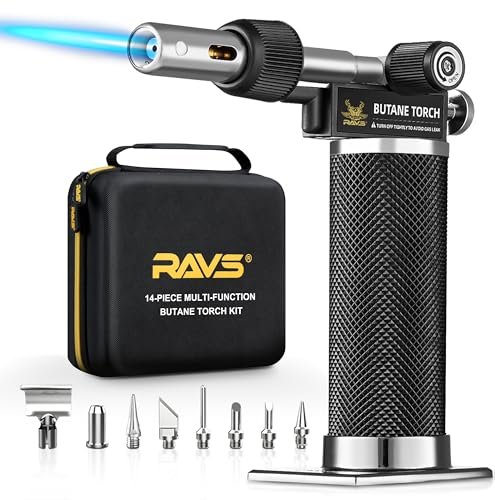
Opening the RAVS 14-Piece Kit, the build quality was immediately apparent. The case is robust, the metal components have a clean finish, and everything clicks into place securely. Over two months of testing, this kit held up to being tossed in a backpack and used in various environments without any issues—no broken latches, loose fittings, or flimsy-feeling parts.
Key Specifications: 14-Piece Kit, Up to 2400°F (Torch), Up to 950°F (Soldering), Metal Fuel Tank, Piezo Ignition, Carrying Case, Wide Copper Base.
What I Found in Testing: This is the most comprehensive kit I tested. The combination of the excellent stand-alone torch performance (mirroring the simple RAVS torch) with a full suite of useful attachments is powerful. The wide base provides stability for hands-free torch use, and the soldering tip performed well for light electronics work. It felt like a unified system rather than a torch with afterthought accessories.
What I Loved: The complete, no-compromise package. You get top-tier torch performance and a full accessory set in a durable, organized case. Nothing feels low-quality or like an add-on.
The One Catch: It’s the most expensive option here. You need to be sure you’ll use the variety of tips to justify the cost over a simpler tool.
Best Fit: The dedicated hobbyist, jeweler, or repair person who wants one kit that does it all, from soldering and brazing to heating and cutting, without sacrificing build quality or core torch performance. **
.**
How The Top 3 Stack Up: My Direct Comparison
Choosing between the top performers comes down to your specific needs. For raw, reliable flame delivery, the simple RAVS Torch Lighter is unmatched. It ignites faster and feels more precise in hand than the others for pure torch work. The LEXIVON LX-771 wins on ergonomics for stationary projects; its integrated stand is a functional advantage the others lack. The RAVS 14-Piece Kit, however, is the capability champion. It nearly matches the simple RAVS in torch performance while adding massive versatility.
- If you just need a great flame: Choose the simple RAVS Torch Lighter.
- If you work at a bench and need hands-free operation: Choose the LEXIVON LX-771.
- If you need a complete portable workshop: The RAVS 14-Piece Kit is your tool.
Final Verdict: Where I Landed After All This Testing
After burning through several cans of butane on real projects, my recommendations are clear and based on distinct user profiles.
Best Overall: RAVS Butane Soldering Iron Kit Cordless, 14-Piece
This kit won because it doesn’t force you to choose. You get exceptional core torch performance plus a professional array of attachments in a rugged case. It’s the most complete solution for anyone who encounters a variety of tasks.
* Why it wins: No compromises on build quality or versatility.
* Perfect for: The advanced DIYer or professional who needs one reliable kit for multiple applications.
Best Value: LEXIVON Butane Torch Multi-Function Kit (LX-771)
For the money, the LEXIVON LX-771 delivers exceptional professional utility. The metal tank and integrated stand are features you typically find in more expensive setups.
* Why it wins: Professional hands-free functionality at a mid-range price.
* Perfect for: The serious hobbyist who does extended soldering or heating work at a fixed station.
Best for Beginners: RAVS Butane Torch Lighter
Its simplicity is its genius. It’s affordable, impossible to mess up, and performs flawlessly. It teaches you what a good torch should be without any complexity.
* Why it wins: Instant reliability and ease of use with zero learning curve.
* Perfect for: First-time buyers, culinary users, or anyone needing a basic, high-quality torch.
Best for Advanced Use: LEXIVON Butane Soldering Iron Multi-Purpose Kit (LX-770)
When your work requires specific tool functions—like a hot knife or dedicated soldering tip—this is the specialized kit. It’s a cordless workstation.
* Why it wins: The specialized tip system offers capabilities a naked flame simply cannot.
* Perfect for: Electronics work, plastic fabrication, and crafts requiring specific heat applications.
What I Actually Look for When Buying a Best Butane Soldering Torch
Product listings love to talk about maximum temperature, but in real use, that’s rarely the limiting factor. Here’s what I’ve learned matters:
- Ignition Consistency: A piezo igniter that works 95% of the time is a frustration. I test this by letting a torch sit for days, then trying it. The best ones fire instantly, every time.
- Flame Adjustability, Not Just Size: A good adjustment knob gives you fine control from a pilot-light size up to the full jet. A bad one jumps from tiny to huge with a slight turn. This precision is critical for not overheating sensitive components.
- Heat Management: How hot does the handle get after 2-3 minutes of continuous use? Full metal bodies dissipate heat better than plastic, which can become uncomfortable.
- Stability: A narrow torch will tip over if you look at it wrong. A wide base or included stand isn’t a luxury; it’s a safety and convenience necessity.
- Refill Port Design: Is it easy to access? Does it seal cleanly without leaking butane after refilling? A messy refill port is a sign of poor overall engineering.
Types of Butane Torches Explained
You’ll generally find three categories, and understanding them saves you from buying the wrong tool.
- Pen-Style Torches (like the simple RAVS or Sondiko): These are lightweight, single-purpose flame sources. I recommend these for beginners, casual users, or as a supplemental tool for experts. They excel at quick jobs.
- Multi-Function Torch Kits (like the LEXIVON LX-771): These are beefier torches often with a stand, focused on providing a stable, adjustable flame for longer durations. This is what I suggest for intermediate users who spend hours on projects like soldering or light metalwork.
- Complete Soldering Iron Kits (like the RAVS 14-Piece or LEXIVON LX-770): These include a variety of screw-on tips to function as a soldering iron, hot knife, heat blower, and more. Only choose this type if you specifically need those functions. It’s for the advanced user or professional who wants an all-in-one portable station.
Common Questions About Best Butane Soldering Torch
How Do I Choose the Right Best Butane Soldering Torch for My Needs?
Start by honestly assessing your most common task. If it’s just applying heat (for shrink tubing, loosening bolts, culinary work), a simple pen torch is perfect. If you’re soldering electronics for more than a few minutes at a time, you want a model with a stable stand. Only invest in a full multi-tip kit if you need the specific attachments for soldering, cutting, or hot-blowing.
What’s the difference between “torch” and “soldering iron” modes in these kits?
When used as a naked torch, you’re directing an open flame for high-temperature, broad heating. When you attach a soldering iron tip, the flame heats the internal tip, which then transfers heat through conduction (like a traditional soldering iron). This is much more precise for electronics work, as you’re not blasting the component with direct flame.
Are butane torches safe for indoor use?
With significant caution, yes. You must work in a well-ventilated area to avoid butane fumes and combustion by-products. Always have a fire extinguisher nearby, use on a non-flammable surface, and never leave a lit torch unattended. The child-resistant locks on models like the LEXIVONs are a valuable safety feature.
Why does my new torch not stay lit, or have a weak flame?
This is almost always due to improper purging during the first fill. Butane torches need to have air purged from the tank before refueling. Use a small screwdriver to press the refill valve until you hear a hiss of gas (do this in a ventilated area, away from sparks). Then refill with quality butane, holding the canister upright. This solves 90% of initial performance issues.
How long does a full tank of butane typically last?
It varies wildly by flame setting. On a low setting for detailed work, a pen torch can last 30-45 minutes. On a full blast, it may only last 15-20. The larger tanks on kits like the LEXIVONs can last over an hour. The Sondiko’s fuel window is the best way to track this in real-time.
As an Amazon Associate, I earn commission from qualifying purchases.