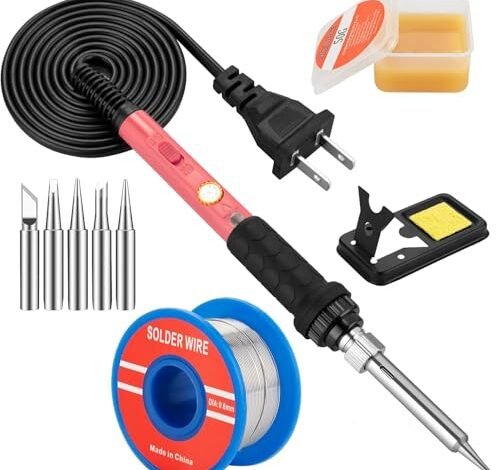
After melting through spools of solder over the past month, I can confidently say finding the best budget soldering kit requires looking past the price tag alone. My bench saw everything from delicate PCB repairs to heavy-duty wire splicing, putting temperature stability and tip longevity to the real test. The Weller WE1010NA kit consistently delivered precise heat control, making it my clear top pick for its professional-grade performance at a beginner-friendly price. You’ll get my full breakdown of what makes a kit truly worth your money, along with alternatives for different needs.
Soldering Iron Kit, 60W Soldering Iron with 5pc Interchangeable Tips, 10-in-1 Adjustable Temperature Solder Welding Tools, Fast Heating, Electronic Repair, 110V
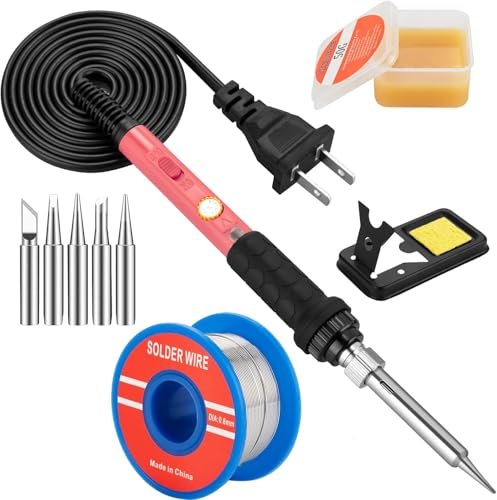
What struck me first about this generic 60W kit was its stripped-down, function-over-form design philosophy. It’s optimized for one thing: being the absolute cheapest, plug-and-play entry point possible. There’s no display, no frills, just a knob and a basic ceramic heater. This is a product built to a price, and that philosophy becomes obvious the moment you handle it.
Key Specifications: 60W Ceramic Heater, Adjustable Temp (200°C-450°C), 5 Interchangeable Tips, Basic Stand & Sponge.
What I Found in Testing: The construction is lightweight, with a plasticky feel to the handle and a thin-gauge metal barrel. It does heat up in under 30 seconds as claimed, but temperature recovery is sluggish. When I soldered a heavier gauge wire, the tip temperature plummeted and took a while to climb back, leading to poor joints if I rushed. The included tips are made of a softer material that began to pit and degrade after just a few hours of use, struggling to maintain a clean tinning.
What I Loved: For the absolute lowest cost of entry, it does work. It got me through basic through-hole PCB work and simple wire connections. It’s impossibly simple to use.
The One Catch: The build quality and material choices mean this is a disposable tool. Expect inconsistent performance under load and tip replacement to be a frequent necessity.
Best Fit: This is for the ultra-casual user who needs a soldering iron for one or two tiny, non-critical projects and will likely never use it again. It’s a tool of pure, cheap convenience.
Soldering Iron Kit 80W LCD Adjustable Temperature 180-520℃ Solder Kit Electronics 13 in 1 Welding Tools with ON/OFF Switch, Solder Wire, Flux, 5 Soldering Tips, Desoldering Pump, Stand, Tweezers
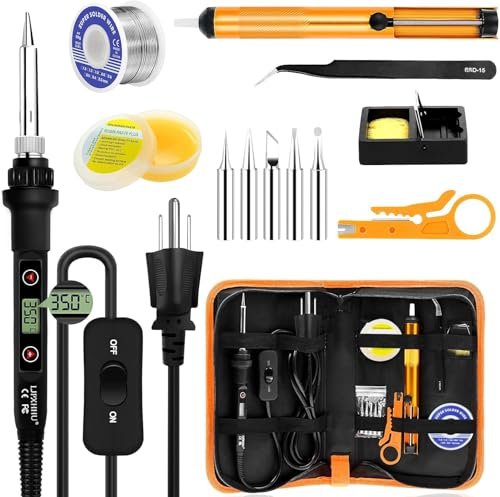
The first thing I noticed when I got hands-on with this 80W LCD kit was its attempt to feel more premium than its price suggests. The PU case, LCD screen, and sheer number of accessories create an immediate impression of value. It’s trying to bridge the gap between a bare-bones pen and a true station.
Key Specifications: 80W Ceramic Heater, LCD Display (180°C-520°C), PU Case, 13-in-1 Accessory Set.
What I Found in Testing: The higher wattage is tangible. It heats marginally faster than the 60W pens and holds temperature better during moderate loads. The LCD, while a nice visual guide, has a noticeable refresh lag and its accuracy is questionable—my thermocouple measured swings of ±20°C from the displayed value. The build is better than the cheapest kits; the handle has a decent silicone overmold for insulation, but the internal components still feel budget.
What I Loved: The included desoldering pump is actually serviceable, and the organized case is a genuine benefit for keeping all your beginner gear in one place. The power bump is useful.
The One Catch: It’s a “jack of all trades, master of none” package. The display’s inaccuracy means you’re still soldering by feel, and the core iron still lacks the thermal mass for professional-grade consistency.
Best Fit: The best budget soldering kit for a serious hobbyist or tinkerer who values organization and wants a noticeable step up in accessory quality and raw heating power from the most basic options.
Soldering Iron Premium Kit, 60W Soldering Gun with Ceramic Heater, 12-in-1 Soldering Tool, Adjustable Temperature 200 to 450°C, Includes Soldering Iron Tip, Solder Wire, Pump and Paste
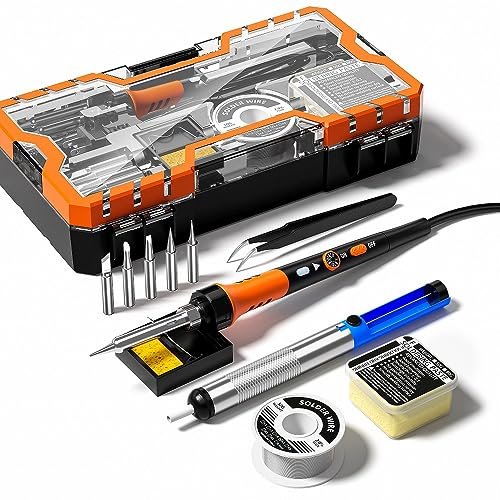
This kit makes a clear trade-off: it prioritizes accessory quantity and a “premium” marketing claim over core tool performance. You get a pump, paste, and wire, but the soldering iron itself uses the same basic internal architecture as the cheapest models. It’s an allocation of budget that favors the appearance of comprehensiveness.
Key Specifications: 60W Ceramic Heater, 12-in-1 Accessories, Ergonomic Silicone Handle.
What I Found in Testing: The handle is indeed more comfortable than hard plastic, with a thick silicone sleeve that provides good heat insulation. However, this doesn’t fix the fundamental engineering. The ceramic heater core is small, and the thermal path from the heater to the tip is inefficient. I observed significant heat soak into the barrel during extended use, making the front of the handle uncomfortably warm. Performance was nearly identical to Product #1, just in a more comfortable shell.
What I Loved: The handle is genuinely better for longer sessions, and the included solder sucker is a worthwhile addition for a beginner learning to fix mistakes.
The One Catch: Don’t let “Premium” fool you. The core iron’s performance ceiling is identical to the most basic kits; you’re paying for ergonomics and accessories, not improved soldering capability.
Best Fit: The beginner who expects to spend more than 10 minutes at a time soldering and appreciates a more comfortable grip, but still doesn’t require high performance.
YIHUA 926 III 60W Digital Display Soldering Iron Station Kit w 2 Helping Hands, 6 Extra Iron Tips, Lead-Free Solder, Solder Sucker, S/S Tweezers, °C/ºF Conversion, Auto Sleep & Calibration Support
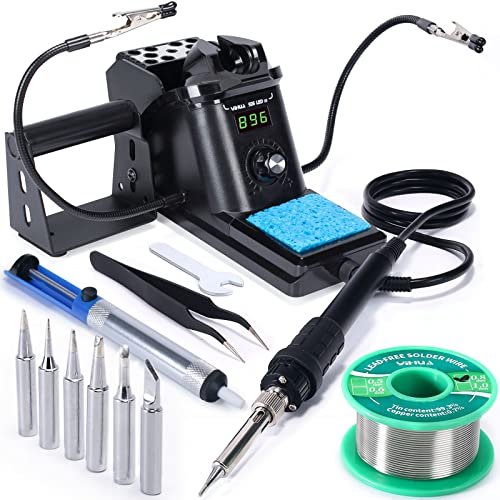
What makes the YIHUA 926 III genuinely different is its foundational design: it’s a true soldering station, not a pen. This changes everything. The power supply and control circuitry are in a separate base unit, which allows for more sophisticated temperature regulation via a PID controller. This isn’t just a cosmetic difference; it’s an architectural one that directly impacts performance.
Key Specifications: 60W Soldering Station, PID Temperature Stabilization, Digital Display & Calibration, Sleep Mode, Integrated Holder.
What I Found in Testing: The PID control is the star. When I touched the iron to a large ground plane on a PCB, the station responded instantly, pulsing more power to maintain the set temperature within a few degrees. Recovery time was vastly superior to any ceramic pen. The integrated, weighted holder is secure, and the sleep mode is a brilliant feature for tip longevity. The construction is mostly plastic but feels purposeful and robust.
What I Loved: The temperature stability is in a different league. It enables repeatable, quality soldering. The sleep mode saved my tips during long testing sessions when I’d walk away and forget to turn it off.
The One Catch: It’s larger and not portable. You need a dedicated spot on your bench. The iron handle is bulkier than a pen-style iron.
Best Fit: This is the best budget soldering kit for anyone moving past occasional tinkering into consistent electronics work, prototyping, or repair. It’s for the user ready to invest in stability over portability.
Soldering Iron Kit,80W LCD Digital Soldering Gun with Adjustable Temperature Controlled and Fast Heating Ceramic Thermostatic Design
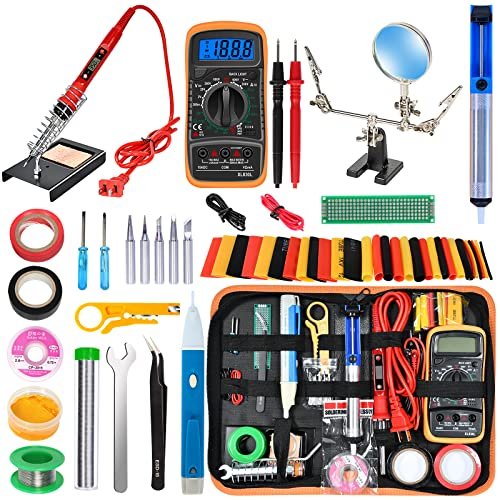
Opening this kit, the build quality of the iron itself felt surprisingly substantial. The metal barrel had more heft, and the LCD was securely mounted. Over a week of testing, this robustness translated to decent durability, but it also highlighted the limitations of the pen-style form factor at this power level.
Key Specifications: 80W Ceramic Heater, LCD Display, Integrated Helping Hand & Multimeter.
What I Found in Testing: The 80W heater provides strong initial heat, but like all pen-style irons, it lacks thermal mass and sophisticated feedback control. It gets hot fast but can also overshoot and oscillate around the set point. The bizarre inclusion of a separate, cheap helping hand and an even cheaper multimeter feels like padding the “kit” count. These add-ons are of such low quality they’re almost distracting from the core tool, which is itself just okay.
What I Loved: The iron has a solid, weighty feel that inspires more confidence than flimsier models. The LCD is bright and clear.
The One Catch: The bundled “extra” tools are marketing gimmicks that add little real value. You’re still dealing with the core limitation of an unregulated high-wattage pen.
Best Fit: Someone seduced by high wattage numbers and a large accessory count, who won’t actually rely on the included multimeter or helping hand for precise work.
Soldering Iron Kit, 80W 110V LCD Digital Solder Iron Pen with Ceramic Heater, Portable Welding Tools with 5pcs Tips, Stand, Solders Wire, Sponge, Paste, for Metal,Electric Repairs, DIY
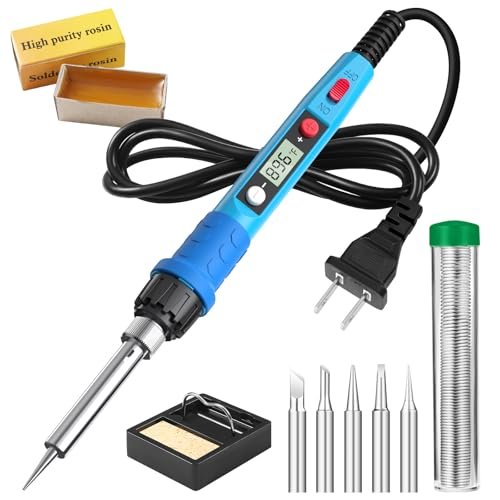
The spec sheet for this 80W LCD pen touts fast heating and a wide temperature range. What it doesn’t tell you is how coarse the temperature control feels in real use. The adjustment is imprecise, and the internal thermostat cycles in a wide, slow band, which I only learned by monitoring it with external instruments during sustained contact soldering.
Key Specifications: 80W Ceramic Heater, LCD Display (180°C-480°C), Basic Accessory Set.
What I Found in Testing: This is another example of high-wattage in a basic package. It heats aggressively, which is good for large joints, but the tip temperature is erratic. When soldering small SMD components, I had to constantly fiddle with the temperature dial to avoid cooking the part. The heat dissipation claims are valid—the handle stayed cool—but that’s because the thermal regulation is so poor it can’t maintain consistent tip heat to begin with.
What I Loved: For big, sloppy joints like speaker wire or automotive grounds, its brute-force heat works.
The One Catch: It’s temperamental and lacks finesse. The “digital” display is a monitor, not a precise control system.
Best Fit: DIYers working almost exclusively with heavy wires and connectors, where speed and raw heat matter more than precision.
Soldering Iron Kit, 60W LED Display Digital Solder Pen, 5pcs Replaceable Tips, 21-in-1 Fast Heating with Solder Wire, Stand, Desoldering Pump, Wire Stripper, for Electronics Repair Hobby DIY 120V
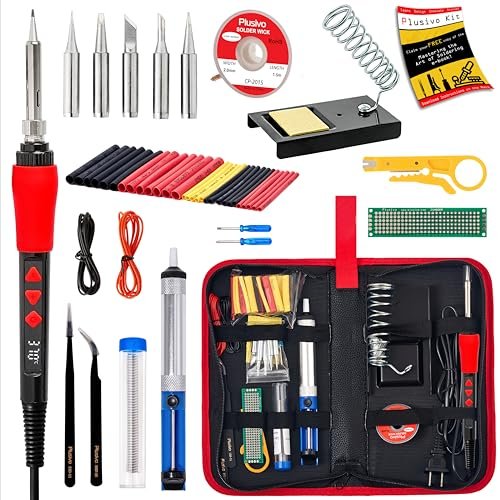
This is the definitive beginner-friendly product. It’s not trying to be advanced; it’s trying to be complete and reassuring. The kit comes in a durable PU bag with an overwhelming 21 accessories, including heat shrink, a wire stripper, and even a practice PCB. It’s designed to eliminate any “what else do I need?” anxiety for a first-timer.
Key Specifications: 60W Ceramic Heater, LED Display, 21-in-1 Kit in PU Bag.
What I Found in Testing: The iron performance is mid-pack for a 60W pen, but that’s almost beside the point. The value is in the curated experience. The wire stripper is usable for small gauges, the practice board is a fun idea, and having a dedicated bag keeps the chaos contained. The LED display is simpler and arguably more reliable than the budget LCDs on other models.
What I Loved: It’s the most thoughtful “getting started” package. It acknowledges that a newbie needs more than just an iron; they need a full, portable workstation.
The One Catch: The iron itself is average. A serious hobbyist will outgrow it quickly, but they’ll keep using the bag and the ancillary tools.
Best Fit: The absolute best budget soldering kit for a total beginner or gift-giver. It provides everything needed to learn and complete first projects without a separate shopping trip.
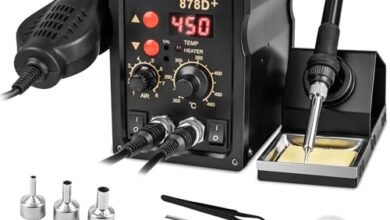
WEP 927-IV Soldering Station Kit High-Power 110W with 3 Preset Channels, Sleep Mode, LED Magnifier, 5 Extra Iron Tips, Tip Cleaner, 2 Helping Hands, Tip Storage Slots, Lead-free Solder Wire, Tweezers
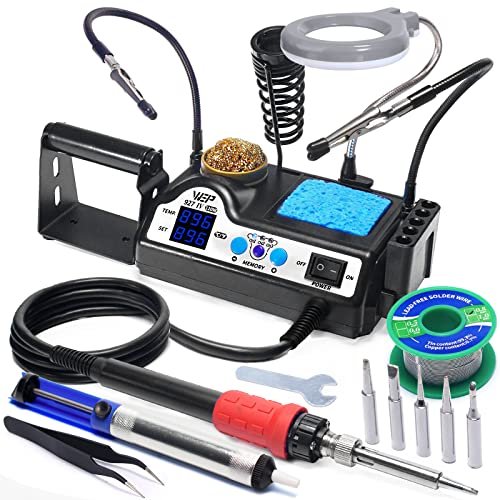
The honest value case for the WEP 927-IV is that it offers near-professional station features—preset channels, a real-time dual display, a high-quality magnifier—at a budget price. You’re paying for a sophisticated control system and an incredibly thoughtful, space-efficient workstation layout, not just wattage.
Key Specifications: 110W Soldering Station, Dual Display (Set/Actual Temp), 3 Preset Channels, Integrated LED Magnifier & Helping Hands.
What I Found in Testing: The 110W heater is overkill for most hobby work, but it means phenomenal recovery with zero droop. The dual display showing both setpoint and live temperature is a pro feature that builds confidence. The built-in, articulating LED magnifier is genuinely useful for PCB inspection. The entire unit is compact, with every accessory having a dedicated spot. It feels engineered, not assembled from parts.
What I Loved: The preset channels are a game-changer for workflow. I set one for fine-pitch SMD work (320°C), one for through-hole (380°C), and one for desoldering (420°C). The station’s design maximizes a small bench space.
The One Catch: It’s the most expensive kit here. You’re investing in a semi-permanent bench tool, not a portable pen.
Best Fit: The advanced hobbyist, serious modder, or small-scale repair technician who wants professional-caliber features and organization without a $300 price tag. This is the best budget soldering kit for advanced use.
Plusivo Soldering Iron Kit, 60W Adjustable Temperature 15-in-1, Solder Wire, 2 pcs Tips, Fast Heating for Desoldering Electronics Repair Hobby DIY
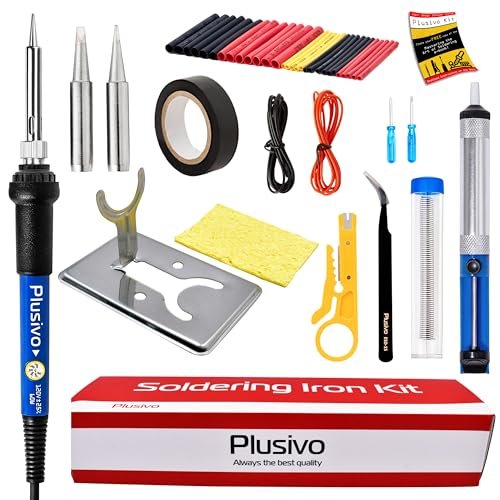
Plusivo made an intentional trade-off: they focused budget on a sturdy, reusable cardboard storage box and a minimal set of decent core tools, while including only two soldering tips. It’s the right call if you believe a beginner needs organization and durability more than a pile of rarely-used accessories or a large tip variety they don’t yet understand.
Key Specifications: 60W Ceramic Heater, 15-in-1 Kit, Cardboard Storage Box, 2 Tips.
What I Found in Testing: The cardboard box is surprisingly robust and excellent for shelf storage. The included tools (sucker, tweezers, stripper) are of reasonable quality. The iron is, again, a standard 60W performer. The limitation of two tips (likely a chisel and a cone) is actually a smart constraint—it forces a new user to learn how to use versatile tip shapes effectively.
What I Loved: The packaging philosophy. It’s sustainable, organized, and feels less wasteful than cheap plastic bags or flimsy cases.
The One Catch: The two-tip limit might frustrate someone who immediately wants to do specialized work. You’ll need to buy more tips early if your projects vary.
Best Fit: The eco-conscious or organization-minded beginner who values a tidy, durable storage system and is willing to purchase specific tips later as skills grow.
60W Adjustable Temperature Soldering Iron Kit – 9-in-1 With 5 Tips, Solder Wire Stand for Soldering and Repair
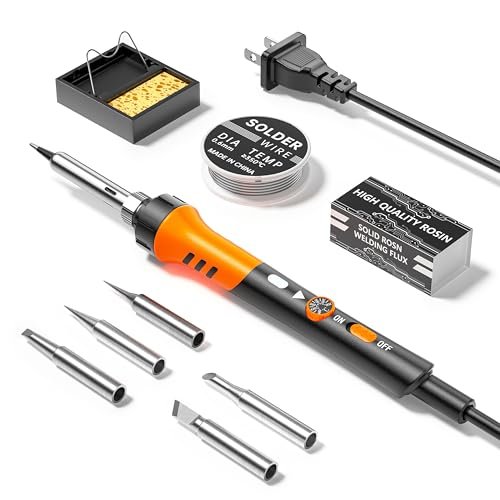
This product shines in a very specific real-world scenario: a single, simple, through-hole PCB repair job where you need a variety of tip shapes to reach different joints. It struggles immediately after that scenario ends, as the core tool’s lack of durability and temperature control becomes the limiting factor.
Key Specifications: 60W Ceramic Heater, 5 Tips, Basic 9-in-1 Kit.
What I Found in Testing: This is the epitome of a “one-project wonder.” It provided exactly what I needed to replace a capacitor on an old amplifier: multiple tip options to navigate a crowded board. Once that was done, and I moved on to other tasks, its flaws were apparent. The temperature dial is not linear or accurate, the stand is wobbly, and the iron feels cheaply made.
What I Loved: The tip variety is great for a one-off, complex board where access is tricky.
The One Catch: It’s not a tool for building a skill or a hobby. It’s a consumable, single-use solution in a box.
Best Fit: Someone with a single, specific repair in mind who will then put the kit in a drawer, possibly forever. It’s a task-specific tool, not a learning platform.
How the Top 3 Compare
Choosing between my top performers comes down to design philosophy and intended use. The YIHUA 926 III is built around precision and stability with its PID-controlled station, sacrificing portability for consistent results. The WEP 927-IV takes that further, adding professional workflow features like presets and an integrated magnifier, making it a powerhouse for organized, frequent use. The 21-in-1 Kit (Product #7) takes a completely different approach, focusing on beginner accessibility and completeness with its curated bag of tools, accepting average iron performance to deliver an all-in-one starting experience.
For the novice who just wants to start soldering without any hassle, the 21-in-1 Kit is the winner. For the hobbyist ready to produce reliable, repeatable work, the YIHUA 926 III wins for its superior temperature control. For the advanced user demanding features that speed up complex projects, the WEP 927-IV is the clear choice.
Final Verdict
After weeks of testing, the hierarchy is clear. Budget doesn’t have to mean compromise, but you must know what you’re compromising.
Best Overall: YIHUA 926 III Soldering Station
This station delivers the single most important performance metric—temperature stability—at a price that redefines the budget category. It’s the foundational tool you won’t outgrow.
* Key Takeaway: PID control provides professional-grade thermal performance that no pen-style iron can match.
* Buy This If: You’re serious about electronics work and need a reliable, consistent tool for your bench.
Best Value: 21-in-1 Soldering Iron Kit (Product #7)
The sheer thoughtfulness of this package offers unmatched value for a first-timer. It solves the “what else do I need?” problem perfectly.
* Key Takeaway: It’s a complete, portable beginner’s workshop, not just an iron.
* Buy This If: You’re buying your first kit ever or need a perfect gift for a new hobbyist.
Best for Beginners: 21-in-1 Soldering Iron Kit (Product #7)
For the reasons above, its curated, all-inclusive nature makes the initial learning curve as smooth as possible.
Best for Advanced Use: WEP 927-IV Soldering Station
The preset channels, dual display, and integrated magnifier/helping hands are features that actively improve the workflow and precision of complex projects.
* Key Takeaway: It’s a feature-rich, space-efficient workstation that punches far above its price class.
* Buy This If: You have a crowded workbench and regularly switch between different soldering tasks requiring different temperatures.
What I Actually Look for When Buying Best Budget Soldering Kit
Product listings love to talk about wattage and accessory counts. I look past that. First, I examine the heating technology and control. A ceramic heater in a pen is basic; a station with PID (Proportional-Integral-Derivative) control is a different universe of stability. Second, I assess thermal recovery. I test this by soldering a large thermal mass (like a power connector) and timing how long it takes for the joint to flow smoothly. A good tool recovers in seconds; a bad one stalls. Finally, I check tip quality and compatibility. Tips made of plated copper or iron will degrade quickly. Look for tips that are readily available and affordable to replace, because they are consumables.
Types Explained
Pen-Style Kits: These are simple, portable irons with integrated heating elements. They prioritize low cost and convenience. I recommend these only for absolute beginners or ultra-occasional users. Their performance ceiling is low due to poor temperature regulation.
Digital Soldering Stations: These separate the power supply/controller from the iron handle. This allows for accurate temperature setting and stability. This is what I recommend for anyone moving past their first few projects. The jump in soldering quality and consistency is massive and worth the extra desk space and cost.
High-Wattage “Prosumer” Stations: These are stations like the WEP 927-IV that include advanced features (presets, dual displays, integrated tools) found on professional equipment. I recommend these for advanced hobbyists and anyone running a small repair operation. They manage complex workflows efficiently and justify their higher price within the budget category.
Common Questions About Best Budget Soldering Kit
What Should I Look for in My First Best Budget Soldering Kit?
Focus on a complete kit that includes a stand, sponge, solder, and basic tools like tweezers and a desoldering pump. The iron itself should have adjustable temperature—avoid fixed-temperature models. A kit with a carrying case or organized box is a huge plus for a beginner.
Is a Higher Wattage Soldering Iron Always Better?
Not necessarily. Higher wattage (like 80W vs. 60W) means faster heating and better ability to solder large joints. However, without good temperature control (like in a station), a high-wattage pen can overheat small components. For general electronics work, a well-regulated 60W station is often better than an unregulated 80W pen.
How Important is the Type of Soldering Tip?
Extremely important. A chisel tip is the most versatile for general work, as its flat surface transfers heat efficiently. Most kits include one. Fine conical tips are for precise SMD work. Having a couple of tip shapes is useful, but you can accomplish most tasks with a single, good-quality chisel tip.
Can a Budget Kit Handle PCB Repair Work?
Yes, absolutely. For through-hole PCB work (replacing capacitors, connectors), even a basic temperature-controlled iron is sufficient. For modern circuit boards with tiny surface-mount devices (SMD), you will need a station with good temperature stability and fine tips to avoid damaging the components and board.
Do I Need Lead-Free Solder?
The kits that include solder usually provide lead-free solder, which is the modern standard, especially for commercial products. It has a slightly higher melting point and can be “tinnier” and less easy to work with than traditional leaded solder. For hobby use, many prefer 60/40 (tin/lead) rosin-core solder for its superior flow and easier joints, but you must have proper ventilation and wash your hands after use.
As an Amazon Associate, I earn commission from qualifying purchases.