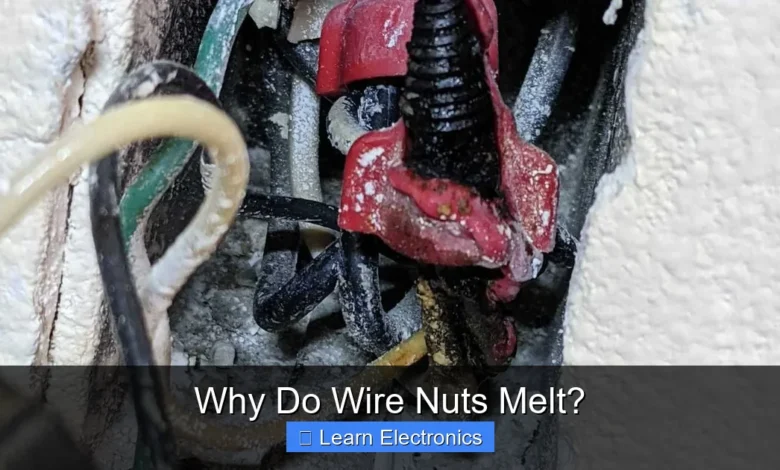
Why Do Wire Nuts Melt? typically due to excessive heat generated by resistance in a faulty electrical connection. This overheating often stems from loose connections, mismatched wire gauges, or circuit overload, compromising the integrity of this crucial electrical component. Understanding the underlying causes of this phenomenon is vital for maintaining electrical safety and preventing potential hazards in residential and commercial settings.
The practice of joining electrical wires with these twist-on connectors is common across countless installations. However, when improper techniques or unsuitable conditions lead to the failure of this method, the consequences can range from minor power interruptions to serious fire risks. Delving into the specific reasons for such failures helps electricians and DIY enthusiasts alike ensure safer, more reliable electrical systems.
Quick Answers to Common Questions
Why Do Wire Nuts Melt?
Wire nuts typically melt due to excessive heat caused by a loose connection or an overloaded circuit. When wires aren’t properly twisted together or the circuit draws too much current, resistance builds up, generating heat that can deform and melt the wire nut’s plastic housing.
Is a melted wire nut dangerous?
Yes, absolutely! A melted wire nut is a serious warning sign of an underlying electrical problem, indicating severe overheating. This can lead to electrical shorts, power outages, and significantly increases the risk of an electrical fire.
How can I prevent wire nuts from melting in my home?
To prevent wire nuts from melting, always ensure connections are secure and properly torqued, using the correct size wire nut for the gauge and number of wires. Avoid overloading circuits, and consider having a qualified electrician inspect your wiring if you have frequent issues or suspect problems.
📑 Table of Contents
- Understanding Wire Nuts and Their Purpose
- The Primary Culprits: What Causes Overheating and Why Do Wire Nuts Melt?
- Electrical Principles Behind Heat Generation
- Identifying Signs of Melting Wire Nuts and Potential Hazards
- Prevention and Best Practices for Safe Electrical Connections
- When to Call a Professional: Repair and Safety
Understanding Wire Nuts and Their Purpose
Wire nuts, also known as twist-on connectors or cone connectors, are insulating caps used to connect two or more electrical wires. They consist of a conical metal spring inside a plastic or nylon insulating shell. When twisted onto bared wires, the internal spring compresses and grips the conductors, creating a mechanical and electrical splice. Their primary purpose is to provide a secure, insulated connection that prevents accidental contact between wires and minimizes resistance.
Construction and Materials
- Shell: Typically made from flame-retardant thermoplastic (like polypropylene or nylon) to insulate the connection and withstand moderate heat. Different colors indicate different wire gauge capacities.
- Spring: A coiled, square-cut steel spring that provides the gripping force and ensures electrical continuity. This spring is crucial for maintaining a low-resistance connection.
The effectiveness of a wire nut largely depends on the quality of its internal spring and the integrity of its insulating shell. Any compromise to these components can lead to a compromised connection and, subsequently, heat generation.
The Primary Culprits: What Causes Overheating and Why Do Wire Nuts Melt?
The fundamental reason a wire nut melts is excessive heat. This heat is not generated by the wire nut itself but is a consequence of electrical current encountering resistance at the point of connection. When the heat generated exceeds the wire nut’s material tolerance, it begins to soften, deform, and eventually melt.
Loose Connections
This is arguably the most common cause. A loose connection occurs when the wire nut isn’t twisted on tightly enough, or the wires inside are not adequately pre-twisted or inserted deeply enough into the connector. When the connection is loose, the contact area between the wires and the wire nut’s internal spring is reduced. This constricted contact point increases electrical resistance (R) at that junction. According to Joule’s Law (P = I²R), even a small increase in resistance, especially with significant current (I), can lead to a substantial increase in power dissipated as heat (P).
- Inadequate Pre-twisting: Wires should be twisted together securely before applying the wire nut for a stronger mechanical and electrical bond.
- Improper Wire Stripping: If too much insulation is stripped, bare wire can be exposed outside the nut. If too little is stripped, the wire nut spring may not get a good grip on the conductor.
- Insufficient Torque: Not twisting the wire nut on firmly enough allows for tiny air gaps and poor contact.
Overcurrent and Overload
Electrical circuits are designed to carry a specific amount of current safely. If a circuit is overloaded, meaning too many devices draw too much current, the wires themselves heat up. This increased heat transfers to the connections, including wire nuts. While the circuit breaker should trip to prevent prolonged overcurrent, sustained conditions close to the breaker’s limit, or a faulty breaker, can cause significant heat buildup.
An overcurrent condition through a properly made connection might not melt the wire nut if the wires themselves can handle the current without exceeding their temperature rating. However, if the connection is already compromised (e.g., loose), the combined effect of overcurrent and increased resistance at the splice point dramatically accelerates heat generation.
Mismatched Wire Gauges or Types
Wire nuts are designed for specific ranges of wire gauges (e.g., 18 AWG to 10 AWG). Using a wire nut that is too small for the wires might not allow for a secure grip or enough contact area. Conversely, using a wire nut that is too large might not provide adequate compression. Combining wires of significantly different gauges (e.g., a small 20 AWG with a larger 12 AWG) can also make it difficult for the wire nut to establish a uniform, tight connection across all conductors, leading to a loose connection for the smaller wire and thus, increased resistance and heat.
Environmental Factors and Material Degradation
While less common, extreme ambient temperatures or exposure to certain chemicals can degrade the plastic shell of the wire nut over time, reducing its heat tolerance. Additionally, age and repeated thermal cycling (heating and cooling) can weaken the internal spring, leading to a gradual loss of grip and increased resistance.
Electrical Principles Behind Heat Generation
At the heart of every melting wire nut is a fundamental electrical principle: resistance. When electric current flows through a conductor, it encounters resistance. While conductors are designed to have very low resistance, no material has zero resistance. The relationship between current, resistance, and heat is described by Joule’s First Law, often simplified as P = I²R, where:
- P is the power dissipated as heat (in watts).
- I is the current flowing through the resistance (in amperes).
- R is the electrical resistance (in ohms).
This equation highlights that heat generation is exponentially proportional to the current (I²) and directly proportional to resistance (R). A slight increase in resistance at a connection point, especially in a high-current circuit, can generate a significant amount of heat. If this heat cannot dissipate fast enough, the temperature rises, eventually reaching the melting point of the wire nut’s plastic casing.
Understanding Resistance in Connections
A perfect electrical connection would have zero resistance. In reality, every splice has some resistance. The goal of a well-made connection is to minimize this resistance to be as close to the resistance of a continuous conductor as possible. Factors contributing to resistance in a wire nut connection include:
- Contact Area: The larger the metallic contact area between wires and the wire nut spring, the lower the resistance.
- Material Conductivity: The materials themselves (copper wire, steel spring) have inherent resistance.
- Oxidation: Over time, copper wires can oxidize, forming a non-conductive layer that increases resistance at the splice.
Identifying Signs of Melting Wire Nuts and Potential Hazards
Recognizing the signs of an overheating or melting wire nut is crucial for preventing electrical fires and other serious hazards. Prompt action can save property and lives.
Visible and Olfactory Indicators
- Discoloration or Charring: The plastic shell of the wire nut may appear discolored, brown, black, or even charred around the edges.
- Deformation: The plastic may be soft, distorted, or have a bubbly appearance.
- Burning Smell: A distinct odor of burning plastic or electrical insulation (often described as a fishy smell) is a strong indicator of overheating. This smell should never be ignored.
- Smoke: In severe cases, smoke may be visible emanating from the electrical box or outlet.
Operational Indicators
- Flickering Lights: Intermittent connections due to a loose wire nut can cause lights on the affected circuit to flicker or dim.
- Tripping Breakers: While not always directly linked to a melting wire nut, frequent circuit breaker trips on a specific circuit can indicate an overload or a fault that is generating excessive heat at a connection point.
- Warm Outlets/Switches: If the faceplate of an outlet or switch feels warm to the touch, it could indicate overheating at the connections behind it.
Potential Hazards
The primary hazard associated with melting wire nuts is fire. The high temperatures generated can ignite surrounding insulation, wood framing, or other flammable materials within walls or electrical boxes. Beyond fire, severe overheating can also damage other electrical components, leading to wider system failures or increasing shock hazards due to degraded insulation.
Prevention and Best Practices for Safe Electrical Connections
Preventing wire nuts from melting hinges on meticulous installation practices and adherence to electrical codes. Following these best practices will significantly reduce the risk of overheating.
Proper Installation Techniques
- Strip Wires Correctly: Strip just enough insulation (typically 1/2 to 5/8 inch) so that no bare wire is exposed outside the wire nut, and the wire nut’s spring can grip the conductor fully.
- Pre-twist Wires (Optional but Recommended): For stranded wires, and often for solid wires, twisting the bared ends together clockwise before applying the wire nut creates a more robust mechanical connection. For solid wires, some manufacturers say pre-twisting isn’t necessary, but it often improves contact.
- Choose the Right Size: Always select a wire nut appropriate for the number and gauge of wires being joined. Manufacturers provide clear specifications for their connectors.
- Twist Firmly: Twist the wire nut clockwise onto the wires until it is snug and the wires are tightly coiled within the spring. A good test is to gently pull on each wire; if any wire comes loose, the connection is inadequate.
- Inspect the Connection: Ensure no bare copper is visible below the wire nut.
Table: Common Wire Nut Sizes and Capacities
This table provides a general guideline. Always refer to the manufacturer’s specific instructions and ratings for the wire nuts you are using.
| Wire Nut Color (Typical) | Approximate Wire Gauge Range (AWG) | Minimum Wires (AWG) | Maximum Wires (AWG) |
|---|---|---|---|
| Gray | 22-16 | 2x 22 AWG | 3x 18 AWG |
| Blue | 22-14 | 2x 20 AWG | 3x 16 AWG |
| Orange | 22-14 | 2x 18 AWG | 4x 16 AWG |
| Yellow | 18-12 | 2x 18 AWG | 3x 12 AWG |
| Red | 18-10 | 2x 14 AWG | 4x 12 AWG, 2x 10 AWG |
Circuit Load Management
Understand the load limits of your circuits. Avoid plugging too many high-power appliances into a single circuit. Use surge protectors and ensure your electrical panel is correctly labeled so you know which circuits feed which outlets and lights. If you frequently experience tripping breakers, investigate the cause rather than simply resetting them.
When to Call a Professional: Repair and Safety
While DIY enthusiasts can handle many home electrical tasks, certain situations demand the expertise of a licensed electrician. This is especially true when dealing with evidence of overheating or melting wire nuts.
Signs That Warrant Professional Intervention
- Recurring Problems: If you’ve identified and fixed a loose connection, but a different connection on the same circuit (or even the same connection after repair) shows signs of overheating again, there might be a larger underlying issue like a persistent overload or faulty wiring.
- Widespread Damage: If multiple wire nuts or large sections of wiring show signs of damage, it’s a clear indication that a professional assessment of the entire circuit or panel is needed.
- Uncertainty or Lack of Experience: If you’re unsure about the cause of the melting, how to safely repair it, or lack experience working with electrical systems, it’s always best to call a qualified electrician.
- Code Compliance Concerns: Electrical work must comply with local and national electrical codes. An electrician ensures all repairs and new installations meet these critical safety standards.
Safety First
Before attempting any inspection or repair, always turn off the power to the affected circuit at the main breaker panel. Use a non-contact voltage tester to confirm that the power is indeed off before touching any wires. Never work on live circuits. Electrical work carries inherent risks, including shock, fire, and injury. Prioritizing safety through proper lockout/tagout procedures and knowing when to defer to an expert is paramount.
In conclusion, while wire nuts are a reliable and widely used method for electrical connections, their failure due to melting is a serious indicator of underlying issues, primarily excessive resistance leading to heat. By understanding the causes—such as loose connections, overcurrent, and improper sizing—and by diligently applying best practices in installation, homeowners and professionals can significantly enhance electrical safety. Always remember that any signs of overheating warrant immediate attention, and when in doubt, consulting a licensed electrician is the safest and most prudent course of action to protect your home and its occupants.
Frequently Asked Questions
Why do wire nuts melt in electrical connections?
Wire nuts melt primarily due to excessive heat generated by a poor electrical connection. This usually happens when the wires inside the nut are not twisted tightly enough or properly matched in gauge, leading to high resistance. This resistance causes the connection to overheat, eventually melting the plastic insulation of the wire nut.
What specific electrical problems cause wire nuts to melt?
The most common culprits are loose connections, overloaded circuits, or mismatched wire gauges. A loose connection creates high resistance, while an overloaded circuit draws too much current through the wires, both generating significant heat at the splice point. Even improper wire preparation, like not stripping enough insulation, can lead to a weak connection and eventual melting.
Is it dangerous if a wire nut melts?
Yes, a melting wire nut indicates a serious electrical problem and poses a significant fire hazard. The excessive heat can ignite nearby combustible materials, and the compromised insulation can lead to short circuits or electrical shock. It’s crucial to address a melted wire nut immediately to prevent further danger.
How can I prevent wire nuts from melting in my electrical system?
Ensure all wire connections are properly made, meaning wires are stripped to the correct length, twisted together tightly, and then secured firmly within the appropriately sized wire nut. Avoid overloading circuits by not connecting too many high-power devices. Regularly inspect connections if you suspect issues, especially in areas with frequent heavy loads.
What are the warning signs that a wire nut might be melting?
Visible signs include discolored or charred plastic on the wire nut itself, a burning smell, or flickering lights in the area. You might also notice a warm or hot electrical switch or outlet cover, indicating heat buildup behind the plate. These are all indicators of a failing connection that needs immediate attention.
What should I do if I discover a melted wire nut?
Immediately turn off the power to the affected circuit at your electrical panel. Do not attempt to touch or repair the melted wire nut while power is still on. It is highly recommended to contact a qualified electrician to inspect and repair the damaged connection and underlying issue safely.
As an Amazon Associate, I earn commission from qualifying purchases.