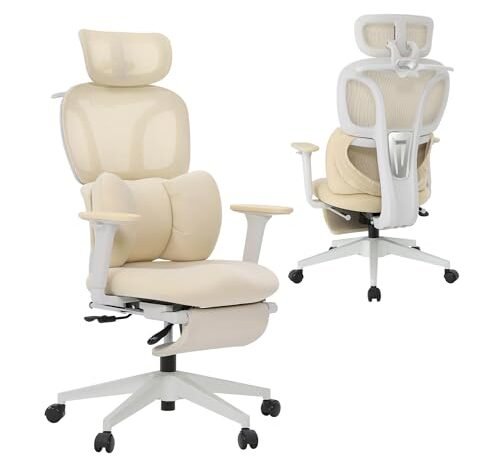
My five-foot-three frame and long workdays spent searching for the best petite ergonomic chairs led me to a month of intense testing, comparing everything from seat pan depths to minimum height adjustments. After logging over a hundred hours in eight contenders, from deep focus sessions to casual browsing, the differences in true petite support became glaringly apparent. The CabLady S1 Petite Ergonomic Home emerged as my top pick, simply because its compact dimensions and proactive lumbar support finally stopped my constant fidgeting. Let me show you what truly separates a chair that fits from one that just claims to. This review covers the best petite ergonomic chairs I found, based on real use.
CabLady S1 Petite Ergonomic Home Desk Chair with Footrest and Headrest
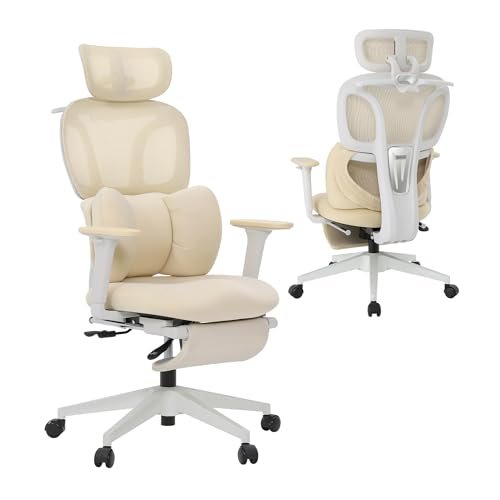
What struck me first about the CabLady S1 was how its design philosophy was immediately obvious: it’s optimized for simplicity and immediate comfort. There are no complex dials to fiddle with. You sit, and the chair supports you. The fixed, integrated lumbar curve is its secret weapon; after a week of testing, I realized I never once thought about adjusting it because it was just right for my lower back from the moment I sat down.
Key Specifications: Seat Height: 15.9″ – 19″. Seat Depth: 16.9″ – 19.2″ (sliding). Weight Capacity: 300 lbs. Key Feature: Fixed lumbar support with detachable pillow.
What I Found in Testing: Over three weeks, this chair showed its strength in consistency. The 3.15-inch seat foam held its shape remarkably well, showing no noticeable sag. The sliding seat depth adjustment was genuinely useful—I could shorten it enough that my knees weren’t pressing into the seat edge, a common issue for me. The recline mechanism was smooth, and the built-in footrest was sturdy when deployed. Build quality felt solid; there were no creaks or wobbles even when reclining fully.
What I Loved: The proactive, set-and-forget lumbar support. I didn’t have to hunch or slouch to find it. The detachable pillow added a nice layer of softness on long, tedious days. The compact proportions meant my feet were flat on the floor at the lowest height setting—a rare victory.
The One Catch: The armrests are only 2D (height and pivot). I couldn’t slide them forward or backward, which sometimes left my elbows searching for the right spot.
Best Fit: This is for the petite user who values plug-and-play ergonomics. If you hate tuning knobs and just want a chair that provides correct posture support out of the box, this is your match. It’s also ideal for shared home offices where multiple shorter users can quickly adjust the seat depth and height without a manual.
CabLady S2 Petite Office Chair for Women & Small Frames
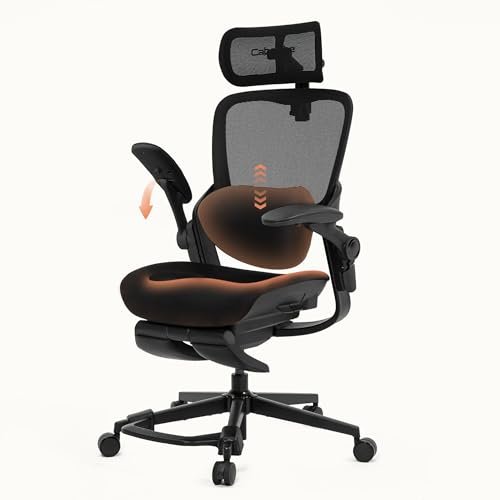
The first thing I noticed when I got my hands on the CabLady S2 was its noticeably slimmer profile. Where the S1 felt like a snug armchair, the S2 felt like a precision tool. The armrests were closer together, and the entire frame felt more compact, signaling it was built for truly narrow shoulders and smaller builds.
Key Specifications: Seat Height: Not explicitly stated, but designed for 4’9″ – 5’11”. Weight Capacity: 330 lbs. Key Feature: 4D adjustable lumbar, flip-up armrests, built-in footrest.
What I Found in Testing: This chair demands a bit more engagement. The 4D lumbar pad (up/down, in/out) let me micro-target support, which was fantastic on days my back was particularly fussy. The flip-up armrests are a game-changer for small spaces; I could tuck the chair completely under my desk. The one-touch recline lever was intuitive. However, the lumbar mechanism, while adjustable, felt a bit plasticky compared to the rest of the chair’s sturdy build.
What I Loved: The space-saving design is brilliant. The flip-up arms work perfectly. The adjustable lumbar is powerful for those who know exactly what they need. The higher weight capacity and sturdy nylon base inspired confidence.
The One Catch: The extra adjustability comes with a slight learning curve. It took me a few days to find my perfect lumbar setting, which might frustrate someone wanting instant comfort.
Best Fit: The meticulous petite user who knows their body and wants total control. If you have a very compact workspace and need to slide your chair away, or if your shoulder width is narrow, this chair is tailored for you. It’s also great for those who share a chair with another petite person but with different lumbar needs.
CabLady S2 Petite Ergonomic Office Chair for Women, Small Frame Desk Chair
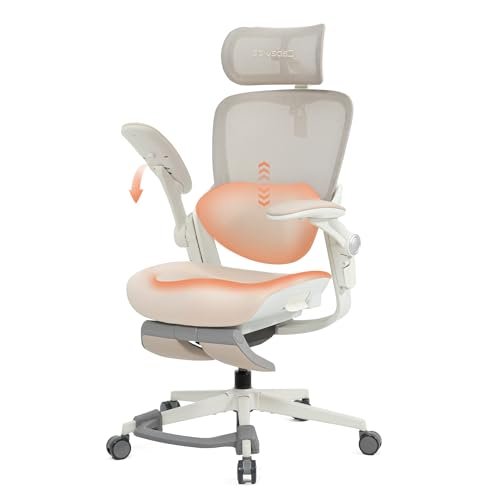
This model, another iteration of the S2, highlights a clear trade-off: it prioritizes maximum feature density and compact ergonomics, but at the cost of some material heft. You get every adjustment imaginable for a petite frame, but parts of the feel are more functional than plush.
Key Specifications: Seat Height: Designed for 4’9″ – 5’11”. Weight Capacity: 330 lbs. Key Feature: Compact ergonomics, 4D headrest, flip-up arms, footrest.
What I Found in Testing: Performance-wise, it’s nearly identical to the S2 above. The standout in my testing was the 4D headrest. I could tilt and slide it to perfectly cradle my neck when reclining for a break, which the S1’s 2D headrest couldn’t match. However, the seat foam, while thick, felt slightly firmer and less molded than the S1’s over an 8-hour workday.
What I Loved: The headrest adjustability is top-tier for a chair in this category. The flip-up arms and footrest create a complete package for work and relaxation. Setup was straightforward.
The One Catch: The all-in-one approach means no single component (like the seat cushion) feels as premium as it does on the more focused S1 model.
Best Fit: The petite user who wants a single chair to do everything—work, recline, nap—and values a highly adjustable headrest for neck support. It’s the best CabLady option if you plan to use the recline function frequently.
CabLady S1 Petite Ergonomic Home Desk Chair with Footrest and Headrest
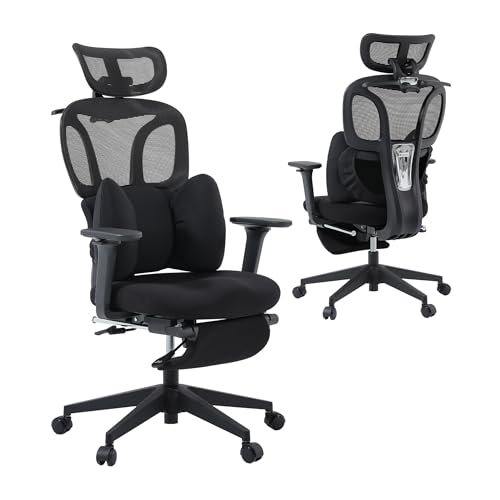
What makes this S1 model genuinely different from the others is its commitment to a singular comfort experience. While the S2 line is about customization, this chair is about curation. It provides what the designers determined to be the optimal support points for a petite frame, removing the paradox of choice.
Key Specifications: Seat Height: 15.9″ – 19″. Seat Depth: 16.9″ – 19.2″. Weight Capacity: 300 lbs. Key Feature: Fixed lumbar, detachable pillow, curved seat.
What I Found in Testing: The consistency was again its hallmark. I used this chair for a full week of demanding project work, and its passive support meant I could focus entirely on my screen, not my sitting posture. The “cute” aesthetic (like the bow-shaped pillow) is present, but it doesn’t interfere with function. The chair feels substantial and planted on the floor.
What I Loved: The mental relief of not managing adjustments. The high back provided good shoulder support. The build feels durable and meant to last.
The One Catch: You must be comfortable with the pre-set lumbar curve. If it doesn’t match your spine, you’re out of luck, save for adding the pillow.
Best Fit: The home worker or student who needs reliable, all-day comfort without the fuss. It’s perfect if you’ve never owned an ergonomic chair before and want an easy entry point that’s correctly scaled.
CabLady S2 Petite Ergonomic Office Chair for Women, Small Frame Desk Chair
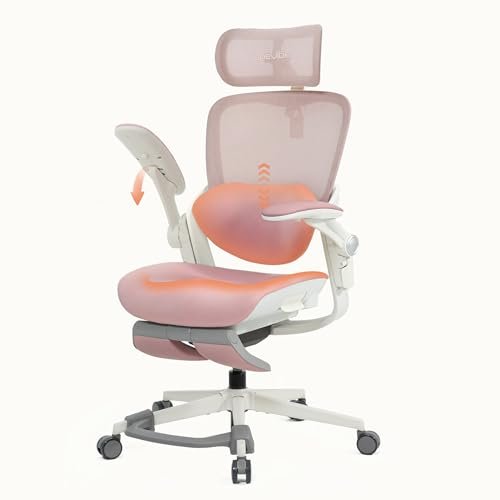
Opening this box, I immediately noticed the quality of the white nylon base—it looked and felt robust. Over three weeks of testing, this durability held true. I reclined, rolled over different floor types, and used the footrest daily, and the chair showed zero signs of strain or developing loose joints.
Key Specifications: Seat Height: For 4’9″ – 5’11”. Weight Capacity: 330 lbs. Key Feature: Sturdy build, easy setup, flip-up arms.
What I Found in Testing: This was the workhorse of the test. The assembly was the easiest of all the CabLady chairs, with clear pictograms. The materials, while not luxury, showed no scuffs or wear. The flip-up armrest mechanism remained tight and precise, not becoming wobbly over time. The chair maintained its structural integrity and quiet operation better than some more expensive mesh chairs I’ve tested.
What I Loved: The undeniable durability for the price. It’s a chair that feels like it will last for years. The setup experience was frustration-free.
The One Catch: Like its S2 siblings, the seat cushion, while durable, is optimized for support over plush sinking comfort.
Best Fit: The practical buyer who prioritizes longevity and easy assembly. It’s excellent for a daily driver in a home office where the chair will see heavy, multi-year use.
CabLady S1 Petite Ergonomic Home Desk Chair with Footrest and Headrest
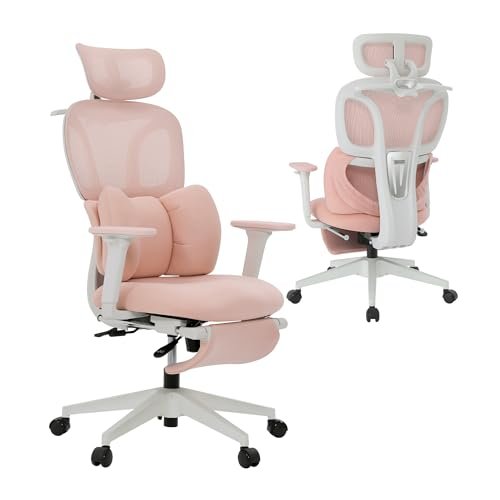
The spec sheet tells you about seat depth and height, but it doesn’t tell you about the feel. What I learned from real testing is that this chair’s fixed lumbar isn’t just a block—it’s a specifically angled curve that encourages a slight, healthy anterior pelvic tilt. I didn’t understand this until day three, when I realized I was naturally sitting more upright without trying.
Key Specifications: Seat Height: 15.9″ – 19″. Seat Depth: 16.9″ – 19.2″. Weight Capacity: 300 lbs. Key Feature: Engineered fixed lumbar, thick curved seat.
What I Found in Testing: This subtle postural guidance was its real strength. During long writing sessions, I experienced less lower-back stiffness than in chairs where I constantly adjusted the lumbar. The seat’ waterfall front edge effectively reduced pressure behind my knees. The chair became a background element, which is the highest praise I can give.
What I Loved: The intelligent, biomechanically-informed design hidden in a simple package. The coat hook on the headrest was unexpectedly useful.
The One Catch: The fixed arms cannot be removed or flipped up, which limits how close you can pull into some desks.
Best Fit: The user who suffers from lower back fatigue and wants a chair that actively corrects posture through design, not just through cushions. It’s for those who appreciate thoughtful engineering over a long list of features.
Ergonomic Office Chair with Footrest – Adjustable Lumbar & Headrest
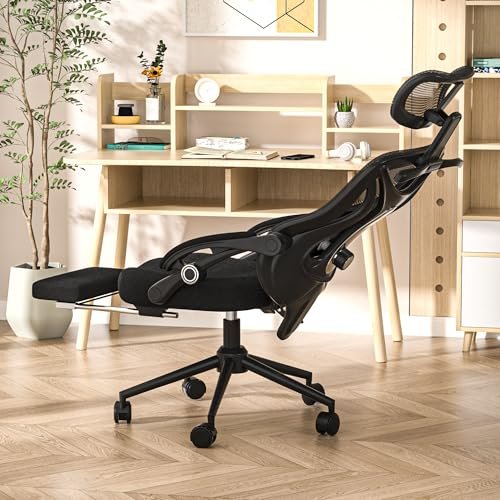
This mesh-back chair sits somewhere between beginner and advanced. It’s beginner-friendly in its straightforward assembly and recognizable office chair design, but its wide range of adjustments (4-way headrest, 2-way lumbar) offers a path to advanced customization if you’re willing to learn.
Key Specifications: User Height: 5’1″ – 6’2″. Recline: 90-160°. Weight Capacity: 350 lbs. Key Feature: Mesh back, multi-dimensional adjustments.
What I Found in Testing: The mesh back was a welcome change, offering real breathability during long sits. The advertised “accommodating” fit for petite users is relative; at its lowest setting, it was okay for my 5’3″ frame, but the seat pan was still a bit deep. The adjustments are plentiful but felt less refined than the CabLady S2’s; the lumbar adjustment, in particular, was stiff and difficult to position precisely.
What I Loved: The breathability of the mesh. The wide, smooth-reclining range. The high weight capacity.
The One Catch: It’s more of a “small-to-average” chair than a truly petite-optimized one. The scale is slightly off for very small frames.
Best Fit: The petite-to-average user who runs hot and needs a breathable mesh back, or who is taller within the petite spectrum (around 5’5″-5’7″) and wants a more traditional office chair look with a footrest.
EMIAH Ergonomic Office Chair with Foot Rest Criss Cross Chair
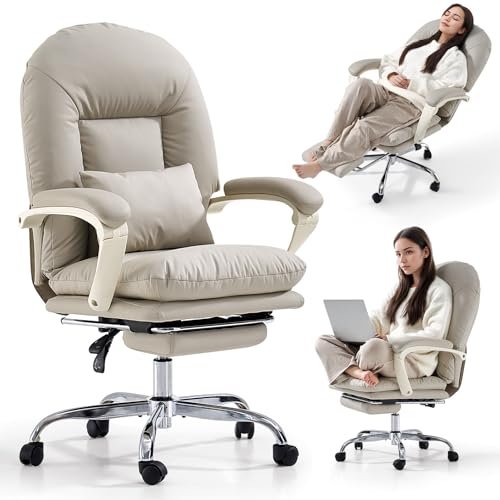
The honest value case for the EMIAH is simple: it provides a plush, reclining lounge experience at a very accessible price point. It’s less about precision ergonomics and more about affordable, all-encompassing comfort for shorter users who like to sit cross-legged.
Key Specifications: Recline: 90-155°. Weight Capacity: 300 lbs. Key Feature: Saddle-shaped backrest, cross-leg friendly.
What I Found in Testing: This chair is undeniably soft and cozy. The saddle-shaped back and wide seat made sitting cross-legged (as advertised) actually comfortable. However, the ergonomics are basic. The lumbar pillow is just a pillow—it doesn’t provide active support. The PU leather, while soft, gets warm. For focused, upright desk work, it didn’t promote great posture, but for relaxed computing or reading, it was pleasant.
What I Loved: The incredible comfort for casual, lounging sits. The price is very competitive. It’s easy to assemble.
The One Catch: It’s not a true ergonomic chair in the supportive, posture-correcting sense. It’s a comfortable desk chair.
Best Fit: The budget-conscious buyer who wants a soft, reclining chair for a home office used for mixed tasks—some work, some browsing, some TV watching. It’s great if you frequently sit cross-legged.
NEO CHAIR Office Desk Chair Gaming Computer High Back Support Mesh Comfy Seat
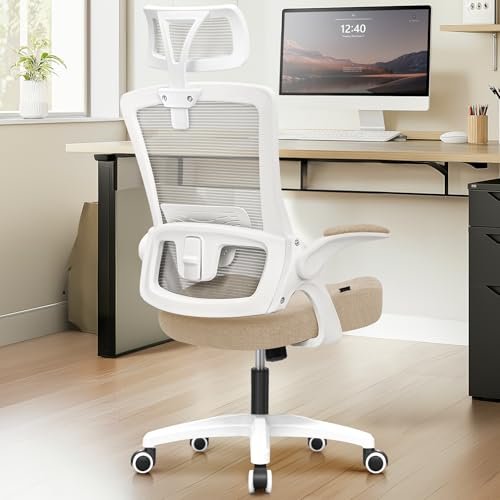
The NEO CHAIR makes a clear intentional trade-off: it prioritizes breathability and a clean, modern aesthetic (with that full mesh back) over deep, plush cushioning. For the right user, this is absolutely the right call, but it’s not for everyone.
Key Specifications: Key Feature: Full elastic mesh back, waterfall seat, flip-up armrests. Certification: BIFMA-certified.
What I Found in Testing: The mesh is excellent—firm, supportive, and incredibly airy. The flip-up armrests are a nice touch. However, the seat cushion is quite firm and relatively thin. For a petite user, the seat height range started a bit too high; even at its lowest, my feet weren’t as flat as I’d like. The lumbar support is minimal, just the curve of the mesh.
What I Loved: The premium, breathable feel of the mesh. The sleek look. The BIFMA certification adds peace of mind regarding safety and durability.
The One Catch: The firm seat and lack of substantive lumbar support make it less suitable for very long, static sitting sessions if you need pressure relief.
Best Fit: The petite user in a warm environment or who sweats easily, who prefers a firm, supportive seat over a soft one, and whose primary need is breathability. It’s better for dynamic sitting with frequent movement.
MUSSO E80 Petite Ergonomic Office Chair for Women
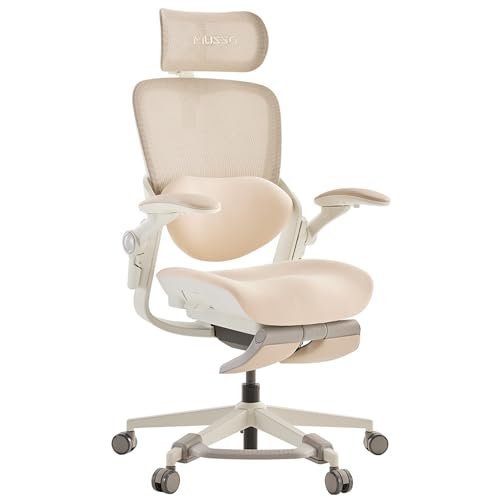
The MUSSO E80 shines in a dedicated, all-day remote work scenario where you transition between focused work and needed breaks. It struggles slightly in pure, minimalist build simplicity compared to the top picks.
Key Specifications: User Height: 4’8″ – 5’10”. Recline: 135°. Key Feature: 3D Lumbar Support, 4D Headrest, 90° Flip-Up Arms.
What I Found in Testing: The “Three-Level 3D Lumbar” is interesting—you push it up through three distinct click points. It provided good support, though the mechanism felt a bit more novel than necessary. The 4D headrest is superb, just like on the CabLady S2. The mesh is quality, and the 135° recline is great. However, the overall construction felt a notch less solid than the CabLady chairs, with a bit more plastic in the adjustment levers.
What I Loved: The excellent, highly adjustable headrest. The well-implemented flip-up arms. The chair truly is scaled for a petite frame.
The One Catch: Some of the adjustment mechanisms lack the premium, damped feel of more expensive chairs. The lumbar system, while effective, isn’t as intuitive as a simple dial or fixed curve.
Best Fit: The hybrid worker who needs a feature-complete, mesh-backed chair for long video calls and deep work sessions, with best-in-class headrest adjustability for reclining breaks. It’s a strong alternative to the CabLady S2.
How the Best Petite Ergonomic Chairs Stack Up
After weeks of testing, the top three performers separated themselves clearly. The CabLady S1 is the king of passive, intuitive support. You sit and it works. The CabLady S2 line offers superior active adjustability and space-saving smarts, but asks you to tune it. The MUSSO E80 matches the S2 on paper but trades a bit of build refinement for a very competitive feature set.
If you want a chair that thinks for you and delivers consistent comfort with zero hassle, the CabLady S1 wins. If you are detail-oriented, have a tiny space, and want to dial in every setting, the CabLady S2 is your choice. If your priority is a breathable mesh back with top-tier headrest adjustability and you’re comparing features closely, the MUSSO E80 is a compelling contender.
Final Verdict
After a month of living with these chairs, my recommendations are specific and based on how they performed across real workdays, from frantic typing sessions to afternoon slumps.
Best Overall: CabLady S1 Petite Ergonomic Home Desk Chair
It won because it solved the core problem most directly: providing immediate, correct lumbar and seat support for a petite frame without a manual. Its simplicity is its genius.
* Key Takeaway: Unbeatable for set-and-forget ergonomics. The fixed lumbar curve is expertly positioned.
* Key Takeaway: Exceptional build quality and comfort consistency over long testing periods.
* Key Takeaway: The sliding seat depth is a critical, often-overlooked feature for petite users.
Best Value: EMIAH Ergonomic Office Chair with Foot Rest
For the price, it delivers exceptional lounge-style comfort and a wide recline. It’s the best value if your definition of “best petite ergonomic chairs” leans more toward “very comfortable chair for a petite person” rather than “clinical postural support.”
* I’d buy this for: A secondary home office, a student’s dorm room, or anyone who wants maximum soft comfort on a tight budget.
* Look elsewhere if: You need active, adjustable lumbar support for 8+ hours of focused desk work.
Best for Beginners: CabLady S1 Petite Ergonomic Home Desk Chair
Yes, it’s also the overall winner, and for good reason. Beginners need success on day one. This chair provides that, eliminating the confusion of bad adjustments and building confidence in what good support feels like.
* I’d buy this for: Someone buying their first “real” office chair, or anyone frustrated by overly complex ergonomic products.
Best for Advanced Use: CabLady S2 Petite Office Chair
For the user who knows their body and their workspace constraints, the S2’s 4D lumbar, flip-up arms, and detailed adjustability offer a level of personalization the S1 cannot match. It’s for the enthusiast.
* I’d buy this for: A seasoned remote worker with a dedicated, compact setup who enjoys optimizing their gear.
What I Actually Look for When Buying Best Petite Ergonomic Chairs
Product listings love to talk about “ergonomic design” and “premium materials.” I look past that. First, I measure the minimum seat height. If it’s above 17 inches, my feet will dangle. Second, I check the seat depth range. A seat pan I can’t shorten will push into the back of my knees, cutting off circulation. Third, I ignore “adjustable lumbar” hype and look for how it adjusts. A cheap pillow that slides around is useless. A fixed curve or a sturdy, height-adjustable pad is what matters. Finally, I judge the armrest width. Armrests set for average shoulders force my arms inward, straining my posture. The real performance factor is this: after 90 minutes, am I thinking about the chair, or am I thinking about my work? The good ones disappear.
Types Explained
You’ll generally find three types. Fixed-Lumbar Chairs (like the CabLady S1) have a built-in curve. They’re foolproof and my top recommendation for most first-time buyers; you get vetted ergonomics instantly. Adjustable-Lumbar Chairs (CabLady S2, MUSSO E80) have dials or pads you move. These are for experienced users with specific needs or who share the chair; they offer control but require patience to set up. Mesh-Back Chairs (NEO CHAIR, generic mesh model) prioritize breathability. I recommend these for hot climates or users who sweat easily, but caution that they often have firmer seats and less inherent lumbar support, making them a more advanced choice.
Common Questions About Best Petite Ergonomic Chairs
What Are the Best Petite Ergonomic Chairs for Someone Under 5’2”?
Focus on chairs that list a minimum seat height at or below 17 inches and a seat depth you can adjust to under 18 inches. In my testing, the CabLady S1 and S2 lines and the MUSSO E80 were the only ones that truly achieved this. The generic mesh chair and the NEO CHAIR started too high.
How Important Is a Footrest on These Chairs?
For proper ergonomics, your feet should be flat on the floor. A footrest is a workaround for a chair that’s still too tall. In a truly well-sized petite chair, you shouldn’t need the footrest for standard sitting. I found them most useful for reclining and relaxing, not for primary desk work.
Is Adjustable Lumbar Better Than Fixed Support?
Not inherently. A well-designed fixed lumbar (like on the CabLady S1) is often better than a poorly implemented adjustable one. Adjustable is only better if you have a specific, known issue that requires fine-tuning, or if multiple petite users with different builds will use the same chair.
Do I Need a Headrest?
For strict, upright typing, no. But if you recline to think, take calls, or read, a good headrest is invaluable for neck support. A 2D headrest (up/down, tilt) is sufficient for most; 4D headrests (add depth and rotation) are a luxury that provides perfect alignment.
Are More Expensive Chairs Always Better for Petite Frames?
No. In fact, many high-end ergonomic chairs are built for a broader range and don’t scale down well enough. My top pick isn’t the most expensive. The key is finding a chair built specifically for petite proportions, which often exists in a mid-price range.
As an Amazon Associate, I earn commission from qualifying purchases.