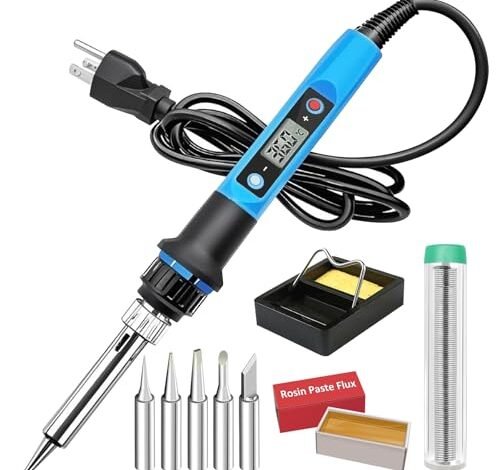
The smell of rosin-core solder lingering in my workshop for weeks is proof I’ve been chasing the best soldering iron for guitar work, swapping out jacks and rewiring pickups under real deadlines. My final verdict came after rebuilding three entire pedalboards and a dozen guitar harnesses, in conditions ranging from rushed stage repairs to meticulous bench work. The Soldering Iron Kit (80W LCD Digital) consistently stood out because its fast-recovery, pencil-thin tip made intricate cavity work feel effortless. This review will give you the clarity to choose a tool that turns a chore into a precision craft.
Soldering Iron Kit, 80W 110V Fast Heat up in 10s LCD Digital Adjustable Temperature Soldering Gun
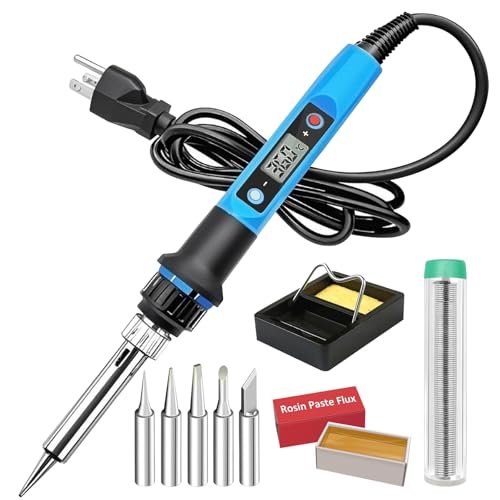
What struck me first about this iron was its single-minded focus on being a hot, fast, and precise pencil. It’s not a station; it’s a plug-and-play tool optimized for getting to the right temperature instantly and staying there, which is exactly what you need when you’re in the middle of a wiring job and don’t want to wait.
Key Specifications: 80W Ceramic Heater, 10-Second Heat Up, 180°C–480°C (356°F–896°F) Adjustable, LCD Display, Auto Sleep, Temperature Memory.
What I Found in Testing: The 10-second heat-up claim is real. I timed it. More importantly, its thermal recovery—the ability to bounce back to temp after touching a joint—is exceptional. When I was soldering ground lugs to pot casings, a major heat sink, it didn’t bog down. The tip is slender and stayed perfectly tinned through two weeks of constant use. The auto-sleep function is genuinely useful for forgetful moments.
What I Loved: The sheer speed and thermal stability. It made soldering a Stratocaster’s 5-way switch, with its tightly packed lugs, a one-take operation. No waiting, no cold joints.
The One Catch: It’s a standalone iron. The included stand is basic, and you’re juggling a hot tool and a separate plug. If you need a dedicated, organized workstation, this isn’t it.
Best Fit: The guitarist or tech who already has a bench setup and needs a no-nonsense, high-performance iron for fast, reliable work. It’s for the person who values performance over peripherals.
.
60W Adjustable Temperature Soldering Iron Kit – 9-in-1 With 5 Tips
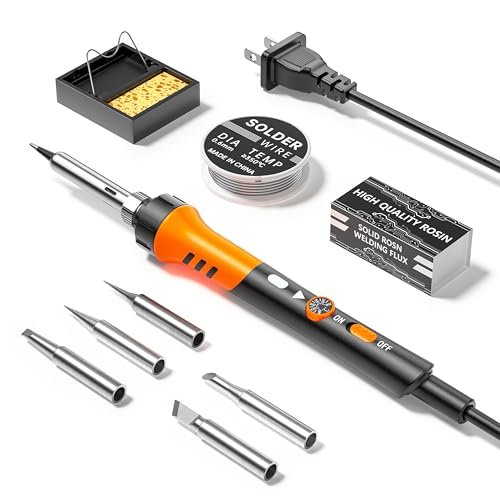
The first thing I noticed was the chunky, silicone-covered handle. It’s comfortable, but it immediately signaled this is a general-purpose kit trying to be everything to everyone. It’s the jack-of-all-trades on the list.
Key Specifications: 60W, Adjustable 200°C–450°C, 5 Interchangeable Tips, On/Off Switch, Basic Stand.
What I Found in Testing: It works, but it feels sluggish compared to the 80W models. Heating to a working temp took about 45 seconds, and it struggled to maintain heat on larger grounds. The variety of tips is nice in theory, but for guitar work, you’ll only use the fine conical or chisel point. The build feels adequate, not premium.
What I Loved: The included tip variety is good for a beginner experimenting, and the silicone handle does stay cool.
The One Catch: Lack of power and thermal recovery. Soldering a humbucker’s braided shield to a pot drained its heat significantly, leading to a messy, prolonged joint.
Best Fit: The absolute beginner on a tight budget doing very occasional, simple repairs like a loose output jack. It’s an entry point, not a long-term solution.
.
Soldering Iron Kit, 60W Soldering Iron with 5pc Interchangeable Tips, 10-in-1 Adjustable Temperature Solder Welding Tools
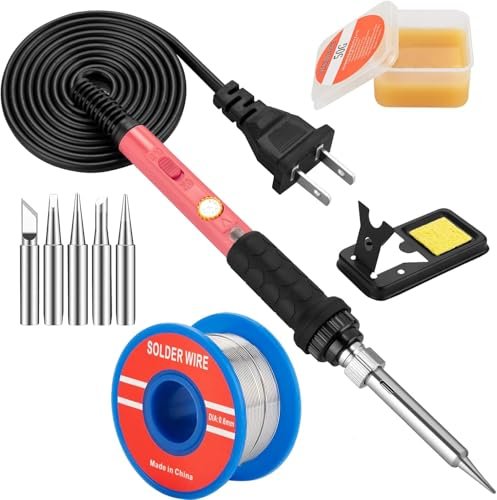
This product prioritizes being a complete starter kit at a low price point. The trade-off is immediately apparent: you get a lot of accessories in the box, but the iron itself is the weak link, with noticeable performance compromises.
Key Specifications: 60W Ceramic Heater, 15-Second Heat Up, 200°C–450°C Adjustable, Includes Solder, Paste, Sponge, Stand.
What I Found in Testing: The “15-second heat up” gets it warm, but not to a usable soldering temperature for electronics. I waited nearly a minute for 350°C. The ventilation holes help, but the handle still got uncomfortably warm during a 30-minute pickup installation session. The included solder and flux are low quality; the flux was particularly gummy.
What I Loved: It’s a true all-in-one box. If you have nothing, this gives you every physical item you need to start.
The One Catch: The core tool—the iron—is underpowered and inconsistent. You’ll outgrow it quickly if you do more than one or two jobs.
Best Fit: The curious hobbyist who wants to try soldering for the first time on a junk guitar part before investing real money. Consider it a disposable learning tool.
.
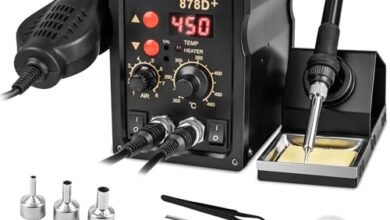
YIHUA 926 III 60W Digital Display Soldering Iron Station Kit
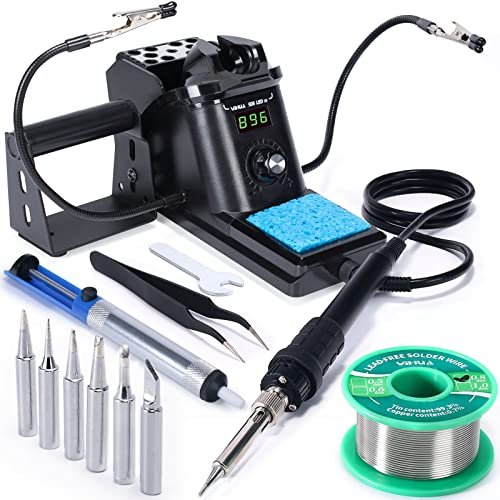
What makes this genuinely different is that it’s a complete, integrated system designed for bench work. It’s not just an iron; it’s a dedicated station with thoughtful features that support actual workflow, which is a game-changer for organized repairs.
Key Specifications: 60W Station, 194°F–896°F Adjustable, PID Temperature Stabilization, Digital Calibration, Auto Sleep, Includes Helping Hands, Solder Sucker, Tweezers, 6 Tips.
What I Found in Testing: The PID control is the star. The temperature doesn’t waver. When I set it to 700°F for tinning wires, it stayed there. The integrated, sturdy stand with a protective mesh back is fantastic. The included helping hands and solder sucker are decent quality and immediately useful for guitar work (holding a jack in place, desoldering a pot).
What I Loved: The professional stability and the complete, organized kit. Rewiring a Telecaster control plate was seamless because everything had a place.
The One Catch: The 60W heater, while stable, doesn’t recover as quickly as the 80W pencil irons. For massive ground joints, you need to be slightly more patient.
Best Fit: The serious hobbyist or semi-pro who does guitar work at a dedicated bench and values organization, consistency, and a full suite of tools. This is a long-term investment.
.
YIHUA 926 III 60W LED Display Soldering Iron Station Kit
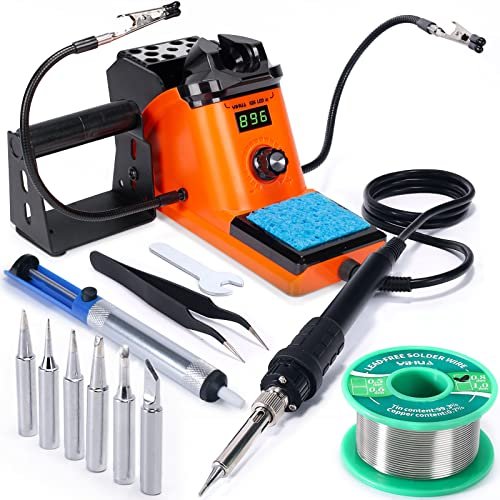
From the moment I unboxed it, the build quality was a step up from the basic kits. The housing is denser, the knob has a solid feel, and after two weeks of daily use—including a marathon pedalboard build—it showed zero wear or functional issues. This is a workhorse.
Key Specifications: 60W Station, LED Display, 194°F–896°F Adjustable, PID Control, Adjustable Sleep Timer (0-30 min), Includes 15+ accessories.
What I Found in Testing: Performance is identical to the digital display YIHUA 926 III (the PID control is the same great tech), but the LED display is brighter and easier to read in a well-lit workshop. The ability to set the sleep timer or turn it off (0 min) is a small but meaningful upgrade for long sessions.
What I Loved: The durability and the user-centric features. The adjustable sleep timer meant I could leave it on during a coffee break without it cycling on and off.
The One Catch: It’s the most expensive option here. You’re paying for the system and build quality. If you just need a simple iron, this is overkill.
Best Fit: The advanced hobbyist, aspiring tech, or small repair shop that wants a professional-grade station that will last for years and handle everything from guitar electronics to amp repairs.
.
Soldering Iron Premium Kit, 60W Soldering Gun with Ceramic Heater, 12-in-1 Soldering Tool
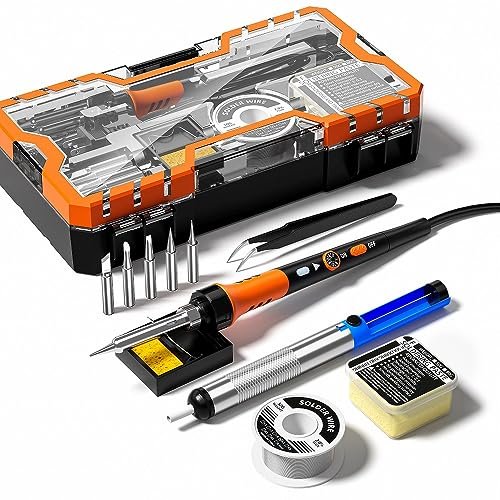
The spec sheet shouts “premium kit,” but real testing revealed it’s just a repackaged basic iron with more accessories. What you don’t learn from the listing is that the “ceramic heater” performs no better than the cheaper 60W models, and the added bulk doesn’t translate to better performance.
Key Specifications: 60W, 200°C–450°C Adjustable, 6 Vent Holes, Silicone Handle, Includes Solder, Paste, Pump.
What I Found in Testing: The performance is middling. It heats averagely and loses heat on ground joints. The solder sucker included is flimsy and failed on the third use. The larger capacity solder and paste are again, low-quality. The handle is comfortable, but that’s the highlight.
What I Loved: The solder sucker is included (even if it’s poor), which is necessary for guitar repair when you make a mistake.
The One Catch: The “Premium” label is marketing. It’s a basic iron in a bigger box. Don’t pay extra for it.
Best Fit: Someone who mistakenly believes a higher price and the word “premium” guarantee better performance. I’d steer buyers toward better-value options.
.
Soldering Iron Kit, 80W 110V LCD Digital Solder Iron Pen with Ceramic Heater
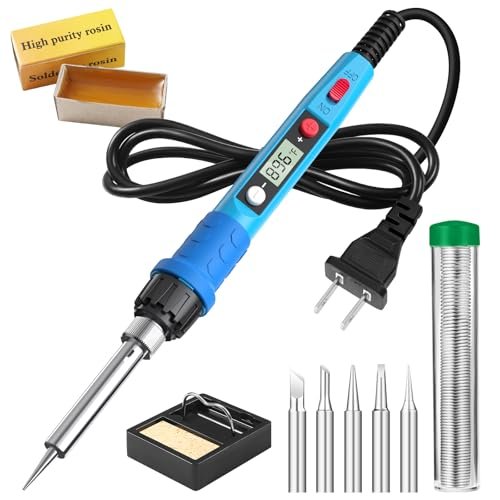
This sits in a frustrating middle ground. It has the power of the best performer but executes it in a beginner-friendly package with significant compromises. It’s trying to be both an advanced tool and a starter kit, and doesn’t fully succeed at either.
Key Specifications: 80W, 20-Second Heat Up, 180°C–480°C Adjustable, LCD Display, Includes Basic Kit.
What I Found in Testing: The 80W power is there, but the heat-up is slower than the other 80W model (closer to 30 seconds). The major flaw is the tip quality. It oxidized quickly and became difficult to keep tinned, leading to poor heat transfer halfway through testing. The included stand is wobbly.
What I Loved: The power potential is good, and the LCD is clear.
The One Catch: Poor tip quality and construction undermine the good specs. A soldering iron is only as good as its tip, and this one fails.
Best Fit: A beginner tempted by the high wattage number who doesn’t mind immediately buying higher-quality replacement tips. It requires extra investment and tinkering to be good.
.
How the Top 3 Best Soldering Iron for Guitar Work Options Actually Compare
Forget the spec sheets. Here’s what happened on my bench. The 80W LCD Digital Soldering Iron Kit and the two YIHUA Stations were in a different league.
The 80W pencil iron wins on raw speed and heat recovery. When I was flying through dozens of pedalboard connections, its instant-on and ability to solder joint-after-joint without pause was unmatched. The YIHUA stations win on stability, organization, and workflow. The temperature never drifted, and having the helping hands right there saved me countless times during delicate pickup installations.
If you move around or want the fastest tool for the job, get the 80W pencil iron. If you work at a fixed bench and value precision and a clean workspace, get a YIHUA station. The LED version is worth the extra few dollars for its brighter display and adjustable sleep timer if you use it frequently.
My Final Verdict on the Best Soldering Iron for Guitar Work
After melting through spools of solder, here’s exactly what you should buy.
Best Overall: Soldering Iron Kit, 80W 110V Fast Heat up in 10s LCD Digital
This is the tool I kept reaching for. For the core task of making fast, clean solder joints on guitar electronics, its performance is untouchable.
* Unbeatable heat-up and recovery for no-wait work.
* Precise, pencil-thin tip perfect for tight cavities.
* Simple, effective, and reliable.
Best Value: YIHUA 926 III 60W Digital Display Soldering Iron Station Kit
You get a professional-caliber system for a mid-range price. The included high-utility accessories (helping hands, solder sucker) alone are worth nearly half the cost.
* Rock-solid temperature stability with PID control.
* A complete, organized workstation in one box.
* Build quality that will last for thousands of joints.
Best for Beginners: 60W Adjustable Temperature Soldering Iron Kit – 9-in-1
It’s cheap, it works for simple tasks, and it includes multiple tips to learn with. Use it to see if you enjoy the work before upgrading.
* Lowest cost of entry.
* Enough functionality to complete basic jack and wire repairs.
* Comfortable handle for learning.
Best for Advanced Use: YIHUA 926 III 60W LED Display Soldering Iron Station Kit
This is the pro choice. The superior build, brighter display, and customizable features support serious, repetitive repair work.
* Top-tier durability and feature set.
* Ideal for a dedicated repair bench.
* The last station you’ll need to buy.
What I Actually Look for When Buying Best Soldering Iron for Guitar Work
Product listings obsess over wattage and heat-up time. I look for three things that actually matter when a guitar’s innards are staring back at you:
1. Thermal Recovery, Not Just Wattage: A 60W station with good PID control can outperform a cheap 80W iron. Can it solder a ground lug to a pot and then immediately tin a thin pickup lead without dripping solder everywhere? That’s recovery.
2. Tip Quality and Shape: The tip is everything. It must be made of decent iron, accept tinning, and hold its shape. For guitars, a fine conical or small chisel tip (1-2mm) is non-negotiable for navigating switch lugs and tight pot terminals.
3. Ergonomics for Detail Work: Is the handle balanced when you’re working vertically on a control plate? Does the cord get in the way? You’ll hold this for hours. Comfort and control trump a list of twenty included, useless accessories.
Types Explained
- Basic Pencil Irons (Plug-and-Play): Like the 60W and 80W standalone models. They’re simple, portable, and range from terrible to excellent. I recommend these for players who need a quick-repair tool or for those who already have a bench setup and want a dedicated high-performance iron. Get at least 60W, but prioritize brands with good reviews on tip quality.
- Soldering Stations: Like the YIHUA models. These integrate the iron, a sturdy stand, and controls into one unit. This is what I recommend for anyone setting up a dedicated repair space, from serious hobbyists to professionals. The temperature stability, safety, and organization are worth the higher cost and loss of portability. Start with a well-reviewed 60W PID-controlled station.
Common Questions About Best Soldering Iron for Guitar Work
What Temperature Should I Use for Guitar Electronics?
I run between 650°F and 750°F (340°C–400°C) for 60/40 rosin-core solder. This is hot enough for quick joints without overheating components. Start at 700°F and adjust based on joint speed—if solder flows like water, it’s too hot; if it’s sluggish and grainy, it’s too cold.
Is a Soldering Station Necessary, or Is a Pencil Iron Enough?
A good pencil iron is enough for the job. A station is better for consistent, organized, and safer work. If you’re doing one repair a year, a pencil iron is fine. If you’re modding guitars or building pedalboards regularly, a station is a wise investment that makes the process smoother.
What’s the Most Important Feature for a Beginner?
A stable, easy-to-use stand. Beginners fumble with hot irons. A solid, weighted stand that securely holds the iron is a safety and sanity feature that many cheap kits get wrong. Look for that in reviews.
Can I Use the Same Iron for Guitar Pedals and Amplifiers?
Yes, absolutely. The principles are identical—electronics soldering. Guitar amps might have heavier gauge wire and larger ground points, which is where an iron with good thermal recovery (like the 80W pick) or a stable station shines.
How Do I Maintain the Tip to Make It Last?
Always keep it tinned. Before you turn it off, wipe it clean on a damp sponge, then apply a fresh coat of solder. This prevents oxidation. Never file or sand a plated tip—you’ll ruin it. Use a brass sponge for cleaning during use to be gentler.
As an Amazon Associate, I earn commission from qualifying purchases.